
📘 BUILD A BEAR WORKSHOP INC (BBW) — Investment Overview
🧩 Business Model Overview
BUILD A BEAR WORKSHOP INC operates an experiential, customization-led toy and gifting business. The core value chain blends (1) in-store “build” experiences (customers select a base bear, personalize it, and complete stuffing/sewing steps), (2) consumable attachment merchandising (clothing, accessories, sounds, and themed add-ons), and (3) ongoing merchandising through retail channels that monetize the same IP ecosystem beyond the initial “build” moment.
Customer stickiness is not driven by switching costs in the strict software sense; it is driven by repeat engagement with a personalized IP product. A bear built in-store becomes a durable, ownable base for incremental purchases (outfits, accessories, characters/themes), and the brand’s customization ritual supports repeat visits and gifting occasions.
💰 Revenue Streams & Monetisation Model
Revenue is primarily generated through company-operated retail stores and e-commerce, complemented by merchandising initiatives that extend the IP into giftable consumer products. Monetisation is structurally supported by:
- Transactional “build” revenue tied to store visits and gift occasions.
- Attachment sales (outfits, accessories, themed upgrades) that typically contribute a disproportionate share of gross profit versus the base toy.
- Repeat monetisation from personalization-by-add-ons: once the base bear is owned, incremental spend can occur without requiring the customer to restart from scratch.
Margin dynamics are driven by product mix (attachment rate), inventory discipline, and store productivity (sales per store hour), with e-commerce profitability influenced by fulfillment and promotions. Lease and labor cost structure tends to be the key swing factor for operating leverage.
🧠 Competitive Advantages & Market Positioning
BBW’s most defensible advantage is a blend of Intangible Assets and Operational Scale in a Specialty Experiential Format. The customization experience and the associated proprietary retail operating system (store execution, merchandising cadence, and assortment designed around personalization) are difficult to replicate at comparable cost and speed.
The company also benefits from economies of scope across the same IP universe: once characters and themed product cycles are established, the business can refresh attachments and accessories without re-creating the entire consumer relationship.
Competitive benchmarking (primary competitors):
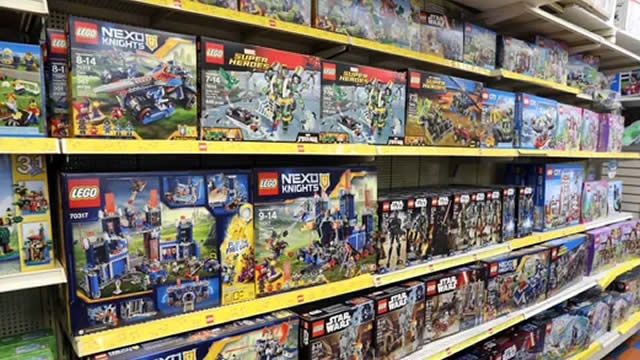
- LEGO (LEGO retail / LEGO-branded merchandising) — strong in construction play and brand-owned retail experiences, with competitive depth in evergreen product design and shelf stability.
- Mattel (e.g., Barbie and other major toy franchises) — competes on major IP franchises and high-volume toy distribution through mass retail and branded channels.
- Large-format retailers (e.g., Target/Walmart ecosystems) — compete on price, breadth of assortment, and convenience, pressuring specialty pricing and driving promotional intensity in core toy categories.
Contrast in focus: BBW differentiates on personalization at the point of purchase and attachment-led incremental merchandising within a specialty experiential format, rather than competing purely on broad toy assortment or on construction/character franchises alone.
🚀 Multi-Year Growth Drivers
- Experiential retail durability within discretionary gifting: customization functions as a “reason to visit” and a tangible gift narrative, supporting resilience versus commoditized toys.
- International and channel expansion (where operators can scale the format): replicating the store/experience model with disciplined lease selection and supply chain readiness can increase addressable store footprint.
- Attachment and replenishment economics: growth depends on maintaining attachment penetration through assortment refresh cycles, which expands revenue per customer visit.
- E-commerce enablement: expanding online gifting workflows can smooth seasonality and capture customer demand that does not align with store access, provided fulfillment economics remain controlled.
- IP/theme monetisation: recurring themed product launches can drive incremental demand and support marketing spend efficiency through merchandise-driven relevance.
⚠ Risk Factors to Monitor
- Mall traffic and discretionary consumer cycles: specialty experiential stores are sensitive to footfall declines, consumer sentiment, and promotional intensity.
- Inventory and product cycle execution: gift categories can become promotion-driven if demand timing or assortment planning misaligns with seasonal peaks.
- Lease and labor cost inflation: store-level fixed costs can limit operating leverage during weak demand periods.
- Competitive promotional pressure: mass retailers and major toy franchises can increase promotional activity, constraining pricing power and compressing gross margin.
- Intellectual property and themed content dependence: changes in partner economics, licensing terms, or theme availability can affect merchandising cadence and customer pull.
- Execution risk in channel expansion: scaling e-commerce or new store formats requires consistent unit economics, supply chain performance, and inventory visibility.
📊 Valuation & Market View
Markets often value BBW-like retail-experience operators on a blended set of metrics: EV/EBITDA when profitability is more stable, and P/S where margin trajectory and operating leverage are central to the thesis. Key value drivers typically include:
- Same-store sales trajectory and footfall sensitivity.
- Gross margin durability via mix (attachment rate) and inventory discipline.
- Operating leverage from labor productivity and leveraging fixed costs.
- Capital efficiency of store growth (or rationalization) and lease economics.
- Conversion and profitability of e-commerce, including fulfillment and promotion intensity.
🔍 Investment Takeaway
BUILD A BEAR WORKSHOP INC’s long-term case rests on an intangible-experience moat and an attachment-driven monetisation model that can generate repeat engagement around personalized products. The investment merits evaluating primarily through operational execution: maintaining attachment penetration, protecting gross margin through disciplined inventory, and sustaining operating leverage against fixed cost pressures. The risk profile remains anchored in discretionary demand cycles and specialty real estate exposure, making store economics and merchandise execution the central variables for multi-year outcomes.
⚠ AI-generated — informational only. Validate using filings before investing.













 Growth Catalysts