D.R. Horton, Inc.

D.R. Horton, Inc. (DHI) Market Cap

D.R. Horton, Inc. has a market capitalization of $46.92B.

Financials based on reported quarter end 2025-12-31

Price: $161.18

β–Ό -1.02 (-0.63%)

Market Cap: 46.92B

NYSE Β· time unavailable

CEO: Paul J. Romanowski

Sector: Consumer Cyclical

Industry: Residential Construction

IPO Date: 1992-06-05

Website: https://www.drhorton.com

D.R. Horton, Inc. (DHI) - Company Information

Market Cap: 46.92B Β· Sector: Consumer Cyclical

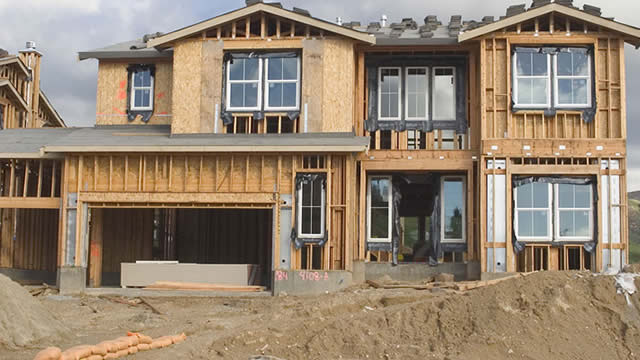
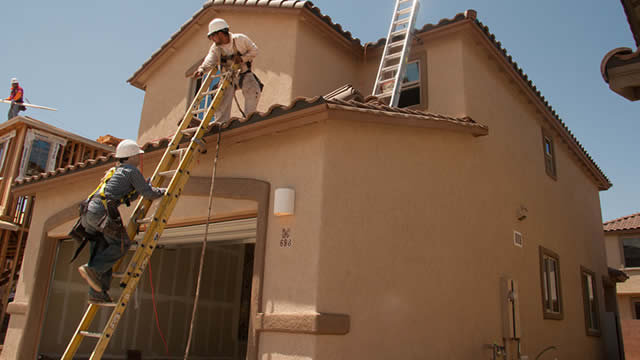
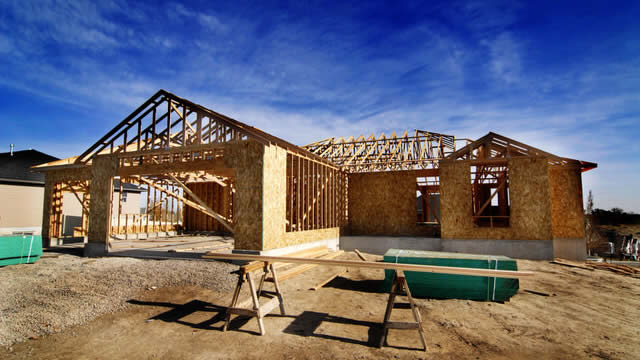
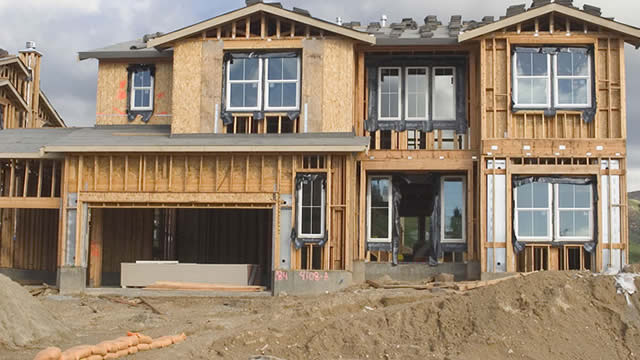
D.R. Horton, Inc. operates as a homebuilding company in East, North, Southeast, South Central, Southwest, and Northwest regions in the United States. It engages in the acquisition and development of land; and construction and sale of residential homes in 31 states and 98 markets under the names of D.R. Horton, America's Builder, Express Homes, Emerald Homes, and Freedom Homes. The company constructs and sells single-family detached homes; and attached homes, such as town homes, duplexes, and triplexes. It also provides mortgage financing services; and title insurance policies, and examination and closing services, as well as engages in the residential lot development business. In addition, the company develops, constructs, owns, leases, and sells multi-family and single-family rental properties; owns non-residential real estate, including ranch land and improvements; and owns and operates energy related assets. It primarily serves homebuyers. D.R. Horton, Inc. was founded in 1978 and is headquartered in Arlington, Texas.

Analyst Sentiment

64%
Buy

Based on 52 ratings

Analyst 1Y Forecast: $166.18

Average target (based on 7 sources)

Consensus Price Target

Low

$129

Median

$163

High

$195

Average

$165

Potential Upside: 2.1%

Price & Moving Averages

Loading chart...

πŸ“˜ Full Research Report

ℹ️

AI-Generated Research: This report is for informational purposes only.

πŸ“˜ D.R. Horton, Inc. (DHI) β€” Investment Overview

🧩 Business Model Overview

D.R. Horton, Inc. operates as one of the largest homebuilding enterprises in the United States, primarily focused on designing, constructing, and marketing single-family detached homes. The company serves a diverse spectrum of homebuyers, ranging from entry-level purchasers to move-up and luxury buyers, as well as active adults seeking age-targeted communities. Operating across numerous U.S. states and metropolitan regions, D.R. Horton benefits from geographic diversification and a broad product mix that addresses varied market demands. The company's operations extend beyond homebuilding to include financing services and other related offerings, providing customers with comprehensive solutions throughout the home purchasing process.

πŸ’° Revenue Model & Ecosystem

D.R. Horton generates revenue primarily through the sale and delivery of new homes across its regional markets. Beyond direct home sales, the company supplements its income with ancillary services such as mortgage financing, title insurance, and closing services, often offered through its captive subsidiaries. These vertically integrated services not only enhance the homebuying experience but also enable D.R. Horton to capture a greater portion of the overall transaction value. The business ecosystem is therefore multi-faceted, encompassing both end consumers (homebuyers) and relationships with residential land developers, suppliers, and institutional partners.

🧠 Competitive Advantages

  • Brand strength
  • Switching costs
  • Ecosystem stickiness
  • Scale + supply chain leverage
  • Brand strength: D.R. Horton is a highly recognized name in the U.S. homebuilding industry, offering buyers assurance of quality, reliability, and after-sale support.
  • Switching costs: Homebuyers frequently benefit from the company’s bundled offeringsβ€”such as in-house mortgage and title servicesβ€”making the switching process to a competitor more complex and less attractive.
  • Ecosystem stickiness: By integrating core ancillary services and providing a seamless end-to-end purchase experience, D.R. Horton encourages customer retention and efficient cross-selling.
  • Scale + supply chain leverage: The company's national footprint allows it to negotiate favorable terms with suppliers, optimize land acquisition, and execute efficient construction processes, supporting both margin resiliency and competitive pricing.

πŸš€ Growth Drivers Ahead

Long-term growth prospects for D.R. Horton are supported by favorable demographic trends, including population growth and generational transitions into homeownership. The company’s strategic expansion into new U.S. geographical markets, introduction of innovative home designs, and focus on capturing underserved buyer segments (such as first-time buyers and active adults) remain core avenues for organic growth. Additionally, investment in digital sales processes and construction technologies is enhancing efficiency and buyer engagement. The integration of complementary services, such as insurance and mortgage solutions, provides cross-selling opportunities and deepens customer relationships, collectively driving incremental revenue growth.

⚠ Risk Factors to Monitor

Key risks include heightened competition from both local and national builders, shifts in regulatory or zoning policies, and exposure to macroeconomic cycles affecting housing demand and affordability. The company is also subject to potential cost inflation in materials and labor, which can compress margins if not effectively managed. Disruptive entrants leveraging digital real estate technology or new construction methods may present competitive threats. Environmental regulations and changing buyer preferences around sustainability can also necessitate adaptation in land use strategies and building practices.

πŸ“Š Valuation Perspective

D.R. Horton is typically valued by the market relative to its peers within the homebuilding sector, often taking into account its scale, operational efficiency, brand strength, and breadth of ancillary service offerings. The company’s consistent execution, national presence, and ability to generate robust cash flows can support either a premium or a stable valuation positioning compared to regional or smaller homebuilders, though this is always subject to prevailing market cycles, investor sentiment, and sector risk appetite.

πŸ” Investment Takeaway

D.R. Horton represents a leading, diversified franchise in the U.S. residential construction industry, with meaningful scale-driven advantages and a broad product portfolio. Bullish investors may be attracted by its wide geographic reach, integrated service model, and ability to capture demographic tailwinds in the home market. Cautious perspectives center on housing cyclicality, regulatory headwinds, and the need to continuously adapt to evolving buyer preferences and new market disruptors. As with all homebuilders, careful monitoring of macroeconomic trends and competitive dynamics remains essential to the investment thesis.


⚠ AI-generated research summary β€” not financial advice. Validate using official filings & independent analysis.

Fundamentals Overview

Loading fundamentals overview...

πŸ“Š AI Financial Analysis

Powered by StockMarketInfo
Earnings Data: Q Ending 2026-03-31

"DHI reported Revenue of $7.56B and Net Income of $647.9M (EPS $2.25) in the latest quarter. On a YoY basis (vs. 2025-03-31), Revenue declined by ~2.3% and Net Income fell ~20.1%, indicating profitability pressure. QoQ (vs. 2025-12-31), Revenue grew ~9.8% and Net Income rose ~8.9%, showing improving near-term momentum. Profitability is mixed across the last four quarters: net margin slipped to ~8.6% (647.9M / 7.56B) from ~10.5% a year ago, with margin weakness most evident compared with the stronger periods earlier in 2025 (notably 2025-06-30 and 2025-09-30 where earnings were higher). Cash-flow specifics aren’t provided, but the balance sheet shows resilience with Total Equity roughly stable QoQ ($24.77B vs. $24.55B) while Total Assets edged up (~2.7%). However, Net Debt increased sharply QoQ ($4.65B vs. $3.04B), suggesting less balance-sheet flexibility than last quarter. Shareholder returns are a key positive: the stock is up ~27.5% over 1 year (>20% momentum). With a low dividend yield (~0.33%) and modest payout ratio (~20%), total shareholder return appears driven primarily by capital appreciation, supported by some share reduction over the year."

Revenue Growth

Neutral

Latest quarter Revenue rose ~9.8% QoQ ($7.56B vs. $6.89B) but fell ~2.3% YoY ($7.56B vs. $7.73B), indicating modestly softer year-over-year demand.

Profitability

Fair

Net margin contracted to ~8.6% from ~10.5% a year ago. Net Income declined ~20.1% YoY despite ~8.9% QoQ growth, implying profitability is not keeping pace with revenue.

Cash Flow Quality

Neutral

Net income remains positive and payout is relatively conservative (~20% payout ratio), but cash-flow dynamics aren’t provided. No evidence of dividend stress in the provided ratios.

Leverage & Balance Sheet

Fair

Total Equity is stable (~$24.8B) and Total Assets increased QoQ, but Net Debt jumped QoQ (~$4.65B vs. $3.04B), modestly weakening balance-sheet flexibility.

Shareholder Returns

Good

Strong 1-year price momentum (+27.45%) materially boosts total return. Dividend yield is low (~0.33%), but share count decreased over the year (buyback signal).

Analyst Sentiment & Valuation

Positive

Consensus target implies upside: $164.57 vs. $149.81 (~10% potential). Valuation improved vs prior quarters (P/E ~15.4).

Disclaimer:This analysis is AI-generated for informational purposes only. Accuracy is not guaranteed and this does not constitute financial advice.

D.R. Horton delivered Q2 2026 results with pretax margin 11.5% and home sales gross margin 20.1%, but the quality of the margin was explicitly framed: 40 bps came from favorable litigation/warranty normalization to 19.7%. Management’s core story is that operational cost actions and faster cycle times are now flowing through the construction cycle, supporting stable gross margins sequentially and incremental benefits into Q3/Q4. Inventory discipline is a tangible lever: unsold completed homes down 35% YoY, with complete-to-close improving about one week sequentially and nearly a month YoY via faster cycle times. Incentives remain elevated (ARM ~10% of closings; buydowns ~73%; incentives ~10% of revenue), and management would only expect material incentive relief if mortgage rates moderate and/or consumer confidence improves. The biggest modeled headwind remains lot costs (up 4% YoY and expected slightly higher sequentially). BFR legislation uncertainty may pause rental activity, but the company mitigates via for-sale underwriting and firm-commitment forward selling. Overall, margin resilience looks credible but depends on stable affordability and construction cost trends.

AI IconGrowth Catalysts

  • Net sales orders +11% YoY to 24,992 homes, supporting revenue and margin leverage
  • Unsold completed homes reduced 35% YoY (and 25% vs December), improving inventory turnover and capital efficiency
  • Median cycle time improved by nearly one month YoY for homes closed in Q2, enabling lower inventory and faster turns
  • Construction cost savings beginning to flow through the homes under construction cycle, with incremental benefits expected into Q3 and Q4
  • Sell-through earlier in the process enabled by faster cycle times, including selling homes before completion while still applying incentives if required

Business Development

  • Forestar: 67% of homes closed on lots developed by Forestar or third parties (vs 64% YoY)
  • Forestar lot supply linkage: 65% of Forestar owned lots are under contract with or subject to ROFR to D.R. Horton
  • Forestar purchases: D.R. Horton purchased $280 million of finished lots from Forestar during Q2
  • Rental/BFR underwriting: built for sale with flexibility to move to-for-rent communities if BFR legislation adds 7-year sale requirements

AI IconFinancial Highlights

  • EPS: $2.24 diluted vs $2.58 prior-year; 2025/26 comps only; management did not state analyst consensus beat/miss
  • Revenue: $7.6B in Q2; home sales revenue $7.0B; pretax income $867M with pretax margin 11.5%
  • Pretax profit margin above high end of guidance range; management attributed to cost/lot productivity and demand allowing better-than-expected incentives
  • Gross margin (home sales): 20.1% included +40 bps from favorable litigation outcome and lower-than-normal warranty costs; normalized gross margin ex litigation/warranty benefit: 19.7%
  • Normalized Q2 home sales gross margin: 19.7% (slightly higher than guidance range)
  • Q3 outlook: home sales gross margin expected 19.7% to slightly higher; consolidated pretax margin 12.2% to 12.7%
  • SG&A: 9.2% of revenues up from 8.9% YoY, driven by lower home closings revenue from lower ASPs
  • Order metrics: cancellation rate 16% (stable YoY; down from 18% sequentially); average active selling communities +4% sequentially, +11% YoY
  • ASP (net sales orders): $366,300, +1% sequential and -2% YoY; average closing price $361,600 (-1% sequential; -3% YoY)
  • Lot costs: flat sequentially and up 4% YoY per square foot; stick & brick down 4% YoY per square foot; stick & brick and revenue down 2% sequentially per square foot
  • Inventory: completed unsold homes down 25% vs December and 35% YoY; completed unsold inventory lowest since fiscal 2023
  • Incentives: management expects incentives remain elevated rest of year; incentives as % of revs ~10%; incentives may be community-level managed without aggregate deterioration
  • Leverage/returns: homebuilding pretax return on inventory 17.6%; consolidated ROE 13.2%; consolidated ROA 8.9%

AI IconCapital Funding

  • Share repurchases: 6 million shares for $904M in Q2; reduced outstanding share count by 8% YoY
  • Dividends: $0.45 per share; $130M paid; board declared same quarterly dividend to be paid in May
  • Operating cash: generated $3.7B from operations over past 12 months; operating cash flow forecast for FY26 at least $3B
  • Liquidity/debt: $6.0B consolidated liquidity at March 31 (cash $1.9B; $4.1B available credit facilities); total debt $6.6B; $600M homebuilding senior notes maturing within next 12 months
  • Leverage target: consolidated leverage 21.7% at March 31; long-term target ~20%
  • FY26 capital returns forecast: common stock repurchases ~$2.5B and dividend payments ~$500M

AI IconStrategy & Ops

  • Inventory discipline: reduced completed unsold homes 35% YoY; started 27,500 homes vs ended with 38,200 in inventory
  • Inventory composition: 22,900 unsold and 5,500 completed and unsold at quarter end
  • Sales pace management: tailored starts pace and inventory to demand; expected starts in Q3 lower than Q2
  • Construction cost initiatives: reduced cycle times and continued focus on lowering stick & brick through labor/material mix and cost-down work with trades
  • Lot strategy: 575,000 total lots at March 31 (23% owned, 77% controlled via purchase contracts); emphasized building on lots developed by others to improve capital efficiency
  • Construction cycle improvements: complete-to-close down ~1 week sequentially; also improved overall cycle time nearly one month YoY
  • Incentive mix management: ARM and buydowns used selectively and expected to remain range-bound (ARM closings ~10% this quarter, expected 10% to 15% range; buydowns: ~73% of closings had some form of buydown; ARM uptake constrained by consumer preference for 30-year fixed)
  • Rental segment: rental inventory expected to remain around $3B; Q2 pretax income $12M on $212M revenues

AI IconMarket Outlook

  • Q3 2026 consolidated revenues expected: $8.8B to $9.3B
  • Q3 homes closed: 23,500 to 24,000
  • Q3 home sales gross margin: 19.7% to 20.2%
  • Q3 consolidated pretax margin: 12.2% to 12.7%
  • FY26 outlook: consolidated revenues ~$33.5B to $34.5B; homes closed 86,000 to 87,500
  • FY26 income tax rate forecast: ~24.5%
  • FY26 operating cash flow forecast: at least $3B; common stock repurchases ~ $2.5B; dividend payments ~ $500M
  • Demand timing: management cited sales in line with normal seasonality through mid-April; emphasized only mid-month visibility

AI IconRisks & Headwinds

  • Affordability constraints and cautious consumer sentiment remain the baseline demand headwind
  • Oil-price-driven inflation risk: management sees no tangible impact currently, but extended elevated oil could pressure costs (fuel surcharges from suppliers/trades mentioned as a potential risk by analyst; company said monitoring closely)
  • Lot costs remain a headwind: lot costs up 4% YoY per square foot and expected to incrementally be higher sequentially
  • Incentive normalization risk: incentives have become a persistent support mechanism; management indicated need for mortgage rates to moderate or consumer confidence to rise before incentives can be reduced
  • BFR legislative uncertainty: uncertainty around potential 7-year sale requirements creates a pause as buyers/participants wait for clarity; management said built-for-sale underwriting and ability to reconfigure mitigates but still a potential volume overhang
  • Regional/segment sensitivity: potential softness in some markets with heavier exposure to the software industry mentioned by management

Q&A: Analyst Interest

  • Gross margin bridge and sustainability: Management said Q2 gross margin beat included +40 bps litigation benefit and lower-than-normal warranty costs; normalized guidance assumed ~19.7% and they expect similar sequential stability. They emphasized construction cost savings entering the cycle, with additional benefit compounding into Q3 and Q4, while noting lot costs likely rise slightly.
  • Incentive environment and normalization path: Analysts asked whether elevated incentives represent a new normal and how much ARM/temp buydowns and buydowns contribute. Management quantified ARM usage (~10% of closings, range 10%-15% expected) and buydowns (~73% of closings). They said incentives ~10% of revenue and rate stability kept total incentive cost steady; normalization requires rate moderation and more consumer confidence.
  • BFR/Built-for-rent demand overhang: Management addressed uncertainty in pending BFR legislation (including potential 7-year sale requirements). They said they still see interest but there’s a pause while stakeholders wait for clarity. Mitigation: they underwrite communities as for-sale and focus forward contracts on firm commitments, reducing reliance on BFR rules.

Sentiment: MIXED

Note: This summary was synthesized by AI from the DHI Q2 2026 (ended ~March 31, 2026; call dated 2026-04-21) earnings transcript. Financial data is complex; please verify all metrics against official SEC filings before making investment decisions.

Loading financial data and tables...
πŸ“

SEC Filings (DHI)

Β© 2026 Stock Market Info β€” D.R. Horton, Inc. (DHI) Financial Profile