
📘 FABRINET (FN) — Investment Overview
🧩 Business Model Overview
Fabrinet operates as an outsourced manufacturing partner focused on advanced optical and electronic assembly, test, and manufacturing scale-up. The value chain is built around taking customer designs (often for precision optical and photonic products), translating them into manufacturable processes, and delivering high-yield production at volumes that meet stringent performance requirements.
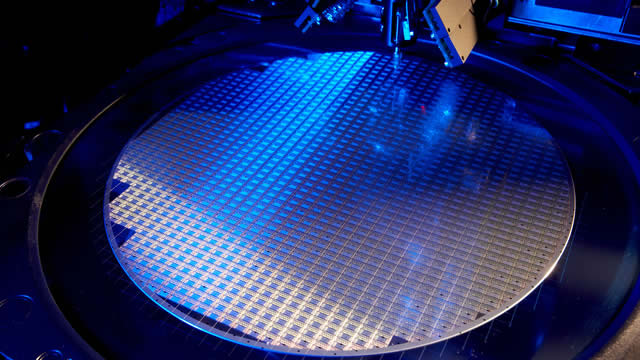
This model is inherently engineering-and-quality intensive: customers require validated processes, controlled environments, and repeatable test methodologies. Fabrinet’s day-to-day work centers on process development, wafer-to-package or die-to-module level assembly flows (depending on product type), precision alignment/packaging steps, and automated testing/measurement that verifies optical and electrical performance before shipment.
💰 Revenue Streams & Monetisation Model
Revenue is predominantly product manufacturing for customers’ end-market demand, with monetisation tied to unit volumes, manufacturing complexity, and the degree of process content per device. While the underlying business is transactional (manufactured units shipped), the economic structure can exhibit steadier characteristics due to:
- Customer qualification and re-qualification needs that extend the life of approved manufacturing processes.
- Program longevity when customers standardize on validated supply chains for optical/photonic modules and assemblies.
- Service-like contribution from ongoing engineering support, yield improvement, and manufacturing process optimization.
Margin drivers are typically dominated by yield performance, mix of higher-complexity products, and labor/automation leverage across stable production volumes. Like other OSAT/advanced manufacturing models, operating leverage can be meaningful when utilization is strong, while downside risk emerges from yield volatility and step-function costs tied to ramp-ups.
🧠 Competitive Advantages & Market Positioning
Fabrinet’s moat is best described as a combination of high switching costs and process/intangible asset depth, supported by cost advantages from scale in complex manufacturing.
- Switching costs (qualification + performance risk): Optical/photonic manufacturing requires tight tolerance control and validated test/inspection regimes. Moving production to an alternative partner typically requires re-validation of processes, requalification by customers, and risk mitigation for yield and performance—creating friction that competitors cannot easily overcome.
- Intangible assets (manufacturing know-how): Proprietary processes, tooling know-how, and optimization learning curves can compound over successive product generations.
- Cost advantages (yield, automation, and learning curve): As production scales, efficiency and throughput improvements can lower per-unit cost, particularly for precision steps where manual time and scrap risk are economically meaningful.
Competitive benchmarking (primary peers):
- Amkor Technology — Broad OSAT footprint and scale; typically competes more directly on general package/test outsourcing, often with less concentrated focus on highly specialized optical/photonic precision manufacturing compared with Fabrinet’s emphasis.
- Jabil — High-scale electronics manufacturing services; competes in complex EMS/assembly, but Fabrinet’s positioning is more targeted toward advanced optical and photonic device manufacturing where process qualification and optical performance validation are central.
- Celestica — Engineering and manufacturing services across high-tech industries; competes on advanced electronics assembly and systems, while Fabrinet differentiates via deeper optical/photonic manufacturing process specialization.
Key positioning contrast: Whereas larger EMS/OSAT players often pursue broader portfolios across consumer, industrial, and communications, Fabrinet’s competitive differentiation is concentrated on precision optical/photonic manufacturing and the operational excellence required to meet those performance thresholds.
🚀 Multi-Year Growth Drivers
The addressable market expands as product architectures demand tighter performance and higher manufacturing complexity—conditions that favor advanced outsourcing partners with proven yields and process discipline. Over a 5–10 year horizon, growth is supported by:
- Secular shift to higher-speed optical interconnects: Data center and networking roadmaps continue to move toward faster, denser optical communication modules, raising the value of precision packaging and test.
- Adoption of silicon photonics and advanced photonic integration: Increased integration density tends to increase manufacturing process complexity and performance verification needs.
- Coherent optics and next-generation transceiver evolution: As performance requirements tighten, demand for validated manufacturing partners that can sustain yield under complexity rises.
- Outsourcing of precision manufacturing: Customers increasingly seek capacity and execution capability from specialized contract manufacturers rather than maintaining full in-house process development.
TAM expansion is therefore less about broad macro demand and more about complexity-driven content per device and the share of high-precision manufacturing that is outsourced.
⚠ Risk Factors to Monitor
- Customer concentration and program cyclicality: Advanced manufacturing partners can be exposed to platform transitions and spending pullbacks if specific end-market programs slow.
- Yield and quality risks during ramps: New product introductions and process changes can temporarily depress margins; persistent yield issues can impair qualification status.
- Technological substitution: Changes in optical architectures, packaging approaches, or integration methods could reduce the process content required from a given manufacturing model.
- Capital intensity for precision capabilities: Maintaining leading process capability and metrology often requires ongoing investments in equipment, facilities, and workforce expertise.
- Geopolitical and supply chain exposure: Precision manufacturing depends on stable supply of components and materials; disruptions can impact lead times and unit costs.
📊 Valuation & Market View
Equity research coverage of advanced manufacturing/OSAT businesses often triangulates valuation using EV/EBITDA and P/S, with attention to operating margin structure and working capital dynamics. Valuation typically responds to:
- Margin trajectory: Yield improvement, mix shift toward higher-complexity content, and favorable labor/automation leverage.
- Utilization and order stability: Even without direct recurring revenue, stable customer programs can support steadier production volumes.
- Quality of earnings: Durable gross margin and disciplined opex to convert volume into profit.
- Risk perception: Program transition risk and sensitivity to technological shifts can compress valuation multiples even when revenue remains intact.
A key analytical lens is whether the business sustains its process qualification advantage long enough to convert technological demand into economic returns (margin and cash generation), rather than competing primarily on price.
🔍 Investment Takeaway
Fabrinet’s long-term thesis rests on a defensible manufacturing position in precision optical/photonic systems—where qualification barriers and performance risk create high switching costs. Coupled with process know-how and scale-driven cost advantages, the business can capture incremental value as optical interconnects and photonic integration grow in complexity and volume. The primary investor focus should remain on yield discipline, program execution, and evidence that new product transitions sustain qualification momentum and margin power.
⚠ AI-generated — informational only. Validate using filings before investing.



















 Growth Catalysts