GLOBALFOUNDRIES Inc.

GLOBALFOUNDRIES Inc. (GFS) Market Cap

GLOBALFOUNDRIES Inc. has a market capitalization of $41.42B.

Price: $75.53

ā–¼ -9.17 (-10.83%)

Market Cap: 41.42B

NASDAQ Ā· time unavailable

CEO: Timothy Graham Breen

Sector: Technology

Industry: Semiconductors

IPO Date: 2021-10-28

Website: https://www.globalfoundries.com

GLOBALFOUNDRIES Inc. (GFS) - Company Information

Market Cap: 41.42B|Sector: Technology

Company Profile

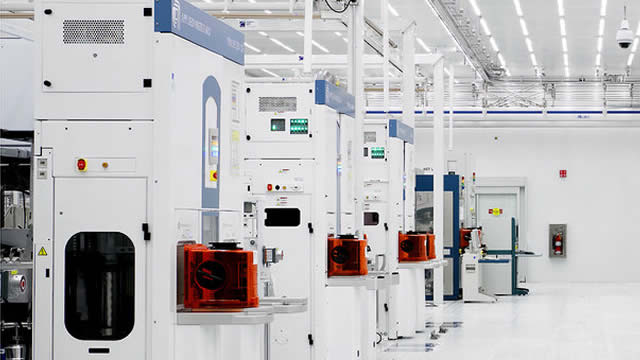
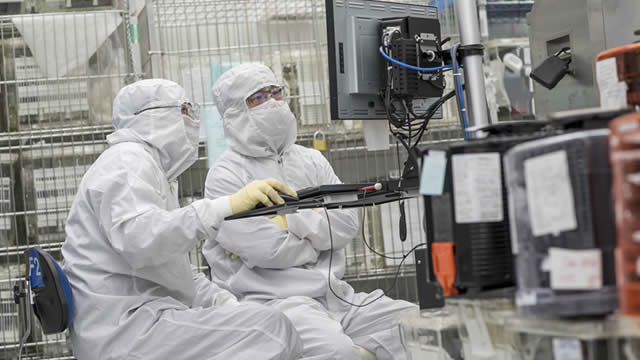
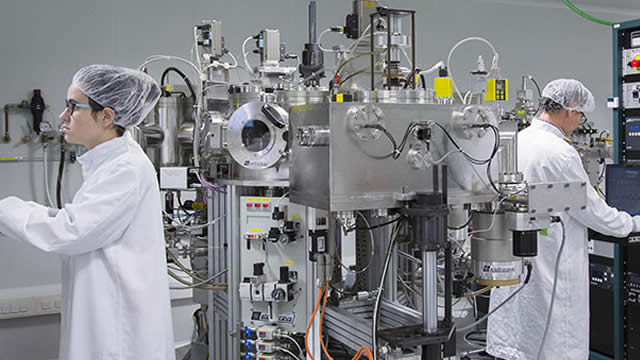
GLOBALFOUNDRIES Inc. operates as a semiconductor foundry worldwide. It manufactures integrated circuits, which enable various electronic devices that are pervasive. The company manufactures a range of semiconductor devices, including microprocessors, mobile application processors, baseband processors, network processors, radio frequency modems, microcontrollers, power management units, and microelectromechanical systems, as well as offers mainstream wafer fabrication services and technologies. The company was founded in 2009 and is based in Malta, New York.

Analyst Sentiment

65%
Buy

From 21 Active Polls

1Y Forecast: $77.45

ā–² +2.5% Potential Upside

Consensus Target Metrics

Low Bound

$50

Median

$77

High Bound

$125

Average

$77

Price & Moving Averages

Loading chart...

šŸŽÆ Wall Street Analyst Intelligence Report

1-Year structural target targets, chart projections, and sentiment maps.

Average 1Y Target
$77.45
ā–² +2.54% Upside
Low Target
$50.00
-34% Risk
Median Target
$77.00
2% Mid
High Target
$125.00
65% Max
Consensus
Buy
11 / 19 Buys

Consensus Trend Projection

Trailing closures vs. 12-month metrics map.

Analyst Vote Distribution

Aggregate institutional coverage sentiment weights.

šŸ“Š Historical Valuation Multiples

Real-time Trailing Twelve Month (TTM) momentum side-by-side with discrete quarterly metrics.

Fiscal QuarterTTMQ1 2026Q4 2025Q3 2025Q2 2025Q1 2025Q4 2024Q3 2024Q2 2024
Period EndingTrailing 12MMar 31, 2026Dec 31, 2025Sep 30, 2025Jun 30, 2025Mar 31, 2025Dec 31, 2024Sep 30, 2024Jun 30, 2024
Market Cap ($M)41,42224,68619,38120,20121,20120,44823,72922,21827,844
Enterprise Value ($M)41,29724,56119,21019,84821,09520,48323,85722,78128,413
Price to Earnings Ratio (P/E)53.8859.9224.3520.3623.2524.34-8.1331.3844.91
Price/Earnings-to-Growth Ratio (PEG)——2.89—3.58—-1.554.798.38
Price to Sales Ratio (P/S)6.0615.1110.5911.9712.5612.9012.9712.7817.06
Price to Book Ratio (P/B)3.582.111.621.721.861.852.201.932.47
Price to Free Cash Flow Ratio (P/FCF)38.57107.33116.7549.7677.94123.9373.69104.3192.51
Enterprise Value to Sales (EV/Sales)—15.0310.5011.7612.5012.9213.0413.1017.41
Enterprise Value to EBITDA (EV/EBITDA)19.1550.0230.7837.9540.6541.8040.1640.6152.42
Debt to Equity Ratio-0.060.150.140.140.150.150.220.250.24

⚔ GFS Growth Runway Model

Standard long term linear growth fade

Multi-Stage Discounted Cash Flow Sandbox

Market Price$75.53
Intrinsic Value$54.89
Market Alignment
Overvalued by 27.3%relative to calculated intrinsic value
9.00%
Exp: 0%0%
i

Growth runway slowdown

This value provides a time window for the growth rate to decline beyond Stage 1 toward the terminal rate. Longer windows are most useful for companies with high growth starting conditions or strong competitive advantages. This option stretches out the growth rate slowdown across 5, 10, or 15-year steps. A high-growth starting condition (exceeding a 25% initial growth rate) automatically applies a curve decay to simulate realistic, rapid market saturation.
i

Terminal growth rate

With long-term inflation between 3-5%, revenue must grow by that baseline to maintain flat real-world market share. This value sets the permanent terminal growth rate to factor into the valuation beyond the growth slowdown runway toward maturity.

3-Stage Financial Runway Horizon

🧠 Perpetuity Horizon Engine (Stage 3: Post-2035)

Terminal FCF Base$0.96B
Perpetuity TV Value$17.98B
Discounted TV (PV)$7.59B
TV Weighting %57.4%
āš ļø
Financial Model Disclaimer & Risk Disclosure: This interactive scenario simulator is an educational sandbox provided strictly for informational and analytical research purposes. Core historical financial statements and consensus estimates are sourced directly via Financial Modeling Prep (FMP). All downstream outputs are entirely deterministic, hypothetical projections generated by combining automated mathematical formulas (including linear interpolation and Gaussian bell-curve decay models) with user-selected variables and third-party financial data inputs. Users assume all liability for trading decisions executed based on these sandbox calculations.

šŸ“˜ Full Research Report

ā„¹ļø

AI-Generated Research: This report is for informational purposes only.

šŸ“˜ GLOBALFOUNDRIES INC (GFS) — Investment Overview

🧩 Business Model Overview

GLOBALFOUNDRIES operates a pure-play (or ā€œpure foundryā€) semiconductor manufacturing platform. Customers—fabless semiconductor companies and some integrated device suppliers—design chips and outsource wafer production. GFS provides: (1) process technology (process nodes and specialty capabilities), (2) manufacturing execution (wafer fabrication, testing, and packaging support via ecosystem partners), and (3) engineering services and qualification support to enable reliable production of customer designs at scale. The economic ā€œengineā€ is wafer demand tied to customer design wins, then sustained through high qualification and reliability requirements that make customer migration costly once a product is validated. Profitability depends heavily on manufacturing utilization, yield performance, and the ability to maintain competitive cost structures in chosen technology segments (notably mature and specialty processes).

šŸ’° Revenue Streams & Monetisation Model

Revenue is primarily generated from wafer manufacturing and related services:
  • Wafer fabrication (core revenue): Transactional orders that vary with customer device volume and mix.
  • Testing/qualification and engineering services: Support tied to ensuring product reliability and production readiness.
  • NRE/technology enablement (where applicable): Upfront engineering or process-enablement work that supports customer adoption, typically less recurring than wafer production.
Margin drivers flow from:
  • Manufacturing utilization: Higher utilization spreads fixed costs over more wafers.
  • Yield and defect reduction: Stronger yields improve gross margin.
  • Product/technology mix: Specialty processes and differentiated platforms can command better economics than commoditized capacity.
  • Cost discipline and capex efficiency: Sustained execution in a capital-intensive industry influences long-run profitability.

🧠 Competitive Advantages & Market Positioning

GLOBALFOUNDRIES’ moat is primarily rooted in switching costs and manufacturing know-how rather than network effects.
  • High Switching Costs (Customer Qualification): Moving a product to a different foundry typically requires re-qualification for performance, reliability, yield learning, and supply assurance. This process involves engineering time, characterization, and manufacturing learning curves—often deterring abrupt migrations.
  • Process Technology and Manufacturing Execution: Competitive yields and stable production depend on deep, hard-to-copy process engineering, defect control, and factory operational discipline.
  • Intangible Asset Base (Process IP and Customer Learning Curves): While fabrication capacity can be built, the accumulated production know-how, device qualification history, and process stability are difficult to replicate quickly.
  • Selective Focus vs. Full-Spectrum Leaders: GFS’ strategic positioning emphasizes technologies and applications where customers value differentiated manufacturing capabilities and dependable supply.
Competitive benchmarking (primary rivals):
  • TSMC — leads on advanced leading-edge nodes; competes for customers pursuing the most sophisticated process geometries.
  • Samsung Foundry — also competes on advanced node leadership and integrated device ecosystem demand.
  • UMC — competes in foundry services across a range of mature and specialty offerings.
Positioning contrast: Compared with TSMC and Samsung Foundry’s emphasis on leading-edge logic, GLOBALFOUNDRIES’ differentiation is more concentrated on mature/specialty and application-specific requirements where qualification, reliability, and cost-competitiveness can outweigh pure leading-edge ambition. Against UMC, competition is centered on manufacturing execution, process stability, and the ability to win and retain product qualification programs.

šŸš€ Multi-Year Growth Drivers

Over a 5–10 year horizon, GFS’ opportunity is supported by structural demand for outsourced manufacturing and specialty/mature process relevance:
  • Continued outsourcing and supply chain resilience: Customers value multi-source manufacturing and localized capacity planning, supporting foundry demand beyond purely lowest-cost contracting.
  • Specialty and application-driven processing: Industries such as automotive, industrial, networking infrastructure, and power applications often prioritize reliability, long qualification cycles, and stable supply—benefiting foundries with strong manufacturing track records.
  • Rationalization of wafer capacity planning: The semiconductor industry’s long lead times and capex requirements can sustain pricing power for well-positioned capacity when demand is balanced.
  • Edge of innovation in mature nodes: Even when leading-edge advances slow in relevance for some product classes, design complexity and system requirements continue to create demand for differentiated, manufacturable processes.

⚠ Risk Factors to Monitor

  • Capital intensity and utilization risk: Foundry economics can deteriorate when utilization is weak, even with operational improvements.
  • Technology transition and competitive pressure: Failure to maintain competitive process performance or to align with customer roadmaps can compress margins.
  • Commodity and pricing cyclicality: Semiconductor foundry demand is cyclical; pricing pressure can increase during downcycles.
  • Geopolitical and export control exposure: Semiconductor supply chains are sensitive to trade restrictions and licensing requirements.
  • Customer concentration and program churn: Product qualification cycles can be long, but individual design programs can still shift volumes or sourcing priorities.

šŸ“Š Valuation & Market View

Markets typically value semiconductor manufacturing businesses using EV/EBITDA and enterprise value-to-revenue frameworks, with investor focus on:
  • Utilization and margin trajectory: Utilization strength and yield improvement can move EBITDA expectations meaningfully.
  • Capex efficiency and capacity additions: Investors monitor whether incremental investment translates into stable, cash-generative throughput.
  • Mix and differentiation: Sustained share in specialty and qualified programs can justify higher multiples relative to purely commoditized capacity.
  • Customer program depth: The durability of design wins and qualification backlog influences visibility and risk perception.
Because foundry businesses are operationally leveraged, valuation sensitivity tends to be high to assumptions about demand balance and manufacturing execution.

šŸ” Investment Takeaway

GLOBALFOUNDRIES’ long-term investment case rests on structural switching costs driven by qualification, reliability, and customer manufacturing learning—paired with hard-to-replicate manufacturing execution and process know-how. While the industry remains cyclical and capital intensive, GFS can benefit over a multi-year horizon if it maintains competitive economics in the process segments where customers value stable supply, proven yield performance, and qualification continuity.

⚠ AI-generated — informational only. Validate using filings before investing.
šŸ“° Market News & Coverage

15 Stories Available

Real-time institutional reporting and market updates for GFS.

zacks.com•2026-06-03

Can GlobalFoundries' ARC Acquisition Strengthen Its Physical AI Push?

GFS boosts its Physical AI push by adding ARC Processor IP, expanding RISC-V offerings, design tools and custom silicon capabilities.

globenewswire.com•2026-06-03

GlobalFoundries joins U.S. Department of Energy's Genesis Mission as industry partner

Partnership paves the way to pair AI-enabled semiconductor design with GF's U.S. manufacturing platform to bridge the gap from research to prototype for next-generation computing initiatives Partnership paves the way to pair AI-enabled semiconductor design with GF's U.S. manufacturing platform to bridge the gap from research to prototype for next-generation computing initiatives

fool.com•2026-06-02

The U.S. Government Just Plowed $2 Billion Into 9 Quantum Computing Companies: Here's the Best of the Bunch

The Department of Commerce just took equity stakes in nine quantum computing companies.

globenewswire.com•2026-06-02

GlobalFoundries completes acquisition of Synopsys' Processor IP Solutions Business, delivering a holistic technology platform for Physical AI

Combines GF's Physical AI portfolio with MIPS' RISC-V and software-to-silicon expertise to accelerate custom, software-first products for automotive, industrial and agentic edge platforms Combines GF's Physical AI portfolio with MIPS' RISC-V and software-to-silicon expertise to accelerate custom, software-first products for automotive, industrial and agentic edge platforms

gurufocus.com•2026-06-02

Northern Trust Announces Asset Servicing Leadership Changes

Northern Trust (Nasdaq: NTRS) today announced changes within its Asset Servicing business, effective 1 June 2026, aligning leadership across the business and p

gurufocus.com•2026-06-02

Sivers & GlobalFoundries Advance AI Data Center Optical Solutions

Sivers and GlobalFoundries Advance AI Data Center Optical Solutions PR Newswire KISTA, Sweden, June 2, 2026

prnewswire.com•2026-06-02

Sivers & GlobalFoundries Advance AI Data Center Optical Solutions

Sivers' laser arrays to support GlobalFoundries' silicon photonics platform and SCALEā„¢ optical engine solutions targeting a $25B Pluggable Optics market by 2030 KISTA, Sweden, June 2, 2026 /PRNewswire/ --Ā Sivers Semiconductors AB (STO: SIVE), a global leader in photonics and wireless technologies,Ā today announced a strategic collaboration with GlobalFoundriesĀ (NASDAQ: GFS) (GF), to develop advanced silicon photonics solutions for the high-growth AI infrastructure market. Sivers Semiconductors' laser arrays will be integrated into reference designs built on GF's silicon photonics platform.

fool.com•2026-05-30

Every Big Tech Company Is Solving AI the Same Way. This Stock Is Solving It Differently.

GlobalFoundries is quietly building the optical backbone hyperscalers may desperately need next.

marketbeat.com•2026-05-29

GlobalFoundries Maps Path to 40% Margins as Silicon Photonics Demand Builds

GlobalFoundries NASDAQ: GFS Chief Financial Officer Sam Franklin said the chipmaker sees a path to significantly higher profitability over the next several years, driven by a mix shift toward faster-growing end markets, technology services, manufacturing productivity and better utilization of its existing footprint.

finbold.com•2026-05-29

5 Quantum stocks to watch as Trump backs sector with $2 billion

Following President Donald Trump's recent announcement of $2.013 billion in federal incentives for quantum companies, Finbold has identified five stocks that stand to benefit the most as of May 29.

247wallst.com•2026-05-28

Forget Nvidia and Taiwan Semiconductor. This $1 Trillion Memory Play Just Soared 90% in 2.5 Months.

Everyone's chasing obvious AI semiconductor names. NVIDIA (NASDAQ:NVDA | NVDA Price Prediction) sits at a $5.15 trillion market cap.

benzinga.com•2026-05-27

Institutional Order Flows Expand As Technology And Aerospace Drive Market Activity

Source: TradePulse | May 27, 2026

seekingalpha.com•2026-05-27

GLOBALFOUNDRIES Inc. (GFS) Presents at TD Cowen's 54th Annual Technology, Media & Telecom Conference Transcript

GLOBALFOUNDRIES Inc. (GFS) Presents at TD Cowen's 54th Annual Technology, Media & Telecom Conference Transcript

marketbeat.com•2026-05-27

Quantum Computing's Commercial Breakout Has Arrived

While the U.S. government's recent $2 billion capital injection via the CHIPS and Science Act provides a significant operational runway, the more profound structural shift is happening at the commercial level. The industry has finally crossed the chasm from theoretical lab physics to utility-scale industrial infrastructure, driven by a rapid acceleration in enterprise bookings, the maturation of recurring cloud-based revenue models, and a structural pivot toward high-yield commercial wafer fabrication.

fool.com•2026-05-26

The U.S. Government Just Bet $2 Billion on 9 Quantum Computing Companies. Here's What It Means for Investors.

The Commerce Department signed letters of intent to provide about $2 billion in CHIPS Act funding to nine quantum companies, taking a minority equity stake in each. IBM is in line for the biggest share -- $1 billion toward a new U.S. quantum chip foundry -- and its stock jumped double digits.

šŸ“Š AI Financial Analysis

Powered by StockMarketInfo
Earnings Data: Q Ending 2026-03-31

"GFS reported Q1 2026 revenue of $1.634B and net income of $103M (EPS $0.19). Revenue was up ~3.1% QoQ (from $1.583B in Q1’25) and up ~8.0% YoY vs Q1’25 revenue ($1.585B). Net income fell ~48.1% QoQ vs Q4’25 ($199M) but rose ~-? YoY: Q1’25 net income was $210M, so Q1’26 net income declined ~-51.0% YoY. Profitability weakened: net margin contracted to ~6.3% in Q1’26 from ~13.5% in Q1’25 and also from ~10.9% in Q4’25, with operating margin down to ~11.0%. Cash flow remained solid in the quarter: operating cash flow was $542M and free cash flow was ~$230M. The business is still extremely cash/asset heavy (cash & short-term investments ~$3.0B) with net debt of about -$125M (net cash). Balance sheet resilience looks improved vs Q4’25 with continued asset scale (~$16.9B total assets) and equity around ~$11.7B. From a shareholder returns perspective, the stock showed strong momentum: price up ~73.2% over 1 year (no dividend paid shown; buybacks occurred—repurchases of ~$430M in Q1). High price momentum meaningfully lifts the total-return outlook despite the earnings volatility. Overall, the key debate is whether margin pressure in Q1’26 is temporary versus a structural issue; cash generation and balance-sheet strength support resilience."

Revenue Growth

Positive

Q1’26 revenue $1.634B: up ~8.0% YoY vs Q1’25 ($1.585B). QoQ vs Q4’25 ($1.830B) revenue declined ~-10.7%, indicating a softer sequential trend.

Profitability

Caution

Net margin contracted to ~6.3% in Q1’26 from ~10.9% in Q4’25 and ~13.3% in Q1’25. Net income $103M: down ~51.0% YoY vs Q1’25 ($210M) and down ~48.1% QoQ vs Q4’25 ($199M).

Cash Flow Quality

Good

Operating cash flow was $542M and free cash flow ~$230M in Q1’26, supporting earnings despite the margin squeeze. No dividends paid; buybacks were active (common stock repurchased ~$430M).

Leverage & Balance Sheet

Good

Net cash position (net debt ~- $125M) with cash & short-term investments of ~$3.00B. Total assets ~ $16.90B; total equity ~ $11.69B, indicating strong resilience.

Shareholder Returns

Good

Strong 1-year price momentum (+73.15%). Dividends show as $0; total return relies on capital appreciation and buybacks (repurchases in Q1).

Analyst Sentiment & Valuation

Fair

Current price ~$54.75 vs consensus target ~$76.7 suggests upside, but valuation multiples shown are elevated (e.g., price/earnings ~59.9), consistent with volatile earnings power.

Disclaimer:This analysis is AI-generated for informational purposes only. Accuracy is not guaranteed and this does not constitute financial advice.

Fundamentals Overview

Loading fundamentals overview...

GFS delivered a strong Q1 2026 with profitability expansion driven primarily by mix and structural cost/productivity levers rather than revenue growth. Revenue was modestly up YoY (+3.1%) but gross margin surged over 500 bps YoY (record quarter) and operating margin rose 320 bps to 16.6%, both above the high end of guidance. Management linked the gross margin upside to richer technology and manufacturing services mix, plus cost synergies (about ~1.0 percentage point from Advanced Micro Foundry in Singapore). Demand remains concentrated in optical networking and differentiated memory/SiGe: silicon photonics is on track to roughly double in 2026 and SiGe capacity is oversubscribed through 2027, supporting ongoing capacity expansion. On outlook, communications infrastructure/data center growth expectations were raised to high 30s% YoY for 2026 (up from ~30% prior quarter), while Q2 guidance implies continued strong margin expansion (gross margin ~28.5%, ~300+ bps YoY at midpoint). Key near-term uncertainty centers on pricing adjustments (back-end 2026) and timing-driven working capital effects.

AI IconGrowth Catalysts

  • Silicon photonics momentum: on track to roughly double silicon photonics revenue in 2026 vs 2025 and target >$1B silicon photonics revenue run rate exiting 2028
  • SiGe (SiGe by CMOS) demand: Vermont fab capacity oversubscribed through well into 2027; expanding SiGe capacity to meet demand
  • Optical networking platform progress tied to OCI MSA standard (CPO scale-up networks) and new tape-outs in Multi New York for pair of CPO design wins
  • Automotive ramp inputs: Auto Grade 1 embedded MRAM capability on FDX with lead customer tape-outs; traction with Tier 1 such as Bosch toward production
  • Robotics/AI reference platform partnership: Inova Semiconductors physical AI robotics control reference platform

Business Development

  • OCI MSA industry standard for scale-up networks (CPO) established by AMD, Broadcom, NVIDIA, Meta, Microsoft, and OpenAI (GF cited as DWDM proof-point contributor via partners/partners in OCI MSA)
  • Renesas multibillion-dollar strategic partnership expanding GF technologies (FDX, BCD feature-is CMOS with integrated nonvolatile memory) for SoCs/power devices/MCUs targeting data center power, ADAS, and secure industrial IoT; tape-outs underway
  • Senco + GF wafer-level detachable fiber interface solution for CPO (announced at OFC)
  • Corning + EXFO + GF ecosystem showcasing CPO attachable fiber connectivity and automated die-level testing with high-volume silicon photonics manufacturing
  • GF + Siltech strategic partnership to mass produce 200 gig per lane receiver photonic ICs for pluggable optical transceivers using GF process technology
  • Inova Semiconductors partnership to deliver robotics control reference platform combining MIPS Open RISC V 5 compute and mixed-signal technologies with Inova high-speed communication links
  • Apple collaboration referenced: joint effort with Logic and GF to bring new process technologies to Multi New York fab (first U.S. availability cited for a silicon platform supporting clinical functions in upcoming Apple devices, incl. Face ID system components)
  • Planned acquisition: Synopsys ARC IP business expected to close toward end of first half of 2026

AI IconFinancial Highlights

  • Q1 2026 revenue: $1.634B, down 11% sequentially and up 3.1% year-over-year; revenue at high end of guidance range
  • Gross margin: record first quarter; grew >500 bps year-over-year (largest expansion in 3 years) and above the high end of guidance
  • Operating margin: 16.6%, above high end of guided range and up 320 bps year-over-year
  • Technology Services mix: guided to rise to high end of original 10%–12% range for 2026; Q1 ended at ~13% of revenue
  • Q2 2026 guidance: revenue $1.76B ±$25M; gross margin ~28.5% ±100 bps (midpoint implies >300 bps YoY gross margin expansion)
  • Q2 2026 operating margin: 15.7% ±180 bps; tax expense $28M–$48M; effective tax rate guided high teens % for full-year 2026
  • Q1 2026 EPS: $0.40 diluted, at the high end of guidance; Q2 2026 EPS not explicitly provided in excerpt
  • Tax/other: Q1 tax expense $49M; Q1 net interest income $5M (net of other expenses)

AI IconCapital Funding

  • Share repurchase: repurchased $400M of shares in Q1 2026 under a $500M authorization; ~$100M remaining
  • Cash & liquidity: ~$3.8B cash/cash equivalents/marketable securities at Q1 end
  • Debt: total debt $1.1B
  • Revolver: $1.0B revolving credit facility, undrawn

AI IconStrategy & Ops

  • Automation/operations: no explicit automation initiatives quantified in provided transcript segment
  • Footprint/fungible capacity: cross-qualified fungible capacity across U.S./Germany/Singapore to support customer onshoring and flexibility (increase in engagements/design wins linked to onshoring cited)
  • CapEx timing: net CapEx expected to increase in Q2 due to tool delivery windows and timing of government grants
  • Cost/margin levers (Q1): ~200 bps gross margin outperformance referenced; about ~1.0 percentage point attributed to cost synergies from the Advanced Micro Foundry acquisition in Singapore
  • Mix-driven improvements: gross margin bridge attributed primarily to mix in manufacturing services and technology services plus cost productivity

AI IconMarket Outlook

  • Investor Day: May 7, 2026 (public webcast 9:00 a.m. ET) with additional details expected on scale and further developments
  • Communications infrastructure and data center end market: now expects high 30s % YoY revenue growth in 2026 (up from ~30% expected a quarter ago)
  • Automotive end market: expects low double-digit 2026 growth (6th consecutive year of double-digit growth mentioned)
  • Smart mobile devices end market: expects 2026 revenue decline in high single-digits %; ā€˜slightly outperform’ overall smartphone market
  • Home & industrial IoT end market: expects 2026 to be a growth year with mid-single-digit YoY growth (timing reversal expected in Q2)
  • Full-year gross margin trajectory not fully quantified, but analyst asked whether approaching 33%–35% by year-end; management response not completed in excerpt

AI IconRisks & Headwinds

  • Pricing risk: analyst highlighted competitors signaling specialty/differentiated wafer pricing increases in 2H 2026; management indicated pricing adjustments occur in the more short-term priced portfolio segment toward back end of 2026 (and flowing into 2027)
  • Demand mix volatility: sequential softness in automotive (-11%) and smart mobile devices (-15%) indicated near-term cyclicality despite structural improvements
  • Working capital timing: adjusted free cash flow in Q1 benefited from favorable working capital movements expected to reverse in Q2
  • Execution/closing risk: Synopsys ARC IP acquisition expected to close toward end of first half of 2026 (timing/approval risk implicit)

Q&A: Analyst Interest

  • Pricing profile into 2H 2026 and full year: Management split portfolio into long-term stable pricing vs short-term dynamic pricing; expects price adjustments toward back-end 2026 flowing into 2027 and discussed constructive conversations around advanced payments for capacity in tight corridors (FDX, silicon photonics, high-performance SiGe).
  • Gross margin bridge and trajectory: Management cited structural drivers (productivity cost, footprint optimization, and mix across manufacturing and technology services). For Q1, roughly 200 bps outperformance referenced; about 1.0 percentage point linked to Advanced Micro Foundry cost synergies, plus richer growth mix and stronger mask/reticles and aerospace/defense contributions in Technology Services.
  • Year-end gross margin potential (33%–35% question): Analyst asked whether margins could approach 33%–35% by year-end given better mix and pricing outlook. Management’s detailed response began but was cut off in transcript; only encouragement on structural improvement and guidance-relevant indicators were provided.

Sentiment: POSITIVE

Note: This summary was synthesized by AI from the GFS Q1 2026 earnings transcript. Financial data is complex; please verify all metrics against official SEC filings before making investment decisions.

šŸ“‹ Official Regulatory 10-K / 10-Q SEC Filings

Direct authenticated documentation links to audited SEC database reports for GFS.

SEC EDGAR Live Feed
No recent 10-K available.
No recent 10-Q available.
Loading financial data and tables...
šŸ“

SEC Filings (GFS)

Ā© 2026 Stock Market Info — GLOBALFOUNDRIES Inc. (GFS) Financial Profile