
📘 GRACO INC (GGG) — Investment Overview
🧩 Business Model Overview
Graco designs and manufactures precision fluid-handling systems used to move, meter, dispense, and apply materials in industrial production environments. The value chain centers on (1) engineering and manufacturing of pumps, spray/dispensing equipment, and control components; (2) system integration for customer-specific workflows; and (3) an aftermarket ecosystem comprising replacement parts, service, and support that keeps installed equipment operating at required performance and safety standards.
Customer stickiness is supported by the fact that fluid-handling systems are embedded into production lines: switching systems typically requires process validation, re-tuning of controls, staff training, and downtime for reconfiguration. Graco’s emphasis on reliability, repeatability, and serviceability positions it as a long-term partner rather than a single-transaction equipment vendor.
💰 Revenue Streams & Monetisation Model
Revenue is primarily generated from:
- New equipment and systems (pumps, spray/dispensing systems, accessories, and controls): largely transactional and tied to customer capital spending and replacement demand.
- Aftermarket parts and service: replacement components, wear parts, and servicing of installed systems, which tend to be more recurring and help smooth equipment-cycle volatility.
- Consumable and configuration-dependent add-ons (where applicable): incremental revenue linked to maintaining performance specifications for specific materials and processes.
Margin drivers are typically anchored in product and system engineering intensity, quality/reliability that reduces downtime, and the higher gross margin profile often associated with aftermarket parts and services versus new equipment. Operating leverage can strengthen when aftermarket demand and parts penetration offset cyclical weakness in new builds.
🧠 Competitive Advantages & Market Positioning
Graco’s durable advantages are best characterized as Switching Costs, Aftermarket/Installed-Base Monetisation, and Product/Process Performance that translates into practical total-cost-of-ownership.
- Switching costs (installed base + process validation): Once equipment is integrated into a line, customers face friction to change pumps, controllers, hoses, metering components, and tuning parameters. Compatibility and performance targets drive continued use of the same platform.
- Aftermarket lock-in: Replacement parts, service tooling, and technical know-how create an ongoing demand stream tied to the installed base.
- Cost and safety performance: Precision metering, spray control, and durability can reduce rework, waste, and downtime—key concerns in coating, lubrication, and process fluid applications.
- Distribution/service coverage: A competent service and parts network lowers downtime risk for customers, reinforcing retention.
Competitive benchmarking: Graco competes with companies such as Nordson Corporation, ITW (including fluid handling and dispensing businesses), and Parker Hannifin.
- Nordson has strong positions in dispensing and coatings equipment; Graco’s differentiation often emphasizes practical system uptime, serviceability, and installed-base aftermarket depth across broader industrial use cases.
- ITW spans multiple industrial categories; Graco’s focus is more concentrated in fluid-handling systems with emphasis on precision control and lifecycle support.
- Parker Hannifin offers extensive motion and fluid technologies; Graco tends to compete more directly on application-specific dispensing and spraying workflows, where platform compatibility and installed-base service matter.
🚀 Multi-Year Growth Drivers
Over a 5–10 year horizon, growth is supported by secular themes that expand the addressable installed base and increase aftermarket utilization:
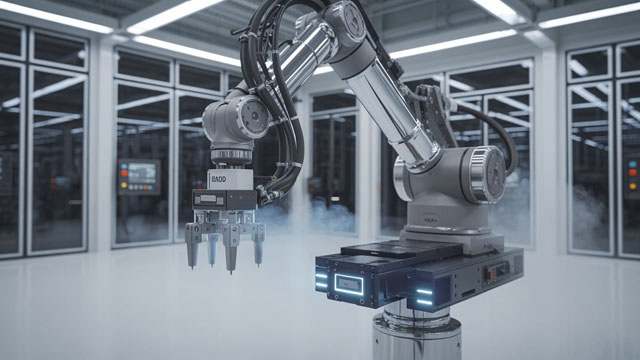
- Automation and labor-cost pressures: Production lines increasingly require controllable, repeatable dispensing and coating processes to maintain throughput and reduce manual variation.
- Emissions and material efficiency: Stricter environmental expectations and customer sustainability commitments increase the value of precise application, reduced overspray, and minimized waste.
- Industrial capex and modernization cycles: Re-tooling of manufacturing facilities supports demand for new systems, while the installed base drives parts and service for years.
- Expansion of industrial end markets: Growth in transportation, electronics-related manufacturing, general industrial production, and process industries tends to expand opportunities for fluid-handling platforms.
- Higher performance standards: Customers often require tighter process tolerances, pushing adoption of systems with superior control, reliability, and documentation.
TAM expansion is less dependent on “one-off” adoption and more tied to the installed base of industrial lines that must continually dispense and apply materials with consistency—supporting a compounding aftermarket-oriented model.
⚠ Risk Factors to Monitor
- Industrial cyclicality: Equipment demand is sensitive to customer capex cycles, inventory behavior, and end-market production levels.
- Execution risk in product transitions: New platform launches or technology upgrades can create qualification timelines, customer acceptance delays, or mix/margin pressure.
- Competitive pressure: Competitors with overlapping fluid technology platforms can intensify pricing or bid activity, particularly in commodity-like system configurations.
- Supply chain and component availability: Production reliability and lead times can be impacted by component constraints or logistics disruptions.
- Regulatory and safety liability: Industrial equipment is exposed to product safety standards, environmental rules, and quality/regulatory compliance requirements.
- Working capital volatility: Changes in customer ordering patterns can affect receivables, inventory, and procurement timing.
📊 Valuation & Market View
Market valuation for industrial equipment and systems businesses typically reflects:
- Quality of earnings: The degree to which aftermarket parts and service support more stable cash flows versus purely cyclical new equipment sales.
- Margin structure and operating leverage: Gross margin durability, service mix, and cost discipline through the cycle.
- Installed-base growth: Evidence that customer fleets are expanding and staying in service longer with higher parts penetration.
- End-market visibility: Product demand linked to manufacturing modernization, automation, and emissions-driven efficiency improvements.
In practice, the market often anchors on EV/EBITDA or earnings multiples for industrial manufacturers while giving incremental valuation benefit for components of recurring aftermarket economics and resilient long-term demand drivers.
🔍 Investment Takeaway
Graco’s long-term thesis rests on an installed-base model in industrial fluid handling: switching costs arise from process integration and platform compatibility, while service and replacement parts monetize that base over time. The company’s competitive positioning versus Nordson, ITW, and Parker Hannifin is reinforced by lifecycle support, precision performance value, and an emphasis on uptime and safety—factors that tend to sustain customer retention through industrial cycles.
⚠ AI-generated — informational only. Validate using filings before investing.

















 Growth Catalysts