Highwoods Properties, Inc.

Highwoods Properties, Inc. (HIW) Market Cap

Highwoods Properties, Inc. has a market capitalization of .

No quote data available.

CEO: Theodore J. Klinck

Sector: Real Estate

Industry: REIT - Office

IPO Date: 1994-06-08

Website: https://www.highwoods.com

Highwoods Properties, Inc. (HIW) - Company Information

Market Cap: -|Sector: Real Estate

Company Profile

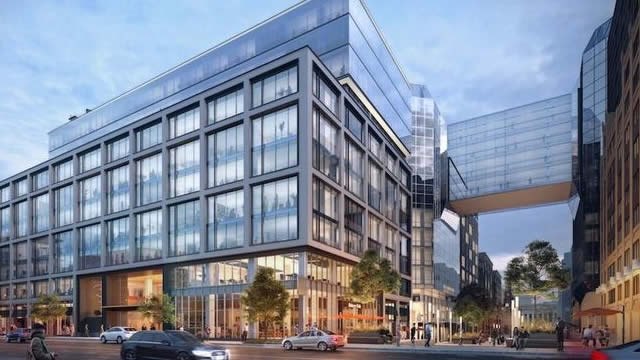
Highwoods Properties, Inc., headquartered in Raleigh, is a publicly-traded (NYSE:HIW) real estate investment trust (REIT) and a member of the S&P MidCap 400 Index. Highwoods is a fully-integrated office REIT that owns, develops, acquires, leases and manages properties primarily in the best business districts (BBDs) of Atlanta, Charlotte, Nashville, Orlando, Pittsburgh, Raleigh, Richmond and Tampa.

Analyst Sentiment

57%
Buy

From 10 Active Polls

1Y Forecast: $27.33

▲ +0.0% Potential Upside

Consensus Target Metrics

Low Bound

$25

Median

$28

High Bound

$29

Average

$27

Price & Moving Averages

Loading chart...

🎯 Wall Street Analyst Intelligence Report

1-Year structural target targets, chart projections, and sentiment maps.

Average 1Y Target
$27.33
▼ -1.97% Upside
Low Target
$25.00
-10% Risk
Median Target
$28.00
0% Mid
High Target
$29.00
4% Max

Consensus Trend Projection

Trailing closures vs. 12-month metrics map.

Analyst Vote Distribution

Aggregate institutional coverage sentiment weights.

Sentiment volume allocation data unavailable.

Historical valuation matrix unavailable.

📘 Full Research Report

ℹ️

AI-Generated Research: This report is for informational purposes only.

📘 HIGHWOODS PROPERTIES REIT INC (HIW) — Investment Overview

🧩 Business Model Overview

HIGHWOODS PROPERTIES REIT INC (“HIW”) owns and operates income-producing commercial real estate, with a primary emphasis on office properties located in major U.S. Sunbelt and growth-market employment corridors. The business generates rent by leasing office space to corporate tenants, then reinvesting capital through tenant improvements, redevelopments, and maintenance to preserve income quality.

The value chain is asset selection → leasing and renewal management → property operations (cost control, tenant satisfaction, and occupancy maintenance) → targeted capital allocation to reposition spaces and extend the productive life of assets → distribution of net operating cash flow to investors via the REIT structure.

💰 Revenue Streams & Monetisation Model

HIW’s revenue is predominantly recurring rental income, with monetisation driven by lease structures, renewal spreads, and the ability to keep occupancy stable while managing lease-up of vacancies. Because office leases often include contractual rent escalators and tenant-specific build-out amortisation, revenue quality depends on:

  • Lease renewals and rollovers: sustaining or improving net effective rent through market leasing and renewal execution.
  • Tenant improvement economics: balancing the cash required for repositioning with the expected rent/occupancy benefit.
  • Operating cost management: keeping operating expense growth in line with inflation and recoveries.

Margin drivers in this sector are primarily tied to property-level net operating income (NOI), leverage (interest expense vs. property cash flow), and the discipline of capital spending—especially for redevelopment initiatives intended to retain tenants and reduce future downtime.

🧠 Competitive Advantages & Market Positioning

HIW’s moat is best characterized as property-level stickiness and operating/development capability rather than a technology or regulatory barrier. In office leasing, tenants face practical switching friction: moving costs, reconfiguration of space for business needs, and downtime risk. In that context, well-located, high-quality assets can earn renewals and demand for upgrades even when broader office sentiment is challenged.

  • Switching costs (tenant-specific fit): office tenants often require tailored space layouts, built infrastructure, and amenity access; renewal reduces disruption compared with relocating.
  • Intangible asset (local operating platform): consistent leasing execution, vendor relationships, and capital planning at the property level can improve occupancy stability through cycles.
  • Geographic demand concentration: a focus on Sunbelt growth markets can align asset supply with longer-duration employment and population trends, supporting durable local demand for Class A configurations.

Competitive benchmarking (industry focus): The most relevant comps are office REITs with similar buyer/seller dynamics and lease-up/repositioning requirements, such as Cousins Properties and Kilroy Realty, along with Douglas Emmett (where applicable to tenant base and submarket characteristics).

  • HIW vs. Cousins Properties: both pursue office assets across growth-oriented geographies, but competition centers on which portfolio delivers better tenant retention and redevelopment economics in Sunbelt markets.
  • HIW vs. Kilroy Realty: Kilroy’s market exposure includes coastal and technology-adjacent submarkets; HIW’s positioning tends to emphasize Sunbelt corporate demand and office formats that fit suburban employment clusters.
  • HIW vs. Douglas Emmett: Douglas Emmett’s footprint includes office exposure influenced by higher-cost metro dynamics; HIW’s suburban/growth-market focus changes the leasing and capex calculus through different demand elasticity and operating cost structures.

Overall, HIW’s differentiation depends on the ability to select and upgrade assets that remain competitively attractive to tenants, improving effective rent outcomes over long lease horizons and reducing the probability of sustained value impairment.

🚀 Multi-Year Growth Drivers

Over a 5–10 year horizon, HIW’s growth and value creation are primarily a function of real estate fundamentals and capital allocation discipline rather than top-line innovation:

  • Sunbelt employment and population growth: sustained demand for office space in growth corridors can support long-term occupancy and renewal velocity.
  • Supply discipline and redeployment of existing stock: where new supply is constrained or older product is less competitive, renovated spaces can capture demand.
  • Lease rollover management: staggered maturities and active tenant retention can reduce earnings volatility and improve predictability of cash flows.
  • Selective repositioning: capital spent on energy efficiency, common area upgrades, and layout modernization can improve leasing outcomes and reduce vacancy duration.

Given the sector’s sensitivity to interest rates and credit conditions, the most durable “growth” often comes from maintaining property cash flows, protecting the asset base, and avoiding value-destructive capital expenditures.

⚠ Risk Factors to Monitor

  • Structural office demand uncertainty: persistent changes in work patterns can pressure leasing velocity, renewal terms, and the pricing of vacant space.
  • Capital intensity and redevelopment execution risk: repositioning requires timely capital deployment; if demand does not materialize, the company may face prolonged vacancy or lower-than-expected returns.
  • Interest rate and refinancing risk: REIT performance is sensitive to debt costs, maturity profiles, and credit spreads.
  • Tenant concentration and credit risk: large tenant exposure can amplify earnings volatility if layoffs or downsizing occurs.
  • Environmental and asset obsolescence risk: energy-efficiency expectations and ESG-related requirements can increase capex needs for older buildings.

📊 Valuation & Market View

Office REIT valuation typically reflects a blend of asset value (NAV), cash flow quality (NOI/AFFO), and cap rate expectations for office properties in each submarket. The market generally places weight on:

  • Same-store NOI stability: occupancy, rental rates, and expense control.
  • Lease maturity profile and renewal prospects: the probability of maintaining income through rollovers.
  • Capital expenditure discipline: whether spending preserves or enhances cash flow with acceptable payback.
  • Interest rate outlook and cost of capital: affects both debt service and the discount rate applied to future cash flows.

Because office portfolios can reprice quickly when credit conditions or leasing fundamentals shift, valuation is often most sensitive to changes in perceived durability of cash flows and the credibility of asset repositioning plans.

🔍 Investment Takeaway

HIW’s long-term thesis rests on the ability to own and manage office assets with durable local demand characteristics, supported by tenant switching friction and operating/redevelopment execution that sustains occupancy and effective rents. The investment case is strongest where HIW can consistently translate capital discipline into stable property cash flows and avoid value erosion from prolonged vacancy or underperforming redevelopments, despite ongoing sector volatility.


⚠ AI-generated — informational only. Validate using filings before investing.

📊 AI Financial Analysis

Powered by StockMarketInfo
Earnings Data: Q Ending 2026-03-31

"HIW reported Revenue of $0 in the 2026-03-31 quarter and Net Income of -$0.85M (EPS -$0.0077). On a YoY basis versus 2025-03-31, revenue declined from $200.4M to $0 (-100% YoY), while net income deteriorated from a profit of $98.1M to a loss of $0.85M (down ~-100% YoY). QoQ, revenue fell from $203.4M in 2025-12-31 to $0 (-100% QoQ), and net income swung from +$29.2M to -$0.85M. Profitability is sharply contracting: net margin moved from +14.4% in 2025-12-31 to effectively negative in 2026-03-31 (net margin ratio 0 in the dataset alongside a negative net income). Cash flow quality looks mixed. Operating cash flow was +$62.8M with positive free cash flow of +$62.8M, but the income statement shows a loss—suggesting non-cash or working-capital/other adjustments are driving OCF. The company continues paying dividends (dividends paid -$55.0M in the quarter), while balance-sheet liquidity remains modest with $32.4M cash and zero reported debt; total assets are very large ($6.6B) and equity is $2.37B, appearing stable. Shareholder returns were negative: the stock is down -13.67% over 1 year, and there is no evidence of >20% 1y price momentum boosting total returns. Analyst valuation context shows a consensus target of $27 vs. $23.56 current (upside, but sentiment appears cautious given operating volatility)."

Revenue Growth

Neutral

Revenue collapsed to $0 in 2026-03-31 vs. $203.4M in 2025-12-31 (-100% QoQ) and vs. $200.4M in 2025-03-31 (-100% YoY).

Profitability

Neutral

Net income swung from +$29.2M (2025-12-31) and +$98.1M (2025-03-31) to -$0.85M (2026-03-31). Margins are contracting materially.

Cash Flow Quality

Caution

Despite the net loss, operating cash flow was +$62.8M and free cash flow +$62.8M in 2026-03-31. Dividends were paid (-$55.0M), which supports shareholder returns but raises sustainability questions given earnings volatility.

Leverage & Balance Sheet

Fair

Reported total debt is $0 and net debt is negative (-$32.4M), with equity around $2.37B. Cash is limited ($32.4M), but leverage appears low versus prior periods with significant debt.

Shareholder Returns

Neutral

Price momentum is negative: 1y_change -13.67%, with no >20% 1y boost. Dividends are being paid, but total return is likely muted by the drawdown.

Analyst Sentiment & Valuation

Neutral

Consensus price target is $27 vs. current $23.56 (implied upside), but operating results show extreme quarterly volatility, likely constraining sentiment.

Disclaimer:This analysis is AI-generated for informational purposes only. Accuracy is not guaranteed and this does not constitute financial advice.

Fundamentals Overview

Loading fundamentals overview...

HIW delivered a strong Q1 2026 leasing and fundamentals quarter, highlighted by +50 bps lease-rate growth on the in-service portfolio and a much larger +800 bps uplift on development. GAAP rent growth was 19.4% with cash rent growth of 4.8%, and net effective rents were 9% above the prior 5-quarter average. The balance sheet remained liquid with $650M+ available liquidity and a post-quarter $100M secured mortgage at Granite Park 6, expanding Highwoods capital access. Management reiterated FFO guidance of $3.40–$3.68 per share and occupancy guidance of 86.5%–88.5%, with the key operational signal being a 470 bps leased–occupied spread (3x historical), implying faster occupancy ramp as leases come online. Dispositions are a central capital lever ($42M sold in Q1; ~$200M expected by mid-year), potentially enabling leverage-neutral share repurchases up to $250M. AI demand risk is acknowledged but management reported no observed impact to date.

AI IconGrowth Catalysts

  • Lease rate +50 bps on in-service portfolio and +800 bps on development lease rate, driving NOI/cash flow/FFO upside as occupancy ramps
  • Signed 958,000 sq ft of second-gen leases (300,000+ sq ft new leases) with GAAP rent growth of 19.4% and cash rent growth of 4.8%
  • Net effective rents at the second-highest level in company history; 9% higher than prior 5-quarter average
  • Weighted average lease term on second-gen volume of 7.5 years (more than 1 year longer than recent average), supporting longer-duration cash flows
  • Placed in service $200M+ of 87% leased development properties; pipeline placed/in-service combined at 86% leased (48% occupied) to monetize as leases commence

Business Development

  • Cricket Hammock brewery: GlenLake II retail delivered 100% leased to Cricket Hammock brewery
  • JPMorgan: announced plans for an eventual ~1,000 job regional hub in Charlotte South Park DBD (400 hired by 2028) tied to HIW’s market demand narrative
  • Capital Group: planned new home in Uptown Charlotte with 600 employees
  • Sumitomo Mitsui Banking Group: selected Uptown Charlotte as second U.S. headquarters creating 2,000 jobs by end of 2032 (average salary projected >$165,000)
  • Starbucks: $100M plan to open Southeast corporate office in downtown Nashville for 2,000 employees (some relocating from Seattle) referenced as demand support

AI IconFinancial Highlights

  • FFO: $0.84 per share on $94M FFO; maintained full-year FFO outlook $3.40 to $3.68 per share
  • GAAP net income: $0.29 per share ($31.3M); includes $17M property sale gain (Richmond) in net income but excluded from FFO
  • Leasing economics: up almost 5% on cash and 19%+ on GAAP; net effective rents 9% above prior 5-quarter average
  • Leased rate: 89.7% vs 89.2% prior quarter (+50 bps); leased-occupied spread 470 bps (3x historical), signaling stronger occupancy ramp
  • Same-store operating expense growth: negative 60 bps on same-store in the quarter; utility costs up due to cold weather in February (expected roughly flat full-year cash basis; low in Q2 then positive in back half)
  • Other income/FFO items: term fee at unconsolidated JV net $2.2M ($0.02/share) from customer moving from McKinney & Olive to 23 Springs; $1.4M gain from selling interest in third-party brokerage services firm; expected additional term fees later in 2026 and other income around $0.06 to $0.07 for full-year 2026 (~$0.05 lower than 2025)
  • Capitalized interest: expected lower going forward because HIW will no longer capitalize interest at 23 Springs or Midtown East

AI IconCapital Funding

  • Liquidity: over $650M available at quarter end
  • Post-quarter: closed $100M secured mortgage at Granite Park 6; over $50M of capital to Highwoods
  • Development funding needs: only ~$40M remaining capital needed to complete development properties
  • Share repurchase authorization: may repurchase up to $250M of outstanding shares on a leverage-neutral basis using noncore disposition proceeds (as announced last week; repurchases subject to timing/approvals implied)
  • Balance sheet / leverage outlook: debt-to-EBITDA expected in low-to-mid-6s at year-end assuming $200M noncore asset sales; expects additional reductions as NOI grows
  • Disposition plan: sold $42M noncore Richmond portfolio in Q1; expects ~$200M additional noncore assets sold by mid-2026 plus additional assets marketed for sale
  • Financing plan: expects 1+ additional JV financings during remainder of 2026 to repatriate capital and improve liquidity/unencumbered debt-to-EBITDA

AI IconStrategy & Ops

  • Portfolio tightening: focus on BBD/high-quality commute-worthy assets; ‘white to quality’ dynamic (little to no new high-quality supply expected) supporting occupancy and rent growth
  • Development progress and placements: GlenLake III now 94% leased; GlenLake II retail delivered 100% leased to Cricket Hammock brewery; Granite Park VI 80% leased; 23 Springs leased rate 83% (up from 75% last quarter; 62% one year ago) with expectations to push into the 90s; Midtown East 95% leased (office component 100% leased); remaining pipeline combined 86% leased but only 48% occupied
  • Accounting/packaging updates: minor changes to supplemental package to simplify deriving JV NOI shares; broken out Dallas as separate market (now 3 in-service properties, increasing to 4 upon stabilization of 23 Springs)
  • Capital efficiency: no longer capitalizing interest expense at 23 Springs or Midtown East due to embedded NOI growth from leases signed but not fully online before mid-2027

AI IconMarket Outlook

  • Year-end occupancy outlook reiterated: 86.5% to 88.5% (midpoint implies +250 bps over remaining 3 quarters)
  • FFO outlook reiterated: $3.40 to $3.68 per share
  • Noncore dispositions: expect to sell roughly $200M additional noncore assets by middle of 2026
  • Cap interest / earnings cadence: second quarter expected to be a little lower than Q1 FFO from items including disposition-dilutive cash placement and line-of-credit paydown while retaining cash for 2027 bond repayment; meaningful ramp in back half implied to reach guidance midpoint ex land sale gains
  • Same-store expense trend: roughly flat full-year on cash basis; low again in Q2, positive in back half to average out

AI IconRisks & Headwinds

  • AI/workforce disruption narrative: management acknowledges potential long-run office demand reshaping but states there is ‘no impact thus far’ and customers/prospects continue long-term commitments; range of outcomes described as wide/unknown
  • Macro/financing constraints for development: build-to-suit and preleased development are expensive and harder to finance; company sees this as a relative opportunity for well-capitalized developers but it is still a risk to execution timing
  • Leasing timing risk: many leases signed will have financial benefit mostly in 2027 and thereafter; near-term recognition may lag
  • Costs volatility: utilities sensitive to winter weather (February cold weather increased utilities Y/Y); introduces quarter-to-quarter variability
  • Disposition execution risk: $200M additional noncore sales by mid-2026 assumed; timing could affect leverage/cash available for repurchases and liquidity

Q&A: Analyst Interest

  • Capital allocation prioritization: Management framed buybacks as additional optionality versus acquisitions/development, emphasizing risk-adjusted returns and discipline. They argued development has become harder/expensive but increasingly attractive for well-capitalized developers, while repurchases offer resilience if development risk/financing conditions persist.
  • Leasing math and occupancy bridge: Management explained Q1 leasing moved signed leases into occupancy, but replaced them, keeping ~1.2M sq ft of signed leases expected to commence by year-end. Remaining expirations imply 850–900k likely move-outs; net absorption leaves ~300–400k sq ft to sign to hit 87.5% midpoint occupancy.
  • Same-store expense and 2026-to-2027 earnings bridge: Management attributed elevated Q1 expenses to cold February utility costs, expecting roughly flat same-store expense growth for the year (low in Q2 then positive in back half). They also highlighted term fee/gain items offsetting G&A timing, and capitalized interest ceasing at 23 Springs/Midtown East.

Sentiment: POSITIVE

Note: This summary was synthesized by AI from the HIW Q1 2026 earnings transcript. Financial data is complex; please verify all metrics against official SEC filings before making investment decisions.

Loading financial data and tables...
© 2026 Stock Market Info — Highwoods Properties, Inc. (HIW) Financial Profile