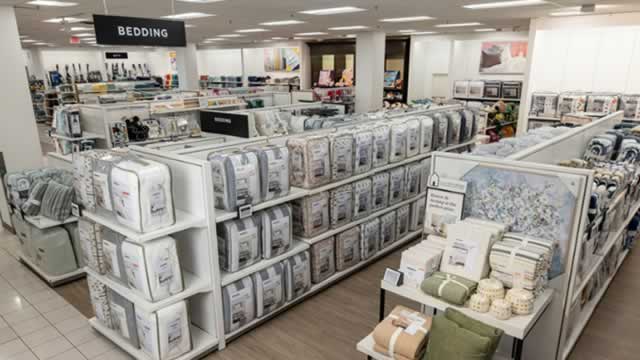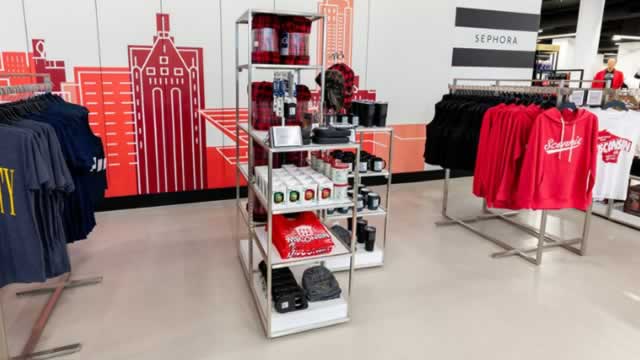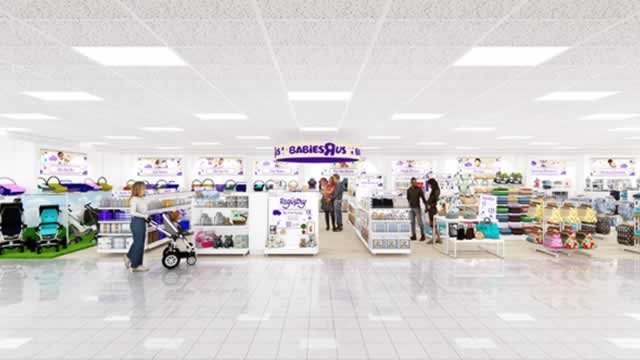
Kohl's Corporation

Kohl's Corporation (KSS) Market Cap

Kohl's Corporation has a market capitalization of $1.74B.

Price: $15.46

-0.50 (-3.13%)

Market Cap: 1.74B

NYSE · time unavailable

CEO: Michael J. Bender

Sector: Consumer Cyclical

Industry: Department Stores

IPO Date: 1992-05-19

Website: https://www.Kohls.com

Kohl's Corporation (KSS) - Company Information

Market Cap: 1.74B|Sector: Consumer Cyclical

Company Profile

Kohl's Corporation operates as a retail company in the United States. It offers branded apparel, footwear, accessories, beauty, and home products through its stores and website. The company provides its products primarily under the brand names of Apt. 9, Croft & Barrow, Jumping Beans, SO, and Sonoma Goods for Life, as well as Food Network, LC Lauren Conrad, Nine West, and Simply Vera Vera Wang. As of March 21, 2022, it operated approximately 1,100 Kohl's stores and a website www.Kohls.com. Kohl's Corporation was founded in 1988 and is headquartered in Menomonee Falls, Wisconsin.

Analyst Sentiment

42%
Hold

From 13 Active Polls

1Y Forecast: $16.00

▲ +3.5% Potential Upside

Consensus Target Metrics

Low Bound

$9

Median

$15

High Bound

$24

Average

$16

Price & Moving Averages

Loading chart...

🎯 Wall Street Analyst Intelligence Report

1-Year structural target targets, chart projections, and sentiment maps.

Average 1Y Target
$16.00
▲ +3.49% Upside
Low Target
$9.00
-42% Risk
Median Target
$15.00
-3% Mid
High Target
$24.00
55% Max
Consensus
Hold
12 / 39 Buys

Consensus Trend Projection

Trailing closures vs. 12-month metrics map.

Analyst Vote Distribution

Aggregate institutional coverage sentiment weights.

📊 Historical Valuation Multiples

Real-time Trailing Twelve Month (TTM) momentum side-by-side with discrete quarterly metrics.

Fiscal QuarterTTMQ2 2026Q1 2026Q4 2025Q3 2025Q2 2025Q1 2025Q4 2024Q3 2024
Period EndingTrailing 12MMay 2, 2026Jan 31, 2026Nov 1, 2025Aug 2, 2025May 3, 2025Feb 1, 2025Nov 2, 2024Aug 3, 2024
Market Cap ($M)1,7351,6421,9571,8221,2028331,4662,0092,243
Enterprise Value ($M)7,8397,7468,4688,4807,8848,0518,4919,6169,490
Price to Earnings Ratio (P/E)6.37-29.323.9156.951.96-13.887.6422.838.50
Price/Earnings-to-Growth Ratio (PEG)0.0969.630.200.170.82
Price to Sales Ratio (P/S)0.110.520.380.510.340.260.270.540.60
Price to Book Ratio (P/B)0.430.410.480.460.310.220.390.530.59
Price to Free Cash Flow Ratio (P/FCF)1.44-10.393.06113.891.70-4.122.95-6.2215.91
Enterprise Value to Sales (EV/Sales)2.451.642.372.222.491.572.592.54
Enterprise Value to EBITDA (EV/EBITDA)5.9935.2121.9434.0617.3734.2627.4834.1026.81
Debt to Equity Ratio4.661.621.641.731.751.951.882.051.95

KSS Growth Runway Model

Standard long term linear growth fade

Multi-Stage Discounted Cash Flow Sandbox

Market Price$15.46
Intrinsic Value$20.10
Market Alignment
Undervalued by 30.0%relative to calculated intrinsic value
9.00%
Exp: -3%-3%
i

Growth runway slowdown

This value provides a time window for the growth rate to decline beyond Stage 1 toward the terminal rate. Longer windows are most useful for companies with high growth starting conditions or strong competitive advantages. This option stretches out the growth rate slowdown across 5, 10, or 15-year steps. A high-growth starting condition (exceeding a 25% initial growth rate) automatically applies a curve decay to simulate realistic, rapid market saturation.
i

Terminal growth rate

With long-term inflation between 3-5%, revenue must grow by that baseline to maintain flat real-world market share. This value sets the permanent terminal growth rate to factor into the valuation beyond the growth slowdown runway toward maturity.

3-Stage Financial Runway Horizon

🧠 Perpetuity Horizon Engine (Stage 3: Post-2035)

Terminal FCF Base$0.57B
Perpetuity TV Value$10.81B
Discounted TV (PV)$4.57B
TV Weighting %55.3%
⚠️
Financial Model Disclaimer & Risk Disclosure: This interactive scenario simulator is an educational sandbox provided strictly for informational and analytical research purposes. Core historical financial statements and consensus estimates are sourced directly via Financial Modeling Prep (FMP). All downstream outputs are entirely deterministic, hypothetical projections generated by combining automated mathematical formulas (including linear interpolation and Gaussian bell-curve decay models) with user-selected variables and third-party financial data inputs. Users assume all liability for trading decisions executed based on these sandbox calculations.

📘 Full Research Report

ℹ️

AI-Generated Research: This report is for informational purposes only.

📘 KOHLS CORP (KSS) — Investment Overview

🧩 Business Model Overview

Kohl’s operates a department-store retail platform with an omnichannel distribution model. Value is created through (1) buying and merchandising apparel, accessories, home, and seasonal categories, (2) deploying inventory through stores and digital fulfillment, and (3) monetizing customer traffic via paid and loyalty-driven promotions. A key operational feature is the ability to route demand across channels—store-based fulfillment, ship-from-store, and direct-to-consumer—using centralized inventory systems to balance service levels against inventory risk. Customer stickiness is supported by its rewards program, marketing cadence, and integrated online/offline experience, which reduce friction for repeat purchases and returns.

💰 Revenue Streams & Monetisation Model

Revenue is primarily transactional and driven by merchandise categories (apparel and accessories typically carry the highest share), supplemented by services and loyalty-linked incentives. Margin dynamics are influenced by:

  • Merchandise gross margin discipline: sourcing terms, markdown management, and mix between brand-name items and private label.
  • Promotional intensity: department stores rely on recurring promotional calendars; profitability depends on controlling the “take rate” of discounts relative to baseline demand.
  • Channel economics: store-based and ship-from-store fulfillment can improve unit economics when inventory is positioned well, while reduced stockouts helps preserve full-price sales.
  • Private label contribution: private label can stabilize gross margin through higher gross margin content and improved control over assortment cadence.

Kohl’s monetisation is not structurally “recurring” like subscription commerce; instead, it behaves as a repeat-purchase retail model where loyalty engagement and data-driven merchandising shift the mix toward less promotional selling and higher retention.

🧠 Competitive Advantages & Market Positioning

Kohl’s exhibits a set of moats that are less about technology and more about retail operating leverage and customer economics:

  • Scale & distribution leverage: dense store footprint and a mature inventory positioning system support omnichannel routing and cost absorption. Competitors with thinner footprints or less flexible fulfillment face higher unit fulfillment cost or higher markdown risk.
  • Private label resistance (margin anchoring): private label provides partial insulation from branded wholesale pricing and supports margin resilience when category demand shifts.
  • Loyalty-driven switching costs (behavioral, not contractual): rewards enrollment, purchase history, and personalized offers create friction for customers to fully disengage, especially in a market where “deal shopping” can otherwise reset loyalty.

Competitive benchmarking (primary peers): Kohl’s competes directly with Macy’s (full-line department stores), Nordstrom (premium department retail with a different mix and inventory strategy), and TJX Companies (off-price department/treasure-hunt model with a value-forward proposition). It also faces meaningful share pressure from Amazon and mass retailers such as Walmart, which compete on breadth, logistics efficiency, and pricing.

Industry focus contrast: Kohl’s remains a department-store specialist with omnichannel capability and active loyalty marketing, whereas Macy’s and Nordstrom are also department-store models with different pricing and merchandising positioning. TJX’s off-price model differs structurally—leveraging lower-cost inventory acquisition and a different promotional cadence—while e-commerce and big-box rivals compete through scale in distribution and faster SKU and price execution.

🚀 Multi-Year Growth Drivers

Over a 5–10 year horizon, Kohl’s growth is likely to be driven less by category expansion and more by share capture and margin improvement through operational execution:

  • Omnichannel conversion with controlled inventory risk: continuing to improve inventory visibility and routing can lift conversion and reduce markdown intensity.
  • Assortment optimization: category and brand mix adjustments, including private label expansion, can improve full-price selling and reduce promotional dependence.
  • Loyalty engagement improving repeat rate: targeted offers and merchandising personalization can increase customer frequency and basket size without proportionally increasing marketing spend.
  • Off-price and promotional normalization: structural channel shifts and consumer value-seeking can benefit operators who can flex toward demand with disciplined inventory planning; the advantage accrues to the best markdown managers.

TAM expansion is modest for department retail, but the relevant opportunity is share movement within discretionary apparel and home demand toward retailers that execute omnichannel efficiency and preserve healthier inventory economics.

⚠ Risk Factors to Monitor

  • Inventory and markdown cycle risk: fashion and seasonal apparel are prone to forecasting errors; persistent demand uncertainty can compress gross margin through elevated markdowns.
  • Promotional escalation: department-store competition can intensify discounting, harming both top-line quality and margin sustainability.
  • Omnichannel cost structure: fulfillment, returns, and last-mile logistics can pressure operating leverage if channel mix shifts unfavorably or if inventory is not well positioned.
  • Competitive pressure from off-price and pure-play e-commerce: TJX’s value model and large online competitors can exert price pressure and influence category expectations.
  • Real estate and capital intensity: store footprint optimization and technology investment require capital discipline amid potentially uneven cash flow generation.

📊 Valuation & Market View

The market typically values department retailers on cash generation and margin trajectory rather than long-duration growth expectations. Valuation frameworks often reference EV/EBITDA and P/S, with the central “needle movers” being:

  • Sustainable gross margin supported by better inventory discipline and private label mix.
  • Operating margin resilience through improved fulfillment efficiency and cost control.
  • Working capital management—particularly inventory turns and markdown cadence.
  • Consistency of cash flow through cycles, reflecting both demand stability and disciplined promotional behavior.

In periods of margin pressure, investors tend to discount the business for structural promotional intensity. Conversely, valuation improves when evidence of margin stabilization and better inventory economics becomes credible.

🔍 Investment Takeaway

Kohl’s is best analyzed as an omnichannel department-store operator where the core thesis rests on operating leverage, inventory discipline, and margin support from private label, complemented by loyalty-driven behavioral switching costs. While the sector remains structurally competitive against off-price and e-commerce players, Kohl’s scale and omnichannel routing can translate into better markdown control and improved channel economics if execution remains consistent.


⚠ AI-generated — informational only. Validate using filings before investing.

📰 Market News & Coverage

15 Stories Available

Real-time institutional reporting and market updates for KSS.

247wallst.com2026-06-02

Down 45% This Year: 1 High-Yield Turnaround Machine Under $15 to Buy Hand Over Fist

Beaten-down retail names trading under $15 are getting a second look from value-focused investors this spring, especially the ones quietly improving cash flow while the headlines stay grim.

marketbeat.com2026-06-02

Kohl's Stock Soars After Better-Than-Feared Quarter

Kohl's Corp. NYSE: KSS delivered first-quarter results last week that were better than Wall Street had feared. While sales still declined and Kohl's posted a loss for the quarter, the retailer delivered its best comparable sales performance in more than four years and topped analyst expectations on both earnings and revenue.

zacks.com2026-06-02

KSS Q1 Earnings Call Highlights Early Turnaround Progress

Kohl's says Q1 fixes are showing: best comp sales in 4+ years, private brands up, and digital sales rising as the value push deepens.

zacks.com2026-06-01

Kohl's Digital Sales Rise 4%: Is Omnichannel Momentum Building?

KSS' digital sales increase 4% in Q1 FY26 as AI gift finder, marketplace expansion and smoother returns aim to fuel omnichannel growth.

247wallst.com2026-06-01

Here Are Monday’s Top Wall Street Analyst Research Calls: Accenture, Caesars Entertainment, Carnival, Dell Technologies, IBM, Kohl’s, Microsoft, Zscaler, and More

Pre-Market Stock Futures: Futures are trading higher to start a new trading week and a new month after what was an incredible May, and anybody who followed "Sell in May and Go Away" is having total seller's remorse. All the major indices, except the Russell 2000, finished the day higher, helping them reach all-time highs,... Here Are Monday's Top Wall Street Analyst Research Calls: Accenture, Caesars Entertainment, Carnival, Dell Technologies, IBM, Kohl's, Microsoft, Zscaler, and More

seekingalpha.com2026-05-29

Kohl's: Proprietary Brands And Value Are Driving This Company Forward (Rating Upgrade)

Kohl's is upgraded to a buy after a better-than-feared Q1 and a 20% post-earnings rally, despite being down 20% YTD. Key categories—women's, kids, and home decor—are showing positive comp sales, supporting the case for a fundamental rebound. KSS's value focus, proprietary brands, and broad national footprint position it for upside in a challenging macro environment.

gurufocus.com2026-05-28

Is It Too Late to Buy Kohl's Corp (KSS) After 20.6% Rally? GF Value Says Undervalued

On May 28, 2026, Kohl's Corp (KSS) shares rose 20.6%, closing at $15.59. The stock has experienced a 52-week range between $7.82 and $25.22, showcasing signific

seekingalpha.com2026-05-28

Kohl's Corporation (KSS) Q1 2027 Earnings Call Transcript

Kohl's Corporation (KSS) Q1 2027 Earnings Call Transcript

fool.com2026-05-28

Why Kohl's Stock Crushed it Today

The retailer posted its latest set of quarterly figures.

marketwatch.com2026-05-28

Can jewelry, kids' clothes and ‘KPop Demon Hunters' resurrect Kohl's from the dead?

The department-store chain's stock is soaring after sales beat expectations — but it's still trading at a fraction of its record high.

zacks.com2026-05-28

Kohl's Posts Narrower-Than-Expected Q1 Loss, Net Sales Down 1.7% Y/Y

KSS reports a narrower first-quarter loss as margins improve despite lower sales and cautious fiscal 2026 guidance.

marketbeat.com2026-05-28

Kohl's Q1 Earnings Call Highlights

Kohl's NYSE: KSS reported what executives described as its strongest quarterly comparable sales performance in more than four years, as the retailer cited gains in proprietary brands, improved inventory management and stabilization among its Kohl's Card customers.

proactiveinvestors.com2026-05-28

Kohl's Q1 earnings top estimates as comparable sales decline less than feared

Kohl's Corporation (NYSE:KSS) reported first quarter 2026 results that showed a smaller-than-expected loss and better-than-anticipated revenue and sales trends, sending its shares up about 17% on Thursday. For the quarter ended May 2, 2026, Kohl's posted a diluted loss of $0.13 per share, beating Wall Street expectations for a loss of $0.21 per share.

seekingalpha.com2026-05-28

Kohl's: The Stabilization Continues (Upgrade)

Kohl's is upgraded to a "Buy," with compelling value after recent declines and macro pressures fully priced in. Q1 results exceeded expectations: EPS loss of $0.13 beat by $0.09, proprietary brands grew 6%, and gross margins held steady at 39.9%. KSS maintains guidance for flat to -2% sales and $1.00-$1.60 EPS, with free cash flow projected at $350–$410 million for deleveraging.

zacks.com2026-05-28

Kohl's (KSS) Reports Q1 Earnings: What Key Metrics Have to Say

Although the revenue and EPS for Kohl's (KSS) give a sense of how its business performed in the quarter ended April 2026, it might be worth considering how some key metrics compare with Wall Street estimates and the year-ago numbers.

📊 AI Financial Analysis

Powered by StockMarketInfo
Earnings Data: Q Ending 2026-05-02

"KSS reported Q1 2026 results on 2026-05-02: Revenue of $3.17B and net loss of -$14M (EPS -$0.13) with net margin of -0.44%. Sequentially (QoQ vs 2025-01-31), revenue fell sharply (-38.8%) and net income swung from profit to loss (from +$125M to -$14M). Year-over-year (YoY vs 2025-05-03), revenue was modestly higher (+0.99%), but net income deteriorated materially from -$15M to -$14M (improvement of ~+6.7% in losses, but still negative). Profitability collapsed versus the strong prior quarters: gross margin compressed to ~1.3% in Q1 2026 from ~43% in Q1 2025, and operating margin weakened to ~1.45% after ~1.86% in Q1 2025—however the quarter’s reported earnings remained negative due to heavy cost structure and below-normal gross profit. Cash flow quality is also weak: operating cash flow was -$74M and free cash flow was -$74M, compared with +$640M FCF in Q4 2025 and +$708M in Q2 2025—suggesting working-capital and earnings pressure. On shareholder returns, the stock price is up strongly over 1 year (+136.9%), which should materially support total return momentum despite no buybacks reported this quarter. Balance sheet resilience is mixed: equity dropped to $13.2B from $4.0–$4.1B in prior quarters (reflecting balance sheet reclassification/changes in the dataset), while net debt remains elevated at ~$2.0B."

Revenue Growth

Caution

YoY revenue was essentially flat (+0.99% vs 2025-05-03), while QoQ revenue declined steeply (-38.8% vs 2025-01-31), indicating weakening demand/seasonality or normalization.

Profitability

Neutral

Net income turned negative in Q1 2026 (-$14M) versus +$125M in the prior quarter and -$15M YoY; margins are severely impaired vs prior quarters (gross margin ~1.3%, net margin -0.44%), signaling major profitability contraction.

Cash Flow Quality

Neutral

Operating cash flow and free cash flow were both negative in Q1 2026 (-$74M), contrasting with sharply positive FCF in Q4 2025 (+$640M) and Q2 2025 (+$708M). Dividend cash outflow continued (-$14M) with no buybacks reported.

Leverage & Balance Sheet

Neutral

Net debt is reported at ~$2.0B in Q1 2026 (down versus prior net debt of ~$6.5–$7.2B), and liquidity (cash ~$429M) remains positive. However, large equity/structure changes across quarters reduce confidence in stability signals.

Shareholder Returns

Good

Strong price momentum: 1-year change is +136.9% (well above the >20% threshold). Dividend yield is small in the provided ratios (~0.0–1.2%), and no repurchases are shown in the latest quarter, but momentum still boosts total return.

Analyst Sentiment & Valuation

Fair

Consensus price target ($15.67) is close to the current price ($14.52), implying limited upside from street expectations. The high 1Y run likely reflects improving sentiment despite deterioration in the latest fundamentals.

Disclaimer:This analysis is AI-generated for informational purposes only. Accuracy is not guaranteed and this does not constitute financial advice.

Fundamentals Overview

Loading fundamentals overview...

Kohl’s Q1 2026 showed early signs of operating leverage and brand-driven stabilization. Comparable sales declined only 1.1% and the quarter marked the best performance in over four years, helped by a proprietary brands comp of +6% (including juniors +10% led by SO). The spring seasonal rebound—up mid-teens after earlier fall/seasons inventory planning fixes—also supported improving demand, with management noting clean inventory dynamics (inventory down ~8% but receipts up 1% and turns +8%). Financially, gross margin improved +4 bps despite higher digital-driven shipping costs, while SG&A fell about $20 million. The Kohl’s Card cohort delivered a major +600 bps improvement vs Q4 to flat comp, indicating stronger customer re-engagement. Guidance was reaffirmed: comp -2% to flat, operating margin 2.8%–3.4%, EPS $1.00–$1.60, with no tariff refund assumptions. Key watch items remain Sephora/makeup weakness and translating in-stock/trip-assurance improvements into sustained transactions and margin consistency.

AI IconGrowth Catalysts

  • Proprietary brands comp up 6% driven by womens juniors strength (juniors up 10% led by SO) and broader womens apparel momentum
  • Spring seasonal turnaround: spring seasonal business up mid-teens vs prior year after earlier holiday-to-spring inventory planning and allocation adjustments
  • Impulse category rollout: impulse queueing lines up over 50% in the quarter; deal bar and toy towers (under $10; $4.99/$7.99/$9.99) exceeding initial expectations
  • Kids proprietary expansion: flex brand rollout to kids in all doors by June; Sea and Sky tween brand exceeding expectations; Jumping Beans expansion into baby/infant
  • Fine jewelry expansion: after a successful 200-store test, expand fine jewelry to an additional 350 doors; SO fashion/hair accessories fixtures in juniors
  • Home category improvement: home category improving over 400 bps from Q4; soft home/tabletop leaning into Miryana and Mingle and Co.; decor adjustments improving Americana/fall harvest/winter collections setup

Business Development

  • AI partnership for digital experience: gift finder powered by AI through Google Gemini (launched earlier in May 2026)
  • Influencer/celebrity marketing partnerships: By Kohl's campaign leveraging partnerships with relevant influencers and celebrities
  • Brand/content launches referenced: LEGO novelty sets amplification; K-Pop Demon Hunters toy offering; brands in beauty rollout include Kayali, Kerastase, Billie Eilish, Coach, M·A·C, Rare Beauty, Beauty of Joseon, Aestura, Biodance
  • Retail brand launch: Brixton modern lifestyle brand across 300 stores (July launch)
  • Sephora at Kohl’s newness pipeline: Kayali and Kerastase cited as strongest categories

AI IconFinancial Highlights

  • Net sales down 1.7% YoY; comparable sales down 1.1% YoY (best quarterly performance in over 4 years)
  • Digital sales grew 4% in Q1, fueled by increased traffic; marketplace GMV referenced as materially additive
  • Including marketplace GMV, comparable sales would have improved by ~50 bps to -0.6%
  • Kohl’s Card customers: flat comp in Q1, a +600 bps improvement vs Q4
  • Gross margin improved +4 bps YoY, driven by higher proprietary brand sales penetration; mostly offset by higher shipping costs from increased digital penetration
  • SG&A down ~1.6% (about $20 million) YoY; decline mainly from lower credit and corporate expenses
  • Interest expense $63 million, down $13 million YoY, partly from open market debt repurchases at a discount (~$9 million discount impact cited)
  • Tax rate 15%; net loss of $14 million; diluted EPS loss of $0.13
  • Other revenue (primarily credit) down 8% YoY due to lower accounts receivable balances entering 2026, reducing late fees/interest

AI IconCapital Funding

  • Ended Q1 with $429 million cash and cash equivalents; no borrowings on ABL (vs $545 million borrowed on ABL last year and $153 million cash)
  • Net cash position improvement: over $800 million YoY
  • Capital expenditures: $84 million in Q1; full-year capex expected $350 million to $400 million
  • Dividends: $14 million returned in Q1; board declared quarterly cash dividend of $0.125/share payable June 24
  • Debt repurchases: repurchased $50 million of debt in Q1 at a $9 million discount (opportunistic ongoing evaluation)
  • Share buyback program: stated as a future consideration, not initiated in Q1

AI IconStrategy & Ops

  • Assortment curation: reduced market brand and choice counts; reintroduced petites and fine jewelry categories; expected incremental benefits through 2026
  • Inventory depth/choice-count planning: apparel depth planned high single digits; choice counts planned down high-single digits to improve trip assurance and size/color in-stock
  • Trip Assurance/in-stock focus: receipts up 1% in quarter; inventory down ~8% YoY; turn improvement of 8% in quarter
  • Store experience uplift: mannequins and shop-in-shops using proprietary brands (LC and Tech Gear started; to expand across apparel)
  • Digital modernization: curated discovery, product storytelling/spotlights, brand-level filters; reduced friction via clearer delivery info and easier returns
  • AI-enabled shopping: gift finder powered by Google Gemini launched earlier in the month
  • Marketplace scaling: plan to more than double marketplace items on website (early stage but “more meaningful contributor”)

AI IconMarket Outlook

  • Reaffirmed FY2026 guidance (guidance excludes potential AFA tariff refund impacts): comp sales expected -2% decrease to flat vs 2025
  • FY2026 operating margin expected 2.8% to 3.4%
  • FY2026 diluted EPS expected $1.00 to $1.60
  • Q2/Q3 seasonal ramp: management expects back-to-school inventory transition benefits in Q2 and Q3

AI IconRisks & Headwinds

  • Transactions decline cited as primary driver of stores business underperformance (stores down low single digits; driven by decline in transactions)
  • Macro pressure on low-to-middle income consumer choiceful discretionary spending
  • Sephora at Kohl’s underperformed in Q1 (low single digits down); makeup and skincare underperformed
  • Margin pressure risk: gross margin tailwind from proprietary penetration offset by higher shipping costs from digital mix
  • Guidance risk around unmodeled tariff refunds: FY guidance does not include potential AFA tariff refunds; Phase 1 China tariff claims submitted $140 million; total eligible refunds $190 million; none received in Q1

Q&A: Analyst Interest

  • Q1 drivers/trajectory: Management attributed improvement primarily to doubling down on proprietary brands (broad-based across juniors/women/men/kids) plus spring seasonal recovery after fixing holiday-era inventory allocation. Jill added Q2 confidence that built sales as the quarter progressed and anticipates back-to-school receipt timing benefits.
  • Inventory vs margin & clearance: Management emphasized inventory freshness (receipts +1% despite inventory down ~8%) and chasing receipts into trending sales. Jill framed guidance intent as keeping margins roughly flat-to-slightly down while investing in value (deal bar under $10) to prevent clearance/markdown drag.
  • Trip Assurance/in-stock and weak categories: Management said better in-stock for essential apparel items (women’s/men’s/kids) is critical; depth of receipts up high single digits and choices down high single digits. Kohl’s Card stabilization (+600 bps vs Q4) expected to persist with lag into other revenue lines. Sephora/makeup underperformance expected to align with company guidance and requires category-level fixes.

Sentiment: POSITIVE

Note: This summary was synthesized by AI from the KSS Q1 2026 earnings transcript. Financial data is complex; please verify all metrics against official SEC filings before making investment decisions.

📋 Official Regulatory 10-K / 10-Q SEC Filings

Direct authenticated documentation links to audited SEC database reports for KSS.

SEC EDGAR Live Feed
Loading financial data and tables...
📁

SEC Filings (KSS)

© 2026 Stock Market Info — Kohl's Corporation (KSS) Financial Profile