📘 MASIMO CORP (MASI) — Investment Overview
🧩 Business Model Overview
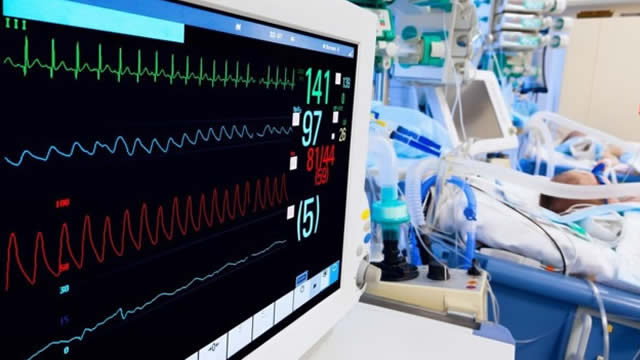
Masimo develops and sells patient monitoring systems—most notably advanced pulse oximetry and related physiologic monitoring products—used in hospital and clinical settings. The value chain is built around (1) higher-end monitoring hardware and platform technology, (2) patient interface devices (sensors and related consumables) that are repeatedly purchased as care episodes recur, and (3) clinical integration and workflow adoption that embeds Masimo systems into care environments.
The commercial model follows a land-and-expand dynamic: initial monitor adoption tends to be driven by clinical performance and reliability, while ongoing use creates a repeatable demand stream through sensors and accessories, supported by clinician training, installation, and compatibility within hospital workflows.
💰 Revenue Streams & Monetisation Model
- Consumables / sensors (recurring-leaning): Sensors and patient interface products are replenished as monitoring is used across surgical, ICU, and perioperative workflows. This segment typically supports more stable demand patterns than hardware.
- Monitoring devices / capital equipment (transactional): Monitors and related components contribute revenue that can be lumpy based on procurement cycles, but they serve as the installed base that drives later consumable utilization.
- Software-enabled monitoring & platform attach: Where applicable, Masimo’s monitoring platforms benefit from ongoing use and configuration within clinical systems, supporting attach of compatible accessories and sensors.
Margin structure is primarily influenced by the product mix (consumables vs. devices), the durability of the installed base, and the ability to maintain differentiation in signal quality—an area that supports premium pricing and customer preference versus commodity pulse oximetry.
🧠 Competitive Advantages & Market Positioning
Masimo’s moat is anchored in Intangible Assets and High Switching Costs. Advanced pulse oximetry depends on proprietary signal processing and associated intellectual property, which has historically created a measurable performance differentiation versus generic or less capable monitoring approaches. Once deployed, hospitals face practical friction to change established monitoring workflows: clinicians are trained on specific devices, alarm behavior and usability matter for patient safety, and procurement decisions often favor continuity.
Moat mechanics:
- Patent-protected technology and clinical performance differentiation: Masimo’s differentiation is difficult to replicate quickly without the relevant intellectual property and validated performance in motion and low-perfusion scenarios.
- Installed-base stickiness: Devices become embedded in clinical workflow, driving repeat purchasing of compatible sensors and accessories.
- Regulatory and clinical validation pathway: Demonstrating performance sufficiency to gain and sustain clinical adoption is non-trivial and reinforces quality perception.
Competitive benchmarking (primary rivals): Masimo competes against major medical technology and monitoring players such as Medtronic, Philips (GE HealthCare/Philips ecosystem), and Nihon Kohden in patient monitoring. Many competitors offer pulse oximetry and monitoring platforms that overlap in function; however, Masimo’s strategy emphasizes technology-enabled measurement performance and sensor compatibility, versus broader platform bundling or more generalized monitoring approaches.
Against these rivals, Masimo typically differentiates by emphasizing advanced signal processing and sensor ecosystem fit for specific clinical use cases (e.g., settings where motion robustness and alarm reliability carry substantial operational importance).
🚀 Multi-Year Growth Drivers
- Secular demand for improved patient monitoring: Rising procedural volume, higher acuity care, and continued emphasis on patient safety and monitoring quality expand utilization of monitoring devices and related sensors.
- Shift from episodic monitoring to standardized workflows: Hospitals increasingly standardize physiologic monitoring protocols across units, supporting repeat consumable demand once an installed base is in place.
- Expansion in perioperative and critical-care capacity: Operating room and ICU monitoring intensity tends to be structurally supported by demographics and healthcare utilization trends.
- Product ecosystem development: Continued sensor/accessory and platform compatibility improvements can raise attach rates and extend technology adoption within existing accounts.
- International adoption of higher-performance monitoring: As healthcare systems upgrade infrastructure and care standards, demand can shift toward higher-quality measurement technologies.
⚠ Risk Factors to Monitor
- Intellectual property and litigation outcomes: The competitive advantage is tied to technology and associated IP. Adverse rulings, settlement terms, or erosion of exclusivity can reduce differentiation and pricing power.
- Regulatory and clinical validation risk: New product iterations and indications may require additional clearances and evidence generation; delays or setbacks can affect adoption timelines.
- Technological substitution: Competitors could develop comparable signal processing approaches, or incumbents could bundle monitoring solutions that compress differentiation.
- Inventory and procurement cycle volatility: Hardware purchases may fluctuate with hospital capital spending and tender cycles, impacting revenue mix.
- Concentration and reimbursement dynamics: Hospital purchasing behavior can be influenced by budget cycles and contracting arrangements in different geographies.
📊 Valuation & Market View
In medical technology, valuation frameworks often emphasize revenue growth durability, consumables/recurring contribution, and gross margin sustainability rather than accounting measures alone. Investors typically weigh the balance between capital equipment (more cyclical) and sensor/consumables (more repeatable), along with the perceived longevity of differentiation.
Common valuation lenses include EV/EBITDA for profitability and operating leverage, and P/S when markets focus on growth and the runway for installed-base expansion. Key variables that tend to move valuation in this sector include: evidence of sustained consumables attach, durability of differentiation, unit economics, and the outlook for regulatory clearances and IP-related risks.
🔍 Investment Takeaway
Masimo presents an institutional-style setup: differentiation rooted in intangible assets (technology/IP) and supported by workflow-embedded switching costs, with a commercial model that can translate monitor adoption into more repeatable sensor and consumable demand. The investment case depends on maintaining technological and IP defensibility while expanding adoption of higher-performance monitoring protocols across perioperative and critical-care environments.
⚠ AI-generated — informational only. Validate using filings before investing.