📘 OMEGA FLEX INC (OFLX) — Investment Overview
🧩 Business Model Overview
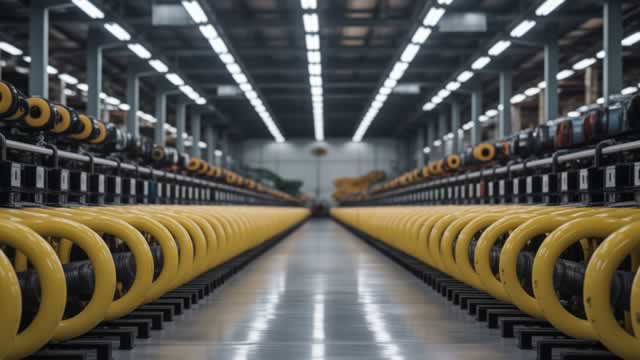
Omega Flex designs and manufactures corrugated metal hose assemblies used to connect and safely flex piping systems across plumbing, HVAC, and industrial applications. The value chain is primarily engineering-led manufacturing: customers specify a flexible connector to handle thermal expansion, vibration, and movement while meeting plumbing and gas-safety standards. Products are then distributed through a network of wholesalers, specialty channel partners, and contractors, with additional business from OEM-style or specification-driven orders where performance and compliance matter more than lowest cost.
Customer stickiness is driven by specification and installation practices: once a project’s design standards and approved materials are set, switching suppliers can require re-qualification, code verification, and field rework risk.
💰 Revenue Streams & Monetisation Model
Revenue is largely generated through shipment of engineered components rather than recurring subscriptions. Monetisation comes from:
- Product sales (primary driver): standard and custom corrugated hose assemblies and related fittings/assemblies.
- Specification/repair-driven demand: aftermarket replacement and service work tied to aging building and industrial infrastructure.
- Mix-driven profitability: margin tends to improve with higher-complexity engineered assemblies, better utilization, and favorable order mix versus highly standardized SKUs.
The key margin drivers are manufacturing yield and efficiency, material pass-through and procurement terms for stainless and other inputs, and product mix toward configurations that require more engineering and fabrication.
🧠 Competitive Advantages & Market Positioning
Omega Flex’s moat is primarily high switching costs plus code and compliance credibility (intangible/structural barriers). Flexible connectors are not fungible commodities: proper performance depends on pressure ratings, material specifications, and installation requirements. Approved-equivalent substitution can be non-trivial for specifiers and installers.
Why competitors have difficulty taking share:
- Specification lock-in: architects, mechanical engineers, and code-compliant installers often standardize on approved products; changing suppliers can require re-approval and documentation work.
- Technical execution and QA reputation: product performance under vibration, movement, and pressure conditions creates credibility advantages that are hard to replicate quickly.
- Distribution and project continuity: established stocking and familiarity reduce adoption friction for approved products.
- Watts Water Technologies — broader plumbing and flow-control systems; less concentrated on corrugated flexible hose assemblies as the core differentiator.
- Viega — strong in piping and fitting ecosystems; competitive overlap exists in connection solutions, but Omega Flex’s positioning centers on engineered metal flexible hose performance for movement and safety.
- Swagelok (Parker Hannifin) — industrial connection products; competes for specific industrial connector use cases, but Omega Flex’s end-market focus and product specialization emphasize flexible hose assemblies for building and gas/plumbing-related applications.
Omega Flex’s industry focus is narrower and more engineering-specific than broad plumbing ecosystems, which supports durability of margins when specifications favor performance and compliance over commoditized pricing.
🚀 Multi-Year Growth Drivers
Over a 5–10 year horizon, growth is supported by structural demand for safer, more reliable connections in aging and expanding infrastructure:
- Infrastructure and retrofit cycles: replacement of aging plumbing, HVAC, and industrial piping connections increases replacement connector penetration.
- Building and industrial safety requirements: regulatory and design standards that address vibration, thermal expansion, and leak risk favor flexible connectors with proven performance.
- Energy infrastructure and fuel systems expansion: ongoing development and modernization of fuel-delivery and utility-adjacent piping systems creates demand for code-compliant connectors.
- Manufacturing scale with engineering depth: capacity expansion and operational discipline can support volume growth without proportionate quality or warranty risk.
TAM expansion is driven less by market share shifts within commodity fittings and more by the continued need to specify reliable flexible connections where movement and pressure integrity are safety-critical.
⚠ Risk Factors to Monitor
- Input cost volatility: stainless and related material costs can pressure gross margins if not offset by pricing power and procurement.
- Construction and industrial cycle sensitivity: demand can soften when new-build activity declines or project timelines stretch.
- Regulatory and code changes: alterations in safety standards, certifications, or installation requirements can affect product qualification and customer adoption timing.
- Quality and liability exposure: any defect or installation misapplication can lead to warranty and product liability costs; maintaining QA and traceability is critical.
- Competitive substitution and commoditization pressure: competitors or private-label offerings may attempt to compete on price; Omega Flex’s durability depends on sustaining specification-driven differentiation.
📊 Valuation & Market View
Industrial manufacturers like Omega Flex are typically valued on EV/EBITDA and P/E, with revenue quality, operating margin durability, and return on invested capital acting as key drivers. Market expectations often improve when investors see:
- Resilient gross margins despite material/input fluctuations.
- Operating leverage supported by efficient utilization and mix.
- Working capital discipline that reduces earnings volatility.
- Evidence of specification-driven demand rather than purely end-market cycle exposure.
Because earnings are tied to engineered manufacturing and project-based demand, multiple expansion tends to require confidence in sustained margins and in the durability of compliant, specification-oriented demand.
🔍 Investment Takeaway
OMEGA FLEX is positioned as an engineering-centric manufacturer of code-relevant corrugated metal hose assemblies, with durability derived from high switching costs (specification and re-qualification friction) and compliance/quality credibility. The investment case rests on the structural need for safe, reliable flexible connections in building and industrial piping systems, supported by retrofit demand and standards-driven specification behavior.
⚠ AI-generated — informational only. Validate using filings before investing.