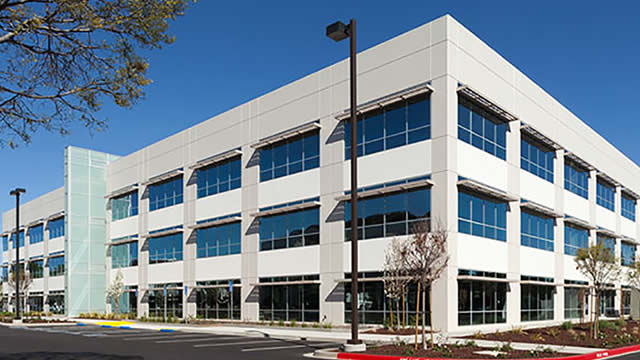
📘 ONE LIBERTY PROPERTIES REIT INC (OLP) — Investment Overview
🧩 Business Model Overview
ONE LIBERTY PROPERTIES REIT INC (OLP) owns and operates income-producing industrial real estate, primarily designed for logistics, distribution, and other operational uses that benefit from access to transportation networks and labor. The business model is built around acquiring, developing, and leasing properties to tenants under long-dated lease structures. A large portion of cash flows is contractual: tenants pay base rent and, in many cases, also fund property-level operating expenses through pass-throughs, aligning incentives between landlord and tenant and stabilizing results across property cycles.
The key “value chain” is property acquisition and underwriting → build/reposition to tenant requirements (where applicable) → secure leases with disciplined tenant selection → collect recurring rent and expense reimbursements → recycle capital into accretive acquisitions and redevelopment when pricing and credit fundamentals support value creation.
💰 Revenue Streams & Monetisation Model
OLP monetizes its asset base through recurring rental revenue sourced from operating leases. Cash generation is typically supported by:
- Base rent under lease contracts, which provides the core recurring income stream.
- Expense pass-throughs (where lease terms permit), which can include reimbursement of taxes, insurance, and certain operating costs—reducing landlord exposure to property-level expense inflation.
- Rent escalators and market rent re-leasing dynamics driven by lease structure and prevailing demand for industrial space in the company’s target markets.
Margin drivers in an industrial REIT context tend to be less about “product margin” and more about (i) occupancy and lease renewal outcomes, (ii) the durability of lease cash flows (tenant credit and lease term), and (iii) the extent to which operating costs are contractually shifted to tenants.
🧠 Competitive Advantages & Market Positioning
OLP’s competitive positioning is rooted in the real-asset nature of industrial space and the structural difficulty tenants face when relocating operational infrastructure. The most relevant economic moats are:
- Tenant-specific switching costs (real cost of relocation): industrial facilities often require specialized build-outs, site-specific approvals, and operational continuity. Relocation typically involves downtime, capital outlay, and supply chain disruption—raising the incentive to renew or renegotiate rather than move.
- Lease structure and cost pass-throughs: the ability to shift property-level costs to tenants can improve earnings stability and reduce variability in net operating cash flows.
- Underwriting discipline and tenant credit culture: disciplined leasing and careful tenant selection can limit downside in adverse demand environments by reducing default risk and preserving recoverability of contractual cash flows.
Competitive benchmarking (industry peers):
- Prologis (PLD) — concentrates heavily on global logistics real estate and develops large-scale portfolios with extensive operating footprint.
- Rexford Industrial Realty (REXR) — focuses on infill industrial markets with an emphasis on redevelopment and dense urban logistics.
- STAG Industrial (STAG) — operates a diversified industrial portfolio with a broader mix of tenant sizes and shorter average lease characteristics.
Contrast versus peers: OLP’s industry focus sits within the industrial REIT universe, but its competitive edge is derived from underwriting-driven durability of lease cash flows and the persistence of tenant “stickiness” in operational real estate. Where larger peers may compete through scale or broader geographic coverage, OLP’s differentiation is more consistent with disciplined asset selection, lease contracting, and cost-aligned structures that support resilient property-level economics.
🚀 Multi-Year Growth Drivers
A 5–10 year growth outlook for OLP is primarily shaped by structural demand for industrial space and the capital allocation discipline that governs risk-adjusted returns:
- Supply chain and logistics intensification: ongoing supply chain complexity and distribution network optimization support long-term demand for well-located industrial facilities.
- Distribution and “last-mile” accessibility: tenants benefit from proximity to labor pools and transportation nodes; properties that serve these nodes can command stronger leasing outcomes.
- Lease renewals and rental re-leasing economics: industrial tenants often prefer continuity; where lease terms allow, rent escalators and renewal negotiations can support compounding cash flows.
- Redevelopment and modernization optionality: industrial space can be repositioned through capital improvements to meet tenant requirements, potentially enhancing rent and occupancy stability versus purely passive ownership.
- Capital recycling and accretive acquisitions: in a valuation-driven asset class, the ability to buy and develop when risk-adjusted entry yields are attractive is a durable driver of total returns over time.
TAM expansion is less about introducing a new product category and more about capturing a persistent share of U.S. industrial real estate demand across distribution, logistics, and operational use cases—particularly where facilities remain functional and competitively located through market cycles.
⚠ Risk Factors to Monitor
- Interest rate sensitivity and financing conditions: higher borrowing costs can pressure REIT valuations and affect acquisition/development returns.
- Tenant concentration and credit risk: industrial leasing exposure depends on tenant durability; weakening tenant fundamentals can impact occupancy, renewal terms, and collections.
- Lease rollover risk: a portfolio with meaningful maturities can face temporary cash flow volatility if market leasing terms soften.
- Capital intensity and sustaining capex: industrial assets require maintenance and periodic modernization to remain competitive with newer supply.
- Regulatory and environmental liabilities: property-level issues (including environmental compliance) can create unexpected costs or restrict certain uses.
📊 Valuation & Market View
Industrial REIT valuation typically reflects a blend of asset-based and cash-flow-based frameworks. Key market reference points often include:
- FFO/AFFO yield and growth expectations (cash-flow durability and visibility).
- Net asset value (NAV) sensitivity to cap rates and the quality of underlying assets.
- Cap rate and discount rate regime, which connects macro rates to property-level pricing.
The market tends to reward industrial landlords with resilient occupancy, credible dividend/return-of-capital capacity, disciplined leverage, and evidence that lease economics and cost structures hold up through cycles.
🔍 Investment Takeaway
OLP’s long-term thesis rests on industrial real estate’s structural tenant stickiness and the earnings stability that can come from lease structures and cost pass-throughs, supported by disciplined underwriting and tenant credit focus. Over a multi-year horizon, total returns are most likely to be driven by durable leasing outcomes, selective redevelopment/modernization, and disciplined capital recycling—while remaining sensitive to interest rate conditions and tenant/lease rollover dynamics.
⚠ AI-generated — informational only. Validate using filings before investing.