Organogenesis Holdings Inc.

Organogenesis Holdings Inc. (ORGO) Market Cap

Organogenesis Holdings Inc. has a market capitalization of $299.7M.

Financials based on reported quarter end 2025-12-31

Price: $2.33

-0.08 (-3.32%)

Market Cap: 299.73M

NASDAQ · time unavailable

CEO: Gary S. Gillheeney

Sector: Healthcare

Industry: Drug Manufacturers - Specialty & Generic

IPO Date: 2017-01-05

Website: https://organogenesis.com

Organogenesis Holdings Inc. (ORGO) - Company Information

Market Cap: 299.73M · Sector: Healthcare

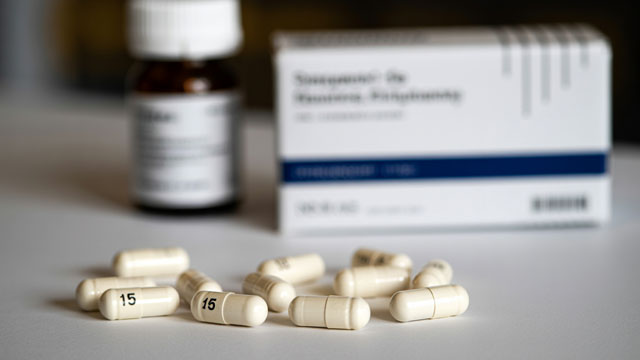
Organogenesis Holdings Inc., a regenerative medicine company develops, manufactures, and commercializes solutions for the advanced wound care, and surgical and sports medicine markets in the United States. The company's advanced wound care products include Affinity, an amniotic membrane wound covering in which viable cells growth factors/cytokines, and ECM proteins in the native tissue are preserved; Apligraf, a bioengineered living cell therapy that produce spectrum of cytokines and growth factors; Dermagraft, a bioengineered product that produces human collagen, ECM, proteins, and cytokines; NuShield, a wound covering tissue includes both amnion and chorion membranes for spongy/intermediate layer intact; PuraPly , a antimicrobial barrier that enables conformability and fluid drainage; and Novachor, an amniotic membrane wound covering in which viable cells, growth factors/cytokines, and ECM proteins are preserved. Its surgical and sports medicine products comprise NuCel, a dehydrated placental tissue surgically applied to the target tissue to support native healing; ReNu, a cryopreserved suspension used to support healing of soft tissues; and FiberOS and OCMP used as a bone void filler primarily in orthopedic and neurosurgical applications. The company's pipeline products include PuraPly XT and PuraPly MZ to treat chronic, acute, and open wounds; PuraForce, a bioengineered porcine collagen surgical matrix for use in soft tissue reinforcement applications; and TransCyte, a bioengineered tissue for the treatment of partial thickness burns. It serves hospitals, wound care centers, government facilities, ambulatory service centers, and physician office through direct sales force and independent agencies. The company was founded in 1985 and is headquartered in Canton, Massachusetts.

Analyst Sentiment

77%
Strong Buy

Based on 5 ratings

Analyst 1Y Forecast: $9.00

Average target (based on 1 sources)

Consensus Price Target

Low

$9

Median

$9

High

$9

Average

$9

Potential Upside: 286.3%

Price & Moving Averages

Loading chart...

📘 Full Research Report

ℹ️

AI-Generated Research: This report is for informational purposes only.

📘 ORGANOGENESIS HOLDINGS INC CLASS A (ORGO) — Investment Overview

🧩 Business Model Overview

Organogenesis Holdings Inc. focuses on the development, commercialization, and supply of advanced wound-care and regenerative medicine products. The business model is anchored in a specialized commercialization engine that connects manufacturing capabilities to clinician adoption and patient pathways. In practical terms, value is created through: (1) a product portfolio built around tissue-repair applications, (2) distribution into outpatient and institutional care settings where wound-management protocols are established, and (3) reimbursement navigation that influences formulary placement and prescribing behavior.

Customer stickiness in this category is shaped less by “consumer preference” and more by clinical workflow integration. Once a provider’s wound-care regimen, ordering habits, and documentation protocols incorporate a product, switching becomes administratively and clinically costly—especially where outcomes, protocol adherence, and payer coverage considerations are tightly linked.

💰 Revenue Streams & Monetisation Model

Revenue is primarily generated from the sale of wound-care products, with monetisation driven by a mix of recurring demand patterns (patients treated over time with ongoing wound management needs) and transactional sales (new episodes of care and product re-orders). Margin structure is influenced by manufacturing scale and supply chain efficiency, product mix within the wound-care portfolio, and the degree of pricing pressure from competitors and channel dynamics.

In this sector, gross margin durability often depends on: (1) the ability to sustain product differentiation that supports pricing power, (2) operational leverage as volumes scale, and (3) cost control in biologics/advanced therapies supply chains. Operating leverage can also emerge from commercialization scale—marketing and reimbursement support become more efficient as provider networks and prescribing familiarity expand.

🧠 Competitive Advantages & Market Positioning

Primary moat: Switching costs via clinical workflow integration.

Wound care is protocol-driven. Clinicians and care settings often adopt products that fit established treatment pathways, documentation requirements, and outcomes tracking. This creates practical switching friction: changing therapies can require re-education, revised protocol adoption, and reassessment of patient outcomes—particularly when payers require specific documentation to justify medical necessity.

Secondary moat: Intangible assets in clinical evidence and regulatory know-how.

In regenerative and advanced wound-care, competitive advantage is reinforced by product-specific evidence, regulatory history, and the operational expertise required to maintain manufacturing and quality systems. These assets raise the barrier for new entrants and reduce the probability of “fast follower” replication, even when competitors are capable of developing similar approaches.

Cost advantages (potential) from specialization.

Specialization can produce cost advantages through process discipline, supplier relationships, and learning-curve effects in manufacturing and commercialization. While scale varies by product and demand, successful commercialization can translate specialization into improved unit economics over time.

🚀 Multi-Year Growth Drivers

1) Secular demand for advanced wound care.

The addressable market benefits from persistent drivers such as aging demographics, higher prevalence of chronic conditions that increase wound incidence, and continued movement toward evidence-based, lower-complication care pathways. Wound management is a large and structurally growing category due to the ongoing need for chronic wound treatment.

2) Shift toward clinical outcomes and reimbursement-backed therapies.

As payers increasingly emphasize outcomes, providers gain incentives to use therapies that can demonstrate clinical benefit and support medical-necessity documentation. Companies with durable clinical evidence and strong payer navigation can capture a larger share of treatment episodes.

3) Expansion through protocol penetration.

Long-run growth often depends on converting new providers and care settings into repeat users. Because wound management is managed through protocols, penetration can be amplified once adoption occurs—new episodes at existing accounts can increase share and reduce customer acquisition cost.

4) Portfolio and pipeline optionality.

Regenerative medicine companies can benefit from product life-cycle management and pipeline progression. Even modest incremental additions to the portfolio can broaden utilization across patient segments and settings, improving overall commercial resilience.

⚠ Risk Factors to Monitor

1) Competitive intensity and pricing pressure.

Advanced wound-care is subject to competition from alternative therapies and new entrants. If differentiation narrows or payer formularies become more restrictive, pricing and volume can be pressured, impacting margins and growth.

2) Regulatory and reimbursement uncertainty.

Medical device/biologics-adjacent categories face reimbursement variability and evolving coverage criteria. Any adverse change in coding, coverage, evidence requirements, or regulatory posture can alter demand.

3) Manufacturing execution and quality risk.

Specialized product manufacturing requires strict quality systems. Operational disruptions, yield variability, or compliance events can raise costs and interrupt supply—directly affecting revenue and credibility with providers.

4) Capital needs and funding dynamics.

Smaller commercial platforms in life sciences can require ongoing investment to expand distribution, support clinical evidence generation, and maintain pipeline progress. Funding conditions can influence strategic optionality.

5) Clinical adoption risk.

Even with plausible differentiation, adoption can be slower than anticipated if outcomes are not compelling for specific patient segments, if clinicians require additional evidence, or if care settings prioritize alternative protocols.

📊 Valuation & Market View

Markets generally value wound-care and advanced therapeutics companies through a combination of revenue scale expectations and quality of margins, with emphasis placed on sustainability of product demand, evidence strength, and commercialization traction. Sector benchmarks often rely on forward revenue and enterprise value frameworks (such as EV-to-sales or EV-to-operating metrics) rather than near-term earnings, given that development timelines and investment cycles can create volatility in profitability.

Key valuation drivers typically include: (1) credible path to margin expansion through mix and operating leverage, (2) durability of payer-supported demand, (3) evidence-backed differentiation that sustains pricing and share, and (4) progress in pipeline milestones that extend the product life cycle.

🔍 Investment Takeaway

Organogenesis’ long-term thesis rests on competing in advanced wound-care where practical switching costs—embedded in clinical protocols and adoption workflows—can support demand durability. The investment case improves if the company sustains evidence-driven differentiation, expands provider penetration, and demonstrates consistent execution in manufacturing and reimbursement navigation, enabling operating leverage over a multi-year horizon.


⚠ AI-generated — informational only. Validate using filings before investing.

Fundamentals Overview

Loading fundamentals overview...

📊 AI Financial Analysis

Powered by StockMarketInfo
Earnings Data: Q Ending 2025-12-31

"ORGO reported a revenue of $225.6M with a net income of $43.7M for the year ending December 31, 2025. With earnings per share (EPS) at $0.28, the company shows a degree of profitability, although its share price has significantly declined over the past year by 55.54%, translating to decreased market sentiment despite a relatively stable market capitalization. The balance sheet appears robust with total assets of $598.7M against total liabilities of $164.8M, indicating a healthy equity position of $433.9M and manageable net debt of $39.2M. Cash flow generated from operations was $39.4M, leading to a free cash flow of approximately $34.8M after capital expenditures. However, the absence of dividend payouts may deter some income-focused investors. Overall, while ORGO displays solid growth metrics, the significant decline in its market performance raises concerns regarding investor confidence and potential recovery in the near term."

Revenue Growth

Neutral

Moderate revenue growth indicates potential.

Profitability

Positive

Positive net income supports profitability, though growth issues exist.

Cash Flow Quality

Neutral

Positive free cash flow indicates good cash generation.

Leverage & Balance Sheet

Good

Healthy balance sheet with manageable debt levels.

Shareholder Returns

Neutral

Significant price decline affects total returns; no dividends.

Analyst Sentiment & Valuation

Fair

Target price suggests potential upside, but sentiment is cautious.

Disclaimer:This analysis is AI-generated for informational purposes only. Accuracy is not guaranteed and this does not constitute financial advice.

Management’s tone is confident on the long-run (share gains expected in 2H 2026; ReNu momentum; new Rhode Island facility progress), but the Q&A reveals the real gating factor is operational confusion created by CMS commentary on Dec 30. While Q4 outperformance was substantial—Advanced Wound Care +83% YoY and $225.1M net product revenue, beating the Q3 guidance high end by ~ $50M—2026 is framed as a steep near-term demand trough: total net revenue down 25% to 38% in 2026, with Q1 down ~50% YoY and H1 down ~30% to 35%. In the analyst follow-up, management clarifies that inventory pull-forward and aggressive pricing were not the driver of the Q4 beat; instead, the rest-of-year decline is primarily clinician confusion (plus the pre-planned $127 reimbursement/price element from CMS), with early 2026 seeing aggressive pricing pressure consistent with inventory clearing. Management believes these issues are transitory, supporting sequential rebound and high-teens adjusted EBITDA margins in Q4.

AI IconGrowth Catalysts

  • Advanced Wound Care Advanced Wound Care net product revenue up 83% YoY in Q4 2025
  • Record Q4 revenue exceeding high end of Q3 guidance range (Q3 guidance: $162M to $187M)

Business Development

  • Commercialization/portfolio expansion: Dermagraft (PMA product)
  • Portfolio expansion capacity: FortiShield and TransCyte (PMA products)
  • ReNu program: rolling BLA submission initiated; expected completion in 1H 2026

AI IconFinancial Highlights

  • Q4 2025 net product revenue: $225.1M (+78% YoY, +50% sequential); beat Q3 guidance high end by about $50M
  • Advanced Wound Care net product revenue: $217.2M (+83% YoY)
  • Surgical & Sports Medicine net product revenue: $7.9M (-2% YoY); full-year 2025 Surgical & Sports Medicine up 12% (PuraPly family)
  • Gross profit: $175.2M (78% of net product revenue) vs 75% last year (mix-driven)
  • Operating expenses: $162.3M vs $116.4M last year (+$45.9M / +39%)
  • GAAP operating income: $63.3M vs $10.2M last year; non-GAAP operating income: $75.9M vs $11.7M
  • GAAP net income: $43.7M vs $7.7M last year; adjusted net income: $52.9M vs $8.8M
  • Adjusted EBITDA: $84.2M (37% of total revenue) vs $18.2M (14%)
  • Balance sheet 12/31/2025: $94.3M cash/cash equivalents/restricted cash; no outstanding debt (vs $136.2M at 12/31/2024)
  • 2026 guidance (new): full-year total net revenue decline 25% to 38% YoY
  • 2026 guidance detail: Q1 revenue decline ~50% YoY; H1 decline ~30% to 35%; strong sequential growth expected in Q3 and Q4
  • 2026 operating outlook: positive adjusted EBITDA expected, particularly Q4 with high teens adjusted EBITDA margins

AI IconCapital Funding

  • Cash: $94.3M at 12/31/2025; no debt obligations; revolving credit facility availability up to $75M
  • No share repurchase authorization/amounts disclosed in the provided transcript

AI IconStrategy & Ops

  • New manufacturing & R&D center in Smithfield, Rhode Island advancing well; intended to scale manufacturing of Apligraf and PuraPly AM
  • Increased focus on clinical evidence: investing in trials and published studies

AI IconMarket Outlook

  • Clinician confusion near-term expected to drive pressure on PMA utilization
  • ReNu: rolling BLA submission completion expected in first half of 2026 (approval-dependent)

AI IconRisks & Headwinds

  • CMS coverage/payment disruptions: withdrawal of LCD coverage policies for skin substitutes announced Dec 24, 2025; and comments regarding discarded product announced Dec 30, 2025
  • Material disruption: clinician confusion impacting utilization of PMA-approved product in first 2 months of 2026
  • Operating environment uncertainty into 2026 tied specifically to December 30 clinician confusion
  • Aggressive pricing pressure observed early in 2026 quarter (management views as transitory and related to inventory clearing)
  • LCD pulled late last year: management stated $127 (implied reduced reimbursement/price factor) was contemplated and manageable
  • Management explicitly expects low-cost/flood of non-sustained low-cost products to not persist throughout the year

Sentiment: CAUTIOUS

Note: This summary was synthesized by AI from the ORGO Q4 2025 earnings transcript. Financial data is complex; please verify all metrics against official SEC filings before making investment decisions.

Loading financial data and tables...
📁

SEC Filings (ORGO)

© 2026 Stock Market Info — Organogenesis Holdings Inc. (ORGO) Financial Profile