📘 POTBELLY CORP (PBPB) — Investment Overview
🧩 Business Model Overview
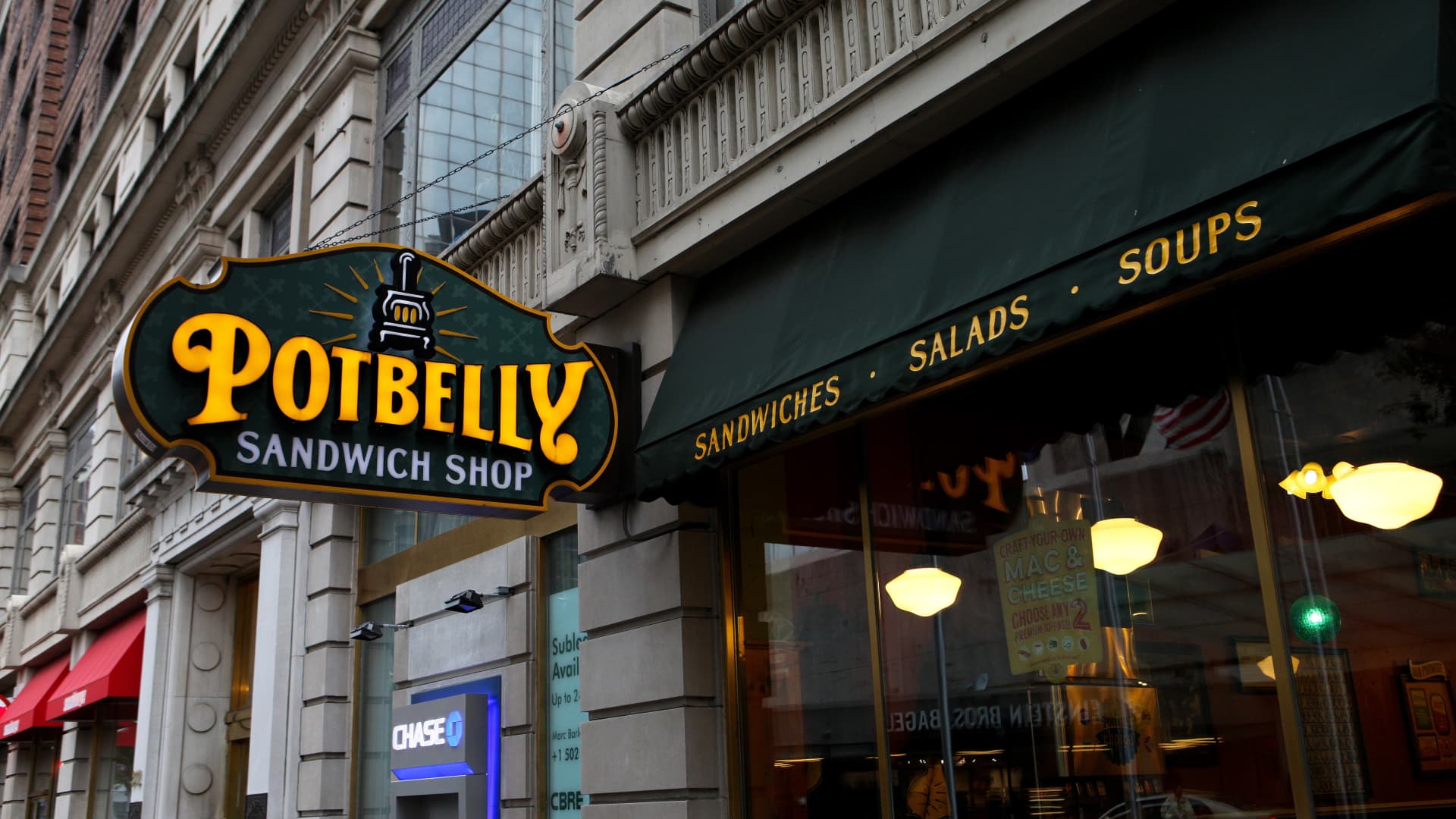
Potbelly operates a neighborhood quick-service restaurant (QSR) model centered on made-to-order sandwiches, salads, soups, and beverages. The value chain is straightforward: customer traffic generates per-ticket revenue at the store level, while corporate functions support procurement, brand/product development, digital ordering capabilities, marketing, and operating standards. Because the product is prepared on-site and quality depends on speed and labor execution, store-level throughput, labor productivity, and ingredient management are primary determinants of profitability. Customer stickiness is cultivated through familiarity with menu formats and store experience rather than through formal subscription-like contracts.
💰 Revenue Streams & Monetisation Model
Revenue is predominantly transactional, driven by same-store sales and unit economics. Monetisation is influenced by mix shifts across:
- Dine-in and takeout: Typically higher control over throughput and add-on sales (beverages, sides, dessert items).
- Delivery: Adds incremental demand but can compress margins due to third-party fees and promotional mechanics.
- Catering and group orders: Tends to be lumpy but can improve daily volume stability and labor utilization.
- Digital ordering and loyalty: Supports convenience and repeat behavior; incremental revenue is still fundamentally transactional, though it can improve forecasting and reduce marketing inefficiency.
Margin drivers are store-level. Key sensitivities include food cost inflation (commodity and packaging inputs), labor cost as a share of sales, store rent/occupancy, and promotional intensity. Execution in scheduling and production flow typically determines whether higher traffic turns into sustained margin expansion or merely higher labor/discount spend.
🧠 Competitive Advantages & Market Positioning
Potbelly operates in a highly competitive sandwich QSR landscape where direct “switching cost” is low—customers can change brands with minimal friction. As a result, structural advantage is more likely to come from intangible and operational factors than from durable economic moats like network effects.
That said, Potbelly can benefit from:
- Operational know-how (cost and execution): Consistency in sandwich assembly, throughput, and waste reduction can create a cost-efficiency gap versus less disciplined operators.
- Intangible asset (brand/store experience): A distinctive menu structure, store layout, and service rhythm can support repeat patronage relative to commoditized options.
- Real-estate selectivity: Placement in pedestrian-traffic and workplace-dense corridors can sustain baseline demand, even during periods of industry-wide price pressure.
Competitive benchmarking (industry context):
- Subway (mass scale, aggressive value proposition; far-reaching footprint): Potbelly differentiates through a more curated, made-to-order positioning rather than relying primarily on price/value leadership at scale.
- Jimmy John’s (speed- and simplicity-driven model): Potbelly competes with a broader menu and a more café-like experience, trading some speed simplicity for variety and dine-in/takeout balance.
- Jersey Mike’s (premium-ish sandwich positioning with strong operational consistency): Potbelly competes on product format and store experience, rather than matching the strongest barriers implied by franchise-scale consistency.
Overall, Potbelly’s moat, if present, is best described as execution-driven differentiation (operations and store experience) rather than a defensible structural barrier that prevents competitors from counter-programming.
🚀 Multi-Year Growth Drivers
Over a 5–10 year horizon, growth depends less on broad TAM expansion and more on share capture and unit-level productivity within the sandwich/QSR category. Material drivers include:
- Digital penetration and ordering convenience: Improving order accuracy, speed, and promotional effectiveness through digital channels can lift frequency and average check.
- Delivery and third-party optimization: Contracting strategy and routing/order timing can improve the delivery mix without disproportionately sacrificing contribution margin.
- Unit growth (where density works): New store economics improve when site selection aligns with traffic patterns and labor availability; mature markets can support densification if cannibalization is contained.
- Menu and mix evolution: Managing contribution margin through product mix (beverages, sides, higher-margin offerings) can sustain profitability even when traffic is volatile.
- Labor productivity improvements: Training, scheduling discipline, and streamlined prep can convert demand into higher operating leverage.
Because category demand is cyclical and competitive, the long-run thesis typically rests on whether Potbelly can maintain or improve unit economics through execution and site selection, rather than expecting lasting pricing power.
⚠ Risk Factors to Monitor
- Intense competitive pressure and price wars: Sandwich QSR competition often compresses margins; promotional cycles can erode contribution margin.
- Labor cost inflation and staffing constraints: QSR profitability is sensitive to wage pressures and turnover, which also impacts speed and quality.
- Food and packaging input costs: Commodity volatility and supply chain disruption can raise food cost percentage and waste levels.
- Lease and occupancy risk: Rent escalations, unfavorable renewals, and underperforming locations can impair cash generation.
- Execution risk in digital and delivery: Operational failures in order accuracy or rising delivery fees can offset incremental volume.
- Unit-level cannibalization: Over-dense expansion can dilute same-store sales and slow recovery of new store economics.
📊 Valuation & Market View
The market typically values QSR restaurants using a blend of EV/EBITDA and P/S, anchored by store-level economics. Key valuation “knobs” include:
- Same-store sales durability (traffic and average ticket).
- Restaurant-level margin trajectory (food/labor/occupancy leverage and promo intensity).
- Unit growth quality (new store payback period and cannibalization control).
- Cash flow conversion (capex intensity and working-capital dynamics).
- Balance-sheet risk (net leverage and impairment exposure tied to underperforming stores).
Because Potbelly’s competitive positioning is vulnerable to industry-wide pricing pressure, valuation tends to follow the stability of contribution margins and the credibility of unit-level productivity improvements.
🔍 Investment Takeaway
Potbelly’s investment case is primarily an execution and unit economics story in a competitive sandwich QSR category. The most credible “moat” elements are operational discipline, real-estate selection, and an intangible store experience that can support repeat behavior—but the business does not exhibit strong, structural switching costs or network effects. Long-term upside is most likely to emerge if Potbelly sustains margin resilience through labor/food cost management and improves the delivery/digital contribution profile while maintaining disciplined site growth.
⚠ AI-generated — informational only. Validate using filings before investing.

















 Growth Catalysts