
📘 PULTEGROUP INC (PHM) — Investment Overview
🧩 Business Model Overview
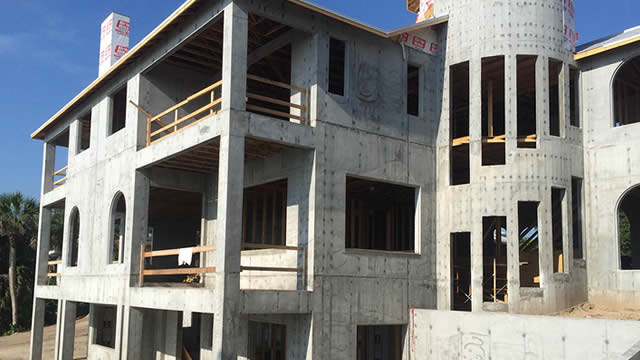
PulteGroup builds and sells homes through a vertically integrated development-and-construction platform. The company acquires and entitles land, develops it into viable homebuilding communities (including infrastructure and lot preparation), and then constructs homes to buyer specifications and market demand. Revenue is realized primarily at home closings, with additional income tied to community/lots and related activity. The core operational loop is land sourcing → planning/entitlement → development → construction → sale, with manufacturing-like execution that converts housing demand into cash flows over a relatively short build cycle once communities are underway.
💰 Revenue Streams & Monetisation Model
The monetisation profile is predominantly transactional rather than recurring:
- Homebuilding revenue (primary): Recognized at closing for contracted homes. Margin depends on land cost basis, construction cost productivity, pricing power, incentives, and the mix of home types.
- Community and land-related revenue (secondary): Includes activity tied to finished lots/communities and occasional ancillary fees, often less significant than home sales but helpful for smoothing variability.
Primary margin drivers center on (1) land economics and inventory management, (2) labor productivity and construction efficiency, (3) material and subcontractor pricing discipline, and (4) utilization of overhead across active communities. Because homebuilders carry meaningful fixed and semi-fixed cost structures (field supervision, operating overhead, and community development costs), margin tends to be sensitive to absorption when volumes fluctuate.
🧠 Competitive Advantages & Market Positioning
Homebuilding is competitive and cyclical, but PulteGroup can sustain an edge through a set of cost and supply advantages rather than customer “switching costs” or recurring revenue moats.
Key competitive advantages
- Land acquisition and development capability (cost advantage + execution): Competence in sourcing buildable land, managing entitlements, and developing communities improves the effective cost of lots and the timing of inventory readiness. This can reduce risk during downturns by improving the cost basis and controllability of inventory.
- Scale in operating infrastructure (cost of production discipline): Compared with smaller regional builders, larger operators can spread overhead, standardize processes, and negotiate better terms with certain suppliers and trades—supporting resilience when pricing weakens.
- Community footprint and geographic concentration (operating learning curve): Concentrated presence in select markets can improve permitting familiarity, subcontractor availability, and schedule reliability, supporting better build outcomes versus less established players.
Competitive benchmarking
- D.R. Horton: Broad national reach with strong scale economics; competes aggressively on price and volume. PulteGroup’s differentiation typically rests more on execution in developed communities and mix within its served markets rather than purely on the largest footprint.
- Lennar: Known for product and operational approaches that can include design standardization and varied homebuilding strategies. PulteGroup competes in many overlapping geographies but must defend margins through land economics and construction productivity.
- NVR (and other smaller regional builders): Often demonstrates disciplined land and build execution in specific markets. PulteGroup’s broader community base can provide diversification, though it requires consistent execution across a wide platform.
🚀 Multi-Year Growth Drivers
- Housing supply constraints and demographic demand: Long-run demand is supported by household formation and replacement needs, while supply constraints have historically limited the responsiveness of housing inventory to demand.
- Market share capture within constrained local markets: In environments where financing and labor availability limit marginal competitors, operators with superior land pipelines and field execution can capture share as peers rationalize inventory.
- Community development as a mechanism for turning demand into buildable inventory: Master-planned communities and multi-phase neighborhoods create a pathway to replenish lot supply, enabling multi-year development cycles when capital markets and demand conditions are supportive.
- Productivity initiatives and build-cycle improvements: Continuous improvement in planning, trade coordination, and construction workflow can translate into better schedule reliability and cost absorption over a full cycle.
⚠ Risk Factors to Monitor
- Interest-rate and affordability sensitivity: Demand for new homes is closely linked to mortgage affordability and consumer credit conditions; pricing pressure and sales velocity can deteriorate quickly during tightening cycles.
- Inventory and land carrying risk: Land and development costs are capital-intensive. Poor timing of acquisitions, delays in entitlement, or unfavorable market shifts can pressure returns.
- Input cost and labor constraints: Material price swings and labor availability can compress margins, especially if pricing resets lag cost changes.
- Regulatory and permitting exposure: Zoning, permitting lead times, and building code changes can alter feasibility, delay starts, and increase compliance costs.
- Execution risk: Operational problems in planning, subcontractor performance, or quality control can affect warranty costs, customer satisfaction, and resale value of homes.
📊 Valuation & Market View
Homebuilders are typically valued through earnings power and normalized cash generation, with valuation outcomes driven by expected delivery volumes, margin durability, and capital efficiency. The market often focuses less on “steady-state” growth and more on:
- Normalization of gross margin across the housing cycle (land cost basis and incentives behavior).
- Return on invested capital via land development economics and inventory turnover.
- Balance sheet resilience, including liquidity and how the company manages community development spending through different demand regimes.
Key model sensitivities include assumptions about home price trends, cancellation rates, sales pace, and the ability to control construction costs when the sales environment softens.
🔍 Investment Takeaway
PulteGroup’s long-term investment case rests on land and development execution, scale-driven cost discipline, and community pipeline management that can improve risk-adjusted returns across housing cycles. While the industry lacks a software-like recurring revenue moat, competitive positioning can still be defended through effective cost of supply and operational reliability—attributes that matter most when affordability tightens and selective share gain favors builders with superior inventory economics and execution discipline.
⚠ AI-generated — informational only. Validate using filings before investing.


















 Growth Catalysts