
📘 PROTO LABS INC (PRLB) — Investment Overview
🧩 Business Model Overview
PROTO Labs operates an “online-to-manufacturing” workflow that converts CAD/design files into quoted, ordered, and produced parts with short lead times. The value chain starts with customers uploading engineering geometry, followed by automated manufacturability screening and pricing. Orders then flow into a mix of additive manufacturing (for rapid iteration) and conventional processes such as CNC machining and injection molding (as designs stabilize and volumes rise). The core stickiness comes from repeatedly translating customer design intent into manufacturable outcomes quickly and reliably, supported by process engineering, quality controls, and an integrated quoting-to-production system.
💰 Revenue Streams & Monetisation Model
Revenue is primarily transaction-based, generated per order across multiple manufacturing technologies. Over a design lifecycle, customers often place successive orders as they iterate prototypes into production intent, which creates a quasi-recurring pattern even without formal subscriptions. Monetisation is influenced by:
- Order mix across technologies: additive is typically used for speed and complexity; CNC and injection molding generally support higher throughput and can carry different gross margin profiles depending on utilization and part characteristics.
- Manufacturing efficiency and capacity utilization: margin performance improves when production schedules are filled efficiently and yield is high.
- Software-enabled quoting and process standardization: automation reduces per-order labor in estimation and intake, improving incremental economics as volumes scale.
- Production progression: as projects move from prototypes toward small-batch or production-like runs, the mix can shift toward processes with more stable demand profiles.
🧠 Competitive Advantages & Market Positioning
PROTO Labs is positioned in the on-demand/instant-manufacturing and rapid prototyping ecosystem, competing on execution speed, engineering throughput, and manufacturability accuracy. The principal moat is rooted in switching costs and operational capability rather than pure “network effects.”
Moat thesis (hard to replicate):
- Switching costs via design + process data (“data gravity”): repeat customers embed prior design constraints, tolerances, and engineering intent into ongoing workstreams. Even when customers change part geometry, the institutional knowledge and production learning from prior runs reduce friction and rework.
- Cost and time advantages from engineered quoting-to-production: standardized intake, automated pricing workflows, and integrated process engineering can compress cycle times and lower manual handling versus competitors that rely more heavily on bespoke quoting and slower throughput.
- Quality and reliability as a structural requirement: for customers using parts in functional testing and downstream integration, consistent quality reduces costly iteration and schedule risk—an advantage that improves with operational maturity.
Competitive benchmarking:
- Xometry and Fictiv (direct comparables in instant quoting and on-demand manufacturing). These firms often compete on speed and online usability, with varying reliance on supplier networks versus owned/controlled manufacturing. Proto Labs’ advantage tends to manifest through deeper internal process execution and integrated engineering workflow.
- 3D Systems (broader additive ecosystem) competes more from an “additive platform” stance than a fully integrated instant-manufacturing service for mixed process needs. Proto Labs’ differentiation is centered on rapid, end-to-end part fulfillment across multiple manufacturing routes rather than hardware-centric offerings.
Industry focus contrast: Proto Labs’ core focus is rapid design-to-part execution across multiple manufacturing technologies under one workflow. Rivals such as Xometry and Fictiv concentrate on similar service models, while technology-platform competitors like 3D Systems can be more hardware/service bundled, changing the economics and customer buying motion.
🚀 Multi-Year Growth Drivers
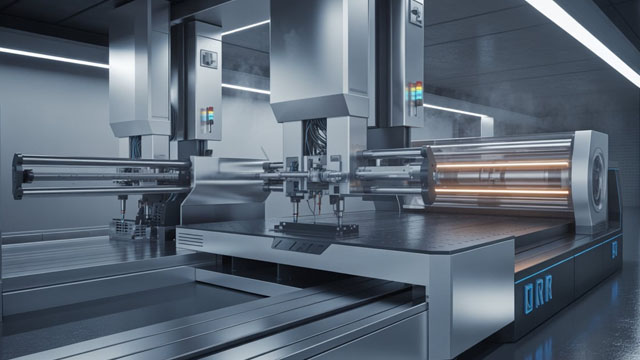
A durable growth outlook typically depends on expansion of the addressable set of companies that require fast iteration and small-to-mid batch production without long tooling lead times. Over a 5–10 year horizon, key secular drivers include:
- Rising product development intensity: shorter design cycles and higher engineering iteration rates increase demand for fast prototyping and quick-turn parts.
- Manufacturing flexibility demand: additive and hybrid manufacturing adoption supports more frequent changes in geometry and material selection, benefiting on-demand providers that can route work to the right process.
- Shift to decentralized, localized production: reducing logistics risk and delivery uncertainty supports distributed manufacturing models—an operational fit for rapid-turn suppliers with scalable fulfillment.
- From prototypes to production-intent: as designs mature, customers increasingly request small-batch runs to validate manufacturing-ready configurations before larger scale programs.
- Digitization of industrial workflows: CAD-driven quoting and automation lowers friction, encouraging broader adoption by engineering teams that previously relied on slower procurement and bespoke machining channels.
⚠ Risk Factors to Monitor
- Capacity and quality execution risk: rapid turn times require consistent throughput, stable suppliers, and disciplined quality systems; disruptions can increase rework, returns, and customer churn.
- Technology and process substitution: improvements in additive, machine learning-driven design optimization, or new manufacturing methods could compress lead-time advantages and pressure pricing.
- Customer and end-market cyclicality: demand can be sensitive to industrial capex cycles, engineering spend, and product launch calendars.
- Competitive pricing and margin pressure: peers offering similar online experiences can drive faster price convergence, making utilization and mix management critical.
- Intellectual property and compliance: handling engineering files introduces IP risk and potential disputes; robust controls and contracting reduce downside.
- Working capital and fulfillment economics: order flow dynamics can affect cash conversion through inventory, production scheduling, and receivables.
📊 Valuation & Market View
Markets typically value on-demand manufacturing and digital-automation service models using a blend of revenue multiples (when growth and scalability are credible) and EV/EBITDA (when margin durability and operating leverage are demonstrable). Key valuation drivers generally include:
- Gross margin structure: technology mix, utilization, yield, and per-order processing costs.
- Operating leverage: fixed-cost absorption as order volumes scale.
- Retention and repeat usage: evidence that customers return as projects progress from prototypes to production-intent configurations.
- Cash flow quality: working capital discipline and stable conversion from earnings to free cash flow.
In this sector, the premium is typically supported by credible scaling of automated quoting-to-production processes and durable customer repeat behavior, rather than by hardware-like asset appreciation.
🔍 Investment Takeaway
PROTO LABS offers exposure to digitized industrial prototyping and on-demand manufacturing with an investment thesis anchored in switching costs (design + process data gravity) and operational execution advantages created by an integrated quoting-to-production workflow. The long-term opportunity depends on maintaining quality and lead-time performance while scaling throughput and improving incremental economics through utilization and technology mix, in a competitive landscape led by instant-quoting peers such as Xometry and Fictiv.
⚠ AI-generated — informational only. Validate using filings before investing.
















 Growth Catalysts