
📘 D WAVE QUANTUM INC (QBTS) — Investment Overview
🧩 Business Model Overview
D-Wave Quantum designs and sells quantum computing systems (quantum processing units) and provides access to its quantum compute capability through a cloud-based offering. The value chain spans (1) proprietary quantum hardware and control-stack development, (2) deployment of QPUs to enterprise and research customers (including managed access models), and (3) software enablement that translates customer optimization and simulation workflows into quantum-usable formulations. Customer adoption is supported by a combination of platform access, technical services, and developer tooling that reduce the friction of running experiments and iterating on problem encodings.💰 Revenue Streams & Monetisation Model
Revenue is typically generated through a mix of:- System sales and related revenue: one-time or milestone-linked transactions tied to QPU delivery, installation, and integration.
- Subscription and managed access: recurring revenue associated with ongoing platform access, hosting, and enterprise compute enablement.
- Professional services and software enablement: project-based revenue for customer onboarding, solution development support, and workflow integration.
🧠 Competitive Advantages & Market Positioning
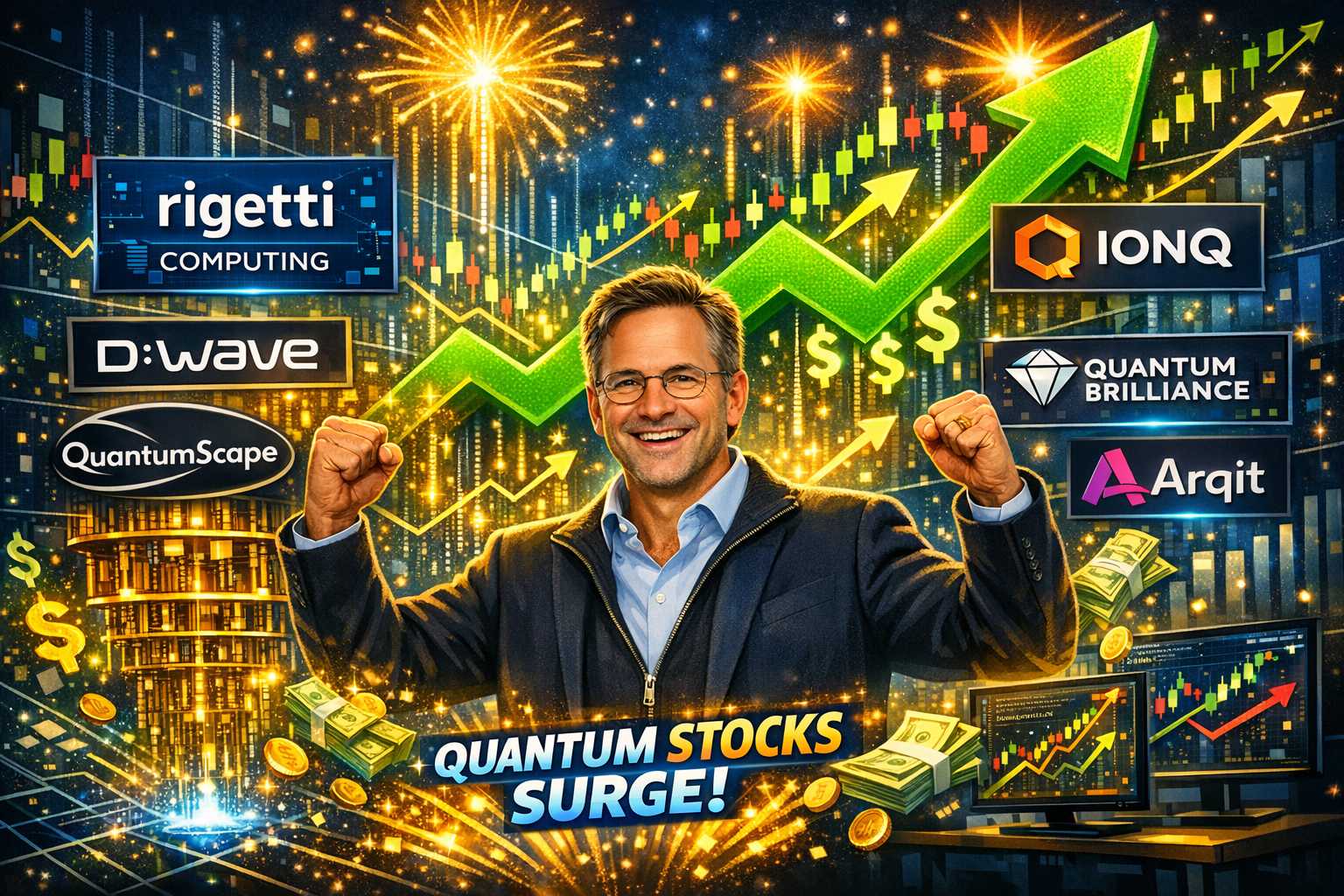
D-Wave’s positioning is anchored in quantum annealing and an integrated compute platform that supports optimization-oriented use cases. The moat is best viewed as a combination of switching costs and intangible assets (hardware and control/IP), supported by a growing ecosystem of users and partners. Switching costs / data gravity (practical): Enterprises that build repeatable workflows—problem encodings, benchmarking routines, and operational processes—tend to reuse the platform and toolchain they have already validated. Migrating away can require re-integration, retraining, and re-optimization of formulations for a different QPU model and programming environment. Intangible assets (technical/IP): Competence in quantum device physics, control systems, and deployment engineering is difficult to replicate on a short timeline. This creates durability around QPU performance characterization and operational reliability, even as the industry experiments with alternative quantum modalities. Competitive benchmarking (primary peers):- IonQ (trapped-ion quantum computing): focuses on a different quantum modality and a different hardware/programming pathway.
- Rigetti (superconducting gate-based quantum computing): pursues general gate-model systems with a different architecture and developer stack.
- Quantinuum (trapped-ion, enterprise-ready approach): targets commercialization pathways through software/stack offerings and enterprise partnerships.
🚀 Multi-Year Growth Drivers
Over a 5–10 year horizon, the growth outlook depends less on a single “hardware breakthrough” and more on sustained progress across commercialization and adoption:- TAM expansion in quantum-enabled optimization: enterprises across logistics, scheduling, portfolio construction, and materials/chemistry workflows seek better solutions under constraints and uncertainty.
- Enterprise workflow standardization: as customers operationalize benchmarking and solution pipelines, usage can shift from exploratory trials to recurring experimentation and production-adjacent pilots.
- Platform scaling and partner ecosystems: cloud access and tooling can increase utilization without linear increases in customer onboarding costs, supporting a more resilient revenue base.
- Broadening application scope: annealing workflows can expand through improvements in problem decomposition, error-mitigation techniques, and higher-level software abstractions that improve outcome reliability.
⚠ Risk Factors to Monitor
- Technological uncertainty: quantum computing roadmaps can shift due to performance, coherence, scaling limitations, and the practical value of quantum advantage for targeted workloads.
- Commercial adoption risk: customers may extend evaluation cycles if solution quality, time-to-solution economics, or integration effort does not meet operational needs.
- Capital intensity and financing risk: scaling hardware and maintaining competitive roadmaps can require continued funding, creating dilution risk if cash burn exceeds planned milestones.
- Competitive dynamics across modalities: alternative quantum approaches and software-native incumbents could capture mindshare if they demonstrate stronger practical advantage for priority use cases.
- Execution and deployment risk: delivering reliable hosted compute and system integration at enterprise standards affects retention and repeat usage.
- Regulatory and export controls: quantum hardware and related technologies can face compliance complexity across jurisdictions.
📊 Valuation & Market View
Quantum-equity valuations typically reflect optionality rather than near-term cash flow. Investors often anchor on:- Revenue scale and the trajectory from lumpy systems revenue toward more recurring platform/access revenue.
- Progress toward commercialization milestones (deployments, customer retention, and evidence of repeatable, measurable value).
- Path-to-profitability signaling: improving gross margins through higher software/platform mix and operating leverage as adoption grows.
🔍 Investment Takeaway
D-Wave’s investment thesis rests on building durable enterprise adoption of annealing-based quantum computing through an integrated platform and developer workflow. The most credible moat is practical switching costs created by workflow integration and the compounding value of technical know-how embedded in its hardware/control stack. Upside depends on converting early experimental demand into recurring usage and expanding the addressable application set where quantum optimization provides measurable operational value. Downside risk centers on commercialization timing, technology uncertainty, and capital needs.⚠ AI-generated — informational only. Validate using filings before investing.



















 Growth Catalysts