📘 ROCKWELL AUTOMATION INC (ROK) — Investment Overview
🧩 Business Model Overview
Rockwell Automation supplies industrial automation products and solutions that sit at the core of factory operations. Its offerings span the full control stack—programmable logic controllers (PLCs), motion control, industrial networking, human-machine interfaces, industrial software, and lifecycle services. In practice, Rockwell participates in the value chain by enabling customers to design, deploy, and operate automation systems that manage industrial processes with high reliability, safety, and throughput.
The company’s commercial model is anchored by an installed base. Once a plant standardizes on Rockwell hardware and software, future upgrades, expansions, and maintenance typically require continued compatibility across controllers, networks, programming tools, and engineering workflows. This installed-base dynamic supports a long-duration relationship rather than a purely transactional “equipment sale.”
💰 Revenue Streams & Monetisation Model
Revenue is generated through a mix of (1) automation products (controllers, I/O, drives and motion, safety components), (2) industrial software, and (3) services. While products can be project-driven and cyclical to industrial capex, services and recurring software components provide a more stable revenue profile.
Key monetisation mechanics include:
- Lifecycle services and support: maintenance, technical support, upgrades, and spares tied to an installed base.
- Industrial software: software licenses and ongoing support that embed into engineering and operations workflows.
- Engineering/solution delivery: integration and project execution that converts automation platforms into end-to-end customer outcomes.
Margin drivers typically include the mix shift toward software and services, the scale of support operations, and sustained utilization of engineering and delivery resources. Over time, customers tend to expand the scope of deployed systems within the same ecosystem, increasing the proportion of recurring revenue relative to one-time hardware sales.
🧠 Competitive Advantages & Market Positioning
Rockwell’s primary competitive moat is switching costs supported by an installed-base ecosystem. Competitors can match components, but replacing an automation stack across an enterprise requires re-engineering control logic, re-validating operational safety and performance, retraining personnel, and requalifying systems—costs that are both financial and operational.
Additional durable advantages include:
- Engineering workflow lock-in: programming tools, commissioning practices, and diagnostic methodologies become standardized around Rockwell platforms.
- Compatibility and performance continuity: maintaining consistent operation and performance across expansions reduces risk for customers.
- Safety and industrial standards: mature safety architectures and compliance tooling create a high bar for switching without operational disruption.
Competitive benchmarking: Rockwell operates in a multi-vendor landscape. Primary competitors include:
- Siemens (Industrial Automation): broad automation portfolio and strong presence in large process and discrete manufacturing.
- Schneider Electric (Energy Management & Automation): industrial control and electrical distribution integration with an embedded customer base.
- Emerson (Automation Solutions): emphasis on process automation and field technologies in many industries.
Rockwell’s industry focus skews toward discrete and hybrid manufacturing environments where controllers, motion control, and industrial software for plant operations are central. Competitors may emphasize different end markets or system integration pathways, but Rockwell’s differentiation is sustained by the practical difficulty of migrating an installed control and software ecosystem once deployed.
🚀 Multi-Year Growth Drivers
Growth over a 5–10 year horizon is driven by structural investment themes in industrial automation and software-enabled operations:
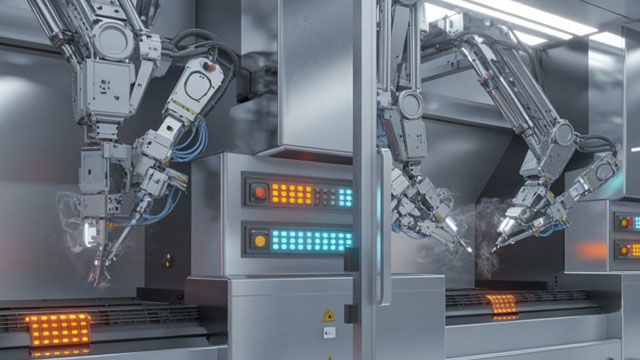
- Smart manufacturing and IIoT adoption: increased data utilization for monitoring, optimization, and control loops expands demand for industrial networking, software, and scalable architectures.
- Modernization of aging control systems: replacement cycles for legacy PLCs and related engineering tooling create sustained demand for platform upgrades and lifecycle services.
- Workforce constraints and productivity pressure: plants seek automation that reduces dependence on scarce engineering and skilled commissioning labor.
- Safety, compliance, and reliability requirements: stricter operational risk management supports spending on proven safety architectures and validated control environments.
- Enterprise-wide standardization: customers continue to consolidate vendors and engineering practices across sites, which favors providers with broad platform compatibility and long-term support.
Total addressable market expansion is not only about adding new factories; it also includes brownfield growth—expansions, upgrades, and digital layer deployments within existing industrial footprints. Rockwell’s installed-base advantage supports capturing both greenfield deployments and the recurring demand created by ongoing operations and lifecycle management.
⚠ Risk Factors to Monitor
- Industrial capex cyclicality: automation demand can slow when end markets delay factory investment and maintenance budgets.
- Competitive pricing and mix pressure: large automation competitors can pressure margins through bundling or platform promotions, particularly for hardware-heavy deployments.
- Technology transition risk: shifts in industrial software architectures, interoperability demands, or open standards could compress differentiation if adoption dynamics change.
- Cybersecurity and operational risk: industrial networks and software create exposure to security threats; failures or vulnerabilities can damage customer confidence and increase compliance costs.
- Supply chain and execution: component availability, order fulfillment, and project delivery performance can affect customer outcomes and revenue timing.
📊 Valuation & Market View
Market valuation for industrial automation providers typically reflects a balance between (1) cyclical industrial end-market exposure and (2) durability from service and software mix. Investors commonly look at valuation multiples anchored to earnings and cash flow (such as EV/EBITDA) and also consider revenue-quality metrics (such as the share of recurring services and software).
Valuation tends to respond to:
- Service and software mix: higher recurring revenue content generally supports multiple expansion.
- Operating leverage and margin trajectory: sustainable gross margin and disciplined opex drive earnings quality.
- Cash conversion: strong free cash flow generation and working-capital discipline improve perceived quality.
- Order-to-revenue conversion stability: consistent conversion reduces risk around growth visibility.
A sober market view typically treats Rockwell as a high-quality industrial automation platform with meaningful installed-base durability, though still exposed to the cycle in discrete and hybrid manufacturing.
🔍 Investment Takeaway
Rockwell Automation is positioned as a platform provider in industrial control and factory operations, with an installed-base ecosystem that creates durable switching costs for customers. Over a multi-year horizon, demand drivers from modernization, smart manufacturing, safety/compliance, and lifecycle services support growth beyond pure hardware cycles. The investment case centers on the sustainability of the software-and-services mix and the continued difficulty for customers to replace a validated automation stack once standardized.
⚠ AI-generated — informational only. Validate using filings before investing.
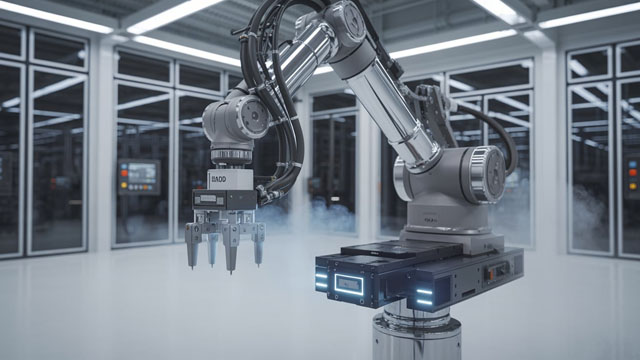



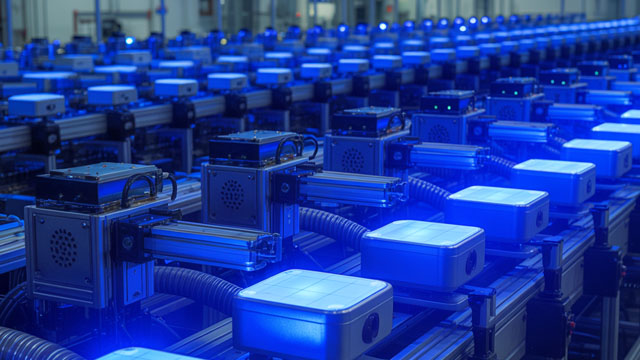











 Growth Catalysts