
📘 SITE CENTERS CORP (SITC) — Investment Overview
🧩 Business Model Overview
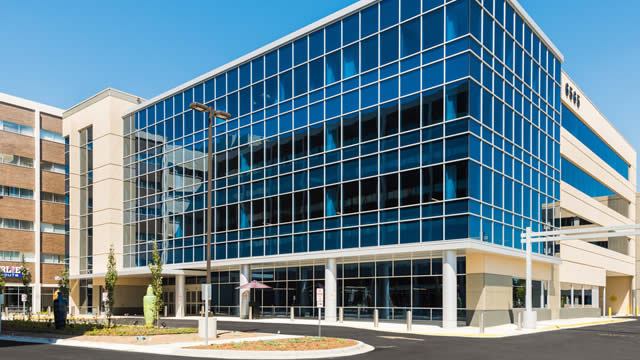
Site Centers Corp is an office REIT focused on owning, operating, and repositioning commercial properties in strategically selected U.S. submarkets. The value chain centers on (1) selecting locations where tenant demand can support durable cash flows, (2) maintaining an operating platform for leasing, capital projects, and property-level cost control, and (3) executing redevelopments/space optimization to retain tenants and improve revenue quality over time. The company’s customer “stickiness” is driven less by brand switching and more by physical and contractual realities: tenant leases, customized build-outs, and the time/cost required to relocate create practical friction that supports lease renewals and re-leasing economics.💰 Revenue Streams & Monetisation Model
Revenue is primarily property-level rental income, supplemented by recoveries and other pass-throughs tied to operations. Monetisation is influenced by:- Lease structure: base rent plus escalations where applicable, with upside tied to leasing spreads and renewal terms.
- Operating cost recoveries: a meaningful portion of property expenses can be passed through, supporting more stable net operating income when buildings are well maintained.
- Repositioning and redevelopment: capital projects can increase rentable value through updated amenities, improved layouts, and better alignment with tenant requirements—improving demand and rent potential.
🧠 Competitive Advantages & Market Positioning
Site Centers’ competitive positioning is best understood as a property-level moat anchored in location selectivity and repositioning capability, rather than a technology-driven advantage. Key moat elements- Tenant “switching costs” (lease + build-out economics): office tenants often face relocation costs, downtime, and bespoke space requirements. Well-leased, well-configured buildings benefit from practical friction that can support renewals and mitigate churn.
- Geographic and submarket selectivity (infrastructure of demand): ownership in submarkets with established employment density and transportation access can stabilize long-term demand versus less-structured markets.
- Intangible asset: operating and redevelopment execution: the ability to re-lease, refurbish, and reposition space efficiently influences returns on capital and reduces downtime risk.
- Vornado Realty Trust
- SL Green Realty
- Boston Properties
🚀 Multi-Year Growth Drivers
Over a 5–10 year horizon, growth is driven by fundamentals that directly translate into property-level cash flow:- Reinvestment and repositioning: repositioning aging office layouts toward modern tenant requirements can increase the probability of renewal and reduce vacancy duration.
- Rent and occupancy normalization within advantaged submarkets: office demand can be cyclical, but submarket selection and property quality can improve resilience and the speed of leasing recovery.
- Capital allocation and balance-sheet flexibility: disciplined capital recycling (selling lower-return assets and deploying into higher-IRR opportunities) can compound per-share value over time.
- Tenant demand for flexible, amenity-aligned space: tenants increasingly select space based on workplace functionality, transit access, and building condition—factors that can be influenced by redevelopment.
⚠ Risk Factors to Monitor
- Structural office demand risk: sustained shifts in workplace patterns can pressure occupancy, renewal rates, and lease terms.
- Capital intensity of repositioning: redevelopment success depends on achieving leasing outcomes that justify project costs; delays or cost overruns can impair returns.
- Refinancing and interest rate risk: REIT cash flows are sensitive to the cost and availability of capital; maturities and debt structure can amplify downside in tight credit environments.
- Market liquidity and cap-rate expansion: property valuations are linked to cap rates; broader risk-off periods can reduce access to favorable financing and pressure asset values.
- Tenant concentration and credit quality: leasing outcomes depend on tenant demand and credit; downturns can increase incentives required to secure leases.
📊 Valuation & Market View
Office REIT valuation is typically anchored to cash-flow metrics and property-level fundamentals rather than growth narratives alone. Common market frameworks include:- EV / EBITDA or EV / NOI-style comparisons, adjusted by leverage and asset quality
- Price-to-AFFO / FFO equivalents (sector-specific cash flow lens)
- Interest rates and credit spreads (affecting discount rates and refinancing)
- Occupancy stability and leasing spreads (supporting NOI)
- Redevelopment returns (project-level IRR and payback)
- Balance-sheet strength (debt maturities, interest coverage, and liquidity)
🔍 Investment Takeaway
Site Centers’ long-term thesis rests on owning a portfolio of office properties where submarket selection, lease-level switching friction, and redevelopment execution can preserve and grow net operating income through economic cycles. The investment case is best evaluated through property quality, leasing discipline, capital allocation rigor, and the capacity to convert reinvestment into durable tenant demand.⚠ AI-generated — informational only. Validate using filings before investing.



















 Growth Catalysts