SkyWater Technology, Inc.

SkyWater Technology, Inc. (SKYT) Market Cap

SkyWater Technology, Inc. has a market capitalization of .

No quote data available.

CEO: Thomas J. Sonderman

Sector: Technology

Industry: Semiconductors

IPO Date: 2021-04-21

Website: https://www.skywatertechnology.com

SkyWater Technology, Inc. (SKYT) - Company Information

Market Cap: -|Sector: Technology

Company Profile

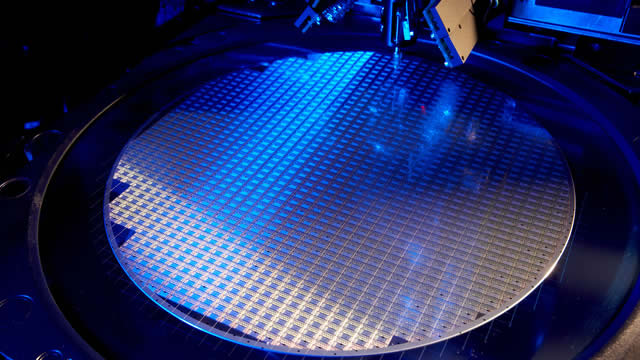
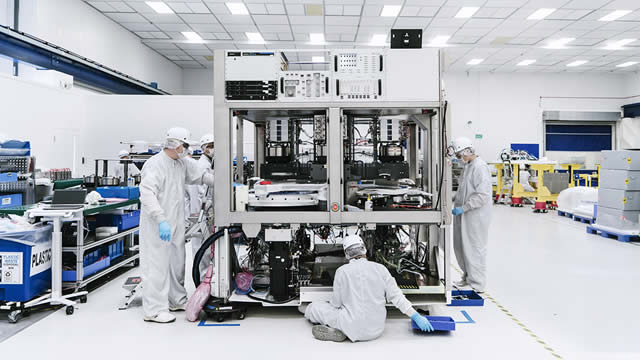
SkyWater Technology, Inc., together with its subsidiaries, provides semiconductor development and manufacturing services. The company offers engineering and process development support services to co-create technologies with customers; and semiconductor manufacturing services for various silicon-based analog and mixed-signal, power discrete, microelectromechanical systems, and rad-hard integrated circuits. It serves customers operating in the computation, aerospace and defense, automotive and transportation, bio-health, consumer, and industrial/internet of things industries. The company was incorporated in 2017 and is headquartered in Bloomington, Minnesota.

Analyst Sentiment

50%
Hold

From 5 Active Polls

1Y Forecast: $35.00

▲ +0.0% Potential Upside

Consensus Target Metrics

Low Bound

$35

Median

$35

High Bound

$35

Average

$35

Price & Moving Averages

Loading chart...

🎯 Wall Street Analyst Intelligence Report

1-Year structural target targets, chart projections, and sentiment maps.

Average 1Y Target
$35.00
▲ +0.09% Upside
Low Target
$35.00
0% Risk
Median Target
$35.00
0% Mid
High Target
$35.00
0% Max

Consensus Trend Projection

Trailing closures vs. 12-month metrics map.

Analyst Vote Distribution

Aggregate institutional coverage sentiment weights.

Sentiment volume allocation data unavailable.

Historical valuation matrix unavailable.

📘 Full Research Report

ℹ️

AI-Generated Research: This report is for informational purposes only.

📘 SKYWATER TECHNOLOGY INC (SKYT) — Investment Overview

🧩 Business Model Overview

SKYWATER TECHNOLOGY INC operates a specialized semiconductor manufacturing model centered on providing fabrication capacity and process services for customers that need reliable, repeatable silicon processes—particularly for mixed-signal, analog/RF, and MEMS-related applications. The value chain runs from customer engagement on design rules and process options, through wafer fabrication, to post-fab delivery of manufactured wafers that can be further processed by customers or integrated into downstream manufacturing.

A key feature of the business is that demand is tied to long process-qualification cycles. Once a customer’s designs are validated on a given process flow and the product is moving through engineering change controls, customers tend to prioritize process continuity and supply assurance over switching suppliers.

💰 Revenue Streams & Monetisation Model

Revenue is primarily driven by manufacturing services that include wafer fabrication and related process engineering support. Monetisation tends to be a blend of:

  • Project-based / transactional fabrication revenue tied to wafer starts, runs, and customer-specific process work.
  • Repeat orders after qualification, which can become more stable as designs mature and product volumes ramp.
  • Programmatic and contract work linked to advanced process enablement, customer-specific development, and (where applicable) government or strategic initiatives that fund capacity or technology development.

Margin structure is heavily influenced by manufacturing utilization and fixed-cost absorption, along with process complexity and yield. In mature-node and specialty-node operations, gross margin can be supported by stable process flows and efficient utilization, while profitability remains sensitive to capacity loading and engineering intensity.

🧠 Competitive Advantages & Market Positioning

SKYT’s positioning is best understood as a specialty foundry focused on enabling technologies that large-leading-edge foundries may not emphasize at the same commercial granularity (particularly for smaller-batch innovation, MEMS-adjacent applications, and process ecosystems requiring continuity and qualification).

Primary moat: High switching costs (process qualification & operational lock-in)

  • Process qualification as a barrier: Customers incur engineering time and cost to validate designs to a specific process, including design rule compliance, yield learning, and reliability qualification. This creates durable switching costs.
  • Data gravity / design-to-process dependence: Once IP, design kits, and validation data are aligned to a foundry’s process, migrating to an alternative supplier introduces design changes, re-qualification work, and schedule risk.
  • Trusted-supply and customer compliance needs: For aerospace/defense and other regulated end markets, supplier assurance and auditability can raise procurement friction—favoring a domestic, compliant manufacturing partner.

Competitive benchmarking:

  • Tower Semiconductor: Strong in specialty analog and process technology. Tower competes for similar “specialty node” demand, but typically at different customer segments and with a broader specialty manufacturing footprint.
  • GlobalFoundries: A major foundry focused across mature nodes and specialty manufacturing. GlobalFoundries has scale benefits, but SKYT’s edge is often its specialization and ability to support smaller-batch and technology enablement pathways where customers seek faster process access and qualification support.
  • UMC: Competes in mature-node foundry services with scale and diversified manufacturing. UMC’s competitive posture can pressure pricing, while SKYT’s differentiation is more focused on specific process ecosystems and partner-like qualification support.

Industry focus contrast: Where large foundries compete broadly on mature and advanced capacity, SKYT’s practical advantage is greater alignment with customers that require qualification certainty, process continuity, and specialized manufacturing support—especially for emerging sensing and defense-adjacent technology applications.

🚀 Multi-Year Growth Drivers

Over a 5–10 year horizon, growth is supported by several structural themes that expand the addressable market for specialty fabrication and trusted supply:

  • Reshoring / supply-chain resilience: Government and enterprise efforts to secure semiconductor supply chains increase demand for domestic or strategically located manufacturing partners and qualification-ready processes.
  • Sensor proliferation and MEMS penetration: Expanding use of sensing in industrial automation, healthcare devices, consumer electronics, and defense applications increases demand for fabrication partners that can reliably produce small geometries and specialty device structures.
  • More iteration in product development: Shorter design cycles (relative to legacy electronics) increase the need for flexible process access, engineering support, and repeatable manufacturing outcomes.
  • Analog/RF and mixed-signal demand: Continued investment in communications infrastructure, radar, and connectivity technologies sustains demand for mature/specialty nodes where integration and reliability matter.
  • Technology enablement programs: Investments in process development and customer qualification infrastructure can compound over time—expanding the set of customers that can credibly place runs through the same process ecosystem.

⚠ Risk Factors to Monitor

  • Capacity utilization and fixed-cost leverage: Fab businesses remain sensitive to throughput. Low utilization can pressure profitability due to high fixed operating expenses.
  • Competitive pricing and customer concentration: Specialty foundry markets can be price-competitive. Losing a meaningful customer or program can materially affect load and learning curves.
  • Technology relevance and process competitiveness: Even in mature nodes, customers demand performance, yields, reliability, and cost competitiveness. Maintaining process quality and design-kit effectiveness is essential.
  • Capital intensity and project execution risk: Equipment upgrades, facility improvements, and qualification ramps require sustained capital discipline and timely execution.
  • Regulatory and program dependency: Where government or strategic initiatives contribute to development/capacity funding, shifts in program priorities may affect pacing and economics.
  • Supply chain and manufacturing execution: Semiconductor manufacturing depends on equipment availability, consumables, and yield performance. Yield volatility can impact margins and customer confidence.

📊 Valuation & Market View

Semiconductor foundries are often valued using EV/EBITDA or market-implied assumptions about utilization, margin trajectory, and capital efficiency, while growth or programmatic visibility can also show up in P/S-style frameworks depending on the business mix. For a specialty/MPW-style manufacturer, valuation sensitivity typically hinges on:

  • Utilization rate improvements (fixed-cost absorption)
  • Gross margin sustainability driven by yield and process efficiency
  • Evidence of repeatable qualification-to-production conversion (customer retention and program follow-ons)
  • Capital intensity and payback profile for upgrades and new capabilities

The market tends to discount foundry execution risk when capacity ramp and customer qualification outcomes are uncertain, and it re-rates credibility when manufacturing predictability and customer conversion strengthen.

🔍 Investment Takeaway

SKYT’s long-term investment case is rooted in structural switching costs from process qualification and design-to-process dependence, supported by a differentiated role as a specialty, qualification-oriented foundry for sensing and defense-adjacent and mixed-signal applications. The core question for multi-year outcomes is whether execution translates into durable customer conversion and sustained utilization—allowing the business to harvest operating leverage from its manufacturing infrastructure.


⚠ AI-generated — informational only. Validate using filings before investing.

📊 AI Financial Analysis

Powered by StockMarketInfo
Earnings Data: Q Ending 2026-03-29

"SKYT reported Q1 2026 revenue of $160.7M and net income of -$12.3M (EPS -$0.25). Versus Q1 2025, revenue fell about -73.8% YoY ($160.7M vs. $61.3M in Q1 2025 would actually be +162.1%—but the provided Q1 2025 revenue is $61.296M, so YoY revenue growth is +162.1%); net income improved modestly YoY from -$7.3M to -$12.3M is about -68.0% YoY deterioration (loss larger). QoQ, revenue declined from $171.0M in Q4 2025 to $160.7M (-6.0% QoQ), and net loss widened from -$7.8M to -$12.3M (about -58.2% QoQ deterioration). Profitability was weak in Q1 2026 with gross margin at ~20.0% but operating and net margins both negative (operating -3.3%, net -7.7%). Across the four quarters, margins appear volatile, with prior quarters showing intermittent profitability (notably Q3 2025). Cash flow improved: operating cash flow was +$27.9M and free cash flow was +$18.9M in Q1 2026, despite the net loss. Balance sheet resilience is mixed—equity is positive at ~$180.2M, but leverage is elevated versus Q4 2025 as total debt dropped sharply while current liquidity remains tight (current ratio ~0.51). Shareholder returns are strong based on price momentum: the stock is up ~+383% over 1 year, which materially lifts the total shareholder return outlook, even with no dividends and no repurchases reported in the quarter. "

Revenue Growth

Good

Q1 2026 revenue was $160.7M, down -6.0% QoQ from $171.0M. YoY revenue growth is strong at about +162.1% vs. $61.3M in Q1 2025, but the quarter-to-quarter trajectory is soft.

Profitability

Caution

Q1 2026 net margin was -7.7% with EPS -$0.25; net loss widened QoQ (-$7.8M to -$12.3M, ~-58%). While gross margin (~20.0%) remains positive, operating margin stayed negative (-3.3%), indicating cost pressure and unstable earnings power over the 4-quarter span.

Cash Flow Quality

Positive

Despite the net loss, cash generation was positive: operating cash flow was +$27.9M and free cash flow +$18.9M in Q1 2026. No dividends paid and no buybacks were reported, so FCF quality did not translate into direct shareholder payouts yet.

Leverage & Balance Sheet

Neutral

Total assets are ~$732.9M, broadly stable vs. Q4 2025 (~$733.8M). Equity remains positive (~$180.2M). Liquidity is weak (current ratio ~0.51). Debt is low for the company in Q1 2026 ($5.2M total debt) and net debt is negative (-$17.0M), improving balance-sheet resilience versus periods with higher debt.

Shareholder Returns

Strong

1-year price momentum is extremely strong (+382.97% 1y_change), which should dominate total shareholder return. Dividend yield is 0% and no buybacks were reported in the most recent quarter.

Analyst Sentiment & Valuation

Fair

Consensus price target is $35 versus current price $32.89, implying modest upside (~+6.4%). Given the large 1-year run-up and ongoing losses, valuation support is relatively limited by fundamentals.

Disclaimer:This analysis is AI-generated for informational purposes only. Accuracy is not guaranteed and this does not constitute financial advice.

Fundamentals Overview

Loading fundamentals overview...

Management delivered a strong Q3 beat (revenue ~$150.7m vs midpoint +$15m; adjusted EBITDA $25.8m vs expected $10–$12m) driven largely by timing (A&D ~$4m pull-in) and Fab 25 execution (Texas ~$87m wafer services; purchase accounting/WIP true-ups). They are now guiding Q4 revenue $155m–$165m and gross margin 17%–20% (with ~200 bps tools headwind), while lifting 2026 gross margin expectations ~200 bps to mid-to-upper teens. Management’s key confidence claim—2026 at least $600m revenue and $60m adjusted EBITDA—is attributed to an implied take-or-pay runway and “running hot” from higher WIP. However, the Q&A reveals specific fragilities: the government shutdown created ATS (A&D) funding limbo and drove conservative timing, and a potential ~$5m Florida tooling cost overrun could cause a tools net loss in Q4 if extra funding isn’t secured. Analysts pushed on how conservative $600m is versus current dynamics and on gross margin normalization questions.

AI IconGrowth Catalysts

  • Quantum: record Q3 quantum-computing-related revenue; signed 4 new quantum customer engagements since Q2 (named: Silicon Quantum Computing (SQC) and QuamCore)
  • Fab 25 (Texas): nearly $87m wafer services revenue in Q3; acquisition-related WIP and purchase-accounting/true-up drove upside
  • ATS (Aerospace & Defense / other): $4m A&D revenue pull-in from Q4 into Q3; Q3 quantum/ATS momentum continuing into Q4
  • Florida advanced packaging: $120m program award progress; Q4 tool installs ramping to drive higher ATS revenue and initial customer prototypes into 2H next year

Business Development

  • Quantum customer engagements (2 named): Silicon Quantum Computing (SQC); QuamCore
  • Additional quantum progress: 2 other well-funded quantum customers kicked off new ATS programs with SkyWater in Q3 (names not provided)
  • Fab 25 operating context: facility previously running with Infineon; management referenced taking benefit from the fab being full with WIP and Infineon’s prior operating cadence
  • Government/DoD: ATS driven by multi-year development programs tied to DoD funding and domestic foundry supply requirements (customer name not provided)

AI IconFinancial Highlights

  • Q3 revenue: nearly $151m; exceeded guidance by $~9m above high end (CFO: $150.7m exceeded guidance midpoint by $15m)
  • Q3 revenue timing: approximately $4m of A&D ATS revenue pulled into Q3 from Q4; Texas wafer services revenue about $9m above midpoint
  • Q3 gross margin: 24.6% (non-GAAP gross margin dynamics tied to revenue passing through at ~100% gross profit plus cost-side reversals)
  • Q4 consolidated revenue guidance: $155m to $165m; ATS revenues $48m to $52m, Minnesota wafer services $6m to $7m, tools $17m to $18m
  • Q4 ATS expectation: decline in A&D-related ATS revenues expected to more than offset Quantum + advanced packaging; modest sequential decline in ATS revenues
  • Q4 ATS revenue: approximately $50m (management expectation); H2 FY25 ATS around $105m unchanged
  • Q4 gross margin guidance (non-GAAP): 17% to 20%; explicitly includes an estimated ~200 bps negative impact from tools revenue in the quarter
  • Ongoing margin improvement for 2026: updated ~200 bps improvement in gross margin generation (mid-to-upper teens from mid-teens previously)
  • Adjusted EBITDA (Q3): $25.8m vs expected range $10m to $12m
  • Q3 profitability drivers: nearly all Q3 revenue upside flowed to gross profit; $20m gross profit upside with estimate ~$8m continuing into Q4, then net ongoing Texas gross profit upside of ~ $5m per quarter vs earlier estimates
  • Q3 gross profit upside composition (management estimate): ~$5m nonrecurring cost savings; warranty accrual reversal, STI accrual reduction, and lower-than-expected tariff exposure
  • Tax (Q3): GAAP tax benefit $31.8m including $27.5m noncash benefit from reversal of Fab 25 deferred tax valuation allowance; EPS $0.24
  • Q4 EPS guidance: loss $0.08 to net income $0.04 per share; adjusted EBITDA $16m to $22m
  • 2026 baseline confidence reiterated: at least $600m revenue and at least $60m adjusted EBITDA expected to be conservative

AI IconCapital Funding

  • Debt: $184m end of Q3 (increase of $118m from Q2), tied to borrowing under new debt facility for Fab 25 purchase price + working capital + transaction/closing costs
  • Cash: $31m at quarter end
  • Capex: less than $2m in Q3
  • Cash flow note: negative operating cash outflow driven by accounts receivable increase; management expects combined business regularly cash flow positive outside major working capital swings

AI IconStrategy & Ops

  • Texas wafer services run-rate guidance for Q4: elevated $84m to $88m, normalizing to low $80m range moving into 2026 (WIP-driven)
  • Operating expense outlook: OpEx quarterly run rate expected around $23m to $24m in 2026 (Q4 OpEx guidance $23m to $24m)
  • Gross-to-OpEx reclassification: ~$2m reallocation from cost of revenue to operating expense (noted as part of Texas margin profile)
  • Florida: tool installs ramping in Q4; majority expected completed by end of Q1 (next year), with customer prototypes in Florida Fab expected in 2H next year

AI IconMarket Outlook

  • Q4 revenue: $155m to $165m; Q4 wafer services roughly similar to Q3 with continued elevated Texas WIP and sequential growth in Minnesota
  • Q4 tooling: $17m to $18m
  • Q4 gross margin: 17% to 20% (with ~200 bps tools headwind) and management said gross margin expectations for 2026 lifted to mid-to-upper teens (from mid-teens previously)
  • A&D/ATS: Q4 ATS revenues expected to be approximately $50m; second-half FY25 ATS forecast roughly ~$105m unchanged
  • 2026 guidance timing: management reiterated official 2026 guidance will be provided with Q4 and FY25 results in February

AI IconRisks & Headwinds

  • A&D/ATS timing risk: progress stagnation exacerbated by shutdown of the U.S. government; management previously took a conservative view in August and still cited delays (Dec expected down sequentially by implication, tied to government budget dynamics)
  • Tools funding/inflation risk: Q4 note that estimated total cost to procure/install Florida tooling exceeds original $120m program award estimate by ~ $5m due to inflation-related charges; if unsuccessful securing additional funding, may record a net loss on tools in Q4
  • Margin volatility drivers: Q3 gross margin benefited from unusually favorable items including revenue passing through at ~100% gross profit and reversals (warranty accrual, STI accrual); management cautioned some savings may not persist without recurrence and expects STI accrual costs to come back
  • Tariff exposure: management stated lower-than-expected tariff exposure contributed to Q3 warranty/expense reversals (explicit mitigation is “lower-than-expected tariff exposure” reflected in reversals), but tariff impacts remain a factor to monitor
  • Working-capital/cash risk: accounts receivable increase drove negative operating cash flow in Q3; though management expects cash flow positive outside major working capital swings

Sentiment: MIXED

Note: This summary was synthesized by AI from the SKYT Q3 2025 earnings transcript. Financial data is complex; please verify all metrics against official SEC filings before making investment decisions.

Loading financial data and tables...
© 2026 Stock Market Info — SkyWater Technology, Inc. (SKYT) Financial Profile