TransMedics Group, Inc.

TransMedics Group, Inc. (TMDX) Market Cap

TransMedics Group, Inc. has a market capitalization of .

No quote data available.

CEO: Waleed H. Hassanein

Sector: Healthcare

Industry: Medical - Devices

IPO Date: 2019-05-02

Website: https://www.transmedics.com

TransMedics Group, Inc. (TMDX) - Company Information

Market Cap: -|Sector: Healthcare

Company Profile

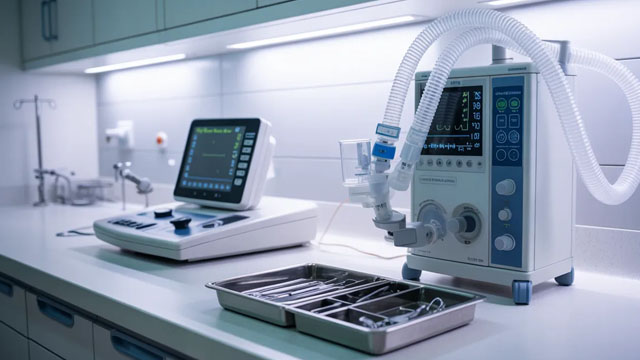
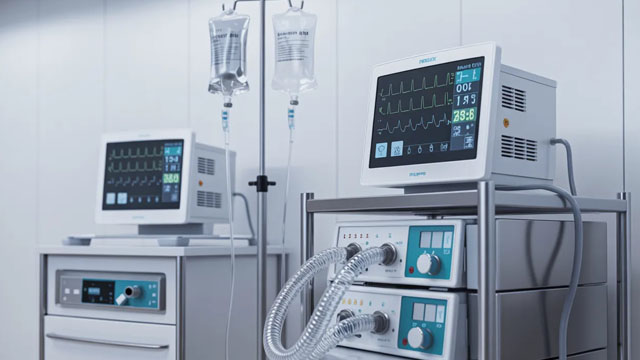
TransMedics Group, Inc., a commercial-stage medical technology company, engages in transforming organ transplant therapy for end-stage organ failure patients in the United States and internationally. The company offers Organ Care System (OCS), a portable organ perfusion, optimization, and monitoring system that utilizes its proprietary and customized technology to replicate near-physiologic conditions for donor organs outside of the human body. Its Organ Care System includes OCS LUNG for the preservation of standard criteria donor lungs for double-lung transplantation; OCS Heart, a technology for extracorporeal perfusion and preservation of donor hearts; and OCS Liver for the preservation of donor livers. The company was founded in 1998 and is headquartered in Andover, Massachusetts.

Analyst Sentiment

77%
Strong Buy

From 11 Active Polls

1Y Forecast: $120.20

▲ +0.0% Potential Upside

Consensus Target Metrics

Low Bound

$75

Median

$124

High Bound

$142

Average

$120

Price & Moving Averages

Loading chart...

🎯 Wall Street Analyst Intelligence Report

1-Year structural target targets, chart projections, and sentiment maps.

Average 1Y Target
$120.20
▲ +73.12% Upside
Low Target
$75.00
8% Risk
Median Target
$124.00
79% Mid
High Target
$142.00
105% Max

Consensus Trend Projection

Trailing closures vs. 12-month metrics map.

Analyst Vote Distribution

Aggregate institutional coverage sentiment weights.

Sentiment volume allocation data unavailable.

Historical valuation matrix unavailable.

📘 Full Research Report

ℹ️

AI-Generated Research: This report is for informational purposes only.

📘 TRANSMEDICS GROUP INC (TMDX) — Investment Overview

🧩 Business Model Overview

TransMedics supplies an integrated organ preservation and transportation platform used by transplant centers to improve the usability of donor organs. The company’s offering typically includes (1) capital equipment that performs ex vivo perfusion/monitoring, (2) a repeat-purchase ecosystem of disposables and consumables that enable each preservation episode, and (3) connected technology and service components that support clinical workflow, remote monitoring, training, and operational reliability.

Once a hospital system incorporates the platform into its transplant logistics, the workflow and protocols become “baked into” procurement, staff training, scheduling, and clinical pathways—creating durable customer stickiness and supporting long-run repeat usage.

💰 Revenue Streams & Monetisation Model

Monetisation is driven by a mixed model that combines one-time and recurring economics:

  • System/equipment revenue: upfront sales of the platform used to establish clinical capability.
  • Consumables/disposables & procedure-linked revenue: repeat purchases tied to each organ preservation event, which generally form the most visible driver of long-term revenue durability.
  • Service and connected/monitoring-related revenue: support, uptime, and technology enablement that reduce operational friction and help sustain platform utilization.

The primary margin drivers tend to stem from scaling the installed base (raising utilization), improving mix toward higher-value consumables, and maintaining device/service reliability that supports continued adoption and protocol adherence.

🧠 Competitive Advantages & Market Positioning

TransMedics’ moat is best characterized as high switching costs plus an installed-base flywheel, underpinned by regulatory-cleared clinical workflows and proprietary technology.

  • Switching costs (workflow + training + procurement integration): transplant centers must standardize protocols, train clinicians/technicians, and align logistics around the preservation system. Switching to a different platform can require process re-validation and operational disruption.
  • Installed-base economics: equipment adoption increases the addressable volume of future procedure-linked consumables and service engagement.
  • Intangible assets (clinical evidence + platform IP): multi-stage device validation, regulatory clearance, and the operational know-how required to run consistent preservation performance create a barrier for late entrants.

Competitive benchmarking (primary peers):

  • OrganOx — emphasizes ex vivo organ perfusion solutions; competes for transplant center adoption and clinical protocol inclusion.
  • XVIVO Perfusion — focuses on organ preservation technologies and broad transplant applications; competes on device performance and ease of integration.
  • Other preservation platform and service providers — regional players and alternative preservation approaches compete for institutional procurement budgets and clinician preference.

Positioning contrast: TransMedics’ differentiation is less about a single device feature and more about platform-level deployment—driving an installed-base model where the system becomes part of repeat transplant logistics. Competitors generally offer similar technical categories (ex vivo preservation/perfusion), but durable share capture depends heavily on adoption friction, demonstrated clinical operational fit, and the economics of disposables and services over time.

🚀 Multi-Year Growth Drivers

Growth is supported by structural demand for higher transplant throughput and better utilization of available organs, which expands the total addressable market beyond the absolute number of transplants.

  • Expanding donor utilization: ex vivo preservation aims to increase the usable pool of donor organs, shifting procedures from “discard” to “transplantable” and supporting higher utilization rates of preservation platforms.
  • Indication and organ-type expansion: scaling from one clinical use-case to additional organ categories can expand addressable procedures per center and deepen installed-base value.
  • Healthcare system focus on capacity: transplant waitlist pressure and outcomes optimization encourage adoption of technologies that can reduce geography- and time-related constraints in organ logistics.
  • Institutional procurement maturity: once centers gain experience, multi-center adoption tends to broaden through established vendor relationships, training pipelines, and standardized protocols.

Over a 5–10 year horizon, the durable thesis hinges on maintaining adoption momentum, increasing procedure penetration per installed system, and extending clinical footprint into additional preservation workflows.

⚠ Risk Factors to Monitor

  • Clinical and evidence requirements: adoption depends on continued clinical performance, published evidence, and successful integration into transplant programs; new indications can face higher regulatory and adoption scrutiny.
  • Reimbursement and payer coverage dynamics: reimbursement pathways for preservation episodes and related services can affect purchasing decisions and utilization rates.
  • Competitive technology and pricing pressure: peer platforms (e.g., OrganOx, XVIVO) can compete through pricing, performance claims, and relationship-based sales—potentially impacting utilization or gross margin.
  • Regulatory and manufacturing execution: scaling systems and consumables while maintaining quality systems and regulatory compliance is essential; supply constraints can impair adoption.
  • Capital allocation and near-term working capital: growth initiatives may require inventory and logistics support; execution risk can emerge in scaling periods.

📊 Valuation & Market View

Market participants generally value this segment using revenue growth durability, installed-base trajectory, and gross margin sustainability, often expressed through P/S and EV/revenue rather than near-term earnings metrics. The multiple typically expands when investors gain confidence in:

  • Installed-base growth (new system placements)
  • Utilization/procedure penetration (consumables scaling)
  • Gross margin improvement (mix shift toward consumables and service)
  • Successful regulatory and clinical expansion (new organ types / workflow additions)

In contrast, valuation pressure tends to occur if adoption slows, competitive dynamics force unfavorable pricing, or reimbursement constraints limit procedure-linked growth.

🔍 Investment Takeaway

TransMedics presents a long-duration growth profile anchored in high switching costs and an installed-base consumables/service engine within the organ preservation and transplantation workflow. The core investment case centers on sustained institutional adoption, procedure-level scaling, and evidence-backed expansion of platform use across additional organ types—while monitoring reimbursement, clinical/regulatory execution, and competitive pressure from established preservation technology peers such as OrganOx and XVIVO.


⚠ AI-generated — informational only. Validate using filings before investing.

📊 AI Financial Analysis

Powered by StockMarketInfo
Earnings Data: Q Ending 2026-03-31

"TMDX (latest: 2026-03-31) reported Revenue of $173.9M and Net Income of $7.3M (EPS $0.21). YoY (vs 2025-03-31), revenue increased 21.1% ($173.9M vs $143.5M) while net income fell 71.5% ($7.3M vs $25.7M). QoQ (vs 2025-12-31), revenue rose 8.2% ($173.9M vs $160.8M) but net income declined 93.1% ($7.3M vs $105.4M). Profitability contracted materially: operating margin fell to 7.6% from 13.2% QoQ and net margin fell to 4.2% from 65.6% QoQ (notably the prior quarter included unusual items, as suggested by the extreme net margin swing). Over the last four quarters, gross margin was broadly stable (~58.1%–61.5%) but the bottom line is highly volatile. Cash flow quality weakened. Operating cash flow was $24.5M and free cash flow was -$12.1M due to higher capex (-$36.7M). Balance sheet liquidity remains strong (cash & equivalents $461.7M; current ratio 6.74), though leverage is still elevated with total debt $818.8M versus equity $494.0M. Shareholder returns appear positive on momentum: the stock is up 35.7% over 1 year (above the 20% threshold), with no dividend payments reported and modest buybacks ($1.7M in the quarter). Analyst consensus targets ($144.75) imply ~25% upside from the $115.87 price, supporting sentiment."

Revenue Growth

Good

Revenue grew 21.1% YoY (2026-03-31 vs 2025-03-31) and 8.2% QoQ (vs 2025-12-31), indicating solid top-line momentum despite earnings volatility.

Profitability

Caution

Profitability deteriorated sharply QoQ: operating margin fell to 7.6% from 13.2% and net margin to 4.2% from 65.6%. Net income is down 71.5% YoY, implying cost pressure and/or non-recurring effects.

Cash Flow Quality

Neutral

Operating cash flow was $24.5M but free cash flow was -$12.1M in the quarter due to higher capex. Prior quarter had positive FCF, so cash generation is currently weaker.

Leverage & Balance Sheet

Positive

Liquidity is strong (cash $461.7M; current ratio 6.74). However, leverage remains meaningful with total debt $818.8M and equity $494.0M; retained earnings are negative.

Shareholder Returns

Positive

Total shareholder momentum is strong: 1y_change is +35.7% (>20% threshold). No dividends reported; buybacks were small ($1.7M).

Analyst Sentiment & Valuation

Positive

Consensus target $144.75 vs $115.87 current price suggests ~25% upside. Valuation multiples appear elevated, but analyst outlook is supportive.

Disclaimer:This analysis is AI-generated for informational purposes only. Accuracy is not guaranteed and this does not constitute financial advice.

Fundamentals Overview

Loading fundamentals overview...

So what: Q1 2026 showed strong top-line execution for TMDX despite U.S. donor-number volatility tied to the Transplant Modernization Act. Revenue grew 21% YoY to $174M, with logistics services continuing to scale (~$32M; +22% YoY) and U.S. transplant product up ~22% YoY. However, gross margin fell ~331 bps YoY to ~58%, driven by deliberate internal supply chain replenishment for DENOVO/ENHANCE and ongoing investment in NOP capabilities, including onetime items expected to normalize. Management’s key near-term swing factor is clinical-program readiness: CHOPS is positioned as the ENHANCE/DENOVO control-arm device, with IDE supplement filing within weeks and approval/implementation targeted for early Q3 2026. Longer-term upside concentrates in OCS Kidney (Gen 3.0) with a working device targeted for late June and early-2027 U.S. IDE submission. Margin headwinds persist (adjusted operating margin guidance up to ~250 bps below 2025), making the story constructive but not yet margin-accretive.

AI IconGrowth Catalysts

  • ENHANCE and DENOVO unlocking via CHOPS: IDE supplement filing within weeks, expected approval/implementation early Q3 2026
  • CHOPS positioned for short DBD heart preservation (~2 hours) where current use is cold static storage
  • OCS Kidney on Gen 3.0 platform: targeting working device by late June (ATC, Boston) and early 2027 U.S. IDE submission
  • Gen 3.0 upgrades for liver, heart, and lung to reduce part count, improve reliability, and increase OCS adoption
  • NOP Europe expansion: Italy hub buildout (4 hubs) and Benelux hub establishment; replicate U.S. NOP adoption model
  • U.S. NOP efficiency initiative: double-shifting a portion of the aircraft fleet to raise utilization/capacity in 2026

Business Development

  • Definitive agreement with European charter flight operator PAD Aviation (PAD) to build a European dedicated transplant air logistics network; aircraft model noted as Embraer Phenom 300Es-equivalent fleet
  • Italy: building NOP infrastructure and staffing across 4 hubs and applying for Italian organ transplant air/ground logistics tenders for select regions
  • Benelux (Netherlands/Belgium): working with regional stakeholders to establish NOP hubs staffed by dedicated clinical TransMedics teams

AI IconFinancial Highlights

  • Total revenue: $174M (+21% YoY, +8% sequentially)
  • U.S. transplant product revenue: $102M (+22% YoY, +7% sequentially); international transplant revenue grew +39% YoY and +17% sequentially
  • Logistics services revenue: ~$32M in Q1 (+22% YoY; +12% sequentially)
  • Gross margin: ~58% down 331 bps YoY; management attributes decline to internal supply chain replenishment for DENOVO/ENHANCE and continued NOP investment plus onetime items (expected to normalize)
  • Adjusted operating margin: ~10% in Q1; adjusted net income ~$11M or $0.30 diluted EPS
  • Operating margin guidance: up to ~250 bps below prior year (adjusted operating margin vs 2025) referenced in Q&A
  • Operational volume driver: OCS case volume growth and increased clinical adoption with no contribution from ENHANCE/DENOVO programs due to enrollment timing

AI IconCapital Funding

  • Cash and cash equivalents: $462M at quarter end
  • No buyback or debt figures disclosed in the provided transcript

AI IconStrategy & Ops

  • CHOPS described as an active cooling device with controllable temperature range of 4 to 12°C; positioned as control arm device for ENHANCE/DENOVO once IDE supplement approved
  • IDE supplement timeline: file within next few weeks; expect approval and implementation early Q3 2026
  • CHOPS is not being rolled out for liver/kidney yet; management stated no decision for those organs
  • U.S. NOP fleet: maintained ~82% coverage of NOP air-transport mission and expects 22 operational aircraft throughout 2026; plans to double shift a portion of the fleet for capacity/efficiency
  • ERP/headquarter relocation and IT investments cited as contributors to adjusted SG&A increases

AI IconMarket Outlook

  • Full-year 2026 revenue guidance reiterated: $727M to $757M (+20% to +25% vs FY2025)
  • Long-term gross margin profile: around 60% (near-term pressure expected per management)
  • ENHANCE and DENOVO: IDE supplement approval/implementation targeted for early Q3 2026

AI IconRisks & Headwinds

  • U.S. donor numbers below expectation: ‘disease donor numbers’ below last year and below expectation through Q1 and April, with Q2 uncertainty
  • Modernization Act disruption acknowledged as transient negative impact on OPO performance and overall donor numbers (timing of stabilization unknown)
  • Margin headwind in Q1: gross margin down 331 bps YoY due to internal supply chain replenishment to support DENOVO/ENHANCE and ongoing NOP network investment plus onetime items
  • ENHANCE Part B and DENOVO enrollment timing delayed by competitive reaction/confusion; management expects strategy execution after mitigation via CHOPS

Q&A: Analyst Interest

  • CHOPS market strategy & cannibalization: Management said CHOPS is not cannibalizing existing use; it targets a currently underutilized segment of DBD hearts with ~2-hour preservation currently handled with static cold storage. They also framed CHOPS as a control-arm enabler and expanded portfolio opportunity rather than a replacement product.
  • CHOPS/ENHANCE/DENOVO trial design implications: Management rejected the idea that adding CHOPS creates a confusing or lower-standard control. They argued there is no established cold storage beyond ice, and CHOPS validates temperatures (4–8°C or 10°C). They also said CHOPS won’t be investigational by result interpretation and expect OCS value via multiple value points.
  • Operating margin and phasing for 2026: Management declined to give detailed phasing but stated expectations of adjusted operating margin up to ~250 bps below last year. They attributed margin trajectory to an investment plan that needs to materialize before results appear, implying front-loaded investment in 2026 with leverage later.

Sentiment: MIXED

Note: This summary was synthesized by AI from the TMDX Q1 2026 earnings transcript. Financial data is complex; please verify all metrics against official SEC filings before making investment decisions.

Loading financial data and tables...
© 2026 Stock Market Info — TransMedics Group, Inc. (TMDX) Financial Profile