
📘 TARGA RESOURCES CORP (TRGP) — Investment Overview
🧩 Business Model Overview
Targa Resources operates an integrated set of midstream assets that move and convert North American hydrocarbons—most importantly natural gas liquids (NGLs)—from production regions to where they can be fractionated, stored, blended, and delivered into end markets such as petrochemical feedstock demand and refined products logistics.
The value chain is built around throughput: producers and upstream marketers supply gas and associated liquids; Targa processes, transports, and fractionates NGL streams through a network of pipelines, fractionation facilities, storage, and terminals. This structure converts basin-level supply into cash-flowing fees and spread-based opportunities, with operational emphasis on reliability, system connectivity, and contract coverage.
Customer stickiness is supported by operational and geographic constraints: once producers and marketers route volumes through a specific pipeline and processing footprint, re-routing is typically costly and disruptive due to transportation distance, quality/specification constraints, and system availability.
💰 Revenue Streams & Monetisation Model
Revenue is predominantly driven by a mix of:
- Fee-based transportation, processing, and storage: Tariff-like earnings linked to moving volumes and using capacity (often supported by minimum-volume commitments and/or “pay-for-usage” structures).
- Commodity-linked margins: Fractionation and NGL logistics can generate additional return through product mix, processing economics, and the spreads between input gas/NGL components and end products.
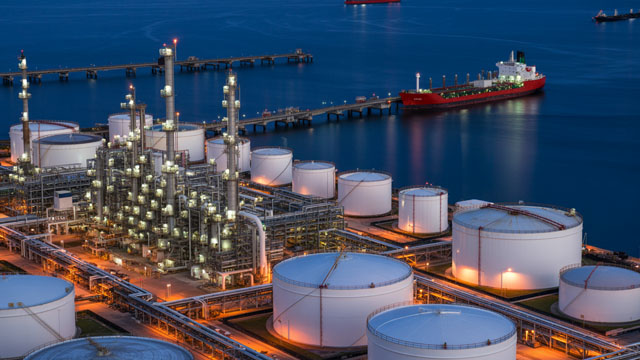
- Storage and terminalling services: Leveraging tank capacity and marine/rail/truck connectivity to capture value from timing and market location differences.
Primary margin drivers typically include: (1) system utilization and throughput quality, (2) tariff/contract terms and escalation mechanics, and (3) fractionation and product-mix dynamics within the NGL complex. The business model tends to balance stable fee streams with incremental contribution from commodity-linked spreads.
🧠 Competitive Advantages & Market Positioning
Moat: Geographic cost advantage + infrastructure scarcity (hard-to-replicate logistics)
Targa’s competitiveness is rooted in the ability to connect low-cost upstream supply regions to higher-value processing, storage, and market access points. Midstream infrastructure is difficult to duplicate due to land/right-of-way constraints, permitting lead times, engineering complexity, and the capital required to build pipeline and fractionation capacity at scale.
From a customer perspective, the network effect is indirect but powerful: reliable interconnection among pipelines, fractionation capacity, and storage improves optionality for shippers, lowering their delivered-cost uncertainty. From a competitor perspective, gaining market share requires building or acquiring comparable transportation and processing “links,” not just competing on service terms.
Competitive benchmarking (primary peers):
- Enterprise Products Partners (EPD): Broader, diversified midstream footprint across NGL, refined products, and petrochemicals; generally competitive on scale and system coverage.
- Plains All American (PAA): Strong crude oil and refined products logistics presence; competitive where Targa focuses more on NGL processing and associated liquids movements.
- Magellan Midstream Partners (MMP): Large refined products and crude storage/transport network; competitive on liquids logistics, with differentiation for Targa in NGL fractionation and basin-to-market gas liquids routing.
Industry focus contrast: While major peers may emphasize different liquids segments and broader commodity exposure, Targa’s positioning centers on NGL-centric transportation, fractionation support, and location advantages tied to North American supply-cost and Gulf Coast market accessibility.
🚀 Multi-Year Growth Drivers
Growth prospects for Targa are tied to long-duration demand and supply fundamentals rather than short-cycle commodity trading:
- North American NGL supply growth: Expanding natural gas production—along with associated NGL yield—supports the need for processing, fractionation, and transport infrastructure.
- Petrochemical feedstock demand: Ethane, propane, and butane utilization by petrochemical and chemical manufacturers sustains structural demand for NGL logistics and processing capacity.
- Export and market-location economics: Access to storage and delivery points that connect to export-capable and high-demand regions supports utilization and value capture.
- Thesis-aligned capital deployment: Incremental capacity additions and debottlenecking tied to contracted or supported throughput can translate into durable cash-flow growth without requiring a pure merchant model.
Over a 5–10 year horizon, the core TAM is driven by the ongoing buildout of basin production and the requirement to move and process resulting liquids through constrained geographic chokepoints—especially where fractionation and export-ready infrastructure are scarce.
⚠ Risk Factors to Monitor
- Volume and utilization risk: System earnings can soften if upstream supply growth under-delivers contracted throughput or if customer economics delay production.
- Commodity and product-mix risk: Commodity-linked components (including fractionation economics) remain sensitive to NGL component pricing, spreads, and mix shifts.
- Regulatory and environmental risk: Permitting, environmental compliance, and operational standards can affect costs and schedules for expansions and ongoing asset operations.
- Capital intensity and execution risk: Large infrastructure projects carry risks around cost inflation, engineering execution, and timing relative to demand.
- Counterparty and credit risk: Fee-based structures often rely on counterparties; credit deterioration can affect cash-flow reliability.
- Operational risk: Pipeline integrity, processing plant reliability, and safety performance can create unplanned costs and downtime.
📊 Valuation & Market View
Midstream investors typically value companies using EV/EBITDA and an emphasis on distributable cash flow (DCF) capacity and sustainability. Key valuation sensitivities include:
- Cash-flow durability: Quality and visibility of contracted fee streams and utilization.
- Distribution/coverage metrics: The relationship between free cash flow and capital needs (capex/turnarounds and growth spending).
- Leverage and balance-sheet flexibility: The ability to fund growth and handle downturns without diluting equity or impairing credit metrics.
- Growth-to-capital alignment: Incremental projects’ ability to convert invested capital into stable, long-life earnings.
In this sector, market repricing often reflects changes in expected throughput, capital spending discipline, credit risk perception, and the stability of commodity-linked margin contributions.
🔍 Investment Takeaway
Targa Resources presents a midstream equity thesis anchored by geographic cost advantage and hard-to-replicate logistical infrastructure in North American NGL movement and processing. The business model combines fee-based cash flow with incremental spread/margin opportunities, supported by system connectivity that strengthens shipper stickiness. The long-run outlook is most compelling where basin supply growth and petrochemical feedstock demand continue to translate into utilization needs for pipelines, fractionation, and storage.
⚠ AI-generated — informational only. Validate using filings before investing.










 Growth Catalysts