W. P. Carey Inc.

W. P. Carey Inc. (WPC) Market Cap

W. P. Carey Inc. has a market capitalization of .

No quote data available.

CEO: Jason E. Fox

Sector: Real Estate

Industry: REIT - Diversified

IPO Date: 1998-01-21

Website: https://www.wpcarey.com

W. P. Carey Inc. (WPC) - Company Information

Market Cap: -|Sector: Real Estate

Company Profile

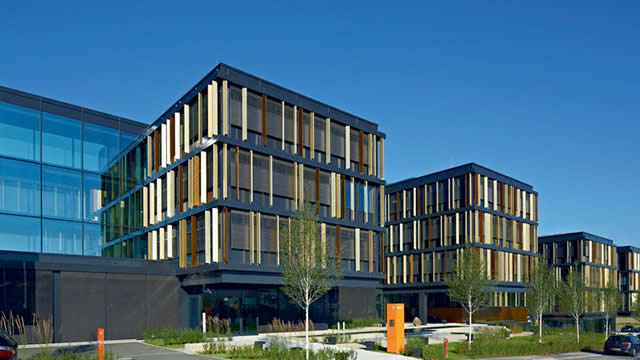
W. P. Carey ranks among the largest net lease REITs with an enterprise value of approximately $18 billion and a diversified portfolio of operationally-critical commercial real estate that includes 1,215 net lease properties covering approximately 142 million square feet as of September 30, 2020. For nearly five decades, the company has invested in high-quality single-tenant industrial, warehouse, office, retail and self-storage properties subject to long-term net leases with built-in rent escalators. Its portfolio is located primarily in the U.S. and Northern and Western Europe and is well-diversified by tenant, property type, geographic location and tenant industry.

Analyst Sentiment

55%
Hold

From 14 Active Polls

1Y Forecast: $75.80

▲ +0.0% Potential Upside

Consensus Target Metrics

Low Bound

$73

Median

$75

High Bound

$79

Average

$76

Price & Moving Averages

Loading chart...

🎯 Wall Street Analyst Intelligence Report

1-Year structural target targets, chart projections, and sentiment maps.

Average 1Y Target
$75.80
▲ +1.76% Upside
Low Target
$73.00
-2% Risk
Median Target
$75.00
1% Mid
High Target
$79.00
6% Max

Consensus Trend Projection

Trailing closures vs. 12-month metrics map.

Analyst Vote Distribution

Aggregate institutional coverage sentiment weights.

Sentiment volume allocation data unavailable.

Historical valuation matrix unavailable.

📘 Full Research Report

ℹ️

AI-Generated Research: This report is for informational purposes only.

📘 W. P. CAREY REIT INC (WPC) — Investment Overview

🧩 Business Model Overview

W. P. Carey operates as a specialized net-lease REIT, partnering with operating companies that need real estate as an input to their business (warehouses, distribution facilities, manufacturing-related space, and select retail and office formats). The company typically acquires properties and leases them to tenants under arrangements where the tenant assumes a meaningful portion of operating expenses and property-level costs. This structure shifts cash flow behavior toward contractual, property-level income rather than purely discretionary leasing cycles.

The investment process is asset-selection and lease-underwriting driven: WPC targets durable locations and income streams, structures lease terms to reduce re-leasing risk, and actively manages renewals and tenant relationships. The result is a business model designed to convert real estate ownership into relatively stable, recurring cash flow.

💰 Revenue Streams & Monetisation Model

WPC’s monetisation is primarily rental income generated from long-duration leases. Revenue is largely recurring through contracted rent, with monetisation supported by:

  • Net-lease structures: tenants bear many property operating costs, improving visibility of net cash flow versus traditional gross-leasing models.
  • Lease escalators and contract terms: long-term agreements can include periodic rent increases, dampening inflation pass-through uncertainty.
  • Re-leasing and acquisition pipeline: growth is driven by disciplined property acquisitions and by maintaining occupancy across lease roll schedules through underwriting and asset management.

Margin drivers are less about “operating leverage” in the classic sense and more about (1) the spread between acquisition yields/cap rates and cost of capital, (2) tenant credit performance, (3) the durability of rent escalation features, and (4) the effectiveness of expense recovery mechanics inherent in net leases.

🧠 Competitive Advantages & Market Positioning

WPC’s moat is best characterized as a blend of credit culture, contractual stickiness, and underwriting/asset-management capability.

  • Credit culture and tenant selection: net-lease cash flows depend on tenant payment capacity. WPC’s positioning emphasizes underwriting discipline that seeks to limit credit losses and maintain lease stability.
  • Contractual stickiness (embedded switching costs): tenants face friction in relocating due to operational setup, local labor/supply-chain considerations, and the need to secure comparable logistics or facility capability. Lease terms reduce churn and extend cash flow duration.
  • Geographic and asset focus: diversification across markets and property types can mitigate local demand cycles.

Competitive benchmarking (primary peers):

  • Realty Income (O): a leading net-lease REIT with strong tenant diversification and broad property exposure; both firms compete in the net-lease model, though Realty Income’s brand and footprint tend to be broader in retail and industrial allocations.
  • STORE Capital (STOR): focused on single-tenant net leasing, often with a distinct emphasis on U.S. properties; the competitive overlap lies in tenancy quality and lease duration, with differing property mix and deal sourcing angles.
  • Agree Realty (ADC): concentrated in net-lease retail and industrial formats; competitive dynamics include asset selection, rent escalation structures, and cost of capital.

Against these peers, WPC’s differentiation rests on underwriting across a global portfolio and a lease structure designed to emphasize contracted cash flow durability and tenant credit quality.

🚀 Multi-Year Growth Drivers

Over a five- to ten-year horizon, growth is primarily a function of maintaining portfolio quality while executing a steady acquisition/replacement pipeline and benefiting from structural demand for well-located operating space.

  • Durable demand for logistics and functional industrial space: supply chain complexity, inventory positioning, and distribution needs support ongoing demand for facilities that perform operationally (location, configuration, and serviceability).
  • Lease duration and rent resilience: long lease terms and contract features can reduce volatility from tenant churn and mitigate inflation uncertainty via escalators where present.
  • Reinvestment and capitalization efficiency: incremental growth can come from accretive acquisitions funded by a cost-of-capital advantage, supported by access to diversified capital sources.
  • Global diversification: exposure to multiple economic regions can lower the impact of localized downturns and provide broader deal flow.
  • Selective turnover capture: lease expirations can create opportunities to re-lease at market terms, but the value depends on maintaining asset utility and tenant credit underwriting.

⚠ Risk Factors to Monitor

  • Tenant credit deterioration: net-lease income quality depends on tenants meeting obligations; economic stress can increase default risk and create landlord remediation costs.
  • Lease rollover and market rent resets: future leasing outcomes depend on local real estate fundamentals and the ability to re-lease on acceptable terms.
  • Interest rate and refinancing risk: capitalization rates and funding costs influence acquisition spreads and the cost of new leverage; unfavorable rate environments can compress total returns.
  • Concentration risk: portfolio concentration by tenant, industry, or geography can amplify idiosyncratic underperformance.
  • Property obsolescence and location durability: facilities that lose operational relevance may require capital expenditures or face higher vacancy risk.
  • Foreign exchange and cross-border execution: international exposure can introduce currency and legal/regulatory complexity in asset management and cash repatriation.

📊 Valuation & Market View

The market typically values net-lease REITs using a blend of cash-flow and balance-sheet frameworks, with attention to:

  • Cash flow coverage and durability: stability of contracted rent and tenant performance drives the perceived quality of earnings.
  • FFO-quality metrics: durability of cash available for distributions and the gap between economic earnings and accounting treatments.
  • Cost of capital: leverage level, maturity profile, and the interest rate environment affect growth capacity and valuation sensitivity.
  • Real estate risk premia: changes in cap rates and credit spreads influence implied property values and acquisition returns.
  • Portfolio metrics: lease term, occupancy, weighted-average escalation characteristics, and diversification reduce perceived downside.

Drivers that typically move valuation include changes in perceived tenant credit risk, the availability of accretive acquisitions, and shifts in interest rates that affect required yield across real estate sectors.

🔍 Investment Takeaway

W. P. Carey is positioned as a specialist in net-lease income with an emphasis on tenant credit discipline, contractual cash flow durability, and effective underwriting/asset management. The core long-term thesis centers on converting ownership of operating real estate into recurring, contract-backed cash flows while sustaining growth through disciplined acquisitions and prudent reinvestment. The principal determinants of long-run outcomes are tenant performance through the cycle, the ability to maintain acquisition spreads versus cost of capital, and resilience of properties to operational obsolescence.


⚠ AI-generated — informational only. Validate using filings before investing.

📊 AI Financial Analysis

Powered by StockMarketInfo
Earnings Data: Q Ending 2026-03-31

"WPC reported Q1 2026 revenue of $454.5M and net income of $176.3M (EPS $0.80). On a YoY basis (vs. 2025-03-31), revenue rose +10.5% ($454.5M vs. $411.0M) and net income increased +40.1% ($176.3M vs. $125.8M). Sequentially (vs. 2025-12-31), revenue increased +2.3% and net income increased +18.8%, indicating improving profitability after the prior quarter. Profitability was strong: net margin expanded to 38.8% from 30.6% YoY, and also increased vs. Q4’s 33.4%. Operating income margin rose to 43.9% from 84.3% in Q1’25 (mix/quarter effects appear significant), but the direction from Q4 to Q1 was favorable (43.9% vs. 46.9% respectively shows margin compression QoQ at operating level while net margin still improved, implying below-the-line items/taxes helped). Cash flow quality remains solid, with operating cash flow of $283.2M and free cash flow of $250.1M in Q1; dividends paid were $205.3M, consistent with coverage by free cash flow (FCF/dividends modestly above 1x). Balance sheet resilience looks reasonable for a REIT/real-estate-adjacent model: total equity was $8.34B with large gross debt (total debt ~$8.85B) and high leverage (debt-to-equity ~1.06), though interest coverage remains acceptable (2.54x). Shareholder returns are supportive: the stock is up +20.72% over 1 year, adding a strong price-momentum tailwind alongside a ~1.37% dividend yield. Analyst consensus implies modest upside vs the current price."

Revenue Growth

Positive

YoY revenue growth was +10.5% in Q1’26 (454.5M vs 411.0M). QoQ revenue rose +2.3% (vs Q4’25). Growth is positive but not accelerating dramatically sequentially.

Profitability

Strong

Net income rose +40.1% YoY and +18.8% QoQ. Net margin expanded to 38.8% from 30.6% YoY (and from 33.4% QoQ), indicating improving earnings power in the latest quarter.

Cash Flow Quality

Good

Q1’26 operating cash flow was $283.2M and free cash flow $250.1M. Dividends paid were $205.3M; FCF coverage of dividends is ~1.2x, supported by positive free cash generation.

Leverage & Balance Sheet

Positive

Equity was $8.34B and total debt about $8.85B (debt-to-equity ~1.06). Interest coverage is ~2.54x, suggesting manageable burden but not conservative for a cyclical rate environment.

Shareholder Returns

Strong

1Y price momentum is strong (+20.72%), and dividend yield is ~1.37%. The combination supports total shareholder returns, with momentum outweighing yield.

Analyst Sentiment & Valuation

Fair

Consensus target (~$73.2) is slightly below the current price ($73.98), implying limited upside. Valuation multiples appear elevated (e.g., P/E ~21.3), which tempers the score despite good fundamentals.

Disclaimer:This analysis is AI-generated for informational purposes only. Accuracy is not guaranteed and this does not constitute financial advice.

Fundamentals Overview

Loading fundamentals overview...

W.P. Carey started 2026 with strong AFFO momentum and materially raised investment volume guidance. Q1 AFFO per share was $1.30 (+11.1% YoY), driven by continued accretive deployment (about $680M closed YTD) and improved rent loss expectations. The company lowered potential rent loss to $8M–$12M (~50–75 bps of ABR), supporting a $0.03 increase to full-year AFFO guidance to $5.16–$5.26 (+4.8% midpoint). Investment strategy remains consistent: cap rates around ~7.5% for the pipeline, with YTD deals averaging 7.2% (mix/timing) and an ~9% average yield over long lease terms via CPI/fixed escalations. Capital markets execution appears a key enabler: EUR 1B notes at 3.25%/3.75%, a Canadian term loan at ~3.1% all-in, and forward equity that leaves ~$653M net proceeds remaining. In Q&A, management repeatedly emphasized limited observed impacts from Europe macro/energy shocks, a comfortable funding position, and scaling of the carried tenant solutions platform.

AI IconGrowth Catalysts

  • Investment activity: ~$680 million closed YTD (completed investments) at accretive cap rates and healthy spreads to funding sources
  • AFFO growth supported by lower estimated rent loss (down to $8M–$12M; ~50–75 bps of ABR)
  • Internal growth from Carey tenant solutions: expansions/BTAs/redevelopments with higher-than-market yields and longer lease terms
  • Inflation linkage: high proportion of ABR with CPI-linked escalations (majority of new deals)

Business Development

  • Go Auto sale-leaseback (Greater Vancouver auto dealerships portfolio); described as Canada’s second-largest auto dealership group; ranks among W.P. Carey’s top 25 largest tenants by ABR
  • Large industrial sale-leaseback of a sizable U.S. industrial portfolio expected to close within weeks (pipeline item in advanced stages)

AI IconFinancial Highlights

  • AFFO per share: $1.30 in Q1 2026, +$0.13 (+11.1%) YoY
  • Guidance raised: full-year investment volume increased by $250 million to $1.5B–$2.0B
  • AFFO guidance midpoint increased by $0.03 to $5.16–$5.26 (4.8% growth at midpoint)
  • Average cap rate: ~7.5% for current pipeline projects delivering in 2026; closed transactions YTD averaged 7.2% (timing toward tightest H1 cap-rate deals)
  • Contractual same-store rent growth: 2.4% YoY in Q1; fixed and CPI-linked escalations both averaging 2.4%; full year expected mid-2%
  • Comprehensive same-store rent growth: 1.0% in Q1; noted typical long-term ~100 bps gap vs contractual due to vacancies/re-leasing
  • Rent loss assumption reduced to $8M–$12M (~50–75 bps of ABR) from $10M–$15M; management characterized as conservative
  • Re-leasing recapture: 103% of prior rents on 1.4% of portfolio ABR; added just over 5 years WALT
  • Other lease-related income: $10.5M in Q1; expected low-to-mid-$30M range for Q2 and low-to-mid-$30M for full year (per stated run-rate expectations); demolition/other expense noted as ongoing
  • Debt cost actions: revolver pricing grid improved by 5 bps at all levels; expected to lower cost of debt modestly
  • Dividend: increased 4.5% YoY to $0.93 quarterly; payout ratio 72%

AI IconCapital Funding

  • Capital markets: close to ~$2.0B of capital accessed in Q1 across debt and equity sources
  • Debt issuance: EUR 1.0B senior unsecured notes (EUR 500M at 3.25% due ~5 years; EUR 500M at 3.75% due ~9 years); proceeds used to address April eurobond maturity and reinvest in liquidity/term loan repayment and liquidity
  • Canadian dollar term loan executed/amended in March: all-in rate ~3.1% (used to fund Canadian investment activity)
  • Forward equity/ATM: sold 6.9M shares forward in Q1 for $497M gross; as of end of Q1 settled 3.45M shares for $247M net; remaining 9.7M shares anticipated net proceeds ~$653M
  • Liquidity: ~$2.8B at quarter-end (credit facility availability + cash + unsettled forward equity)
  • Debt metrics: net debt to adjusted EBITDA 5.3x at quarter-end inclusive of unsettled forward equity; 5.7x excluding unsettled forward equity (target mid- to high-5x)
  • Remaining 2026 maturities minimal; primarily $350M U.S. bonds maturing in October
  • Commentary on retained cash flow: expects ~$300M of retained cash flow in 2026 to provide additional equity capital

AI IconStrategy & Ops

  • Self-storage exit: sold remaining 11 operating self-storage properties for $75M in Q1; completed exit; generated ~$860M aggregate proceeds at average cap rate just below 6% and recycled into higher-yielding investments
  • Capital allocation mix in Q1: warehouse/industrial ~60% of investment volume; retail ~40% driven largely by Go Auto sale-leaseback
  • Development funnel visibility: completed 4 capital projects totaling $68M in Q1; total 11 capital projects totaling ~$280M delivering over next 12 months
  • Inflation hedge approach: CPI-linked rent escalations and fixed bumps (fixed rent escalations on Q1 deals averaging ~2.8% annually for the fixed portion; new-deal average yields still ~9% over long lease terms)

AI IconMarket Outlook

  • Full-year AFFO per share expected $5.16–$5.26 (midpoint +4.8%); raised by $0.03 due to higher investment volume and lower estimated rent loss
  • Full-year investment volume guidance raised to $1.5B–$2.0B
  • Nonreimbursed property expenses expected $56M–$60M for full year; demolition costs higher in Q2 before normalizing in back half
  • Portfolio occupancy: 98.1% at quarter-end; expected to improve further as assets are re-tenanted or disposed
  • Comprehensive rent growth expectation: guidance range for full year 1%–2% given vacancies timing and rent recoveries; contractual growth mid-2%

AI IconRisks & Headwinds

  • Energy price uncertainty in Europe (management stated no impact yet, but acknowledged more potential uncertainty)
  • Vacancy-driven drag on comprehensive vs contractual rent growth (Q1 comprehensive 1% vs contractual 2.4%; vacancies cited as primary driver)
  • Rent loss estimation risk: reduced assumption to $8M–$12M (~50–75 bps of ABR), but still an embedded risk factor
  • Macro/geopolitical volatility: management stated no noticeable impact on transaction activity to date from recent geopolitical tensions
  • Private credit/financing market tightening: could make sale-leasebacks more attractive; management said not currently observed as a factor in pipeline or tenant base

Q&A: Analyst Interest

  • Europe exposure and macro/energy: Management said Europe has “a little bit more potential for uncertainty” given higher energy prices, but emphasized portfolio diversification and large, cycle-resilient tenants. They reported no impact to date and stated they feel “good” about the European portfolio with no concerns observed.
  • Funding runway and whether to pre-fund 2027: Management highlighted $650M of forward equity remaining to settle, plus ample liquidity. They said they’re comfortable now, with any additional equity raising dependent on the 2027 opportunity set, staying “opportunistic” rather than accelerating by default.
  • Carried tenant solutions platform update: Management described the carried tenant solutions initiative as a formalized branding of longstanding build-to-suits/expansions/redevelopments, historically ~$200M/year. They cited ~$280M projects in process, with ~$180M of that expected to complete this year, plus an active follow-on pipeline supported by in-house project management.

Sentiment: POSITIVE

Note: This summary was synthesized by AI from the WPC Q1 2026 earnings transcript. Financial data is complex; please verify all metrics against official SEC filings before making investment decisions.

Loading financial data and tables...
© 2026 Stock Market Info — W. P. Carey Inc. (WPC) Financial Profile