
📘 YORK WATER (YORW) — Investment Overview
🧩 Business Model Overview
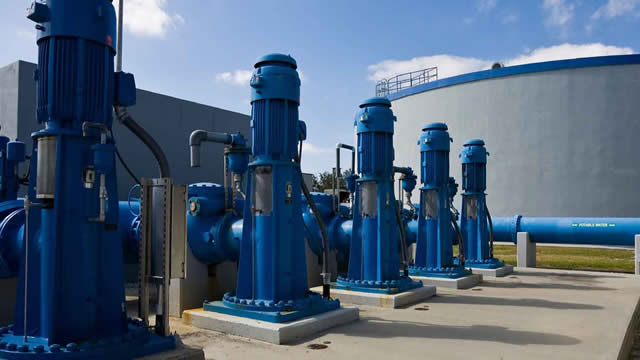
York Water operates a regulated, geographically defined water utility service territory. The business model is straightforward: York Water owns and maintains water production assets (wells/intakes and treatment), a distribution network (mains, storage, pumps), and customer meters, then bills customers under regulated tariffs. Because service rights are tied to the utility’s footprint and governed by regulators, customers typically cannot switch providers, which makes the system’s cash flows driven by ongoing service availability, approved operating practices, and permitted capital investment.
💰 Revenue Streams & Monetisation Model
Revenue is primarily recurring and rate-based, with monetisation anchored in regulated tariffs and metered consumption. Typical components include:
- Metered water service: Charges linked to usage, including demand and volumetric rates.
- Fixed/availability charges: Ongoing customer charges that support baseline cash generation regardless of usage volatility.
- Regulatory-authorised pass-throughs: Certain costs can be recovered through tariff mechanisms, reducing long-term earnings volatility versus unregulated utilities.
Margin drivers are closely tied to the ability to recover prudent costs and earn an allowed return on the rate base. Operating efficiency, labor/material cost control, and successful regulatory recovery of capital expenditures (capex) and operating expenses are the key determinants of profitability.
🧠 Competitive Advantages & Market Positioning
York Water competes primarily with other regulated water and wastewater utilities that serve distinct service territories; competition is limited by franchise/service rights rather than by product differentiation.
- Primary moat: High switching costs — Water service is a localized utility. Customers cannot feasibly replace piping networks and treatment infrastructure, creating a durable customer lock-in.
- Regulatory moat — Tariff setting and rate-case frameworks can provide earnings support for prudent investments and operating practices, subject to regulatory oversight.
- Geographic operating footprint — Dense, entrenched networks in the service area create long-lived assets and reduce the likelihood of meaningful displacement by alternative providers.
Competitive benchmarking (public peers and alternative regulated operators):
- American Water Works (AWK) — Larger scale operator with a broader footprint; competes for acquisitions and regulatory approvals rather than customer switching.
- Middlesex Water (MDWS) — Similar regulated model with distinct territory exposure.
- SJW Group (SJW) — Regulated utility with geographic concentration and a comparable rate-base-driven earnings profile.
York Water’s positioning emphasizes a more concentrated regional operating footprint, where the moat is reinforced by local infrastructure ownership, established service rights, and regulator-governed tariff recovery—rather than by broad geographic scale.
🚀 Multi-Year Growth Drivers
Over a 5–10 year horizon, growth is less about volume expansion and more about expanding and modernizing the rate base while maintaining system reliability. Key drivers typically include:
- Infrastructure renewal and system upgrades: Aging mains, treatment upgrades, storage expansion, and automation improve reliability and support regulatory recovery.
- Regulatory-driven water quality compliance: Standards for contaminants and treatment efficacy can require capital investment, often supported by tariff mechanisms when prudently incurred.
- Demand stability with tariff structure support: While usage may fluctuate due to conservation, fixed charges and rate design can sustain revenue durability.
- Service territory opportunities: Extensions, targeted development connections, and utility program growth can add customers and marginal usage within the franchised footprint.
The most durable compounding mechanism for regulated utilities is the ability to invest at reasonable execution risk, then translate capex into an expanded and recoverable rate base under the regulatory framework.
⚠ Risk Factors to Monitor
- Regulatory outcome risk: Rate-case timing, allowed returns, disallowances, and tariff design can affect earnings durability and the conversion of capex into recoverable value.
- Capital intensity and execution risk: Water systems require continuous investment; project overruns, contractor performance issues, or permitting delays can pressure cash flow and regulatory recoveries.
- Water quality and environmental compliance risk: Treatment requirements (including emerging contaminants) can drive higher-than-planned capex and operating costs.
- Demand and conservation pressure: Conservation can reduce volumetric revenue; the tariff structure and fixed charge components become critical to offset usage declines.
- Financing and interest-rate sensitivity: As rate base expands, capital markets access and cost of debt influence capital planning and coverage metrics.
- Climate and operational stress: Drought conditions, storm impacts, and source-water variability can strain operations and increase O&M needs.
📊 Valuation & Market View
The regulated water utility sector is typically valued on steady, rate-base-linked cash generation rather than high growth. Market participants often focus on:
- EV/EBITDA and utility earnings multiples as a shorthand for operating profitability and capital structure normalization.
- Dividend sustainability and payout coverage for income-oriented investors.
- Regulatory fundamentals: allowed returns, rate-case outcomes, and the trajectory of rate base expansion.
- Quality of earnings: the extent to which earnings reflect durable recoveries of prudently incurred costs versus temporary timing effects.
Key valuation “drivers” are regulatory decisions (allowed return and recoverability), capex execution quality, and the balance between operating cost growth and tariff recovery.
🔍 Investment Takeaway
York Water offers a durable, evergreen utility thesis built on local infrastructure ownership and structurally high switching costs. The core investment case rests on (1) regulatory frameworks that can support cost recovery and returns on prudently invested capital, and (2) ongoing capex needs driven by system reliability, water quality compliance, and infrastructure modernization. For investors, the fundamental question is less about market share and more about regulatory and execution discipline—how effectively the company converts required investment into a recoverable, reliable earnings stream.
⚠ AI-generated — informational only. Validate using filings before investing.












 Growth Catalysts