
📘 ALCOA CORP (AA) — Investment Overview
🧩 Business Model Overview
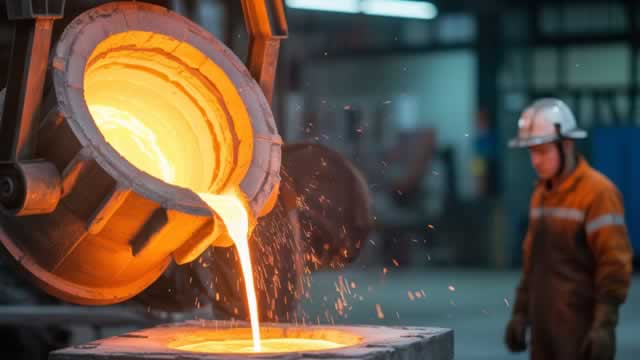
ALCOA CORP operates across the aluminum value chain, converting upstream inputs into primary aluminum and then into higher-value downstream products (notably cast and rolled aluminum). The value chain structure matters: competitive smelting economics depend on (1) reliable feedstock supply for alumina/bauxite-derived inputs, (2) low-cost and dependable electricity (a major cost driver in smelting), and (3) the ability to move metal efficiently to customers through industrial logistics.
From a customer perspective, aluminum is widely specified by performance and form factor (alloy, thickness, temper) rather than brand. As a result, customer “stickiness” tends to come from operational reliability, consistent quality, and qualified supply—attributes that are hard to replicate without established capacity, process know-how, and validated downstream capabilities.
💰 Revenue Streams & Monetisation Model
Revenue is predominantly tied to the market for aluminum and aluminum-based products, with monetization driven by the relationship between aluminum pricing and the company’s all-in cost position. Margin performance generally reflects:
- Product pricing versus input costs: profitability depends on aluminum spreads (pricing net of conversion and energy costs) rather than pure volume growth.
- Downstream value capture: downstream processing can modestly reduce exposure to raw commodity pricing by embedding conversion premiums into specific alloys/forms.
- Operational utilization: smelting and related assets are capital intensive; stable utilization supports unit cost absorption and cash generation during favorable market conditions.
Overall, the revenue profile is largely “commodity-linked with conversion premiums,” where the principal lever for value creation is maintaining a structurally low-cost footprint and operational consistency.
🧠 Competitive Advantages & Market Positioning
ALCOA’s competitive positioning is best understood as a cost-and-infrastructure moat in a capital- and power-intensive industry. The durable advantage is less about “brand” and more about manufacturing economics that competitors cannot quickly replicate.
- Geographic cost advantage (Low-Cost Feedstock & Power): aluminum smelting economics hinge on electricity costs and supply reliability. Industrial clusters with favorable power generation profiles can sustain lower all-in conversion costs.
- Logistical infrastructure: integrated or well-located facilities reduce friction in sourcing inputs and shipping output, supporting better delivered-cost economics and service reliability.
- Scale and process know-how: operating discipline in smelting, casting, and downstream processing lowers unit costs and improves yield—an edge that takes significant time and investment to rebuild.
Industry focus versus named competitors:
- Rio Tinto (upstream and integrated aluminum ecosystem): stronger upstream exposure can support feedstock economics; ALCOA’s relative focus emphasizes maintaining cost competitiveness through its industrial footprint and downstream conversion.
- Norsk Hydro (integrated aluminum and bauxite/alumina dynamics in parts of its footprint): Hydro’s integration can provide cost stability; ALCOA competes by optimizing smelting economics and downstream product capabilities, targeting efficient conversion and customer qualification.
- Century Aluminum (primary aluminum producer with a concentrated smelting profile): competitors with more limited integration may face higher exposure to energy and delivered-cost variance; ALCOA’s model benefits from a broader value-chain approach and infrastructure-enabled cost execution.
In each case, the differentiator is the ability to sustain delivered low-cost aluminum through electricity/power economics and logistics—factors that are structurally difficult to change quickly without new siting, permitting, and multi-year buildout.
🚀 Multi-Year Growth Drivers
Over a 5–10 year horizon, growth is driven by aluminum’s role in energy transition and lightweighting, constrained by the industry’s high capital intensity and permitting cycle.
- Lightweighting and electrification: aluminum penetration supports demand growth in transportation and electrified mobility due to weight reduction and design flexibility.
- Grid modernization and renewables: aluminum is used in power infrastructure and components where corrosion resistance and conductivity-to-weight matter.
- Supply discipline and cost-based capacity: new aluminum supply requires substantial capex and long lead times; cost-efficient producers often benefit when higher-cost capacity exits or underinvests.
- Recycling and circularity: recycling supports longer-term material availability and can affect the marginal cost curve, with benefits accruing to players positioned to secure offtake and conversion capability.
TAM expansion is meaningful, but the key investment question is not “will demand grow,” rather “which producers can convert growth into cash at the lowest all-in cost under varying cycle conditions.”
⚠ Risk Factors to Monitor
- Commodity cycle risk: aluminum pricing swings can compress spreads; value creation depends on sustaining cost leadership and operational resilience.
- Energy and power cost volatility: electricity is a central input for smelting; changes in power pricing, grid reliability, or contract structures can alter competitiveness.
- Regulatory and decarbonization pressure: carbon taxes, emissions limits, and permitting constraints can raise the effective cost base or delay expansions.
- Capital intensity and project execution: maintaining and upgrading assets requires ongoing capex; delays or cost overruns can permanently impair unit economics.
- Counterparty and customer qualification dynamics: supply qualification processes and long-cycle customer procurement can slow upside capture during demand upturns.
📊 Valuation & Market View
Aluminum/materials companies are typically valued using enterprise value relative to operating cash flow/earnings (often EV/EBITDA) because profitability is cyclical and driven by spreads between metal prices and all-in costs. Multiple expansion or contraction tends to be driven by:
- Aluminum spread expectations: the market prices in the sustainability of net pricing versus conversion and energy costs.
- Cost competitiveness: structural cost curves (power, logistics, yield) matter more than short-term operational noise.
- Capital discipline and leverage: credit quality influences flexibility to invest through the cycle.
- Policy and carbon/regulatory outlook: perceived future compliance costs can re-rate the long-term cost base.
Because the sector is cyclical, investors typically underwrite longer-term value through normalized spread and resilient cost positioning rather than through a single-cycle earnings point.
🔍 Investment Takeaway
ALCOA’s long-term investment case centers on a structural manufacturing moat: low-cost aluminum conversion enabled by geographic power economics and logistics, supported by scale and operational know-how. In a capital-intensive industry where new capacity is slow and regulation can raise effective costs, disciplined cost execution and infrastructure advantages can translate incremental demand into cash generation across the cycle.
⚠ AI-generated — informational only. Validate using filings before investing.













 Growth Catalysts