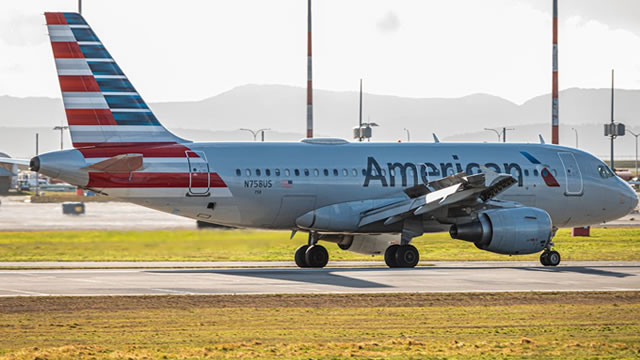
American Airlines Group Inc.

American Airlines Group Inc. (AAL) Market Cap

American Airlines Group Inc. has a market capitalization of .

No quote data available.

CEO: Robert D. Isom Jr.

Sector: Industrials

Industry: Airlines, Airports & Air Services

IPO Date: 2005-09-27

Website: https://www.aa.com

American Airlines Group Inc. (AAL) - Company Information

Market Cap: -|Sector: Industrials

Company Profile

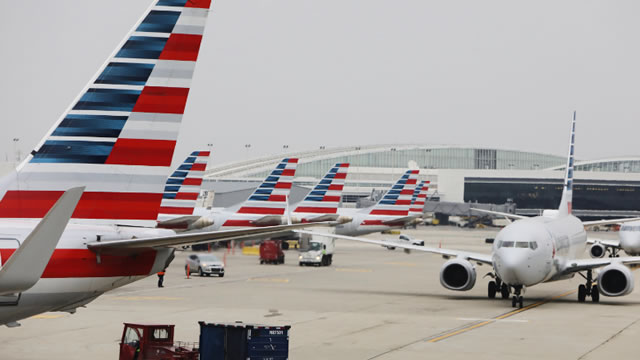
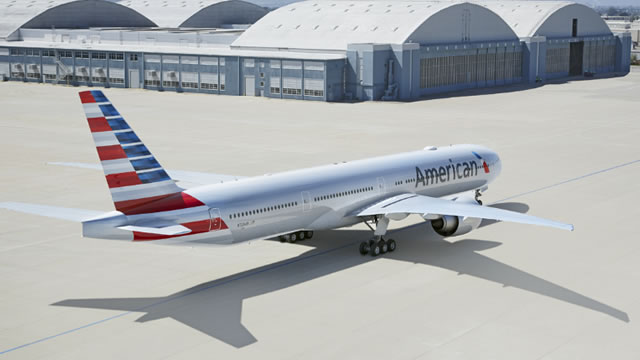
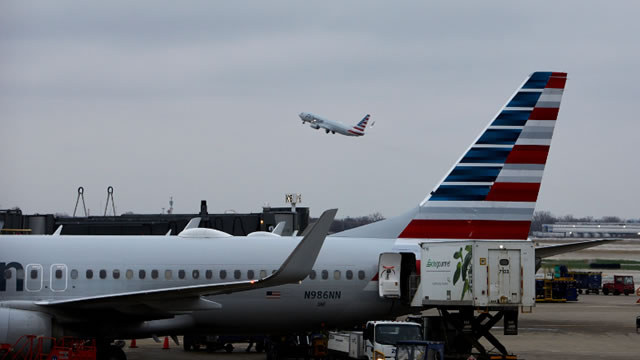
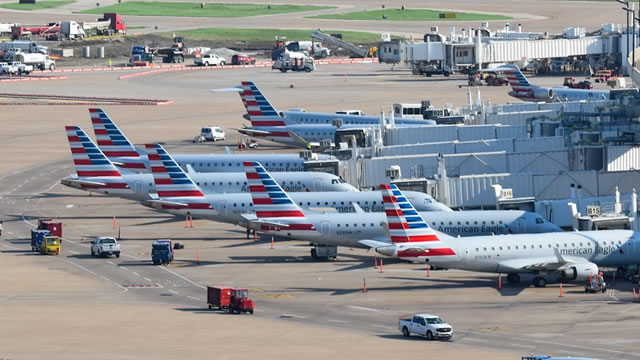
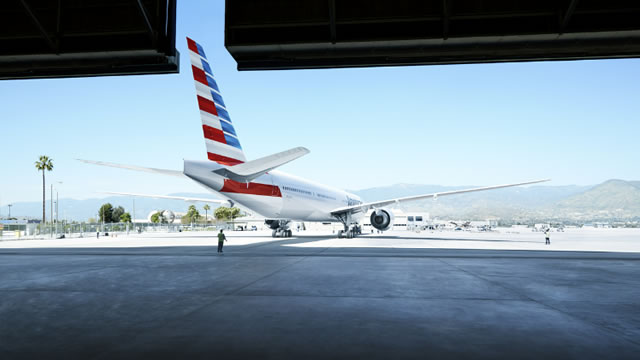
American Airlines Group Inc., through its subsidiaries, operates as a network air carrier. The company provides scheduled air transportation services for passengers and cargo through its hubs in Charlotte, Chicago, Dallas/Fort Worth, Los Angeles, Miami, New York, Philadelphia, Phoenix, and Washington, D.C., as well as through partner gateways in London, Madrid, Seattle/Tacoma, Sydney, and Tokyo. As of December 31, 2021, it operated a mainline fleet of 865 aircraft. The company was formerly known as AMR Corporation and changed its name to American Airlines Group Inc. in December 2013. American Airlines Group Inc. was founded in 1930 and is headquartered in Fort Worth, Texas.

Analyst Sentiment

65%
Buy

From 26 Active Polls

1Y Forecast: $17.58

▲ +0.0% Potential Upside

Consensus Target Metrics

Low Bound

$14

Median

$17

High Bound

$24

Average

$18

Price & Moving Averages

Loading chart...

🎯 Wall Street Analyst Intelligence Report

1-Year structural target targets, chart projections, and sentiment maps.

Average 1Y Target
$17.58
▲ +30.22% Upside
Low Target
$13.50
0% Risk
Median Target
$17.00
26% Mid
High Target
$24.00
78% Max

Consensus Trend Projection

Trailing closures vs. 12-month metrics map.

Analyst Vote Distribution

Aggregate institutional coverage sentiment weights.

Sentiment volume allocation data unavailable.

Historical valuation matrix unavailable.

📘 Full Research Report

ℹ️

AI-Generated Research: This report is for informational purposes only.

📘 AMERICAN AIRLINES GROUP INC (AAL) — Investment Overview

🧩 Business Model Overview

American Airlines Group operates an integrated air-transportation network that converts passenger demand into seat-mile revenue through a coordinated system of aircraft deployment, route scheduling, and revenue management. The value chain spans aircraft ownership/financing or leasing, network planning (hub-and-spoke and point-to-point connectivity), ground handling and airport operations, and ticket distribution via online channels, global distribution systems, and corporate travel accounts. The airline then monetizes demand through base fares plus ancillary services (bags, seat selection, onboard products) and by leveraging a frequent flyer program to retain customers and improve load factors.

💰 Revenue Streams & Monetisation Model

Revenue is primarily transactional: passenger fares derived from dynamic pricing and capacity allocation, supported by ancillary revenue streams that scale with passenger volume. Ancillary revenue typically includes baggage fees, seat upgrades, priority services, and partner-driven commissions related to the airline’s loyalty program. Freight and other smaller segments contribute marginally versus passenger economics. Margin drivers center on (1) unit revenue productivity from revenue management and network optimization, (2) utilization and load factors that spread fixed costs over more seats, and (3) variable cost discipline—especially fuel, labor productivity, and maintenance efficiency. Monetisation is also supported by program economics: loyalty activity influences customer choice and can increase share of wallet within a competitive travel set.

🧠 Competitive Advantages & Market Positioning

Airlines face intense competition, but structural advantages still exist where network scale, airport access, and customer retention create durable economics. American’s positioning is defined by a large domestic network, international connectivity via alliance relationships, and a customer retention engine through its loyalty platform.

  • Network effects (practical, not platform-like): American benefits from route connectivity and frequency. Customers choose airlines that minimize total travel time and provide more viable itinerary options. This “option value” raises the attractiveness of the network and supports demand across a wide origin-destination matrix.
  • Switching costs (loyalty-driven): The AAdvantage program creates behavioral stickiness. Accumulated miles, status benefits, and redemption access reduce customer propensity to switch airlines solely on marginal fare differences—particularly for frequent travelers and those managing corporate travel preferences.
  • Operational and cost scale: A large fleet and network enable spreading fixed operating infrastructure across many flights and destinations. Competitors with smaller networks may face higher average costs per seat mile on comparable routes, especially when assembling schedules that protect demand connectivity.
  • Intangible assets—customer data and distribution reach: Revenue management capabilities, large customer bases, and distribution relationships (including corporate channels and travel intermediaries) improve the ability to match capacity with demand.

Competitive benchmarking: The primary competitive set includes Delta Air Lines and United Airlines in major hub-to-hub markets, plus Southwest Airlines in highly contested domestic routes. American differs from these rivals in how it structures network connectivity and alliance-driven international feed, with a stronger emphasis on a large hub-and-spoke system and alliance synergies (where applicable). Southwest’s focus on point-to-point, operational simplicity, and cost positioning creates pressure in certain markets; however, American competes through broader full-service network coverage and loyalty-driven retention.

🚀 Multi-Year Growth Drivers

Over a five- to ten-year horizon, growth prospects are driven less by a single product innovation and more by structural demand trends and industry dynamics that improve utilization and unit economics.

  • Industry capacity discipline and consolidation effects: Fleet rationalization, contractual labor frameworks, and industry consolidation can reduce “overcapacity” episodes, supporting higher normalized margins.
  • Network optimization and revenue management: Continued refinement of route structures, schedule planning, and pricing yields incremental improvements in load factors and yield per available seat mile.
  • Premiumization of demand: Higher proportion of business and premium leisure travel can improve revenue per passenger, particularly on routes with limited substitutability.
  • Ancillary revenue expansion: Seat products, baggage, upgrades, and loyalty-related monetization can grow faster than base fares as distribution and product bundling mature.
  • Alliance and partnerships as demand multipliers: Coordinated international connectivity and partner networks expand addressable itineraries without proportional increases in operating assets.

⚠ Risk Factors to Monitor

  • High exposure to fuel costs and inflationary input pressures: Fuel is a major variable cost; adverse fuel price movements and limited hedging flexibility can pressure margins.
  • Labor cost and contract risk: Labor is a structural cost. Contract renegotiations, productivity assumptions, and work-rule changes can shift cost curves.
  • Capital intensity and aircraft delivery timing: Fleet decisions and aircraft availability affect capacity planning, maintenance costs, and the ability to sustain network strategy.
  • Industry cyclicality and demand shocks: Passenger demand is sensitive to macroeconomic conditions and geopolitical events, which can cause rapid changes in revenue and load factors.
  • Regulatory and operational constraints: Slot availability, airport regulation, and consumer protection rules can limit flexibility and raise operating complexity.
  • Competitive fare pressure: Low-cost carriers and capacity expansions by major rivals can force yield discipline, especially in overlapping markets.

📊 Valuation & Market View

Equity markets typically value major airlines using measures tied to operating profitability, with EV/EBITDA and earnings power frameworks reflecting the sector’s cyclicality and high operating leverage. The valuation sensitivity is driven by the market’s view of (1) normalized load factors and yields, (2) sustainable cost structure, (3) balance sheet resilience and access to capital markets, and (4) the likelihood of prolonged periods of capacity discipline. Higher-quality earnings profiles—supported by stronger unit economics and steadier utilization—tend to command a premium versus peers when the industry outlook is favorable.

🔍 Investment Takeaway

AAL’s long-term investment case rests on earning power derived from a scaled network, loyalty-driven customer retention (practical switching costs), and the operational ability to convert network demand into load factors and unit revenue. While the business remains inherently cyclical and capital-intensive, structural advantages—connectivity, distribution reach, and loyalty economics—can support more resilient profitability through industry cycles, provided fuel, labor, and capacity discipline do not deteriorate materially.


⚠ AI-generated — informational only. Validate using filings before investing.

📊 AI Financial Analysis

Powered by StockMarketInfo
Earnings Data: Q Ending 2026-03-31

"American Airlines (AAL) reported a quarterly revenue of $13.91 billion with a net income loss of $382 million for the quarter ending March 31, 2026. YoY, revenue increased by approximately 11% from $12.55 billion in Q1 2025, while QoQ revenue decreased slightly from $13.99 billion. The annual net income trajectory is volatile, with negative earnings both YoY and QoQ, reflecting financial instability. EPS declined YoY from -$0.72 to -$0.58 and dropped QoQ from $0.15. Margins have been inconsistent, reflecting fluctuating profitability. Total assets grew by around 1.7% YoY, while equity remains negative, indicating financial distress. There has been no dividend payout since 2020, further impacting shareholder returns through income. However, the stock showed strong price momentum with a 35.67% increase over the past year, largely contributing to overall shareholder return. With fluctuating financial performance alongside significant market appreciation, American Airlines’ outlook is mixed, leaning towards cautious optimism contingent on operational stabilization."

Revenue Growth

Positive

Revenue grew 11% YoY, but saw a slight QoQ decline, indicating positive long-term trends tempered by near-term volatility.

Profitability

Caution

Despite revenue growth, net income has been inconsistent with negative margins prevailing, reflecting weak profitability.

Cash Flow Quality

Neutral

Continuous net losses and no recent dividend payouts indicate weaker cash flow quality and little financial flexibility.

Leverage & Balance Sheet

Neutral

Negative equity and increasing liabilities emphasize financial distress and high leverage risks.

Shareholder Returns

Neutral

Strong price momentum with a 35.67% annual increase has boosted returns despite no dividend income and recent price volatility.

Analyst Sentiment & Valuation

Fair

Current price is 12.78 against a consensus target of 17.4, suggesting potential upside, yet necessitates caution due to financial instability.

Disclaimer:This analysis is AI-generated for informational purposes only. Accuracy is not guaranteed and this does not constitute financial advice.

Fundamentals Overview

Loading fundamentals overview...

American reported Q1 2026 adjusted diluted EPS of -$0.40 (excluding net special items) while revenue still rose 10.8% YoY. The key profitability bridge was a ~2-point YoY pretax margin improvement despite major weather and fuel shocks: ~$320M winter-storm revenue impact, ~$400M higher fuel vs January forward curve, and ~2 points of CASM ex pressure from reduced Q1 capacity production. Management’s confidence rests on premium-led demand (paid load factors +~10 points vs 2019; premium unit trends strong) and commercial execution, plus a clear fuel-recapture plan. For Q2, guidance calls for revenue growth of +13.5% to +16.5% YoY and CASM ex up +2% to +4% YoY, with adjusted EPS between -$0.20 and +$0.20. Full-year midpoint remains $0.35 per share, flat versus 2025, despite >$4B YoY higher fuel expense. The main near-term risk is whether recapture (40–50% in Q2; 75–85% in Q3; 90s in Q4 if fuel/capacity conditions hold) materializes as planned.

AI IconGrowth Catalysts

  • 9 highest revenue intake weeks in company history during Q1
  • Premium product momentum: lie-flat and premium economy seats growing more than twice as fast as main cabin seats
  • Flagship suite expansion across international-capable fleet; continued strong NPS since introduction
  • DFW rebanking: new 13-bank structure supporting ~1/3 of aircraft touching DFW daily, improving connection rates and NPS
  • Paid load factor improvements in business and premium economy: +~10 points vs 2019
  • Free AT&T-sponsored in-flight satellite WiFi driving record AAdvantage enrollments: +25% YoY

Business Development

  • Citi co-branded card partnership: all-time record card acquisition in Q1; co-branded spend +9% YoY
  • AAdvantage in-flight WiFi sponsorship by AT&T on more aircraft than any other carrier globally
  • Managed corporate/TMC partnerships cited: Amex GBT and BCD supporting American
  • OneWorld network and joint business growth referenced across international expansion
  • Longstanding relationship with Alaska Airlines (OneWorld sponsorship executed); potential future scoped evolution discussed

AI IconFinancial Highlights

  • Adjusted diluted EPS: $-0.40 (excluding net special items)
  • Total revenue +10.8% YoY; revenue performance exceeded initial expectations
  • Pretax margin improved ~2 points YoY despite headwinds
  • Winter storms: ~$320 million revenue impact in Q1; also pressured Q1 capacity production
  • Fuel headwind: ~$400 million increase in fuel expense vs the forward curve in January
  • Domestic PRASM +6.6% YoY; domestic YoY expected to accelerate in Q2
  • International: Atlantic unit revenue +16.7% YoY (London +25%); Pacific unit revenue +7.8% YoY; Latin America slightly negative excluding Mexico positive
  • Unit cost (ex net special items, fuel and profit sharing) +5.2% YoY; CASM ex pressured ~2 points from winter storms
  • Q2 revenue expected +13.5% to +16.5% YoY
  • Q2 CASM ex expected +2% to +4% YoY (elevated due to close-in capacity reductions)
  • Q2 adjusted diluted EPS expected loss of $-0.20 to profit of $0.20
  • Full-year outlook updated: midpoint earnings guidance $0.35 per share (flat vs 2025 despite fuel expense increasing >$4B YoY)

AI IconCapital Funding

  • Aircraft deliveries: 49 new aircraft in 2026 (down from initial 55); includes 12 Boeing 787-9 (premium configuration) and continued A321XLR expansion
  • CapEx reduced by nearly $300 million from initial estimate due to delivery count; total CapEx expected ~ $4 billion
  • Ended Q1 with nearly $11 billion total available liquidity
  • More than $27 billion in unencumbered assets and first lien borrowing capacity
  • Total debt: $34.7 billion; down $1.8 billion during the quarter; first time below $35 billion since mid-2015

AI IconStrategy & Ops

  • Premium seat mix improvement: lie-flat and premium economy seats growing >2x main cabin seat growth rate in Q1
  • Customer experience investments: flagship lounges planned/added (Miami, Charlotte) increasing total to 10 premium lounges; 12 new/refresh lounge announcements over past year
  • In-flight connectivity: AT&T-sponsored complementary high-speed satellite WiFi on more aircraft
  • Schedule/technology reliability investments: new DFW 13-bank structure with improved connection rates and NPS
  • Network growth focus: hubs prioritized in Philadelphia, Miami, Phoenix; additional DFW flights planned later this year via Terminal A/C gate expansions
  • Summer Chicago operational assurance: expects ~500 flights/day during summer peak following FAA/DoT action referenced by management
  • Capacity actions for Q2: suspended Tel Aviv and Doha flying; reduced Chicago planned capacity; decreased marginal flying tied to higher fuel

AI IconMarket Outlook

  • Q2 revenue guidance: +13.5% to +16.5% YoY
  • Q2 CASM ex guidance: +2% to +4% YoY
  • Q2 adjusted diluted EPS guidance: -$0.20 to +$0.20
  • Fuel assumption for Q2 guidance: approximately $4 per gallon (based on forward fuel curve from April 20)
  • Full-year earnings guidance midpoint: $0.35 per share (flat vs 2025)
  • Fuel recapture framework discussed: incorporated ~40% to 50% of fuel recapture in Q2; expected to grow to ~75% to 85% in Q3; ultimate Q4 recapture rate in the 90s if fuel remains elevated with capacity reductions

AI IconRisks & Headwinds

  • Winter storms delivered a ~$320 million revenue impact and reduced Q1 capacity production, pressuring CASM ex by ~2 points
  • Fuel volatility: $400 million increase in fuel expense vs forward curve in January; fuel expense >$4B YoY for full year
  • Higher fuel environment drives close-in capacity reductions and contributes to Q2 cost pressures (CASM ex +2% to +4%)
  • Demand uncertainty risk managed via conservative capacity planning: will monitor fuel/demand over next 4 to 6 weeks and adjust for off-peak August/September and beyond
  • Potential broader industry pricing elasticity risk acknowledged through fuel-recapture dependence (recapture assumptions tied to continued fuel levels and capacity cuts)

Q&A: Analyst Interest

  • Topic: Industry pricing discipline vs demand elasticity: Management argued travel remains a “good deal” on real terms, with structural premiumization and segmentation/bundling supporting pricing without demand loss. They cited 9 record-setting revenue intake weeks in Q1 before Mid-East hostilities drove fuel higher, plus loyalty-driven resonance.
  • Topic: Fuel recapture and guidance mechanics: Management explained Q2 revenue estimate booked at 65%, with incorporated fuel recapture of ~40% to 50% in Q2. They expected recapture to rise to ~75% to 85% in Q3 and reach the 90s in Q4 if fuel stays elevated and industry capacity reductions broaden.
  • Topic: Chicago FAA/DoT capacity actions and partner alignment: Management stated Chicago O’Hare would have faced a delay program without DoT/FAA action. They expect ~500 departures/day this summer, emphasizing no airline “kick out,” and linked the outcome to meeting/exceeding expectations for local/business growth and enrollments (AAdvantage, co-brand).

Sentiment: MIXED

Note: This summary was synthesized by AI from the AAL Q1 2026 earnings transcript. Financial data is complex; please verify all metrics against official SEC filings before making investment decisions.

Loading financial data and tables...
© 2026 Stock Market Info — American Airlines Group Inc. (AAL) Financial Profile