Comcast Corporation

Comcast Corporation (CMCSA) Market Cap

Comcast Corporation has a market capitalization of $85.09B.

Price: $23.82

0.49 (2.10%)

Market Cap: 85.09B

NASDAQ · time unavailable

CEO: Brian L. Roberts

Sector: Communication Services

Industry: Telecommunications Services

IPO Date: 1980-03-17

Website: https://corporate.comcast.com

Comcast Corporation (CMCSA) - Company Information

Market Cap: 85.09B|Sector: Communication Services

Company Profile

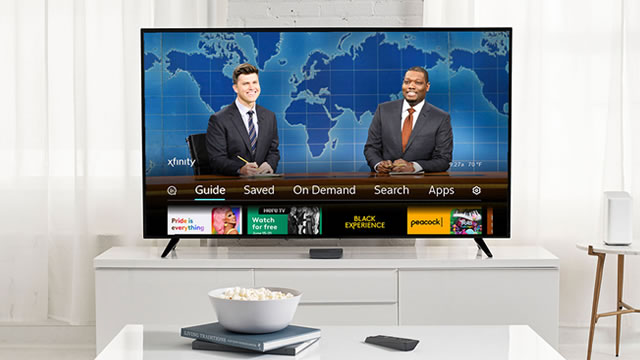
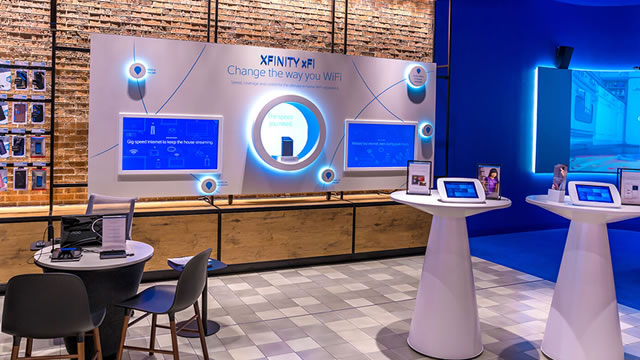
Comcast Corporation operates as a media and technology company worldwide. It operates through Cable Communications, Media, Studios, Theme Parks, and Sky segments. The Cable Communications segment offers broadband, video, voice, wireless, and other services to residential and business customers under the Xfinity brand; and advertising services. The Media segment operates NBCUniversal's television and streaming platforms, including national, regional, and international cable networks, the NBC and Telemundo broadcast, and Peacock networks. The Studios segment operates NBCUniversal's film and television studio production and distribution operations. The Theme Parks segment operates Universal theme parks in Orlando, Florida; Hollywood, California; Osaka, Japan; and Beijing, China. The Sky segment offers direct-to-consumer services, such as video, broadband, voice and wireless phone services, and content business operates entertainment networks, the Sky News broadcast network, and Sky Sports networks. The company also owns the Philadelphia Flyers, as well as the Wells Fargo Center arena in Philadelphia, Pennsylvania; and provides streaming service, such as Peacock. Comcast Corporation was founded in 1963 and is headquartered in Philadelphia, Pennsylvania.

Analyst Sentiment

67%
Buy

From 27 Active Polls

1Y Forecast: $31.48

▲ +32.2% Potential Upside

Consensus Target Metrics

Low Bound

$23

Median

$32

High Bound

$37

Average

$31

Price & Moving Averages

Loading chart...

🎯 Wall Street Analyst Intelligence Report

1-Year structural target targets, chart projections, and sentiment maps.

Average 1Y Target
$31.48
▲ +32.16% Upside
Low Target
$23.00
-3% Risk
Median Target
$32.00
34% Mid
High Target
$37.00
55% Max
Consensus
Buy
34 / 60 Buys

Consensus Trend Projection

Trailing closures vs. 12-month metrics map.

Analyst Vote Distribution

Aggregate institutional coverage sentiment weights.

📊 Historical Valuation Multiples

Real-time Trailing Twelve Month (TTM) momentum side-by-side with discrete quarterly metrics.

Fiscal QuarterTTMQ1 2026Q4 2025Q3 2025Q2 2025Q1 2025Q4 2024Q3 2024Q2 2024
Period EndingTrailing 12MMar 31, 2026Dec 31, 2025Sep 30, 2025Jun 30, 2025Mar 31, 2025Dec 31, 2024Sep 30, 2024Jun 30, 2024
Market Cap ($M)85,090103,844101,808117,291134,052138,165144,190161,274149,054
Enterprise Value ($M)170,234188,988202,770207,029225,866228,694235,961253,824255,917
Price to Earnings Ratio (P/E)4.5811.9411.748.803.0110.237.5511.119.48
Price/Earnings-to-Growth Ratio (PEG)3.293.012.111.38
Price to Sales Ratio (P/S)0.683.303.153.764.424.624.525.035.02
Price to Book Ratio (P/B)0.981.181.051.211.381.591.691.881.79
Price to Free Cash Flow Ratio (P/FCF)4.1722.8719.9920.8626.1022.8734.6147.35111.32
Enterprise Value to Sales (EV/Sales)6.016.286.647.457.657.397.918.62
Enterprise Value to EBITDA (EV/EBITDA)3.8124.5727.1321.5311.3524.3527.8426.0826.27
Debt to Equity Ratio1.911.071.141.021.051.141.161.181.36

CMCSA Growth Runway Model

Standard long term linear growth fade

Multi-Stage Discounted Cash Flow Sandbox

Market Price$23.82
Intrinsic Value$101.22
Market Alignment
Undervalued by 324.9%relative to calculated intrinsic value
9.00%
Exp: 0%0%
i

Growth runway slowdown

This value provides a time window for the growth rate to decline beyond Stage 1 toward the terminal rate. Longer windows are most useful for companies with high growth starting conditions or strong competitive advantages. This option stretches out the growth rate slowdown across 5, 10, or 15-year steps. A high-growth starting condition (exceeding a 25% initial growth rate) automatically applies a curve decay to simulate realistic, rapid market saturation.
i

Terminal growth rate

With long-term inflation between 3-5%, revenue must grow by that baseline to maintain flat real-world market share. This value sets the permanent terminal growth rate to factor into the valuation beyond the growth slowdown runway toward maturity.

3-Stage Financial Runway Horizon

🧠 Perpetuity Horizon Engine (Stage 3: Post-2035)

Terminal FCF Base$33.70B
Perpetuity TV Value$634.25B
Discounted TV (PV)$267.91B
TV Weighting %57.6%
⚠️
Financial Model Disclaimer & Risk Disclosure: This interactive scenario simulator is an educational sandbox provided strictly for informational and analytical research purposes. Core historical financial statements and consensus estimates are sourced directly via Financial Modeling Prep (FMP). All downstream outputs are entirely deterministic, hypothetical projections generated by combining automated mathematical formulas (including linear interpolation and Gaussian bell-curve decay models) with user-selected variables and third-party financial data inputs. Users assume all liability for trading decisions executed based on these sandbox calculations.

📘 Full Research Report

ℹ️

AI-Generated Research: This report is for informational purposes only.

📘 COMCAST CORP CLASS A (CMCSA) — Investment Overview

🧩 Business Model Overview

Comcast operates a vertically integrated communications platform anchored by its last-mile broadband network (Xfinity). Customers pay recurring subscription fees for internet connectivity and related services (including video and home/managed services), while Comcast also monetizes downstream demand through advertising and content distribution. The company’s media unit (NBCUniversal) creates and distributes content, then earns revenues through advertising, subscriptions, licensing, and theme park admissions. Value is generated by combining (1) network-delivered service subscriptions with (2) an owned content and distribution pipeline that can be bundled and marketed across its broadband footprint.

💰 Revenue Streams & Monetisation Model

The revenue base is predominantly recurring and network-linked, with additional monetisation from media and advertising:

  • Subscription services (recurring): broadband internet is the core recurring engine; video and voice historically add incremental ARPU, though the mix continues to shift toward data-heavy internet.
  • Advertising and sponsorship (recurring/seasonal): advertising demand ties to scale and audience reach in cable networks and digital platforms.
  • Business services (recurring): connectivity, managed services, and enterprise-grade offerings leverage the same access network and field operations.
  • Media monetisation (semi-recurring): filmed entertainment, television programming, and distribution generate revenue through advertising, streaming subscriptions, licensing, and content syndication.

Margin drivers follow two main channels. First, broadband and related services benefit from operating leverage on a largely fixed cost access footprint as penetration and usage rise. Second, media economics depend on content monetisation and distribution leverage—the ability to amortize content costs over multiple platforms and revenue types (advertising, licensing, and consumer subscriptions).

🧠 Competitive Advantages & Market Positioning

Comcast’s core moat is rooted in the economics of network access infrastructure and customer stickiness. While “network effects” are not the dominant dynamic in traditional pay-TV, Comcast benefits from structural advantages typical of cable broadband providers.

  • Switching costs (service bundling + operational friction): home connectivity and bundled services create practical switching barriers (installation logistics, equipment provisioning, and service continuity).
  • Cost advantages from existing infrastructure: owning and operating the cable access network supports scale efficiencies in procurement, maintenance, and field deployment relative to entrants without comparable last-mile footprint.
  • Intangible assets (content relationships and distribution): NBCUniversal’s content library and distribution capabilities create recurring monetisation opportunities and improve cross-promotion effectiveness within Comcast’s customer base.

COMPETITIVE BENCHMARKING:

  • AT&T and Verizon: focused on wireless-first and fiber/telecom platforms. Their scale is substantial, but duplicating cable-like footprint economics in dense residential areas typically requires significant capex and time to reach comparable household coverage.
  • Charter Communications: another large cable operator competing in broadband and video markets with similar infrastructure-based advantages and overlapping customer priorities (service quality, pricing, and retention).

Comcast’s industry focus is centered on cable broadband access plus integrated media, whereas mobile-focused peers compete more directly on wireless substitution and coverage breadth, and other cable operators compete primarily on execution within comparable access-network economics.

🚀 Multi-Year Growth Drivers

Across a 5–10 year horizon, Comcast’s growth profile is supported by a mix of secular demand and operational initiatives:

  • Broadband demand durability: data usage growth from streaming, gaming, telework, and connected-home applications supports sustained demand for higher-speed tiers and better network performance.
  • Monetisation of usage through tier upgrades: customers tend to upgrade when network reliability and speed differentiation are meaningful, providing a pathway to ARPU improvement even when video penetration declines.
  • Retention-driven revenue quality: reducing churn is an economic lever because broadband is high share-of-wallet within households; stable retention underpins predictable cash generation.
  • Business services expansion: enterprise connectivity and managed services can scale with the same network and operational capabilities, improving the mix toward higher-value recurring contracts.
  • Media and distribution cross-leverage: owning distribution plus content can support packaging and marketing efficiency, while ongoing subscription and licensing strategies diversify revenue beyond advertising cycles.

⚠ Risk Factors to Monitor

  • Capital intensity and network upgrade requirements: maintaining competitive speeds, reliability, and evolving standards requires continuous investment; execution cost overruns can pressure free cash flow.
  • Competitive pricing pressure and churn: cable peers and telecom alternatives can force slower pricing power, especially in markets where fiber deployment is more aggressive.
  • Technological substitution: further improvements in wireless capacity or fiber expansion could increase substitution risk if customer willingness to switch connectivity rises.
  • Media content and subscription economics: content costs, audience fragmentation, and platform competition can affect profitability and long-term subscription unit economics.
  • Regulatory and franchise dynamics: permitting, local franchise requirements, and spectrum/telecom policy can influence cost and operating flexibility.

📊 Valuation & Market View

Markets typically value Comcast-like infrastructure and media hybrids on a blend of enterprise value and cash flow frameworks, commonly anchored to EV/EBITDA and free cash flow durability, with additional emphasis on leverage, payout capacity, and the sustainability of broadband cash generation. Key valuation drivers include:

  • Broadband subscriber and churn trends (retention and monetisation of higher tiers)
  • Capex intensity and the trajectory of network investment efficiency
  • Media segment margin trajectory (content monetisation and subscription profitability)
  • Capital structure and credit profile (downside protection and flexibility through cycles)

Because a large portion of economic value is tied to recurring connectivity cash flows, the market often assigns incremental credibility when the company demonstrates sustained retention, manageable unit economics, and disciplined reinvestment.

🔍 Investment Takeaway

Comcast’s long-term investment case rests on an infrastructure-backed broadband moat—supported by switching costs and cost advantages from last-mile ownership—paired with NBCUniversal’s content and distribution assets that diversify revenue and support cross-platform monetisation. The principal swing factors are network investment efficiency, competitive churn dynamics, and media economics; however, the durability of recurring connectivity cash flows provides a foundation for mid-cycle resilience and multi-year operational improvement.


⚠ AI-generated — informational only. Validate using filings before investing.

📰 Market News & Coverage

15 Stories Available

Real-time institutional reporting and market updates for CMCSA.

fool.com2026-06-06

Is Your Plan for Retirement Too Safe?

In this episode of Motley Fool Hidden Gems Investing, Motley Fool retirement expert Robert Brokamp looks at some investing rules of thumb that may be overly cautious, causing you to work longer than necessary. He also discusses:

zacks.com2026-06-05

Comcast (CMCSA) Rises As Market Takes a Dip: Key Facts

In the closing of the recent trading day, Comcast (CMCSA) stood at $23.81, denoting a +2.06% move from the preceding trading day.

fool.com2026-06-04

Stock Market Today, June 4: Comcast Flat After Confirming Over 8 Billion Universal UK Theme Park Investment

Comcast's multibillion-dollar U.K. resort bet and fresh debt tenders are reshaping its capital playbook, today, June 4, 2026.

seekingalpha.com2026-06-04

13 Lucky Dogs: June Graham Value All-Stars (GVAS)

The June GVAS portfolio highlights 13 'safer,' fair-priced large-cap value stocks with strong dividend yields and positive free cash flow margins. Top ten GVAS stocks are forecasted to deliver average net gains of 39.68% by June 2027, with yields ranging from 7.9% to 16.46%. Energy and financial sectors dominate the highest-yielding, lowest-priced GVAS, with Okeanis Eco Tankers and IRSA Inversiones offering standout upside potential.

wsj.com2026-06-04

Comcast to Invest More Than $8 Billion on Universal Theme Park in U.K.

The U.K. government said the investment would be followed by an additional capital injection over the first decade of operation, after an estimated five-year construction period.

gurufocus.com2026-06-03

Comcast Corporation and Comcast Cable Communications, LLC Announce Results and Upsize of their Offers to Purchase for Cash Certain of their Outstanding Senior Debt Securities

Comcast Corporation, a Pennsylvania corporation (the “Company”) announced results of its previously announced cash tender offers to purchase any and all of

businesswire.com2026-06-03

Comcast Corporation and Comcast Cable Communications, LLC Announce Results and Upsize of their Offers to Purchase for Cash Certain of their Outstanding Senior Debt Securities

PHILADELPHIA--(BUSINESS WIRE)--Comcast Corporation, a Pennsylvania corporation (the “Company”) announced results of its previously announced cash tender offers to purchase any and all of its outstanding 2.350% Notes due 2027; 3.300% Notes due February 2027; 3.300% Notes due April 2027; 4.150% Notes due 2028; 3.150% Notes due 2028; 3.550% Notes due 2028; 5.100% Notes due 2029; 4.550% Notes due 2029; 4.250% Notes due 2030; 3.400% Notes due 2030 and 2.650% Notes due 2030 (together, the “Company No.

seekingalpha.com2026-06-03

Comcast Corporation (CMCSA) Presents at 2026 Evercore Global TMT Conference Transcript

Comcast Corporation (CMCSA) Presents at 2026 Evercore Global TMT Conference Transcript

businesswire.com2026-06-02

Comcast Corporation and Comcast Cable Communications, LLC Announce Pricing Terms of Offers to Purchase for Cash Certain of their Outstanding Senior Debt Securities

PHILADELPHIA--(BUSINESS WIRE)--Comcast Corporation, a Pennsylvania corporation (the “Company”) today announced the pricing terms of its previously announced cash tender offers to purchase any and all of its outstanding 2.350% Notes due 2027; 3.300% Notes due February 2027; 3.300% Notes due April 2027; 4.150% Notes due 2028; 3.150% Notes due 2028; 3.550% Notes due 2028; 5.100% Notes due 2029; 4.550% Notes due 2029; 4.250% Notes due 2030; 3.400% Notes due 2030 and 2.650% Notes due 2030 (together,.

seekingalpha.com2026-06-01

Top 25 High-Yield Dividend Stocks For June 2026

My updated dividend stock screening highlights 25 U.S. stocks with strong yields, fundamental growth, and substantial undervaluation for June 2026 consideration. The top 25 list averages a 3.29% yield and ~28% undervaluation, with a projected future CAGR of 14.63%, outperforming the broader screened universe. Key opportunities include high-yielders like Comcast (5.25%) and Paychex (4.98%) and fast dividend growers such as Autoliv (38.15% DGR) and Penske Automotive (33.37% DGR).

zacks.com2026-06-01

Comcast Corporation (CMCSA) is Attracting Investor Attention: Here is What You Should Know

Zacks.com users have recently been watching Comcast (CMCSA) quite a bit. Thus, it is worth knowing the facts that could determine the stock's prospects.

gurufocus.com2026-05-29

Xfinity Ranked #1 Nationally in Consistent Quality, Download Speed, and Video Experience in New Opensignal Report

Xfinity has once again been recognized as a broadband leader in Opensignal's latest U.S. Fixed Broadband Experience Report, earning more top rankings than any

businesswire.com2026-05-29

Xfinity Ranked #1 Nationally in Consistent Quality, Download Speed, and Video Experience in New Opensignal Report

PHILADELPHIA--(BUSINESS WIRE)--Xfinity has once again been recognized as a broadband leader in Opensignal's latest U.S. Fixed Broadband Experience Report, earning more top rankings than any other major provider in the country. Xfinity ranked #1 nationally among the five largest U.S. internet providers in three key categories: Consistent Quality, Download Speed, and Video Experience. Additionally, in head-to-head comparisons within its footprint, Xfinity won for Most Reliable WiFi, underscoring.

gurufocus.com2026-05-28

Reliable, Fiber-Powered Internet from Xfinity Now Available to More of Pennsylvania's Susquehanna River Valley

Comcast's Xfinity has started to connect the first of more than 16,000 new homes and businesses in Pennsylvania's Susquehanna River Valley to multi-gigabit, sy

gurufocus.com2026-05-27

Comcast Business Delivers Advanced Technology Infrastructure at Levi's® Stadium, Powering the Fan Experience and Stadium Operations

Comcast Business today detailed the advanced network infrastructure it has deployed at Levi's Stadium, home of the San Francisco 49ers – one of the most te

📊 AI Financial Analysis

Powered by StockMarketInfo
Earnings Data: Q Ending 2026-03-31

"CMCSA reported Q1 2026 results with Revenue of $31.46B and Net Income of $2.17B (EPS: $0.60). QoQ, revenue decreased from $32.31B (Q4 2025) to $31.46B (Q1 2026; -2.8%), while net income declined from $1.97B to $2.17B (+10.2%). YoY, revenue rose from $29.89B (Q1 2025) to $31.46B (+5.2%), and net income fell from $3.38B to $2.17B (-35.6%), indicating margin/other-income volatility. Profitability trends are mixed over the quarter-to-quarter/annual comparisons: gross margin expanded to 65.4% in Q1 2026 from 60.6% in Q4 2025, but operating margin fell to 13.1% from 10.8% (slightly up YoY vs Q1 2025 at 18.9%—down year over year). The net margin was 6.9% in Q1 2026 versus 6.1% in Q4 2025 (+80 bps QoQ) but below Q1 2025 (11.3%). Cash flow quality remains solid: operating cash flow was $6.89B and free cash flow was $4.54B, supporting dividends ($1.25B) and buybacks ($1.50B). Balance sheet resilience is moderate: total equity was $88.3B vs $97.4B in Q4 2025, while leverage remains elevated (total debt $94.6B; net debt $85.1B). For total shareholder returns, the stock price is down 11.68% over the last year and the dividend yield is about 1.2%, so returns are mainly supported by ongoing capital returns rather than strong price momentum. Analyst consensus valuation implies upside vs current levels (consensus target ~$32.45 vs price $29.63)."

Revenue Growth

Positive

Revenue grew YoY to $31.46B (+5.2%) but slipped QoQ from $32.31B (-2.8%), suggesting modest top-line momentum with short-term softness.

Profitability

Fair

Net income declined YoY from $3.38B to $2.17B (-35.6%). QoQ net income rose (+10.2%), and gross margin improved QoQ (65.4% vs 60.6%), but operating/net margins remain below prior-year levels (net margin 6.9% vs 11.3% in Q1 2025).

Cash Flow Quality

Positive

Operating cash flow was $6.89B with free cash flow of $4.54B. Dividends ($1.25B) and buybacks ($1.50B) continued, indicating adequate cash generation despite lower YoY earnings.

Leverage & Balance Sheet

Fair

Equity fell to ~$88.3B from ~$97.4B QoQ, while debt remains sizable (total debt $94.6B; net debt $85.1B). Liquidity is adequate but leverage provides less cushion than stronger equity base quarters.

Shareholder Returns

Fair

Dividend yield is ~1.2% and buybacks were active (repurchased ~$1.50B in Q1). However, price performance is weak with 1Y change of -11.68%, limiting total return despite ongoing capital returns.

Analyst Sentiment & Valuation

Positive

Consensus target (~$32.45) is above the current price ($29.63), implying potential upside. Lack of 1Y price momentum keeps the score from being higher.

Disclaimer:This analysis is AI-generated for informational purposes only. Accuracy is not guaranteed and this does not constitute financial advice.

Fundamentals Overview

Loading fundamentals overview...

Comcast reported a Q1 2026 pro forma revenue gain (+11% YoY) driven largely by “Legendary February” (Winter Olympics + Super Bowl). Despite that top-line strength, adjusted EBITDA fell 9% due to an investment period: broadband ARPU pressure from simplified pricing and free wireless lines, and peak NBA-related media dilution. Connectivity signals are improving: broadband subscriber losses narrowed by 117k YoY to 65k, wireless produced record net additions (+435k), and NPS/customer perception began moving in the right direction. However, management explicitly expects continued broadband ARPU pressure in Q2 and said relief should come exiting 2026 as free lines monetize at the 1-year Freeline anniversary. Media results were strong (+60% revenue; distribution and advertising growth), with Q2 expected to mark an inflection toward Peacock profitability. Capital returns were heavy ($2.5B in the quarter). Net-net, progress is visible, but near-term dilution risk remains the gating factor.

AI IconGrowth Catalysts

  • Broadband go-to-market pivot resonating via simple, transparent packaging and messaging (incl. gig-speed focus and 5-year price guarantee) during “Legendary February,” contributing to improved broadband performance
  • Wireless acceleration as a convergence lever: record wireless net additions plus improving churn, NPS, and customer perception
  • Real-time 4K launch enabling lower-latency live sports streaming versus competitors (positioned to improve engagement and reduce perceived switching friction)
  • Parks growth driven by Epic Universe: strong Orlando demand with higher per-cap spending and ongoing theme-park pipeline investments (Fast & Furious Hollywood Drift; Frisco kids park)
  • Media monetization “Legendary February” scale: Olympics + Super Bowl drove record advertising and subscriber growth at Peacock

Business Development

  • T-Mobile MVNO launch planned for business mobile relationships (near future / launch referenced as upcoming)
  • Mention of MVNO relationships (two strong MVNOs: consumer and broadband) supporting capital-efficient, converged mobile strategy
  • Peacock/Universal Studios content licensing impacts: Studios benefited from a Peacock-related office renewal (content licensing deal referenced)

AI IconFinancial Highlights

  • Revenue +11% YoY (pro forma), helped by Milan Cortina Winter Olympics and Super Bowl; excluding these events, revenue up low single digits
  • Adjusted EBITDA -9% (decline driven by investment period, broadband ARPU pressure from simplified pricing and inclusion of free wireless lines, and peak NBA-related dilution)
  • EPS: $0.79 in Q1 2026
  • Free cash flow: $3.9B; returned $2.5B to shareholders including $1.25B share repurchases (plus $1.2B dividends)
  • Connectivity broadband subscriber losses improved by >100k YoY (Q1: -117k to 65k loss), first improvement since Q4 2020; roughly >50% of improvement attributed to “Legendary February” offers
  • Broadband ARPU declined -3.1%; management flagged incremental ARPU pressure in Q2 and expected relief exiting 2026 as free lines monetize at 1-year anniversary and dilution laps
  • Convergence ARPA -0.8% (convergence revenue -2.8%); offset by +15% wireless service revenue
  • Wireless: +435k net wireless lines; ~nearly half of residential postpaid phone connects came from free lines; premium unlimited adoption ~30% of postpaid phone connects; premium base ~5x since launch
  • Media revenue +60% YoY; Olympics + Super Bowl drove $2.2B incremental revenue; Media EBITDA loss $426M (peak NBA dilution in first quarter; second quarter expected inflection toward less dilution)

AI IconCapital Funding

  • Shareholder returns in quarter: $2.5B total, including $1.25B share repurchases and $1.2B dividends
  • Net leverage: ended quarter at 2.3x net leverage (12-month trailing); expectation leverage ticks up as VERSANT exits the calculation over 2026, with intention to return to 2.3x
  • Free cash flow generated: $3.9B in the quarter; capital allocation prioritized organic investment behind growth drivers (VERSANT spend now complete)

AI IconStrategy & Ops

  • Leadership structure change: Mike Cavanagh as Co-CEO taking day-to-day lead; Steve Croney leading connectivity & platforms with restructuring of operations
  • Go-to-market shift: aligned Xfinity and NBCUniversal around clearer offers, focused messaging, sharper targeting; improving connect and churn metrics
  • Simplified buy/activate/support: emphasis on simplified pricing/packaging, improved activation (including same-day broadband order-to-activation), reduced unassisted friction, and reliability upgrades
  • AI/automation in customer acquisition/retention optimization: “hundreds of models with thousands of attributes” to optimize acquisition/upsell/winback
  • Sales effectiveness overhaul: hired new head of sales focused on sales development/training/staffing/compensation/tools; reported early results
  • Freeline lifecycle management: monetization expected as free lines reach 1-year anniversary mark late in the year; early engagement/usage trends encouraging

AI IconMarket Outlook

  • Q2 2026: incremental broadband ARPU pressure expected to continue (management explicitly flagged Q2 pressure after Q1)
  • Exit 2026: expected relief in broadband ARPU pressure as it laps initial transition effects and monetizes free lines (at the 1-year anniversary mark of Freeline rollout)
  • Media: Q2 expected meaningful inflection point with Peacock approaching profitability (management stated second quarter reflects improvement versus peak NBA dilution in Q1)

AI IconRisks & Headwinds

  • Competitive intensity remains elevated: fixed wireless aggressive across footprint, fiber overbuild at rapid pace, promotional convergence elevated
  • Satellite and other alternatives referenced as continued competitive threats in connectivity
  • Broadband ARPU dilution risk continues into Q2 from absence of early-year rate increase, simplified pricing, and free wireless lines (free lines initially dilutive)
  • Media dilution risk from NBA rights: Q1 represented peak volume (~50% of games) and corresponding cost flow-through
  • International parks demand headwinds: Osaka attendance pressured by China-related inbound travel trends; Beijing pressured by tougher macroeconomic environment

Q&A: Analyst Interest

  • Topic: Broadband ARPU stabilization path and segmentation of impact (FWA vs fiber) Management's detailed response: Management said ARPU pressure would intensify in early 2026 with incremental pressure in Q2, then relieve exiting the year. Drivers were absence of a broadband rate increase, free wireless lines, and simplified pricing. They emphasized mix shift to gig-plus and improving broadband performance across competitive environments.
  • Topic: Wireless success mechanics, customer migration simplification, and subsidy dynamics Management's detailed response: Management emphasized Comcast’s capital-efficient, converged mobile model: two MVNO relationships, largest WiFi/offload (~90%), and selling to its base to reduce acquisition costs. They cited ~50% of connects from free lines, ~30% premium plan contribution, lifecycle management, and selective subsidies tied to launches; T-Mobile MVNO adds mid-market/enterprise reach.
  • Topic: Cable/cable consolidation landscape and regulatory backdrop Management's detailed response: Management framed the value creation approach as “Plan A” executing the connectivity playbook and changing sentiment versus pursuing distractions. They said they have partnered opportunities (video/mobile/otherwise), and remain open to strategic possibilities “to create value,” while indicating additional thoughts were beyond Plan A.

Sentiment: MIXED

Note: This summary was synthesized by AI from the CMCSA Q1 2026 earnings transcript. Financial data is complex; please verify all metrics against official SEC filings before making investment decisions.

📋 Official Regulatory 10-K / 10-Q SEC Filings

Direct authenticated documentation links to audited SEC database reports for CMCSA.

SEC EDGAR Live Feed
Loading financial data and tables...
📁

SEC Filings (CMCSA)

© 2026 Stock Market Info — Comcast Corporation (CMCSA) Financial Profile