
📘 ETHAN ALLEN INTERIORS INC (ETD) — Investment Overview
🧩 Business Model Overview
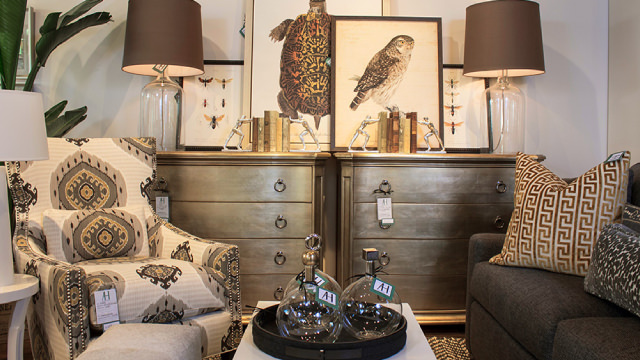
Ethan Allen designs, manufactures, and sells home furnishings through a showroom-led model supported by interior design expertise. The value chain runs from product design and material selection to manufacturing (including upholstery/casegoods capabilities) and then to retail delivery and installation. Customers typically engage with design consultants, choose finishes and configurations, and place orders that translate into made-to-order or assembled products—creating a structured workflow from consultation to production to fulfillment. The business also benefits from trade demand and accessories attachment, supported by an owned manufacturing base and a branded retail presence that functions as a “destination” for home remodeling and furnishing projects.
Stickiness is reinforced by the product customization process, showroom-assisted decisioning, and the operational complexity of replicating a customer’s design choices elsewhere. Even when competitors offer similar categories (sofas, casegoods, dining), the customer’s specific configuration and design direction become embedded in the purchasing relationship.
💰 Revenue Streams & Monetisation Model
Revenue is primarily generated from furniture and home décor sales, including made-to-order or configured pieces, complemented by accessories and related offerings. Monetisation is driven by:
- Transactional sales with project-based order values: large-ticket purchases tied to room refresh cycles rather than low-consideration replenishment.
- Manufacturing-driven margin structure: operating margin depends on production efficiency, product mix (higher-value custom upholstery/casegoods vs. lower-margin basics), and procurement economics for wood, fabrics, and hardware.
- Design-to-order conversion: design consultations increase conversion rates and support higher average selling prices through configuration depth.
- Delivery/fulfillment economics: logistics and installation execution influence both customer experience and unit economics.
While the revenue base is not “recurring” in a software sense, it exhibits relationship durability through replacement cycles and accessory expansion within a customer’s home—particularly for customers who buy coordinated room sets.
🧠 Competitive Advantages & Market Positioning
Ethan Allen’s competitive moat is a blend of switching costs and execution capability that competitors struggle to replicate at the same quality-price point.
- Switching costs (customization + embedded design intent): the customer’s chosen materials, dimensions, finishes, and style direction are difficult and time-consuming to recreate after leaving the process—especially when design consultants and product specifications are integral to the purchase.
- Operational know-how in complex home furnishings: owning or controlling key aspects of manufacturing and product development supports consistent quality and reduces reliance on purely external supply.
- Showroom-led conversion and trade enablement: the showroom/design workflow functions as a conversion engine, particularly for customers undertaking whole-room projects.
Competitive benchmarking: Ethan Allen competes with other furnishing retailers across channels and price tiers, including:
- Williams-Sonoma Group (e.g., Pottery Barn, West Elm) — focused on branded portfolios with strong DTC/omnichannel reach; Ethan Allen emphasizes deeper in-house design guidance and a more targeted brand experience for custom-oriented purchases.
- RH (Restoration Hardware) — positioned around luxury-led aesthetics and experiential retail; RH competes at the high end, while Ethan Allen targets customers seeking elevated design customization with a broader accessible mix.
- La-Z-Boy — with strong upholstery and comfort positioning and manufacturing capacity; Ethan Allen’s differentiation rests more heavily on full-room coordinated styling and showroom-guided selection.
Against these rivals, Ethan Allen’s advantage is most defensible when customers value a structured design process and coordinated, specification-driven products—areas where switching away creates friction and higher “rework” risk.
🚀 Multi-Year Growth Drivers
Over a 5–10 year horizon, growth is driven by market expansion in residential interiors and the shift toward personalized, design-led home improvement:
- Housing churn and renovation cycles: household formation, moves, and periodic refresh of key rooms (living, dining, bedroom) create durable category demand.
- Share shift toward design-led, project purchases: consumers increasingly prefer curated guidance and coordinated sets versus commodity sourcing.
- Omnichannel optimization: continued investment in digital discovery that routes customers to consultative showroom conversion can improve funnel efficiency without fully abandoning experiential retail.
- International and geographic expansion (selectively): expanding showroom footprint and localized assortment can extend addressable demand where brand and service infrastructure can be supported.
- Product mix improvement: rising contribution from higher-value upholstery, casegoods configurations, and accessories can support margin resilience through cycles.
⚠ Risk Factors to Monitor
- Consumer discretionary cyclicality: home furnishings are sensitive to housing affordability, employment trends, and consumer confidence.
- Input cost and supply volatility: wood, fabric, foam, and hardware costs—and transportation—can compress margins if not offset by pricing and mix management.
- Inventory and working-capital risk: retail demand variability can lead to inventory imbalances and markdown pressure, particularly when lead times and order patterns diverge from expectations.
- Competitive channel pressure: direct-to-consumer brands and off-price players can pressure pricing, especially for non-customizable items.
- Execution risk in manufacturing and fulfillment: production scheduling, quality consistency, and delivery performance influence brand trust and repeat purchase intent.
- Credit/returns behavior: in softer demand environments, higher returns or slower collections can strain cash flow.
📊 Valuation & Market View
Market valuation for home furnishings retailers typically reflects the credibility of long-term earnings power rather than near-term growth alone. Investors often anchor on:
- Operating margin sustainability: driven by product mix, manufacturing efficiency, and logistics execution.
- Sales productivity: showroom and design conversion efficiency, and the ability to manage promotional intensity without eroding gross margin.
- Inventory discipline and working-capital efficiency: inventory turns and cash conversion affect earnings quality.
- Category and mix tailwinds: whether higher-value upholstery/casegoods configurations gain share versus commodity categories.
Multiples in this space tend to expand when the market expects stable margins through cycles and disciplined inventory management; they compress when demand softness leads to promotional activity or when input costs pressure profitability without adequate pricing power.
🔍 Investment Takeaway
Ethan Allen’s long-term attractiveness rests on switching costs created by customization and design intent, supported by operational capability in complex home furnishings and a showroom-led conversion model. The investment case strengthens when management can defend margin through product mix and production discipline while navigating discretionary demand cycles and intensified competition across channels. The core thesis is that the company can retain a disproportionate share of “design-led, project-based” purchases where customer friction and specification depth make switching materially harder.
⚠ AI-generated — informational only. Validate using filings before investing.















 Growth Catalysts