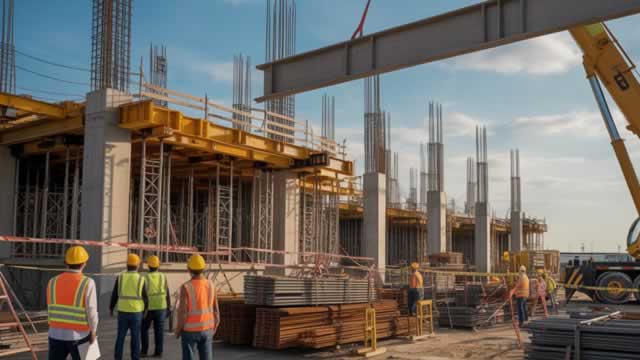
Installed Building Products, Inc.

Installed Building Products, Inc. (IBP) Market Cap

Installed Building Products, Inc. has a market capitalization of $5.32B.

Price: $197.61

-5.13 (-2.53%)

Market Cap: 5.32B

NYSE · time unavailable

CEO: Jeffrey W. Edwards

Sector: Consumer Cyclical

Industry: Residential Construction

IPO Date: 2014-02-13

Website: https://www.installedbuildingproducts.com

Installed Building Products, Inc. (IBP) - Company Information

Market Cap: 5.32B|Sector: Consumer Cyclical

Company Profile

Installed Building Products, Inc., together with its subsidiaries, engages in the installation of insulation for residential and commercial builders in the United States. It operates through three segments: Installation, Distribution, and Manufacturing Operations. The company offers a range of insulation materials, such as fiberglass and cellulose, and spray foam insulation materials. It is also involved in the installation of insulation and sealant materials in various areas of a structure, which includes basement and crawl space, building envelope, attic, and acoustical applications. In addition, the company installs a range of caulk and sealant products that control air infiltration in residential and commercial buildings; basic sliding door and complex custom designs; and custom designed mirrors, as well as closet shelving systems. Further, it installs and services garage doors and openers, including steel, aluminum, wood, and vinyl garage doors, as well as opener systems; installs waterproofing and caulking and moisture protection systems; offers sheet and hot applied waterproofing membrane, deck coating, bentonite, and air and vapor systems; and provides rain gutters installation services. Additionally, the company provides fire-stopping systems, including fire-rated joint assemblies, perimeter fire containment, and smoke and fire containment systems installation services; and cordless blinds, shades, and shutters installation services, as well as other complementary building products. It also distributes products and materials purchased wholesale from manufacturers, such as spray foam insulation, metal building insulation, residential insulation, and mechanical and fabricated Styrofoam insulation; and insulation products, including equipment, machines, and services. The company was formerly known as CCIB Holdco, Inc. Installed Building Products, Inc. was founded in 1977 and is based in Columbus, Ohio.

Analyst Sentiment

59%
Buy

From 14 Active Polls

1Y Forecast: $253.67

▲ +28.4% Potential Upside

Consensus Target Metrics

Low Bound

$200

Median

$241

High Bound

$355

Average

$254

Price & Moving Averages

Loading chart...

🎯 Wall Street Analyst Intelligence Report

1-Year structural target targets, chart projections, and sentiment maps.

Average 1Y Target
$253.67
▲ +28.37% Upside
Low Target
$200.00
1% Risk
Median Target
$241.00
22% Mid
High Target
$355.00
80% Max
Consensus
Hold
10 / 27 Buys

Consensus Trend Projection

Trailing closures vs. 12-month metrics map.

Analyst Vote Distribution

Aggregate institutional coverage sentiment weights.

📊 Historical Valuation Multiples

Real-time Trailing Twelve Month (TTM) momentum side-by-side with discrete quarterly metrics.

Fiscal QuarterTTMQ1 2026Q4 2025Q3 2025Q2 2025Q1 2025Q4 2024Q3 2024Q2 2024
Period EndingTrailing 12MMar 31, 2026Dec 31, 2025Sep 30, 2025Jun 30, 2025Mar 31, 2025Dec 31, 2024Sep 30, 2024Jun 30, 2024
Market Cap ($M)5,3247,1066,9786,6774,9274,7184,8706,8925,666
Enterprise Value ($M)6,0307,8127,7097,3295,6055,3965,5217,4536,257
Price to Earnings Ratio (P/E)20.7851.0522.7722.4417.8525.9818.2025.1221.73
Price/Earnings-to-Growth Ratio (PEG)9.531.628.063.37
Price to Sales Ratio (P/S)1.8110.769.338.586.486.896.499.067.68
Price to Book Ratio (P/B)7.9310.659.839.847.417.146.919.628.27
Price to Free Cash Flow Ratio (P/FCF)84.3782.91141.54-45.5265.8765.6292.0789.1697.35
Enterprise Value to Sales (EV/Sales)11.8310.319.427.377.887.369.808.48
Enterprise Value to EBITDA (EV/EBITDA)8.6581.1224.0351.3640.8251.2941.2655.0948.77
Debt to Equity Ratio1.011.771.481.451.481.481.391.351.42

IBP Growth Runway Model

Standard long term linear growth fade

Multi-Stage Discounted Cash Flow Sandbox

Market Price$197.61
Intrinsic Value$141.52
Market Alignment
Overvalued by 28.4%relative to calculated intrinsic value
9.00%
Exp: 0%0%
i

Growth runway slowdown

This value provides a time window for the growth rate to decline beyond Stage 1 toward the terminal rate. Longer windows are most useful for companies with high growth starting conditions or strong competitive advantages. This option stretches out the growth rate slowdown across 5, 10, or 15-year steps. A high-growth starting condition (exceeding a 25% initial growth rate) automatically applies a curve decay to simulate realistic, rapid market saturation.
i

Terminal growth rate

With long-term inflation between 3-5%, revenue must grow by that baseline to maintain flat real-world market share. This value sets the permanent terminal growth rate to factor into the valuation beyond the growth slowdown runway toward maturity.

3-Stage Financial Runway Horizon

🧠 Perpetuity Horizon Engine (Stage 3: Post-2035)

Terminal FCF Base$0.46B
Perpetuity TV Value$8.58B
Discounted TV (PV)$3.62B
TV Weighting %57.5%
⚠️
Financial Model Disclaimer & Risk Disclosure: This interactive scenario simulator is an educational sandbox provided strictly for informational and analytical research purposes. Core historical financial statements and consensus estimates are sourced directly via Financial Modeling Prep (FMP). All downstream outputs are entirely deterministic, hypothetical projections generated by combining automated mathematical formulas (including linear interpolation and Gaussian bell-curve decay models) with user-selected variables and third-party financial data inputs. Users assume all liability for trading decisions executed based on these sandbox calculations.

📘 Full Research Report

ℹ️

AI-Generated Research: This report is for informational purposes only.

📘 INSTALLED BUILDING PRODUCTS INC (IBP) — Investment Overview

🧩 Business Model Overview

INSTALLED BUILDING PRODUCTS INC (IBP) operates as a building-envelope installer, primarily delivering insulation and related exterior building solutions that improve thermal performance and help manage moisture and air leakage. The value chain is execution-focused: IBP converts building-product inputs into installed systems through a local network of trained crews, project management, and established processes.

Customer demand flows from homebuilding and remodeling activity. IBP typically participates at the job-site level, where builder relationships, installer reliability, schedule adherence, and installation quality influence contractor selection. This structure creates operational “stickiness” even when product supply is broadly available, because the customer needs predictable delivery and compliant, defect-resilient installation work.

💰 Revenue Streams & Monetisation Model

IBP’s monetisation is driven by installation work billed per project. Revenue is therefore predominantly transactional, with modest smoothing from a steady flow of projects tied to repair/remodel and ongoing construction cycles. Margin performance depends on:

  • Labor productivity and crew throughput: installation efficiency directly affects gross margin.
  • Project mix: different building envelope scopes carry different labor intensity and complexity.
  • Material sourcing and cost control: while insulation products are commodity-like, effective procurement and waste reduction can improve unit economics.
  • Scheduling and install-quality execution: rework and warranty exposure pressure margins; process discipline supports returns.

Overall, the model monetises operational execution—converting demand into repeatable installation economics—rather than selling a high-margin, recurring software or consumables base.

🧠 Competitive Advantages & Market Positioning

IBP’s moat is best characterized as a cost-and-quality advantage built on execution, supported by practical switching costs in real-world construction contracting.

  • Switching costs (practical, not contractual): Builders and contractors prefer installers who consistently meet schedule, installation standards, and defect prevention requirements. Changing installer counterparties can introduce coordination risk, training overhead, and quality variability—costs that favor established local operators.
  • Cost advantage from operating scale: Scale enables better purchasing leverage, standardized training, tighter job costing, and more efficient dispatch of crews across local markets.
  • Intangible assets—execution know-how: Installation methodology, quality controls, and field experience accumulate over time and are difficult to replicate quickly through hiring or marketing alone.

Competitive benchmarking

  • Builders FirstSource (BFS): BFS is a major building-products distribution and component supplier with installation-related capabilities in parts of its portfolio. IBP’s focus is more execution-intensive on insulation and building-envelope installation scopes, where delivery reliability and installation quality drive selection.
  • Owens Corning: Owens Corning is a materials manufacturer with an insulation product platform. IBP competes as an installer delivering installed performance; material supply alone does not guarantee end-customer outcomes, which favors contractors with superior execution.
  • Regional insulation and weatherization contractors: These are fragmented, often local competitors. IBP’s differentiation typically comes from scale-enabled cost control, standardized processes, and consistent workmanship versus smaller operators constrained by workforce depth and operational variability.

🚀 Multi-Year Growth Drivers

Over a 5–10 year horizon, IBP’s addressable opportunity is supported by several structural drivers:

  • Energy-efficiency and building-envelope standards: Energy conservation requirements and tightening building practices tend to increase the share and importance of insulation and air/moisture management solutions in both new construction and retrofit activity.
  • Retrofit and replacement demand: A large installed base of older residential stock creates demand for upgrades as efficiency expectations rise and building performance becomes a homeowner priority.
  • Weatherization “scope expansion”: Contractors increasingly package building-envelope improvements, which increases the value of reliable, end-to-end installation execution.
  • Share gains in a fragmented installer market: Local installation markets often remain operationally fragmented; scale and process discipline can support market-share capture from smaller competitors.

TAM expansion is therefore less about new product innovation and more about deeper penetration of building-envelope performance solutions and the ability to execute at scale across local demand pockets.

⚠ Risk Factors to Monitor

  • Residential construction cyclicality: New build volumes are sensitive to housing affordability, interest rates, and consumer confidence, which can pressure near-term project counts.
  • Labor availability and wage pressure: Installation businesses depend on skilled labor; sustained labor cost inflation or shortages can compress margins.
  • Execution and warranty risk: Defects, rework, or moisture-related issues can increase costs and harm future customer selection.
  • Material cost volatility and procurement execution: Even when material costs are partially managed through purchasing strategy and job scope definitions, volatility can still affect gross margin.
  • Acquisition integration risk: If growth is supported by acquiring or expanding operations, integration can strain management focus and dilute process discipline.

📊 Valuation & Market View

Markets typically value installer-heavy building-envelope businesses using EV/EBITDA and free-cash-flow yield frameworks, reflecting the cyclical nature of residential construction and the importance of conversion from earnings to cash. Key valuation drivers commonly include:

  • Normalized gross margin and its durability: driven by productivity and execution quality.
  • Operating leverage through cycles: the ability to protect margins and reinvest in workforce and process.
  • Return on invested capital: especially where expansion requires working capital and new market buildout.
  • Balance sheet flexibility: to weather downturns and sustain integration pace.

For investors, the needle typically moves when the company demonstrates consistent labor productivity, stable installation quality outcomes, and disciplined cost control despite construction-cycle variability.

🔍 Investment Takeaway

IBP presents a long-term thesis rooted in building-envelope performance demand and a competitive edge built on execution. The moat is expressed through practical switching costs, scale-enabled cost advantages, and accumulated installation know-how that reduce quality and schedule risk for builders. The investment case remains most compelling when viewed through the lens of multi-year energy-efficiency and retrofit penetration, tempered by residential cycle and labor/execution risk.


⚠ AI-generated — informational only. Validate using filings before investing.

📰 Market News & Coverage

15 Stories Available

Real-time institutional reporting and market updates for IBP.

gurufocus.com2026-05-19

Installed Building Products Announces the Acquisition of Diamond Energy Systems, Inc. and a Share Repurchase Update

Installed Building Products, Inc. (the “Company” or “IBP”) (NYSE: IBP), an industry-leading installer of insulation and complementary building products

businesswire.com2026-05-19

Installed Building Products Announces the Acquisition of Diamond Energy Systems, Inc. and a Share Repurchase Update

COLUMBUS, Ohio--(BUSINESS WIRE)--Installed Building Products, Inc. (the “Company” or “IBP”) (NYSE: IBP), an industry-leading installer of insulation and complementary building products, today announced the acquisition of Diamond Energy Systems, Inc. (“DESI”). With headquarters in St. Joseph, MN, DESI specializes in mechanical insulation with the majority of its sales derived from retrofit work between industrial and commercial applications. “DESI adds approximately $12 million of annual revenue.

marketbeat.com2026-05-10

Installed Building Products Q1 Earnings Call Highlights

Installed Building Products NYSE: IBP reported lower first-quarter revenue as weather disruptions and weaker new residential demand weighed on results, while management pointed to continued strength in commercial work, acquisitions and cash generation as offsets.

seekingalpha.com2026-05-10

Installed Building Products, Inc. (IBP) Q1 2026 Earnings Call Transcript

Installed Building Products, Inc. (IBP) Q1 2026 Earnings Call Transcript

zacks.com2026-05-07

J vs. IBP: Which Stock Is the Better Value Option?

Investors with an interest in Building Products - Miscellaneous stocks have likely encountered both Jacobs Solutions (J) and Installed Building Products (IBP). But which of these two companies is the best option for those looking for undervalued stocks?

zacks.com2026-05-07

Installed Building Products (IBP) Lags Q1 Earnings and Revenue Estimates

Installed Building Products (IBP) came out with quarterly earnings of $1.79 per share, missing the Zacks Consensus Estimate of $2.09 per share. This compares to earnings of $2.08 per share a year ago.

businesswire.com2026-05-07

Installed Building Products Reports First Quarter 2026 Results; Declares Regular Quarterly Cash Dividend

COLUMBUS, Ohio--(BUSINESS WIRE)--Installed Building Products, Inc. (the "Company" or "IBP") (NYSE: IBP), an industry-leading installer of insulation and complementary building products, today announced results for the first quarter ended March 31, 2026. First Quarter 2026 Highlights (Comparisons are to Prior Year Period) Net revenue decreased 3.5% to $660.5 million Installation revenue decreased 5.8% to $609.8 million, including sales from IBP's recent acquisitions Other revenue, net of elimina.

defenseworld.net2026-04-24

Head to Head Contrast: Hillman Solutions (NASDAQ:HLMN) and Installed Building Products (NYSE:IBP)

Hillman Solutions (NASDAQ: HLMN - Get Free Report) and Installed Building Products (NYSE: IBP - Get Free Report) are both construction companies, but which is the better business? We will compare the two companies based on the strength of their analyst recommendations, institutional ownership, valuation, earnings, risk, dividends and profitability. Profitability This table compares Hillman Solutions and

businesswire.com2026-04-23

Installed Building Products to Report First Quarter 2026 Financial Results

COLUMBUS, Ohio--(BUSINESS WIRE)--Installed Building Products, Inc. (the “Company”) (NYSE: IBP), an industry-leading installer of insulation and complementary building products, announced today that the Company will release its first quarter 2026 financial results on May 7, 2026. A webcast and conference call will be held that same day at 10:00 a.m. (Eastern Time) to review the Company's results. Webcast: The conference call will be available on the investor relations section of the Company's we.

zacks.com2026-04-13

ACA or IBP: Which Is the Better Value Stock Right Now?

Investors interested in stocks from the Building Products - Miscellaneous sector have probably already heard of Arcosa (ACA) and Installed Building Products (IBP). But which of these two stocks offers value investors a better bang for their buck right now?

defenseworld.net2026-04-05

SG Americas Securities LLC Increases Stock Holdings in Installed Building Products, Inc. $IBP

SG Americas Securities LLC boosted its position in shares of Installed Building Products, Inc. (NYSE: IBP) by 107.3% during the fourth quarter, according to the company in its most recent filing with the Securities and Exchange Commission. The firm owned 9,227 shares of the construction company's stock after acquiring an additional 4,777 shares

zacks.com2026-03-25

HCMLY vs. IBP: Which Stock Should Value Investors Buy Now?

Investors interested in stocks from the Building Products - Miscellaneous sector have probably already heard of Holcim Ltd Unsponsored ADR (HCMLY) and Installed Building Products (IBP). But which of these two stocks presents investors with the better value opportunity right now?

defenseworld.net2026-03-24

Rep. David Taylor Acquires The Home Depot, Inc. (NYSE:HD) Stock

Representative David Taylor (Republican-Ohio) recently bought shares of The Home Depot, Inc. (NYSE: HD). In a filing disclosed on March 20th, the Representative disclosed that they had bought between $1,001 and $15,000 in Home Depot stock on March 12th. The trade occurred in the Representative's "DAVID TAYLOR TRUST > SARDINIA READY MIX 401(K) - DAVE" account.

defenseworld.net2026-03-20

Installed Building Products, Inc. (NYSE:IBP) Given Consensus Rating of “Reduce” by Brokerages

Shares of Installed Building Products, Inc. (NYSE: IBP - Get Free Report) have earned a consensus recommendation of "Reduce" from the thirteen research firms that are covering the stock, Marketbeat.com reports. Two research analysts have rated the stock with a sell rating, ten have issued a hold rating and one has issued a buy rating on

defenseworld.net2026-03-16

31,946 Shares in Installed Building Products, Inc. $IBP Purchased by Aquatic Capital Management LLC

Aquatic Capital Management LLC bought a new stake in Installed Building Products, Inc. (NYSE: IBP) in the undefined quarter, according to its most recent disclosure with the SEC. The fund bought 31,946 shares of the construction company's stock, valued at approximately $7,880,000. Aquatic Capital Management LLC owned approximately 0.12% of Installed Building Products

📊 AI Financial Analysis

Powered by StockMarketInfo
Earnings Data: Q Ending 2026-03-31

"IBP reported Q1 2026 results with Revenue of $660.5M and Net Income of $34.8M (EPS $1.30). YoY, revenue increased from $684.8M (Q1 2025) to $660.5M, a -3.5% decline, while Net Income rose from $45.4M to $34.8M, a -23.3% decline. QoQ, Revenue fell from $747.5M (Q4 2025) to $660.5M (-11.7%), and Net Income declined from $76.6M to $34.8M (-54.6%). Profitability softened: gross margin slipped to 32.1% from 35.0% in Q4 2025 (and vs 32.7% in Q1 2025), while operating margin dropped to 8.7% from 14.6% in Q4. Cash generation remains positive despite weaker earnings: operating cash flow was $102.3M and free cash flow $85.7M in Q1 2026. Capital allocation in the quarter shows limited/no buybacks or dividends (both $0 shown), while balance sheet resilience improved with equity at $667.5M and total assets up to $2.23B. Total shareholder return is strong given the stock’s momentum: price is up 90.9% over 1 year, and the dividend yield is low (~0.83%). With high price momentum, the valuation/expectations component is elevated despite margin pressure."

Revenue Growth

Caution

Revenue declined YoY (-3.5%) and QoQ (-11.7%), indicating a weaker demand/price environment entering Q1.

Profitability

Neutral

Margins contracted sharply QoQ: operating margin fell to 8.7% from 14.6%, and net margin to 5.3% from 10.2%. YoY net income also declined (-23.3%).

Cash Flow Quality

Positive

Operating cash flow was $102.3M and free cash flow $85.7M in Q1 2026, supporting coverage despite lower net income. Dividends and buybacks were shown as $0 in the quarter.

Leverage & Balance Sheet

Positive

Total assets increased to $2.23B and equity was $667.5M. Net debt is elevated (~$706M) but balance sheet scale and equity remain stable/improving.

Shareholder Returns

Strong

Strong capital appreciation: 1Y price change +90.9% (well above 20%). Dividend yield is modest (~0.83%), with limited evidence of shareholder payouts in the quarter.

Analyst Sentiment & Valuation

Neutral

Valuation context is mixed: high momentum suggests positive sentiment, but earnings/margins weakened. Price (297.64) vs consensus target (307) implies near-term upside is limited.

Disclaimer:This analysis is AI-generated for informational purposes only. Accuracy is not guaranteed and this does not constitute financial advice.

Fundamentals Overview

Loading fundamentals overview...

IBP delivered resilient performance despite Q1 weather-driven working-day losses (missed revenue opportunity: $20M) and a weak entry-level production builder environment. Revenue fell 4% to $661M, while same-branch Installation sales declined 6% due to new residential down 11%, partially offset by commercial up 11%, with heavy commercial remaining the dominant growth driver (Installation up 11% same-branch). Profitability remained within a stated 32%–34% gross margin band but softened YoY (32.2% vs 32.7%) and sequentially due largely to volume compression and “other COGS” items—especially vehicle insurance and depreciation. Management highlighted multiple cost headwinds (M&GL insurance +36%, vehicle insurance +25%) and expected $15M–$20M fuel/logistics impact in the balance of 2026. Spray foam pricing is expected to gain traction on ~25% manufacturer increases, supporting back-half price mix. Multifamily backlog growth remains encouraging but is exposed to GC-driven project slow-walks. Cash generation was strong (CFO $102M, +11% YoY) with ongoing buybacks.

AI IconGrowth Catalysts

  • Heavy commercial end market drove same-branch Installation sales up 11% (heavy commercial contract backlog growth cited as supporting sustained 2026 profitability)
  • Multifamily contract backlog and partnership build-out across branches continued to grow
  • 4 acquisitions completed in the quarter, adding ~ $28 million annual sales (diverse residential + commercial installers and services)

Business Development

  • Acquisitions announced/closed in Q1 2026: insulation installer (TX/LA/AR/OK, ~$5M annual sales), value-added mechanical insulation services provider (WI/IA/MN/MI/IL, ~$13M), insulation installer (KS/OK, ~$3M), waterproofing installer (MN, ~$7M)
  • Said multifamily partnership/backlog growth was occurring across branches (no named partners/customers disclosed on the call)
  • Closed a smaller mechanical industrial installation business (commercial/industrial installation focus; no named counterpart provided)

AI IconFinancial Highlights

  • Consolidated net revenue down 4% to $661M (vs. $685M prior year)
  • Same-branch Installation sales down 6%: new residential down 11%, offset by commercial up 11%
  • Adjusted gross margin 32.2% vs 32.7% prior year (driver: depreciation higher in COGS and vehicle insurance costs)
  • Adjusted selling & administrative expense as % of sales increased to 20.9% vs 20.1% (M&GL and facility cost inflation; M&GL insurance cited as 36% higher YoY)
  • Adjusted EBITDA $92M; adjusted EBITDA margin 13.9%; adjusted net income $48M / $1.79 diluted EPS
  • Cash flow from operations $102M, up 11% YoY
  • Working capital $346M at 3/31/26 (ex cash), cash on hand $474M
  • Net interest expense $10M in Q1 vs $8M prior year (write-off of debt issuance costs)
  • Fuel/logistics impact: management expected $15M–$20M in other COGS sold impact over the rest of the year (run-rate ~$5M+ per quarter) and noted manufacturers’ fuel surcharges (fiberglass) as a partial pass-through
  • Tax outlook maintained: effective tax rate 25%–27% for full-year 2026

AI IconCapital Funding

  • Share repurchase: ~91,000 shares for ~$25M during Q1
  • Repurchase program availability: ~$475M at 3/31/26; expires March 1, 2027
  • Net debt to trailing 12-month adjusted EBITDA leverage 1.2x at 3/31/26 (vs 1.17x at 3/31/25), below stated 2x target
  • Capital expenditures + finance leases ~ $18M combined (~3% of revenue) in the quarter

AI IconStrategy & Ops

  • Extreme weather caused missed working days at branches; management quantified $20M missed revenue opportunity (referenced from prior 2025 Q4 call)
  • Price/mix: flat overall in Q1; increased 3% when including heavy commercial
  • Volume: down 10% in Q1 partially due to adverse weather
  • Gross margin sequential pressure discussed as driven primarily by volume compression and other COGS (not material/labor); vehicle insurance and depreciation cited as key factors
  • M&A posture: expects to acquire at least $100M of annual revenue in 2026 (current outlook for acquisition opportunities described as strong)

AI IconMarket Outlook

  • No comprehensive financial guidance provided; management expectations focused on expense run-rate and macro conditions
  • Amortization expense expectation: ~$10M in Q2 2026 and ~$40M full-year 2026 (can change with future acquisitions)
  • Dividend: Q2 dividend $0.39/share, payable June 30, 2026; June 15, 2026 record date; “more than 5%” increase vs prior year period
  • Macro starts: U.S. Census Bureau data showed single-family starts down 6% YoY in 2026 Q1 and multifamily up 21%; management said they are not placing strong confidence in census near-term
  • Industry pricing traction outlook: fiberglass pricing increases unlikely to stick in current demand/material conditions; spray foam pricing increases expected to show traction (25% announced increases)

AI IconRisks & Headwinds

  • Weather and working-day disruptions (missed revenue opportunity quantified at $20M)
  • Entry-level production builder weakness driving volume declines and price pressure; public builder market homebuilding revenue down low teens in cited context
  • Fuel/diesel and logistics cost headwind: expected $15M–$20M impact in other COGS for rest of 2026
  • Vehicle insurance inflation: up 25% (gross margin headwind in Q1; reiterated as a key sequential/structural contributor)
  • Insurance and facility cost inflation: M&GL insurance cited as 36% higher YoY; administrative expense ratio increased (20.9% vs 20.1%)
  • Multifamily project risk: some projects being “slow walked,” potentially affecting second-half comps if GCs delay development timing

Q&A: Analyst Interest

  • Topic: Industry pricing traction & capacity tightness—management’s detailed response explained why fiberglass price gains are unlikely (weak entry-level demand + available material + no material tightness), while spray foam has more traction (two announced ~25% price increases; semi-custom product; manufacturer cost pressure; spray foam ~11% of sales).
  • Topic: Multifamily strength vs project slow-down risk—management detailed that high-rise is <1% of revenue but nearly ~50% revenue decline occurred; despite that, high-rise backlog turned mid-single-digit positive in the quarter. Traditional multifamily backlog grew; April was strong; however, GC slow-walks can reduce second-half comps.
  • Topic: Gross margin bridge (sequential ~280 bps decline) & inflation pass-through—management attributed sequential compression mainly to volume and under-absorbed fixed/semi-variable other COGS (vehicles ~30 bps headwind; depreciation ~30 bps; vehicle costs expected to create $15M–$20M full-year other COGS impact; discuss surcharges from fiberglass manufacturers).

Sentiment: MIXED

Note: This summary was synthesized by AI from the IBP Q1 2026 earnings transcript. Financial data is complex; please verify all metrics against official SEC filings before making investment decisions.

📋 Official Regulatory 10-K / 10-Q SEC Filings

Direct authenticated documentation links to audited SEC database reports for IBP.

SEC EDGAR Live Feed
Loading financial data and tables...
📁

SEC Filings (IBP)

© 2026 Stock Market Info — Installed Building Products, Inc. (IBP) Financial Profile