indie Semiconductor, Inc.

indie Semiconductor, Inc. (INDI) Market Cap

indie Semiconductor, Inc. has a market capitalization of $682.5M.

Price: $3.23

0.07 (2.22%)

Market Cap: 682.46M

NASDAQ · time unavailable

CEO: Donald McClymont

Sector: Technology

Industry: Semiconductors

IPO Date: 2019-10-04

Website: https://www.indie.inc

indie Semiconductor, Inc. (INDI) - Company Information

Market Cap: 682.46M|Sector: Technology

Company Profile

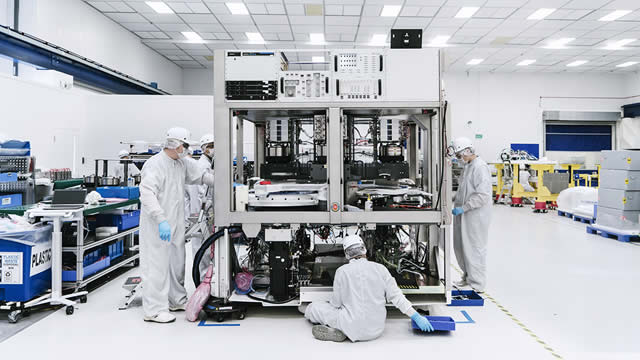
indie Semiconductor, Inc. specializes in delivering cutting-edge semiconductor and software solutions, primarily targeting the automotive industry. Their offerings enhance critical functions such as advanced driver assistance systems (ADAS), in-car connectivity, the overall user experience, and vehicle electrification. Within the automotive domain, their products encompass ultrasound technology for parking assistance, integrated wireless charging systems for vehicle cabins, sophisticated infotainment platforms, and LED lighting solutions designed to elevate passenger comfort. Furthermore, they facilitate robust vehicle connectivity through telematics and cloud access technologies. Beyond the automotive sector, the company also engineers photonic components leveraging a variety of technological platforms. These include fiber Bragg gratings, low-noise lasers, athermal and tunable packaging, photonic integration, and high-speed, low-noise electronics. These advanced photonic products cater to diverse markets such as laser systems, optical sensing, and optical communication. Founded in 2007, indie Semiconductor, Inc. is headquartered in Aliso Viejo, California.

Analyst Sentiment

87%
Strong Buy

From 8 Active Polls

1Y Forecast: $4.75

▲ +47.1% Potential Upside

Consensus Target Metrics

Low Bound

$5

Median

$5

High Bound

$5

Average

$5

Price & Moving Averages

Loading chart...

🎯 Wall Street Analyst Intelligence Report

1-Year structural target targets, chart projections, and sentiment maps.

Average 1Y Target
$4.75
▲ +47.06% Upside
Low Target
$4.75
47% Risk
Median Target
$4.75
47% Mid
High Target
$4.75
47% Max
Consensus
Buy
6 / 8 Buys

Consensus Trend Projection

Trailing closures vs. 12-month metrics map.

Analyst Vote Distribution

Aggregate institutional coverage sentiment weights.

📊 Historical Valuation Multiples

Real-time Trailing Twelve Month (TTM) momentum side-by-side with discrete quarterly metrics.

Fiscal QuarterTTMQ1 2026Q4 2025Q3 2025Q2 2025Q1 2025Q4 2024Q3 2024Q2 2024
Period EndingTrailing 12MMar 31, 2026Dec 31, 2025Sep 30, 2025Jun 30, 2025Mar 31, 2025Dec 31, 2024Sep 30, 2024Jun 30, 2024
Market Cap ($M)6826427048116963917527161,057
Enterprise Value ($M)9298889381,0118725508768141,118
Price to Earnings Ratio (P/E)-4.19-3.66-5.52-5.36-4.45-2.83-5.63-3.56-14.11
Price/Earnings-to-Growth Ratio (PEG)
Price to Sales Ratio (P/S)3.1211.5712.1315.1113.477.2212.9613.2720.18
Price to Book Ratio (P/B)1.981.981.972.201.780.961.801.562.24
Price to Free Cash Flow Ratio (P/FCF)-10.45-25.33-43.85-78.54-51.07-12.43-81.24-23.60-45.19
Enterprise Value to Sales (EV/Sales)16.0116.1618.8316.8910.1715.1115.0921.36
Enterprise Value to EBITDA (EV/EBITDA)-8.68-26.34-43.54-38.18-34.47-24.90-38.82-20.27-134.08
Debt to Equity Ratio-2.301.331.061.000.950.980.950.430.39

📘 Full Research Report

ℹ️

AI-Generated Research: This report is for informational purposes only.

📘 INDIE SEMICONDUCTOR INC CLASS A (INDI) — Investment Overview

🧩 Business Model Overview

Indie Semiconductor is a fabless semiconductor company that designs programmable mixed-signal/logic devices aimed at secure, low-power processing at the edge. The core value proposition centers on enabling customers to reduce time-to-market and engineering risk versus a fixed-function ASIC by using programmable logic that can be configured during product development and, in many deployments, maintained across product lifecycles.

The value chain is typical of fabless semiconductors: (1) design of the silicon and security features, (2) tool enablement for customer integration, (3) manufacturing through third-party foundries, and (4) sale of devices to end-market customers and/or system partners. Stickiness is driven by the integration effort required to embed Indie devices into customer hardware and software workflows (design-in qualification, board respins avoidance, and validation cycles).

💰 Revenue Streams & Monetisation Model

Revenue is primarily transactional product sales of Indie’s programmable devices. Monetisation is influenced by customer design cycles and device adoption, which determine shipment volumes. While the economics of fabless models typically feature a material cost of goods sold driven by wafer/packaging and yield, margin structure is also shaped by mix (device type and end-market) and by the extent to which recurring customer design demand replaces sporadic development-only orders.

In this business model, gross margin is a key driver because Indie’s differentiation relies on higher-value silicon (functionality + security features) rather than commodity logic. Operating leverage depends on scaling R&D amortization, maintaining efficient engineering productivity, and using customer design wins to smooth shipment demand.

🧠 Competitive Advantages & Market Positioning

Indie’s competitive moat is best characterized as a combination of switching-cost effects and product differentiation around secure edge functionality:

  • Switching Costs (Design-In Lock-In): Once a customer architecture qualifies Indie devices, replacing them involves hardware redesign, requalification, and validation across manufacturing and software layers. This creates inertia against competitive migration.
  • Security-Enabled Differentiation: Indie’s product positioning emphasizes hardware-level security capabilities integrated into programmable endpoints, aligning with rising demand for device identity, secure provisioning, and lifecycle protection.
  • Programmable Logic for Faster Iteration: Customers can iterate product definition and feature sets without committing to a full custom ASIC path, compressing engineering timelines in use cases where requirements evolve.

Competitive benchmarking:

  • Lattice Semiconductor (low-power programmable solutions): Lattice competes broadly in programmable logic with strong presence in industrial/communications segments. Indie’s contrast is a sharper emphasis on secure edge endpoint functionality and a pathway to avoid fixed-function ASIC redesign cycles.
  • Microchip Technology (FPGA/SoC and embedded programmable offerings): Microchip’s ecosystem and product breadth appeal to customers seeking integrated FPGA/SoC solutions. Indie competes where customers prioritize secure endpoint features and switching-cost advantages from design-in of a programmable security-centric platform.
  • QuickLogic (programmable/mixed-signal logic solutions, historically pASIC-adjacent positioning): Rivalry exists on “programmable endpoint” overlap, but Indie’s focus is on combining programmable functionality with security requirements and low-power edge deployments.

Overall, Indie’s positioning contrasts with broader FPGA incumbents by targeting a subset of deployments where security integration, deterministic endpoint behavior, and design-in switching costs matter more than maximizing general-purpose compute.

🚀 Multi-Year Growth Drivers

Across a 5–10 year horizon, growth is supported by three structural tailwinds:

  • Escalating edge compute content: More functionality is moving from gateways/cloud into endpoints for latency, reliability, and bandwidth efficiency. Programmable endpoint silicon can capture additional bill-of-material value.
  • Security requirements for connected devices: Hardware root-of-trust, secure provisioning, and long-term integrity verification increasingly influence semiconductor selection—favoring vendors with embedded security differentiation.
  • Faster product iteration cycles: Device manufacturers and industrial OEMs face shifting standards and feature needs. Programmable solutions reduce the engineering and qualification burden of redesigning fixed-function ASICs.

TAM expansion should be viewed through the lens of design-in adoption rather than unit growth alone: the addressable market expands as more endpoint OEMs treat security and lifecycle configurability as baseline requirements.

⚠ Risk Factors to Monitor

  • Competitive displacement risk: Larger FPGA/programmable logic vendors can bundle ecosystems, pricing leverage, and broad reference designs that pressure device-level differentiation.
  • Customer concentration and design-cycle volatility: Semi adoption can be lumpy due to product qualification timelines, leading to revenue variability.
  • Supply chain and foundry dependency: As with most fabless models, capacity allocation, process transitions, packaging constraints, and component lead times can affect shipment cadence.
  • Technology and security execution risk: Security-centric product positioning increases scrutiny around robustness, manufacturing correctness, and vulnerability response.
  • Inventory and mix management: Maintaining favorable gross margin requires disciplined mix and yield performance; inventory misalignment can pressure working capital and margins.

📊 Valuation & Market View

Semiconductor investors typically price fabless companies using a blend of revenue growth expectations and margin/operating leverage potential rather than only near-term earnings power. Market valuation often responds to:

  • Design-in progress: Evidence that customer qualifications convert into repeatable shipment volumes.
  • Gross margin durability: Ability to protect silicon value-add versus commodity substitution.
  • Operating expense scalability: R&D efficiency and reduced cost-per-design-win as adoption expands.
  • Balance between growth and cash burn: Credible pathway from early adoption to sustained profitability.

In practice, the sector is often valued on forward revenue multiples (e.g., EV/Sales) for earlier-stage phases and on EV/EBITDA or discounted cash flow logic once operating leverage becomes visible—though INDIE’s profile should be assessed primarily through unit economics and design adoption consistency.

🔍 Investment Takeaway

Indie Semiconductor presents an institutional thesis built on switching-cost economics from design-in qualification and differentiated secure edge programmability. The long-term opportunity is tied to rising endpoint security requirements and the structural shift toward programmable solutions that reduce fixed-function redesign burden. Key diligence should focus on adoption converting from design wins into sustained shipment volumes, margin durability through mix and yield, and resilience versus broader programmable logic competitors.


⚠ AI-generated — informational only. Validate using filings before investing.

📰 Market News & Coverage

15 Stories Available

Real-time institutional reporting and market updates for INDI.

businesswire.com2026-07-07

indie Sets Date for Second Quarter 2026 Earnings Release and Conference Call

ALISO VIEJO, Calif.--(BUSINESS WIRE)--indie Semiconductor (Nasdaq: INDI), an automotive solutions innovator, plans to conduct a conference call with analysts to discuss its second quarter 2026 results and business outlook on August 6, 2026, at 5:00 p.m. Eastern time. After the close of the market on August 6 and prior to the conference call, indie Semiconductor (“indie”) will issue a copy of the earnings press release via Business Wire. The press release may also be viewed on indie's website at.

gurufocus.com2026-06-22

indie Announces Changes to Board of Directors

indie Semiconductor (Nasdaq: INDI), an automotive solutions innovator, today announced that Dr. Ichiro Aoki will resign from his position as President of indie

businesswire.com2026-06-22

indie Announces Changes to Board of Directors

ALISO VIEJO, Calif.--(BUSINESS WIRE)--indie Semiconductor (Nasdaq: INDI), an automotive solutions innovator, today announced that Dr. Ichiro Aoki will resign from his position as President of indie and member of indie's board of directors, effective June 29, 2026, and has appointed Mr. Thomas Schiller to its board of directors. Dr. Aoki has been with indie since its inception and is renowned as one of the Company's co-founders, serving as indie's President, managing the execution of the Company.

businesswire.com2026-06-10

indie Launches Edge AI SoC to Power Smarter Perception Systems for Automotive and Humanoids

ALISO VIEJO, Calif.--(BUSINESS WIRE)--indie (Nasdaq: INDI), an automotive solutions innovator, today announced the release of iND881, its next-generation edge artificial intelligence (AI) system-on-chip (SoC), incorporating an AI compute engine to power smart cameras for automotive and robotic applications. By coupling AI compute with indie's market-leading low-latency multi-camera image signal processor (ISP), the iND881 offers designers an efficient solution for developing intelligent cameras.

fool.com2026-06-04

An indie Semiconductor Co-Founder Sold Company Shares Worth $3.8 Million. Here's What That Mean for Investors.

Focused on automotive semiconductors and smart vehicle tech, this company reported a notable insider sale amid strong recent stock gains.

businesswire.com2026-05-29

indie Announces New Employee Inducement Grants

ALISO VIEJO, Calif.--(BUSINESS WIRE)--indie Semiconductor (Nasdaq: INDI), an automotive solutions innovator, today announced that it has granted equity awards (the “Inducement Grants”) under its 2023 Inducement Incentive Plan to new employees who joined indie. The grants were previously approved by the Compensation Committee of the Board of Directors of indie Semiconductor. Information regarding the equity awards can be found on the company's investor relations website at: https://investors.ind.

seekingalpha.com2026-05-13

indie Semiconductor: Poor Value Investment With Good Trading Opportunities

indie Semiconductor (INDI) is rated Sell due to persistent cash burn, delayed profitability, and competitive headwinds in automotive semiconductors. INDI's near-term valuation is unsupported by fundamentals; a DCF yields a near-zero share price, highlighting excessive market optimism on growth or discount rates. The Wuxi divestment will reshape INDI's revenue mix, but exposes the company to geopolitical and supply-chain risks, especially given its heavy China exposure.

businesswire.com2026-05-11

indie to Acquire CMOS Image Sensor Product Line from ams OSRAM

ALISO VIEJO, Calif.--(BUSINESS WIRE)--indie Semiconductor (Nasdaq: INDI), an automotive solutions innovator, has announced the signing of a definitive agreement to acquire the fabless CMOS image sensor group from ams OSRAM AG for a total consideration of 40 million euros. With primary operations in Belgium and Portugal, this product line includes intelligent, high‑performance CMOS image sensors for a broad range of industrial, automation, and physical artificial intelligence (AI) applications.

seekingalpha.com2026-05-08

indie Semiconductor, Inc. (INDI) Q1 2026 Earnings Call Transcript

indie Semiconductor, Inc. (INDI) Q1 2026 Earnings Call Transcript

zacks.com2026-05-07

indie Semiconductor, Inc. (INDI) Reports Q1 Loss, Tops Revenue Estimates

indie Semiconductor, Inc. (INDI) came out with a quarterly loss of $0.06 per share in line with the Zacks Consensus Estimate. This compares to a loss of $0.08 per share a year ago.

businesswire.com2026-05-07

indie Reports First Quarter 2026 Results

ALISO VIEJO, Calif.--(BUSINESS WIRE)--indie Semiconductor, Inc. (Nasdaq: INDI), an automotive solutions innovator, today announced first quarter results for the period ended March 31, 2026. Q1 revenue was $55.5 million. On a GAAP basis operating loss for the first quarter of 2026 was $38.9 million, the same as the prior year period. Non-GAAP operating loss for the first quarter of 2026 was $11.1 million, compared to $15.1 million a year ago, representing continued progress towards profitability.

businesswire.com2026-04-09

indie Sets Date for First Quarter 2026 Earnings Release and Conference Call

ALISO VIEJO, Calif.--(BUSINESS WIRE)--indie Semiconductor (Nasdaq: INDI), an automotive solutions innovator, plans to conduct a conference call with analysts to discuss its first quarter 2026 results and business outlook on May 7, 2026, at 5:00 p.m. Eastern time. After the close of the market on May 7 and prior to the conference call, indie Semiconductor (“indie”) will issue a copy of the earnings press release via Business Wire. The press release may also be viewed on indie's website at https:.

defenseworld.net2026-04-09

Donald Mcclymont Sells 18,420 Shares of indie Semiconductor (NASDAQ:INDI) Stock

indie Semiconductor, Inc. (NASDAQ: INDI - Get Free Report) CEO Donald Mcclymont sold 18,420 shares of the business's stock in a transaction on Monday, April 6th. The stock was sold at an average price of $2.99, for a total transaction of $55,075.80. Following the sale, the chief executive officer directly owned 298,500 shares in the company,

defenseworld.net2026-04-05

indie Semiconductor (NASDAQ:INDI) and IQE (OTCMKTS:IQEPF) Head to Head Contrast

indie Semiconductor (NASDAQ: INDI - Get Free Report) and IQE (OTCMKTS:IQEPF - Get Free Report) are both small-cap computer and technology companies, but which is the superior stock? We will contrast the two companies based on the strength of their institutional ownership, profitability, analyst recommendations, risk, dividends, earnings and valuation. Profitability This table compares indie Semiconductor

defenseworld.net2026-03-29

indie Semiconductor (NASDAQ:INDI) President Ichiro Aoki Sells 50,000 Shares of Stock

indie Semiconductor, Inc. (NASDAQ: INDI - Get Free Report) President Ichiro Aoki sold 50,000 shares of indie Semiconductor stock in a transaction on Friday, March 27th. The stock was sold at an average price of $3.17, for a total value of $158,500.00. Following the sale, the president owned 100,952 shares in the company, valued at $320,017.84.

📊 AI Financial Analysis

Powered by StockMarketInfo
Earnings Data: Q Ending 2026-03-31

"INDI reported Q1’26 revenue of $55.46M and net income of -$43.19M (EPS -$0.22). On a YoY basis, revenue rose +2.60% (from $54.08M in Q1’25) while net loss widened: net income declined to -$43.19M from -$34.55M (about -25.0% deterioration). QoQ, revenue eased -4.25% (vs. $58.01M in Q4’25) and net loss improved somewhat: -$43.19M vs. -$32.10M, i.e., still worse, but the loss is not consistently trending down. Profitability remains deeply negative: gross margin was ~38.0% (slightly down vs. ~38.0% in Q4’25), but operating and net margins deteriorated meaningfully to -70.1% and -77.9%, respectively. Cash flow statements in the dataset show operating cash flow and free cash flow as 0 for Q1’26, while cash increased by ~$29.0M (driven by FX effect), leaving cash at $184.7M. Balance sheet resilience is mixed: total assets fell to $869.6M from $840.8M (Q4’25), while total equity is $349.0M and cash has declined from $236.6M at Q1’25. Total shareholder return is supported by strong momentum: price is up +81.7% over the last year, though valuation metrics are highly stretched and the company is not dividend-paying."

Revenue Growth

Fair

Revenue +2.60% YoY in Q1’26, but -4.25% QoQ (vs Q4’25). Trajectory looks modest and uneven across the last four quarters.

Profitability

Neutral

Margins remain severely negative. Net margin is -77.9% in Q1’26 vs -55.3% in Q4’25, with EPS -$0.22. Gross margin is ~38.0%, but operating leverage is not translating into profitability.

Cash Flow Quality

Neutral

Q1’26 operating cash flow and free cash flow are shown as 0 in the provided dataset; cash increased due to FX effect. Net income remains materially negative, so cash burn sustainability cannot be confirmed from these line items.

Leverage & Balance Sheet

Neutral

Notable but stable funding: total assets are higher vs Q4’25, with total equity at $349.0M. Net debt is still elevated (~$242.8M), but short-term liquidity looks strong (current ratio ~4.11). Cash has trended down since Q1’25.

Shareholder Returns

Good

Strong price momentum: +81.7% 1Y change. Dividend yield is 0 and buybacks are not indicated, so returns appear driven primarily by capital appreciation.

Analyst Sentiment & Valuation

Neutral

Consensus price target is $4.75 vs. current price $3.38 (implied upside), but earnings multiples are not meaningful given negative EPS. Valuation appears highly speculative due to persistent losses.

Disclaimer:This analysis is AI-generated for informational purposes only. Accuracy is not guaranteed and this does not constitute financial advice.

Fundamentals Overview

Loading fundamentals overview...

INDI delivered a modestly ahead-of-midpoint Q1 with $55.5M revenue (+3% YoY) and improved non-GAAP operating loss to $11.1M from $15.1M a year ago, supported by expense discipline while sustaining momentum in core ADAS. The key inflection is commercial traction in radar and vision: a Tier 1 partner’s $25M production order for a 77GHz 4TX/8RX Gen 8 radar (linked to two OEMs) and iND880 DRAMless vision reaching production at NIO eMirror with additional volume programs entering phase in 2026. Management highlighted strong “tens of millions” annual iND880 pipeline and suggested it could potentially exceed radar revenue in 2026, driven by customers’ inability or unwillingness to source DRAM at 2–4x pricing. Q2 guidance calls for $59–$65M revenue (midpoint $62M) with flat OpEx ($38M) and improved EPS (non-GAAP) to -$0.05. Risks remain around China policy-driven demand softness and broader logistics/capacity tightness, though management expects normalization in Wuxi.

AI IconGrowth Catalysts

  • Tier 1 partner commitment: new production order of $25 million for Gen 8 77GHz 4TX/8RX radar, tied to 2 OEMs (Europe + Asia), supporting multi-OEM acceptance and an efficient ramp with added back-end/test capacity
  • iND880 vision processor: began production for NIO eMirror; design-to-production in ~6 months; accelerating volume production for the camera mirror system referenced last quarter with a large Chinese OEM
  • DRAMless architecture (iND880): expanding global adoption as customers face inability to source memory or face 2–4x premium pricing; expected to remain a meaningful growth driver through 2026 and beyond
  • Perception software momentum: post emotion 3D integration, strategic partnership with Mahindra to supply OMS/DMS perception suite for electric Origin SUV series; expectation of additional U.S. customer commitments near term
  • Photonics traction in quantum: announced world’s first commercially available UV DFB laser at 399nm matched to ytterbium atomic cooling transition; visible DFB laser family now spans near-UV to green for multiple atomic species
  • LiDAR transition to FMCW: integration partners completing designs using indie’s iND83301 SoC replacing FPGA processing; reported 80% power reduction and 40% solution-size reduction with market-making cost position
  • Embedded AI/robotics demand: adoption across AMR and broader embodied AI (vision, LiDAR, radar) as robots need better navigation in unpredictable environments

Business Development

  • Tier 1 radar partner: committed $25 million new production order for Gen 8 77GHz radar (4TX/8RX), supporting 2 OEMs (one European, one Asian) for mainstream vehicle penetration
  • Mahindra: strategic partnership to supply OMS/DMS perception suite for electric Origin SUV series
  • NIO: iND880 production supporting eMirror camera functionality

AI IconFinancial Highlights

  • Q1 2026 revenue: $55.5 million, ~+$0.5 million above guidance midpoint and +3% YoY
  • Core business revenue: ~$34.1 million, +20% sequential, continuing momentum in core ADAS portfolio
  • Revenue from WuXi: ~$21.4 million, consistent with expectations
  • Non-GAAP operating loss: $11.1 million vs $15.1 million in Q1 2025 (improvement driven by expense discipline)
  • Non-GAAP operating expenses: $37.3 million, consistent with outlook
  • Net loss: $13.9 million; loss per share (non-GAAP): $0.06 on 223 million shares (consistent with prior guidance last quarter)
  • Q2 2026 guidance: total revenue $59–$65 million (midpoint $62 million); Wuxi revenue ~$25 million and core revenue ~$37 million at midpoint
  • Q2 2026 margin/expense guidance: non-GAAP operating expenses $38 million (flat vs Q1); net interest expense ~$3.1 million; no tax expenses
  • Q2 2026 EPS (non-GAAP): improve net loss per share to $0.05 at midpoint on 227 million shares

AI IconCapital Funding

  • Issued 4% convertible senior notes due 2031: aggregate principal $170.5 million; net proceeds ~$165 million after fees/operating costs
  • Used net proceeds to repurchase significant portion of 2027 notes: ~$108 million total
  • Cash balance: exited quarter with total cash and cash equivalents including restricted cash of $184.7 million; net increase of $29 million vs Q4 2025
  • Refinancing effects: extends debt maturity profile by ~4 years, lowers coupon, enhances financial flexibility to support growth

AI IconStrategy & Ops

  • Second-source foundry strategy advancement: manufacturing flexibility and ability to meet potential “no China, no Taiwan” requirements demanded by certain industry players
  • Production readiness for radar ramp: secured additional back-end and test capacity across multiple suppliers; emphasized need for watchful capacity management given tight AI-related demand
  • Portfolio expansion to quantum and embodied AI: increasing engagement with quantum computing companies on next-generation laser source requirements; FMCW LiDAR adoption expanding beyond automotive

AI IconMarket Outlook

  • Q2 2026 revenue expected $59–$65 million (midpoint $62 million); core ADAS/photonic/adjacent business expected ~$37 million at midpoint (~+8% sequential, ~+20% YoY for core)
  • Expected Wuxi contribution in Q2: ~$25 million
  • Net loss per share expected to improve to $0.05 at midpoint (base 227 million shares)
  • Management reiterated radar and vision programs on track and design wins ramping through 2026

AI IconRisks & Headwinds

  • Geopolitical tensions and shifting trade dynamics: elevated logistics costs and selective capacity constraints across the industry
  • Market tightness in manufacturing capacity driven by AI demand: requires active oversight rather than expecting automatic supply availability
  • China EV sector headwinds in lower-end of the e-vehicle market: subsidy policy change hit through Q1; management expects a bounce back in the next quarter
  • DRAM supply constraints are a recurring market risk for customers that indie’s DRAMless iND880 mitigates; memory availability and pricing volatility can still affect broader adoption timelines

Q&A: Analyst Interest

  • Radar order ($25M) ramp schedule: Management declined to provide exact delivery timing. They emphasized wafers in the line, secured capacity (back-end/test/substrate/foundry diversification), and confirmed the order should contribute meaningfully in 2026, framing it as the first of many orders tied to OEM ramp needs and capacity certainty.
  • iND880 pipeline vs radar and use beyond automotive: Management cited a pipeline of “tens of millions” of dollars per year and said iND880 may exceed radar revenue in 2026 because memory scarcity forces demand. They added 880 derivatives are being evaluated for drone use, including possible AI processing and LiDAR processor interest.
  • Wuxi headwinds and China subsidy impacts: Management attributed prior-quarter softness to lower-end e-vehicle market headwinds from a China government subsidy policy change affecting results through Q1. They reiterated confidence in resolving issues and expected a “good bit of a bounce back” in the next quarter, alongside rising content per vehicle.

Sentiment: POSITIVE

Note: This summary was synthesized by AI from the INDI Quarter and Year earnings transcript. Financial data is complex; please verify all metrics against official SEC filings before making investment decisions.

📋 Official Regulatory 10-K / 10-Q SEC Filings

Direct authenticated documentation links to audited SEC database reports for INDI.

SEC EDGAR Live Feed
No recent 10-K available.
No recent 10-Q available.
Loading financial data and tables...
📁

SEC Filings (INDI)

© 2026 Stock Market Info — indie Semiconductor, Inc. (INDI) Financial Profile