Kopin Corporation

Kopin Corporation (KOPN) Market Cap

Kopin Corporation has a market capitalization of .

No quote data available.

CEO: Michael Murray

Sector: Technology

Industry: Consumer Electronics

IPO Date: 1992-04-15

Website: https://www.kopin.com

Kopin Corporation (KOPN) - Company Information

Market Cap: -|Sector: Technology

Company Profile

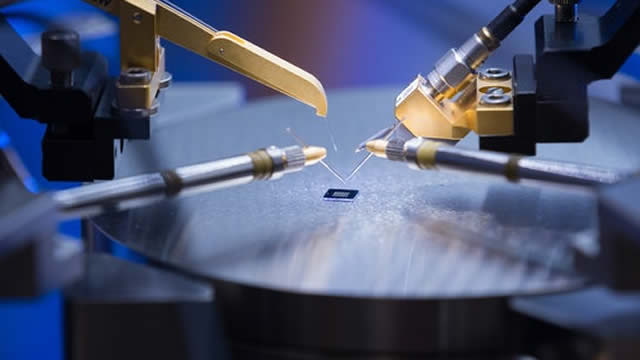
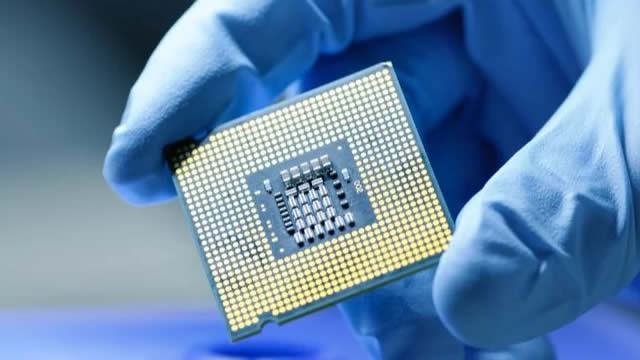
Kopin Corporation, together with its subsidiaries, invents, develops, manufactures, and sells microdisplays, subassemblies, head-mounted and hand-held systems, and related components for defense, enterprise, industrial, and consumer products in the United States, the Asia-Pacific, Europe, and internationally. It offers miniature active-matrix liquid crystal displays, liquid crystal on silicon displays/spatial light modulators, organic light emitting diode displays, application specific integrated circuits, backlights, and optical lenses; and headset systems. The company's products are used in soldier, avionic, armored vehicle and training, and simulation defense applications; industrial, public safety, and medical headsets; 3D optical inspection systems; and consumer augmented reality and virtual reality wearable headsets systems. Kopin Corporation was incorporated in 1984 and is headquartered in Westborough, Massachusetts.

Analyst Sentiment

83%
Strong Buy

From 6 Active Polls

1Y Forecast: $7.75

▲ +0.0% Potential Upside

Consensus Target Metrics

Low Bound

$6

Median

$7

High Bound

$10

Average

$8

Price & Moving Averages

Loading chart...

🎯 Wall Street Analyst Intelligence Report

1-Year structural target targets, chart projections, and sentiment maps.

Average 1Y Target
$7.75
▲ +41.94% Upside
Low Target
$6.25
14% Risk
Median Target
$7.00
28% Mid
High Target
$10.00
83% Max

Consensus Trend Projection

Trailing closures vs. 12-month metrics map.

Analyst Vote Distribution

Aggregate institutional coverage sentiment weights.

Sentiment volume allocation data unavailable.

Historical valuation matrix unavailable.

📘 Full Research Report

ℹ️

AI-Generated Research: This report is for informational purposes only.

📘 KOPIN CORP (KOPN) — Investment Overview

🧩 Business Model Overview

KOPN designs and manufactures microdisplay technologies used in devices where size, power, and optical performance matter. The value chain is product-and-integration oriented: (1) core microdisplay R&D and fabrication know-how, (2) qualification and customization for customer form factors and optical requirements, and (3) integration into end systems such as wearable displays and defense platforms. Because these systems must meet stringent performance and reliability requirements and often require extended qualification, KOPN’s practical “how it works” is less about single-unit retail sales and more about program-based supply into customer designs that are slow to change.

💰 Revenue Streams & Monetisation Model

Revenue is primarily generated through product sales of microdisplays and display-related components delivered into customer programs. Monetisation typically reflects:

  • Program-based/contract-driven shipments: Revenue is tied to customer design wins and subsequent production phases, rather than purely demand-led, short-cycle consumer purchasing.
  • Commercial wearables and industrial-adjacent markets: Monetisation depends on optical performance, yield/cost competitiveness, and customer design cycles.
  • Defense-related display content: Monetisation is often supported by multi-year procurement cycles and long integration lead times, which can dampen end-market volatility versus purely consumer channels.

Margin drivers center on (i) manufacturing yield and process stability, (ii) component cost and sourcing discipline, (iii) product mix (defense content vs. commercial wearables exposure), and (iv) the degree of engineering involvement required for customer qualification.

🧠 Competitive Advantages & Market Positioning

KOPN’s moat is best characterized as hard-to-replicate technology plus customer qualification-driven switching costs, supported by manufacturing expertise and embedded know-how. Microdisplay suppliers are not interchangeable in end products because performance targets (brightness, resolution, power, optics compatibility, thermal characteristics) must be met within tight integration constraints, followed by qualification and reliability testing. Once designs are locked, changing suppliers typically triggers requalification and redesign risk—creating practical switching costs.

Competitive benchmarking (primary competitors):

  • MicroVision — focuses on display/vision-related microdisplay and scanning technologies for AR and related applications.
  • eMagin — produces microdisplay solutions used in defense and other specialized markets.
  • DigiLens — emphasizes waveguide/optical display approaches for wearables.

Positioning vs. rivals: KOPN’s emphasis is on delivering microdisplay capability that can be integrated into customers’ optical and system requirements, with particular attention to qualification pathways in defense and select commercial use cases. Competitors may differentiate on specific microdisplay architectures or optical paradigms; however, in both defense and advanced wearable systems, integration constraints and qualification timelines tend to favor suppliers with proven performance and manufacturability.

🚀 Multi-Year Growth Drivers

  • Defense and security demand for situational awareness: Persistent investment in embedded display content for helmets, sights, and tactical systems supports a multi-year procurement horizon.
  • Wearables progress constrained by component-level performance: Advances in display brightness, resolution, and power efficiency expand the addressable applications where microdisplays are a fit.
  • Supplier consolidation toward fewer qualified vendors: Qualification and reliability requirements can reduce the number of viable suppliers over time, benefiting those with established processes and references.
  • Technological iteration with learning-curve benefits: Ongoing refinements in yield, optics integration, and manufacturing repeatability can translate into improving unit economics as programs scale.

⚠ Risk Factors to Monitor

  • Program concentration and customer qualification risk: A limited number of design wins or production ramps can materially influence revenue; delays or cancellations can create step-function impacts.
  • Technology and competitive substitution: Improvements in alternative display technologies, optical architectures, or competing microdisplay solutions can reduce demand if performance/cost curves shift.
  • Manufacturing yield and cost structure: Microdisplay businesses are sensitive to yield, defect rates, and process stability; sustained cost pressure can compress margins.
  • Capital intensity and execution: Maintaining manufacturing capabilities and tooling, while funding R&D, requires disciplined investment timing and execution.
  • Defense procurement cyclicality: Budget cycles and platform-level program changes can affect purchasing cadence.

📊 Valuation & Market View

The market typically values companies in specialized hardware and advanced components using a blend of EV/Revenue (P/S-type framing) and EV/EBITDA (when margins and cash generation become more visible), with emphasis on sustainability of gross margin and the credibility of the revenue pipeline. Key valuation drivers include:

  • Commercial vs. defense mix: Defense-oriented content can be viewed as more program-stable, while commercial wearables can be more cyclical.
  • Evidence of manufacturing scalability: Gross margin trajectory and cost-down progress are central to equity re-rating in component supply businesses.
  • Quality of end-market pull: Backlog visibility and customer production phase progression tend to matter more than isolated product announcements.
  • Working capital and cash conversion: Tight control of receivables, inventory, and production ramps influences financing needs and equity risk.

🔍 Investment Takeaway

KOPN’s long-term investment case rests on a defensible position in microdisplay supply where integration and qualification create meaningful switching costs, and where continued manufacturing execution can improve unit economics. Upside is tied to sustained design-win-to-production conversion and margin progress, with defense-linked content serving as a stabilizing pillar against more volatile commercial wearable demand.


⚠ AI-generated — informational only. Validate using filings before investing.
📊 AI Financial Analysis

Powered by StockMarketInfo
Earnings Data: Q Ending 2026-03-28

"Kopin (KOPN) reported sharply negative results in the latest quarter ended 2026-03-28: Revenue of $10.55B and Net Income of -$3.79B (EPS -$0.02). YoY: Revenue was up ~100,8% vs 2025-03-29 (from $10.54M to $10.55B) while Net Income deteriorated (from -$3.11M to -$3.79B; about -121,9x). QoQ: Revenue rose materially vs 2025-12-27 ($0.84M to $10.55B; ~+1,160,5x), and Net Income declined from +$6.81M to -$3.79B. Profitability remains deeply pressured: gross margin was 46.8% in Q1 2026, but operating margin was -56.7% and net margin -35.9%, indicating large operating cost load and below-the-line volatility. Operating cash flow was -$0.81B and free cash flow was -$2.11B, with cash down to $59.49B from $61.63B (modest drawdown). Balance-sheet liquidity is very strong (cash and total assets of ~$59.5B and ~$102.4B), with low stated debt and net debt of -$58.8B, suggesting resilience. Shareholder returns are mixed on fundamentals but strong on momentum: the stock is up +253.6% over 1 year (price momentum >20% materially boosts the total return score). Dividend yield is shown at ~8.6%, though given ongoing losses and negative free cash flow, dividend sustainability risk appears elevated. Analyst valuation context (consensus target ~$7.5 vs price ~$2.98) implies meaningful upside, but the earnings/cash flow backdrop is currently highly unstable."

Revenue Growth

Caution

Revenue surged QoQ (~$0.84M to $10.55B; ~+1,160,5x) and was up massively YoY (~$10.54M to $10.55B; ~+100,8%). However, the scale and quarter-to-quarter swing suggest volatility rather than steady demand momentum.

Profitability

Neutral

Net income deteriorated sharply: YoY from -$3.11M to -$3.79B (worsening ~121,9x) and QoQ from +$6.81M to -$3.79B. Despite a high Q1 gross margin (46.8%), operating and net margins are deeply negative (operating -56.7%, net -35.9%).

Cash Flow Quality

Neutral

Operating cash flow was -$0.81B and free cash flow -$2.11B in Q1 2026. Cash declined slightly QoQ, but ongoing negative free cash flow raises near-term funding/earnings-quality concerns.

Leverage & Balance Sheet

Good

Liquidity appears strong: cash of ~$59.5B and total assets ~$102.4B with low stated debt. Net debt is deeply negative (-$58.8B), and equity is sizable, supporting balance-sheet resilience.

Shareholder Returns

Positive

Total shareholder return outlook is helped by strong 1-year price momentum (+253.6%, well above 20%). Dividend yield is shown around 8.6%, but persistent net losses and negative free cash flow suggest dividend risk.

Analyst Sentiment & Valuation

Neutral

Consensus target (~$7.5) is above the current price (~$2.98), implying upside. However, the recent earnings/cash flow volatility likely tempers confidence in valuation.

Disclaimer:This analysis is AI-generated for informational purposes only. Accuracy is not guaranteed and this does not constitute financial advice.

Fundamentals Overview

Loading fundamentals overview...

Kopin’s Q1 2026 results were roughly flat YoY at $10.6M revenue, but the composition shifted meaningfully toward nonproduct/award and collaboration revenue (+$3.9M YoY to ~$5.2M). Product revenue fell to $5.4M from $9.2M, and gross cost of product as a share of net product revenue worsened to 103% (from 83%), attributed to reduced production efficiency on a lower base—highlighting near-term margin volatility despite improving strategic momentum. Management’s core “inflection” is product expansion: DarkWAVE with Theon (first $1.0M development order), Sentinel FPV (initial $3.2M; potential 40,000 goggles by end-2028), and a Phase 1 SBIR for smaller full-color MicroLED soldier/weapon sight displays. Post-quarter-end, a $21.5M thermal imaging follow-on strengthens the defense backlog. In parallel, the Fabric.AI collaboration (Kopin owns 19.9%; exclusive manufacturer) targets Neural I/o optical interconnects using MicroLED to replace power-hungry copper links in AI data centers. The company reiterated conservative 2026 revenue guidance of $52M-$60M, explicitly including Fabric.AI, supported by U.S. OLED in-house deposition CapEx (~$5M in 2026).

AI IconGrowth Catalysts

  • Fabric.AI collaboration to develop Neural I/o optical interconnects using Kopin MicroLED pixels as ultra-high-speed optical transceivers (targets higher bandwidth, lower power, and lower data center operational costs)
  • DarkWAVE with Theon: first $1.0 million development order to bring 960p OLED DarkWAVE module to production readiness; supports Theon’s DARK-I eye product and a retrofit aftermarket
  • Sentinel FPV entry into first-person viewer drone market: initial $3.2 million order with potential delivery of up to 40,000 goggles by end of 2028; Dual Situational Awareness differentiator
  • Phase 1 SBIR: U.S. government contract to advance new full color, smaller-format MicroLED display technology for soldier-borne and weapon sight applications
  • Post-quarter-end $21.5 million thermal-imaging follow-on production contract from a major U.S. prime for custom thermal-imaging eyepieces and assemblies for a manportable thermal weapon system
  • In-house OLED microdisplay manufacturing ramp: purchase of a state-of-the-art OLED deposition system to establish full-scale OLED microdisplay production at Westborough

Business Development

  • Fabric.AI: strategic collaboration; Kopin owns 19.9% of Fabric.AI; Kopin is exclusive manufacturer of Neural I/o chipsets
  • Theon International: partnership produced first DarkWAVE order ($1.0 million development order) to bring 960p OLED DarkWAVE module to production readiness
  • Tier 1 European defense contractor: $2.0 million microdisplay production order for rotary-wing helmet-mounted display system
  • European defense customer: $3.6 million purchase order for advanced avionic helmet-mounted display system integrated into a rotary-wing military aircraft
  • U.S. government: Phase 1 SBIR for full color yet smaller-format MicroLED displays for soldier-borne/weapon sight applications; also referenced IBAS award context for domestic MicroLED production
  • Major U.S. prime (post-quarter-end): $21.5 million follow-on production contract for custom thermal-imaging eyepieces/assemblies

AI IconFinancial Highlights

  • Revenue: $10.6 million in Q1 2026 vs $10.5 million in Q1 2025 (flat YoY); driven by $15.4 million government MicroLED award and strategic AR/thermal clip-on partnership offsetting lower product revenues
  • Product revenue: $5.4 million vs $9.2 million prior year (YoY decline attributed to lower thermal weapon sight and liquid crystal display shipments)
  • Nonproduct revenue: $5.2 million vs $1.3 million prior year; increase driven by award revenue for ultrabright full color MicroLED and collaboration revenue for next-generation augmented reality/thermal clip-on
  • Cost of product revenues: $5.6 million or 103% of net product revenues vs $7.6 million or 83% prior year; percentage increase attributed to reduced production efficiency on a lower revenue base
  • R&D: $4.9 million vs $2.1 million prior year; primarily due to the ultrabright full-color MicroLED government award (offset by process improvements)
  • SG&A: $6.0 million vs $4.7 million prior year; increase due to professional fees and accrued performance-based compensation
  • Guidance reiterated: 2026 revenue range of $52 million to $60 million; management characterized as conservative and includes Fabric.AI

AI IconCapital Funding

  • Cash and cash equivalents: $34.0 million as of March 28, 2026
  • Total cash, restricted, and marketable securities: $59.5 million, including $25.3 million restricted cash bonded against BlueRadios litigation appeal
  • Liquidity assessment: sufficient to fund operations through at least end of Q2 2027 and beyond (after October 2025 deconsolidation of Kopin Europe)
  • CapEx outlook from Q&A: OLED deposition line CapEx expected ~ $5 million in 2026 and about the same (roughly $5 million) for 2027

AI IconStrategy & Ops

  • Optical automation: both phases operational; expected to deliver about $1.0 million in annual operating expense savings and add to production capacity at full utilization
  • OLED strategy: invest in in-house U.S. OLED deposition (Westborough) to meet domestic defense demand; continue Asian manufacturing for non-domestic consumer/medical and maintain European OLED deposition partner for NATO-aligned defense programs
  • Manufacturing positioning: described as only U.S. manufacturer of four microdisplay types (AMLCD, FLCoS, MicroLED, OLED) supporting U.S. defense and increasingly photonics-facing needs
  • Neural display/AI infrastructure: Neural display platform extended beyond defense into AI infrastructure via Fabric.AI collaboration; Neural I/o described as a family of application-specific chipsets (AI GPU/CPU/memory interconnects), not a single chip

AI IconMarket Outlook

  • 2026 revenue guidance reiterated at $52 million to $60 million; management confirmed it includes Fabric.AI order and called it “uber/very conservative” to support current order book plus new AI chipset build

AI IconRisks & Headwinds

  • Reduced production efficiency on a lower revenue base drove cost of product revenues to 103% of net product revenues (vs 83% prior year), pressuring margins near term
  • R&D and SG&A elevated year-over-year from government award and professional/performance comp; near-term expense pressure may persist as development ramps
  • Competition risk implied: competitors attempting MicroLED solutions at scale are described as struggling; scaling failures or yield issues could threaten ramp timelines
  • Government funding/timing risk referenced: management said they are “gun-shy” about prior government shutdown impacts in Q3/Q4 of the prior year

Q&A: Analyst Interest

  • Topic: Guidance conservatism and whether it includes Fabric.AI: Management confirmed the reiterated 2026 revenue outlook includes the Fabric.AI order. They emphasized conservatism to ensure the company can support both the existing defense order book and the new AI infrastructure chipset effort without overpromising on timing or ramp.
  • Topic: OLED demand visibility and F-35 pilot helmet segment timing: Management would not provide detailed program specifics, but stated LCD demand is modestly increasing while OLED development is expected to enter low-rate initial production by end of 2026 or into the first half of 2027. They expect new OLED orders for that platform by end of 2026.
  • Topic: Sentinel FPV market sizing, U.S. legal constraints, and economics: Management agreed with analysts’ assumptions and discussed congressional line items for drones: ~1 million drones in the budget year with about 1/3 first-person view, and 3 million drones in the 2027-2028 time frame with ~1/3 first-person viewers. They stressed U.S.-built requirements and non-use of Chinese materials, which they view as enabling a unique growth window.

Sentiment: POSITIVE

Note: This summary was synthesized by AI from the KOPN Q1 2026 earnings transcript. Financial data is complex; please verify all metrics against official SEC filings before making investment decisions.

Loading financial data and tables...
© 2026 Stock Market Info — Kopin Corporation (KOPN) Financial Profile