
📘 MATSON INC (MATX) — Investment Overview
🧩 Business Model Overview
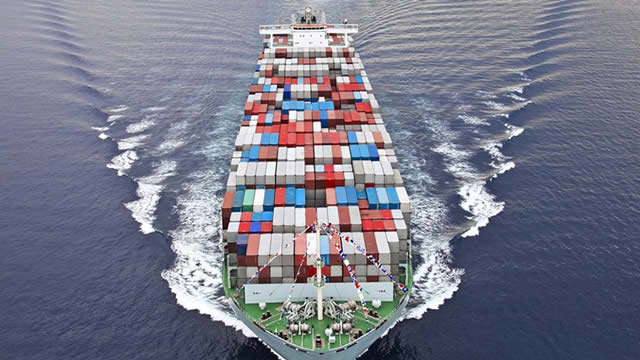
Matson is a niche ocean transportation and logistics operator with a concentrated operating footprint across the United States—anchored by serving the U.S. West Coast-to-Hawaii and U.S. West Coast-to-Guam lanes. The model is built around running a dedicated network of containerized freight movements using an owned/managed vessel fleet, coordinated terminal operations, and time-tabled service reliability.
In practical terms, shippers tender cargo for container shipment, Matson transports it via scheduled ocean routes, and the logistics chain is completed through port-to-destination drayage and intermodal handling where applicable. The value proposition is less about “cheapest headline shipping” and more about dependable transit windows, route coverage, and operational execution in markets where alternative routing options are limited by geography.
💰 Revenue Streams & Monetisation Model
Revenue is primarily derived from freight revenue earned per container movement (transactional by nature), supplemented by logistics and related service revenue tied to handling and movement of cargo through Matson’s network. Pricing typically incorporates a combination of base freight and pass-through components such as fuel-related surcharges, along with contractual arrangements that can reduce exposure to short-term rate swings.
Margin drivers are closely linked to vessel and route utilization (how fully capacity is deployed), operating efficiency (vessel performance, crew and maintenance productivity), and cost discipline (port/terminal costs, equipment expenses, and labor). Because ocean shipping is capital-intensive and utilization-sensitive, operating leverage is meaningful: incremental demand and improved fleet deployment typically flow through more than proportionally to earnings than in lower-fixed-cost models.
🧠 Competitive Advantages & Market Positioning
Matson’s moat is best described as a combination of geographic network advantages and operational switching friction, supported by an asset base and execution track record.
- Geographic cost advantage (route reality): Hawaii and Guam are inherently distance- and routing-constrained markets. The economic barrier to entry is structural because service coverage, sailing frequency, and vessel scheduling must be maintained to compete on reliability.
- Switching costs: Shippers and freight forwarders value predictable transit times, equipment coordination, and routable service commitments. Changing carriers often requires retooling logistics plans, contracts, and inventory/fulfillment schedules—raising practical friction.
- Scale in niche lanes: Concentration in specific trades allows Matson to run routes with better density and operational rhythm than generalized carriers that prioritize high-volume global lanes.
Competitive benchmarking:
- Crowley — strong presence in Hawaii/territory-related shipping. Matson competes by emphasizing route coverage and execution in these same geographic niches.
- MAERSK / MSC (large global container lines) — dominant on transpacific and global networks. Their focus is primarily high-volume mainland trades, leaving niche geographic lanes where Matson has stronger service fit.
- Other U.S. West Coast and regional ocean carriers — compete where they can offer overlapping sailings into parts of Matson’s corridors. Matson’s differentiated positioning is strongest where routing constraints and service reliability matter most.
Overall, Matson’s advantage is harder to replicate than a pure cost or pricing story because it depends on network permanence, fleet deployment discipline, and customer logistics integration in routes where “substitute” shipping options are limited.
🚀 Multi-Year Growth Drivers
- Structural demand in constrained territories: Long-run cargo needs tied to population, infrastructure development, tourism-driven consumption, and defense/government logistics in Hawaii and Guam support relatively steady underlying volume versus more discretionary global trades.
- Supply chain rebalancing toward reliability: Shippers increasingly optimize for service dependability and planning certainty. In niche geographic markets, carriers that sustain schedules tend to win and retain business through operational outcomes, not only rate competitiveness.
- Regulatory-driven fleet optimization: Maritime emission and efficiency standards increase the economic cost of operating non-compliant or inefficient vessels. Over a multi-year horizon, this tends to favor operators with the ability and discipline to manage modernization and compliance at scale.
- Route density and intermodal execution: Better density, equipment management, and terminal throughput can improve unit economics even without major step-changes in total demand.
Taken together, the growth profile is less about “hyper growth” and more about compounding performance through service durability, disciplined capacity deployment, and regulatory compliance execution in markets where logistics constraints are persistent.
⚠ Risk Factors to Monitor
- Freight rate cyclicality and utilization risk: Ocean shipping earnings can swing materially with global capacity, trade imbalances, and demand shocks. Matson’s niche focus reduces some exposure but does not eliminate it.
- Fuel cost and margin pass-through: While surcharges can partially offset fuel variability, timing differences and contract structures may leave operating margins exposed when fuel costs move faster than pricing adjustments.
- Regulatory and compliance capex: Emissions and vessel efficiency requirements can raise maintenance, retrofit, and operating costs. Failure to execute economically could pressure competitiveness.
- Capital intensity and fleet renewal: Sustaining service levels requires continuous investment and disciplined fleet management. Cost of capital and timing of vessel delivery can affect returns.
- Operational disruption: Labor constraints, port congestion, weather-related disruptions, and equipment shortages can impair schedule integrity, which is central to customer stickiness in constrained markets.
📊 Valuation & Market View
Market participants typically value shipping and transportation operators using a framework that emphasizes enterprise value versus operating cash flow (EV/EBITDA) and cycle-adjusted earnings power rather than steady recurring revenue metrics. Key valuation sensitivity comes from:
- Operating leverage: how quickly incremental demand translates into utilization gains and margin expansion.
- Cost per unit and fleet efficiency: crew productivity, maintenance efficiency, and throughput at terminals.
- Regulatory capex trajectory: the magnitude and timing of compliance-related investments relative to sustainable cash generation.
- Contracting and rate structure: degree of revenue stability from contractual arrangements versus spot dynamics.
For Matson specifically, investors generally underwrite durability by assessing whether the operating network produces consistent route density and whether modernization investments can be executed without structurally impairing unit economics.
🔍 Investment Takeaway
Matson’s long-term investment case rests on network-based geographic advantages in constrained U.S. territories, reinforced by operational switching friction and a fleet-and-execution model that supports reliable service. The core risk is cyclical freight dynamics and regulatory capex, but the structural nature of its routes and the practical difficulty of replacing service coverage create a durable competitive position that can compound value across a full cycle when capacity discipline and compliance execution remain strong.
⚠ AI-generated — informational only. Validate using filings before investing.















 Growth Catalysts