
📘 MCDONALDS CORP (MCD) — Investment Overview
🧩 Business Model Overview
McDonald’s operates a hybrid quick-service restaurant model: a mix of company-operated restaurants and a large franchised system. The franchisor supplies the operating platform—brand and trademarks, core training and operating standards, menu development, procurement and supply-chain guidance, and real estate/restaurant support. Franchisees fund most unit-level capital and bear day-to-day operating costs, while McDonald’s monetizes system volume through franchise royalties, rent (where applicable), and related fees.
This structure creates a value chain where store-level throughput and franchisee economics drive corporate cash generation. Customer demand flows through a standardized store format designed for speed, predictability, and repeat purchasing, which supports consistent system-wide performance and ongoing reinvestment.
💰 Revenue Streams & Monetisation Model
Revenue is primarily a function of systemwide restaurant sales (franchise royalties) and corporate-operated restaurant profitability. The monetisation engine typically combines:
- Franchise royalties and rent-related income: Linked to franchisee sales volume and the resilience of consumer traffic.
- Company-operated restaurant margins: Driven by labor productivity, food-cost discipline, throughput, and disciplined capex/remodel cycles.
- Other system fees: Includes additional franchise-related and supply-chain support economics.
Margin drivers are dominated by cost structure (food and packaging, labor, and occupancy) and sales mix (items and channels that lift ticket size and frequency). For the franchised portion, incremental corporate income generally scales with the system’s unit economics—making volumes and franchisee sustainability central to long-run profitability.
🧠 Competitive Advantages & Market Positioning
McDonald’s competitive positioning is anchored less in “switching costs” and more in structural scale advantages and distribution leverage, supported by an operating system designed for high throughput. Key moat elements include:
- Cost Advantage / Scale-Driven Procurement: Centralized purchasing coordination and scale enable favorable sourcing and supply-chain efficiency versus smaller independents and many regional chains.
- Operational Know-How & Standardization: Tight process control (kitchen layout, workflow, training, and menu engineering) supports speed and consistency—reducing variability in service times and margin outcomes.
- Franchise System Economics: The franchised model shifts a substantial portion of unit capital and operating execution risk to franchisees, while preserving corporate participation in system sales through royalties and fees.
Competitive benchmarking:
- Yum! Brands (e.g., Taco Bell, KFC): Similar QSR franchised economics, with different brand/subcategory focus and menu cadence.
- Restaurant Brands International (e.g., Burger King, Popeyes): Competes for value and convenience traffic but lacks McDonald’s breadth of global QSR system scale.
- Wendy’s (QSR-focused competitor): Greater emphasis on certain menu positioning; typically competes on individual restaurant differentiation rather than system-wide scale efficiency.
McDonald’s focus is mass quick-service with a standardized, globally scalable operating platform. Rivals may compete through brand-centric differentiation or faster menu innovation cycles, but matching McDonald’s combined procurement scale, system operating discipline, and franchise-led unit expansion capacity is structurally difficult.
🚀 Multi-Year Growth Drivers
The durable growth opportunity is best viewed as a combination of unit expansion, sales-per-unit improvements, and channel mix evolution over a multi-year horizon:
- Global market penetration: Ongoing store openings in geographies with relatively lower QSR penetration, supported by franchise expansion frameworks and local operator partnerships.
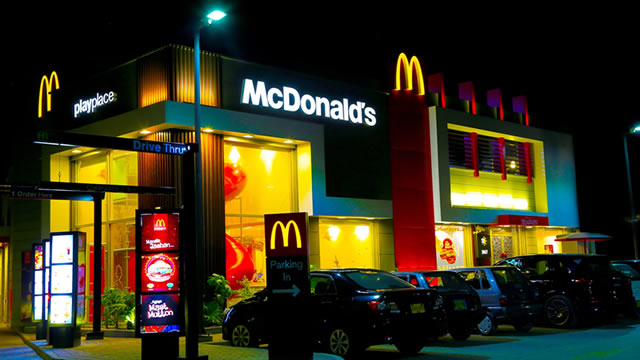
- Throughput and format optimization: Restaurant remodels, layout refinements, and drive-thru-optimized designs that can improve service speed and capacity.
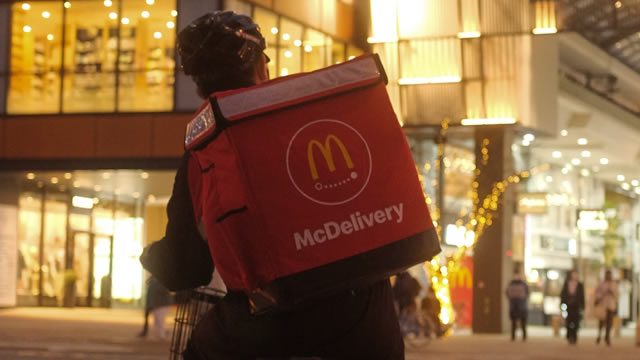
- Digital ordering and loyalty-enabled retention: Data-enabled promotion and ordering flows that support frequency and reduce friction in repeat purchases.
- Menu and mix engineering: Value-oriented propositions, breakfast participation, and targeted limited-time offerings designed to influence ticket size and daypart mix.
Collectively, these levers expand effective demand while reinforcing cost and execution advantages. The addressable market remains tied to consumer demand for affordable, convenient meals and the continuing shift toward off-premise and quick-service channels.
⚠ Risk Factors to Monitor
- Commodity and input-cost inflation: Food, packaging, and labor costs can pressure restaurant-level margins, especially if pricing power lags input cost changes.
- Labor market and wage regulation: Wage inflation and local labor constraints can reduce operating leverage, requiring continued productivity improvements.
- Franchisee credit stress: Because a large portion of units operate through franchisees, weak consumer demand or cost surges can impair franchisee profitability and increase risk of underperformance or unit attrition.
- Regulatory and health-related compliance: Nutrition labeling requirements, marketing restrictions, and food safety standards can increase compliance cost and affect menu strategy.
- Execution risk in reinvestment cycles: Remodeling, channel upgrades, and digital systems require sustained execution to avoid unit-level sales/margin deterioration.
📊 Valuation & Market View
Equity markets typically value mature QSR franchisors through a blend of cash-flow durability and system-level growth, often referencing EV/EBITDA and earnings multiples rather than asset-heavy metrics. Drivers that tend to move valuation include:
- Systemwide sales resilience (traffic and frequency) and the stability of royalty/rent revenue streams.
- Margin trajectory from food-cost management and labor productivity.
- Quality of growth (mix of franchised expansion versus company-operated burdens).
- Capital allocation discipline: reinvestment efficiency, franchise support, and measured shareholder returns.
Given the franchised-heavy economics, investors often place emphasis on long-run free cash flow generation and the durability of franchisee economics, rather than short-term unit volatility alone.
🔍 Investment Takeaway
McDonald’s offers a structurally resilient quick-service franchise platform supported by scale-driven cost advantages, standardized operations, and a system model that aligns corporate cash generation with systemwide volume. Over a multi-year horizon, growth is driven by global unit expansion, restaurant optimization, and digital/loyalty-enabled retention—while risks center on input costs, labor dynamics, and franchisee credit stability. The investment case is best framed as long-duration cash-flow compounding from an efficient, globally scalable QSR operating system.
⚠ AI-generated — informational only. Validate using filings before investing.












 Growth Catalysts