NVR, Inc.

NVR, Inc. (NVR) Market Cap

NVR, Inc. has a market capitalization of $16.69B.

Price: $6182.55

5.28 (0.09%)

Market Cap: 16.69B

NYSE · time unavailable

CEO: Eugene James Bredow

Sector: Consumer Cyclical

Industry: Residential Construction

IPO Date: 1985-07-22

Website: https://www.nvrinc.com

NVR, Inc. (NVR) - Company Information

Market Cap: 16.69B|Sector: Consumer Cyclical

Company Profile

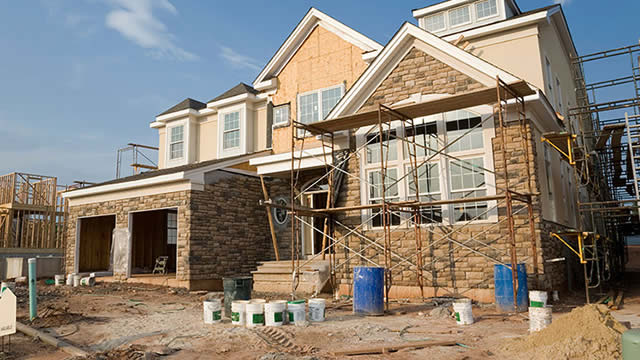
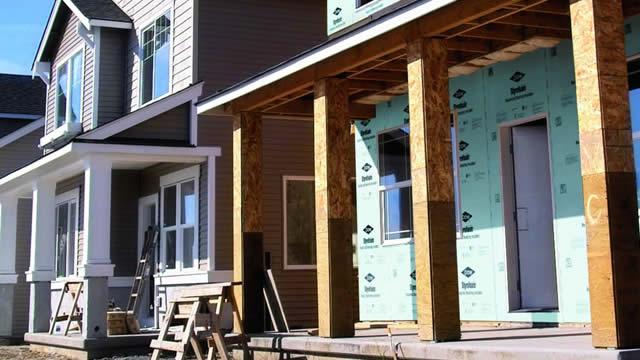
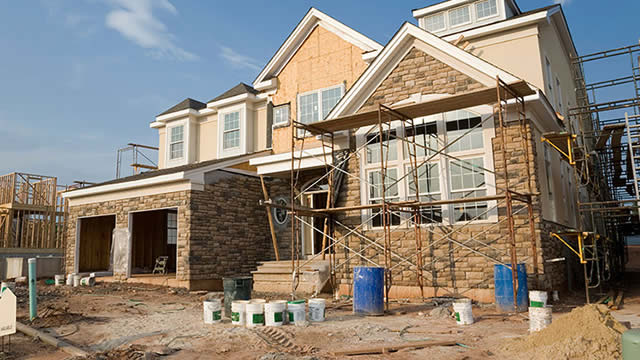
NVR, Inc. operates as a homebuilder in the United States. The company operates in two segments, Homebuilding and Mortgage Banking. It engages in the construction and sale of single-family detached homes, townhomes, and condominium buildings under the Ryan Homes, NVHomes, and Heartland Homes names. The company markets its Ryan Homes products to first-time and first-time move-up buyers; and NVHomes and Heartland Homes products to move-up and luxury buyers. It also provides various mortgage related services to its homebuilding customers, as well as brokers title insurance; performs title searches in connection with mortgage loan closings; and sells mortgage loans to investors in the secondary markets on a servicing released basis. The company primarily serves in Maryland, Virginia, West Virginia, Delaware, New Jersey, Eastern Pennsylvania, New York, Ohio, Western Pennsylvania, Indiana, Illinois, North Carolina, South Carolina, Florida, Tennessee, and Washington, D.C. NVR, Inc. was founded in 1980 and is headquartered in Reston, Virginia.

Analyst Sentiment

55%
Hold

From 7 Active Polls

1Y Forecast: $7465.33

▲ +20.7% Potential Upside

Consensus Target Metrics

Low Bound

$6600

Median

$7700

High Bound

$8096

Average

$7465

Price & Moving Averages

Loading chart...

🎯 Wall Street Analyst Intelligence Report

1-Year structural target targets, chart projections, and sentiment maps.

Average 1Y Target
$7465.33
▲ +20.75% Upside
Low Target
$6600.00
7% Risk
Median Target
$7700.00
25% Mid
High Target
$8096.00
31% Max
Consensus
Buy
10 / 24 Buys

Consensus Trend Projection

Trailing closures vs. 12-month metrics map.

Analyst Vote Distribution

Aggregate institutional coverage sentiment weights.

📊 Historical Valuation Multiples

Real-time Trailing Twelve Month (TTM) momentum side-by-side with discrete quarterly metrics.

Fiscal QuarterTTMQ1 2026Q4 2025Q3 2025Q2 2025Q1 2025Q4 2024Q3 2024Q2 2024
Period EndingTrailing 12MMar 31, 2026Dec 31, 2025Sep 30, 2025Jun 30, 2025Mar 31, 2025Dec 31, 2024Sep 30, 2024Jun 30, 2024
Market Cap ($M)16,68918,32620,64623,48521,78021,61725,43630,16123,395
Enterprise Value ($M)17,64619,88622,54421,04320,43223,84628,66521,939
Price to Earnings Ratio (P/E)23.1014.1917.1316.3218.0413.9017.5614.59
Price/Earnings-to-Growth Ratio (PEG)1.711.523.353.811.22
Price to Sales Ratio (P/S)9.747.619.378.379.208.9211.028.94
Price to Book Ratio (P/B)5.255.345.925.665.476.047.065.66
Price to Free Cash Flow Ratio (P/FCF)54.7447.3554.21812.64107.7040.2886.16103.40
Enterprise Value to Sales (EV/Sales)9.387.339.008.088.698.3610.478.38
Enterprise Value to EBITDA (EV/EBITDA)77.9341.7849.3345.7649.2140.7952.0940.28
Debt to Equity Ratio0.300.310.260.270.260.240.240.25

📘 Full Research Report

ℹ️

AI-Generated Research: This report is for informational purposes only.

📘 NVR INC (NVR) — Investment Overview

🧩 Business Model Overview

NVR is a U.S. homebuilder that converts land and entitled development opportunities into new, move-in-ready homes for retail buyers. The value chain is built around (1) sourcing and acquiring land in targeted geographies, (2) managing entitlement and development to control the timing and cost of “finished lots,” (3) producing homes through a repeatable construction process using established trade partners, and (4) selling homes largely on a build-to-order basis with controlled spec inventory. This operating model reduces exposure to long-duration unsold finished inventory while preserving the ability to respond to buyer demand through lot and plan selection, standardization of materials, and disciplined project execution.

💰 Revenue Streams & Monetisation Model

NVR’s monetisation is primarily transactional: revenue is recognized upon home deliveries/sales as buyers take possession. Margin is driven by the relationship between (1) achieved home selling prices, (2) construction and land carrying costs, and (3) operating efficiency (labor productivity, construction cycle time, and overhead discipline). Key profit levers include:

  • Land cost basis and lot readiness: Acquisition terms and development execution influence the cost of “finished lots,” which can persist through multiple construction cycles.
  • Construction cost control: Procurement scale, trade partner depth, and process consistency affect material and labor efficiency.
  • Pricing discipline and mix: Home price realization depends on community positioning, product mix, and buyer demand elasticity.

While homebuilding is not a recurring-revenue model, NVR’s back-to-work and build pipeline dynamics create a degree of visibility through its backlog and land strategy, which helps smooth earnings relative to peers that carry heavier finished-inventory risk.

🧠 Competitive Advantages & Market Positioning

NVR’s moat is best described as a combination of geographic execution advantages and cost discipline, supported by operational know-how and capital allocation discipline.

  • Geographic concentration & execution depth (cost advantage): Focused footprint allows repeatable development pipelines, stronger subcontractor relationships, and more consistent permitting and construction execution. This can reduce cycle-time friction and improve the effective cost of building.
  • Land sourcing and lot economics (capital allocation advantage): Competitors can acquire land, but consistently translating land opportunities into finished lots at attractive basis and timing requires execution, network depth, and risk management.
  • Process standardization (operating moat): Building practices, supplier relationships, and plan/material standardization can improve labor productivity and reduce rework, supporting more resilient margins through cost swings.

Competitive benchmarking:

  • D.R. Horton and Lennar: broader national footprints. Their scale supports purchasing power and diversification, but execution economics may be less concentrated and can dilute the depth of local development relationships.
  • PulteGroup: sizable scale with multi-market exposure and different community/product strategies.

Compared with these larger, wider-footprint builders, NVR’s positioning emphasizes concentrated market execution—where localized execution quality and land-to-production efficiency can be more defensible over cycles.

🚀 Multi-Year Growth Drivers

Over a 5–10 year horizon, NVR’s demand base is tied to housing needs, supply constraints, and household formation rather than technology or product obsolescence. Structural drivers include:

  • Demographic housing demand: Household growth and ongoing replacement demand from aging housing stock sustain long-term demand for new housing.
  • Housing supply undersupply in many submarkets: Planning, permitting, and development constraints often slow incremental housing supply, supporting favorable long-run pricing for well-located communities.
  • Migration and regional economic pull: Target geographies that retain population draw can benefit from sustained demand for new homes.
  • Operational compounding through disciplined land strategy: Successful conversion of land opportunities into profitable communities can compound through repeatable processes and improved return on invested capital.

These factors do not eliminate cyclicality, but they influence the balance between long-run demand and supply responsiveness, which is central to homebuilder profitability.

⚠ Risk Factors to Monitor

  • Interest-rate and affordability sensitivity: Mortgage rate movements can alter buyer affordability and change the timing/volume of demand.
  • Construction input volatility: Labor availability, material cost swings, and logistics constraints can pressure margins without guaranteed pricing offsets.
  • Land and development timing risk: Entitlement delays, higher-than-expected carrying costs, or changing local demand can reduce land investment returns.
  • Concentration risk: A more focused geographic footprint can increase exposure to local economic shocks or slower housing turnover in specific regions.
  • Execution risk: Construction productivity, warranty exposure, and project delays can impair profitability and reputation with trade partners and buyers.

📊 Valuation & Market View

The market typically values homebuilders as cyclical operators, with valuation levels driven more by earnings power through the cycle than by stable, long-duration cash flows. Common frameworks include valuation multiples tied to earnings or enterprise value, but the primary drivers that move investor decisions are:

  • Margin trajectory sensitivity: Gross margins and operating leverage respond to pricing realizations, cost inflation, and labor productivity.
  • Balance-sheet and liquidity profile: Homebuilders’ access to capital, working capital needs, and land pipeline funding shape downside resilience.
  • Land pipeline quality: The future profitability of deliverable communities depends on land basis, development progress, and expected selling price ranges.

In institutional practice, the most durable valuation work focuses on the sustainability of returns on capital and the ability to defend margins during cost and pricing swings.

🔍 Investment Takeaway

NVR’s long-term investment case rests on operational and geographic execution advantages that translate land opportunities into profitable communities. The moat is primarily cost discipline and localized know-how—supported by process standardization and a developed trade ecosystem—rather than a financial or software-like switching-cost mechanism. For investors, the key is underwriting the cycle: demand stability supported by supply constraints, disciplined land conversion, and margin durability through construction input volatility.


⚠ AI-generated — informational only. Validate using filings before investing.

📰 Market News & Coverage

15 Stories Available

Real-time institutional reporting and market updates for NVR.

247wallst.com2026-06-02

Buffett Just Bought a Homebuilder. One Stock in That Industry Crushed the S&P 500 by 34x Since 1996

Although Wall Street treats homebuilders as cyclical, Berkshire Hathaway (NYSE:BRK-B | BRK-B Price Prediction) just doubled down on the industry in a way that demands attention.

fool.com2026-05-29

Lennar vs. D.R. Horton: Which Consumer Stock Is a Better Buy in 2026?

Two homebuilding giants take different paths in scale, strategy, and financial strength, see how their latest numbers stack up for value-focused investors.

zacks.com2026-05-29

PSMMY or NVR: Which Is the Better Value Stock Right Now?

Investors looking for stocks in the Building Products - Home Builders sector might want to consider either Persimmon Plc (PSMMY) or NVR (NVR). But which of these two stocks is more attractive to value investors?

247wallst.com2026-05-27

4 High-Flying Stocks Stubbornly Resist Splits—Here's Which Might Crack First

The stock split is back in fashion. Yet a small club of high-priced names has refused to play along for decades, even as peers embrace splits to court retail investors.

zacks.com2026-05-22

NVR (NVR) Down 9.3% Since Last Earnings Report: Can It Rebound?

NVR (NVR) reported earnings 30 days ago. What's next for the stock?

247wallst.com2026-05-22

Will GE Vernova, MercadoLibre, or NVR Be the Next Big Stock Split?

Wall Street is rediscovering the stock split playbook. In May 2026, KLA (NASDAQ: KLAC | KLAC Price Prediction) announced a 10-for-1 forward stock split alongside a fiscal Q3 earnings beat and a roughly 21% dividend hike, with shares trading in the $1,800 range.

prnewswire.com2026-05-08

NVR, INC. ANNOUNCES SHARE REPURCHASE AUTHORIZATION

RESTON, Va., May 8, 2026 /PRNewswire/ -- NVR, Inc. (NYSE: NVR) announces that its Board of Directors has authorized the repurchase of up to an aggregate of $750 million of its outstanding common stock.

fool.com2026-05-01

Mortgage Rates Just Hit a Four-Week High Thanks to Iran. Are Homebuilder Stocks a Buy on the Dip?

Homebuilders had a rough first quarter. When will sales recover?

fool.com2026-04-29

A 45% Trim Inside a 12-Stock Fund Tells You More Than the Share Count

Alliance Resource Partners, L.P. operates seven mining complexes and manages coal, mineral, and royalty assets across key U.S. basins.

seekingalpha.com2026-04-28

NVR, Inc.: Forward Indicators Have Improved, But P&L Hasn't (Rating Upgrade To Hold)

NVR, Inc. (NVR) is upgraded from Sell to Hold as forward indicators improve, but P&L remains under pressure. Q1 2026 saw new orders rise 7% y/y, community count increase, and cancellations improve, signaling demand stabilization. Despite better forward metrics, revenue fell 22% y/y, gross margin declined 230bps, and homebuilding income before tax dropped 39% y/y.

seekingalpha.com2026-04-28

NVR: Fundamental Resilience And Reasonable Valuation Warrant A Buy Amid Market Volatility

NVR, Inc. demonstrates resilience amid soft housing markets, leveraging an asset-light model and East Coast focus for sustained profitability. NVR maintains a robust net income margin of 10.4% in Q1 2026, outperforming peers, despite a 21.4% YoY revenue decline. Valuation metrics (P/S 1.87x, P/B 5.09x) indicate NVR is underpriced, with target prices suggesting upside potential.

marketbeat.com2026-04-27

Homebuilder Earnings: D.R. Horton Sticks Out as Pulte & NVR Sales Tank

Homebuilders have been going through a rough patch as of late. Across top homebuilding stocks, analysts expected revenues and earnings to fall considerably in Q1 2026, and this is exactly what happened.

zacks.com2026-04-23

NVR's Q1 Earnings Miss Estimates, Homebuilding Revenues Down Y/Y

NVR's Q1 EPS and revenues miss estimates as settlements fall 22% on a 15% lower opening backlog; shares drop 4.7%.

gurufocus.com2026-04-22

Is NVR Inc. (NVR) Still Undervalued After Q1 2026 Miss? EPS $67.76 (miss vs. $79.53 est.), Revenue $1.88B (miss vs. $2.069B est.); GF Score 87/100, 13.3% Undervalued

Q1 2026 revenue was $1.88 billion, down 22% year over year.Diluted EPS was $67.76, down 29% year over year.EPS of $67.76 was below the $79.53 analyst estimate.

zacks.com2026-04-22

NVR (NVR) Misses Q1 Earnings and Revenue Estimates

NVR (NVR) came out with quarterly earnings of $67.76 per share, missing the Zacks Consensus Estimate of $78.25 per share. This compares to earnings of $94.83 per share a year ago.

📊 AI Financial Analysis

Powered by StockMarketInfo
Earnings Data: Q Ending 2026-03-31

"NVR reported Q1 2026 revenue of $1.881B and net income of $198.4M, translating to EPS of $71.33 (diluted $67.76). YoY, revenue rose from $2.603B (Q1’25) to $1.881B (Q1’26), a decline of ~-27.8%. Net income increased from $299.6M (Q1’25) to $198.4M (Q1’26), a decrease of ~-33.8%. QoQ, revenue fell from $2.713B (Q4’25) to $1.881B, down ~-30.7%, while net income declined from $363.8M to $198.4M, down ~-45.5%. Profitability contracted: gross margin slid from 22.7% (Q4’25) to 21.6% (Q1’26), and net margin declined from 13.4% to 10.5%. Operating margin fell sharply (16.5% to 12.0%). Despite weaker earnings, balance sheet resilience remains strong for a homebuilder: total assets were $5.59B and total equity was $3.49B; net debt is negative (net cash position) at about -$0.68B. Cash generation was solid but down QoQ: operating cash flow was not provided for Q1’26 in the dataset, but cash at quarter-end increased/decreased alongside reported cash levels (cash & equivalents $1.73B). Shareholder returns look muted based on price momentum: the stock is at ~$7,000.92 with 1-year change of -0.63% (no momentum boost) and no dividend yield provided (dividend yield listed as 0). With buybacks shown historically (notably in earlier quarters), total shareholder return appears driven mainly by repurchases rather than current price appreciation."

Revenue Growth

Neutral

Q1’26 revenue of $1.88B declined ~-27.8% YoY and ~-30.7% QoQ (vs. $2.60B Q1’25 and $2.71B Q4’25), indicating a clear deceleration.

Profitability

Caution

Margins contracted: gross margin fell to 21.6% (from 22.7% in Q4’25), and net margin dropped to 10.5% (from 13.4%). Net income declined ~-33.8% YoY and ~-45.5% QoQ; EPS followed lower (71.33 vs 128.52 in Q4’25).

Cash Flow Quality

Fair

Q1’26 operating cash flow and free cash flow were not included in the provided cash flow array, limiting assessment of cash conversion this quarter. Balance sheet liquidity is still strong with $1.73B cash & equivalents and a net cash position (negative net debt).

Leverage & Balance Sheet

Good

Total assets were $5.59B with total equity of $3.49B. Net debt is negative at about -$0.68B, reflecting ample liquidity and resilience through the earnings slowdown.

Shareholder Returns

Caution

No dividend yield is indicated (0%). Price performance is weak: 1-year change is -0.63% (no >20% momentum boost). Prior buyback activity appears in earlier cash flow quarters, but current-quarter price-driven total return looks limited.

Analyst Sentiment & Valuation

Positive

Street target consensus is ~7,465 vs current price ~7,000.9, implying modest upside (~+6.5%). Valuation metrics provided suggest earnings multiples are high, but targets remain supportive.

Disclaimer:This analysis is AI-generated for informational purposes only. Accuracy is not guaranteed and this does not constitute financial advice.

Fundamentals Overview

Loading fundamentals overview...
Loading financial data and tables...
© 2026 Stock Market Info — NVR, Inc. (NVR) Financial Profile