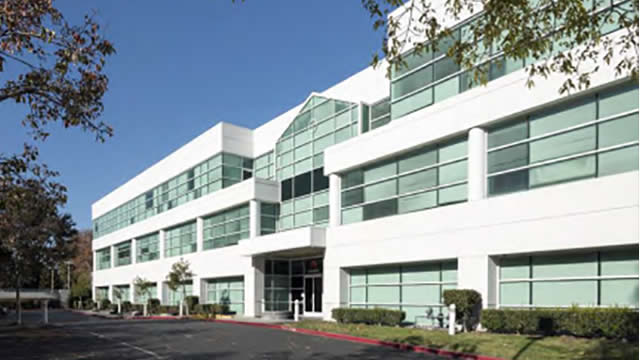
Rithm Capital Corp.

Rithm Capital Corp. (RITM) Market Cap

Rithm Capital Corp. has a market capitalization of .

No quote data available.

CEO: Michael Nierenberg

Sector: Real Estate

Industry: REIT - Mortgage

IPO Date: 2013-05-02

Website: https://www.rithmcap.com

Rithm Capital Corp. (RITM) - Company Information

Market Cap: -|Sector: Real Estate

Company Profile

Rithm Capital Corp. provides capital and services to the real estate and financial services sectors in the United States. Its investment portfolio comprises mortgage servicing related assets, residential securities and loans, and consumer loans. It qualifies as a real estate investment trust for federal income tax purposes. The company generally would not be subject to federal corporate income taxes if it distributes at least 90% of its taxable income to its stockholders. The company was formerly known as New Residential Investment Corp. and changed its name to Rithm Capital Corp. in August 2022. Rithm Capital Corp. was incorporated in 2011 and is headquartered in New York, New York.

Analyst Sentiment

90%
Strong Buy

From 10 Active Polls

1Y Forecast: $13.63

▲ +0.0% Potential Upside

Consensus Target Metrics

Low Bound

$13

Median

$14

High Bound

$15

Average

$14

Price & Moving Averages

Loading chart...

🎯 Wall Street Analyst Intelligence Report

1-Year structural target targets, chart projections, and sentiment maps.

Average 1Y Target
$13.63
▲ +49.29% Upside
Low Target
$12.50
37% Risk
Median Target
$13.50
48% Mid
High Target
$15.00
64% Max

Consensus Trend Projection

Trailing closures vs. 12-month metrics map.

Analyst Vote Distribution

Aggregate institutional coverage sentiment weights.

Sentiment volume allocation data unavailable.

Historical valuation matrix unavailable.

📘 Full Research Report

ℹ️

AI-Generated Research: This report is for informational purposes only.

📘 RITHM CAPITAL CORP (RITM) — Investment Overview

🧩 Business Model Overview

RITHM CAPITAL CORP participates in the U.S. residential mortgage ecosystem through a combination of (1) servicing mortgage loans and (2) holding mortgage-related assets, including mortgage servicing rights (MSRs) and related investments. The economic engine is the cash-flow stream generated by servicing and managing mortgages—plus the value of owning MSRs, which capture the economics of future servicing performance. Revenue is supported by established operational capabilities in servicing administration, borrower interaction, and collateral performance monitoring, while risk is managed through capital structure and hedging practices tied to prepayment and interest-rate exposure.

💰 Revenue Streams & Monetisation Model

RITHM’s monetization is primarily driven by two recurring components and one episodic component:

  • Servicing income (recurring): Contractual servicing fees earned for administering mortgage obligations (billing, collections, loss mitigation, reporting, and compliance). This stream tends to be more stable than transaction-driven mortgage origination economics.
  • MSR-related earnings (recurring): MSRs represent an intangible claim on a mortgage portfolio’s servicing cash flows. Economic outcomes depend on loan performance and borrower prepayment behavior, with valuation sensitivity to interest rates and prepayment speeds.
  • Investment and trading/hedging impacts (variable): Results can reflect gains/losses from mortgage-related investments and the effectiveness of risk management strategies (notably interest-rate and prepayment dynamics).

Margin drivers are largely tied to servicing economics (cost-to-serve versus contractual fees), MSR valuation dynamics (performance and prepayment assumptions), and the discipline of hedging and funding. A key point for underwriting is that “earnings power” is influenced by both mortgage servicing fundamentals and market-implied prepayment/discount-rate assumptions.

🧠 Competitive Advantages & Market Positioning

Moat: operational scale in servicing plus asset-intangible ownership (MSRs) that benefits from established servicing infrastructure. While RITHM is not a bank with a traditional deposit base, it benefits from an internal capability to manage mortgage servicing operations at scale—reducing average cost-to-serve, improving control over servicing processes, and supporting consistent performance in loss mitigation and administration. Ownership of MSRs adds an intangible element: MSRs embed long-dated cash flows tied to borrower servicing behavior, and competitors must build both servicing infrastructure and credibility to compete effectively for similar MSR opportunities.

Competitive benchmarking:

  • Mr. Cooper Group (COOP): Focused primarily on mortgage servicing as a core business. RITHM competes in servicing economics, but its positioning also emphasizes holding MSRs and mortgage-related investments to create a blended earnings profile.
  • Ocwen (OCN) / formerly similar legacy servicer platforms (reference point): The sector has seen operational and regulatory scrutiny for certain servicers. RITHM’s positioning depends heavily on operational consistency and risk controls to avoid servicing-quality deterioration.
  • New Residential Investment Corp. (NRZ): More investment-oriented in mortgage-related exposures (including MSR-related participation) versus pure servicing platform economics. RITHM’s differentiation is the combination of servicing operations with ownership of MSR-linked cash-flow claims.

How this moat holds: Competitors can acquire MSR portfolios or replicate servicing procedures, but building a servicing platform with the cost discipline, compliance maturity, and performance history required for durable MSR participation is operationally complex. That complexity functions like switching friction for counterparties (seller/investor and servicing transfer processes) and raises the bar for sustained market share gains.

🚀 Multi-Year Growth Drivers

  • Structural shift in servicing market dynamics: Ongoing regulatory and operational demands encourage consolidation and specialization among mortgage servicers, favoring well-capitalized operators with mature servicing processes.
  • MSR “intake” and investor participation: As market participants continue to originate, securitize, and transfer mortgage servicing rights, the investable MSR universe supports multi-year opportunities for operators that can underwrite prepayment and performance risk.
  • Housing portfolio depth and replacement servicing needs: The residential mortgage stock is large and long-dated. Even without strong origination cycles, servicing obligations persist and create a persistent base for servicing fee generation and MSR cash-flow capture.
  • Technology and process improvements in loss mitigation: Enhancements in borrower engagement, collections efficiency, and vendor management can improve cost-to-serve and portfolio outcomes—supporting better economics through different mortgage-cycle conditions.

⚠ Risk Factors to Monitor

  • Prepayment and interest-rate sensitivity: MSR valuations and hedging outcomes are exposed to borrower refinancing behavior and discount-rate assumptions.
  • Credit and servicing performance risk: Deterioration in delinquency, defaults, or loss-mitigation effectiveness can compress results and increase operational costs.
  • Regulatory and compliance risk: Mortgage servicing standards, consumer protection enforcement, and capital/operational expectations can affect economics and required processes.
  • Funding and market liquidity risk: Mortgage-related assets and hedges can be impacted by capital market conditions, including spread volatility and access to financing.
  • Operational and vendor concentration risk: Servicing quality depends on disciplined execution across systems, call centers, foreclosure/eviction processes where applicable, and third-party dependencies.

📊 Valuation & Market View

Equity markets for mortgage servicing and mortgage-asset platforms often emphasize a blend of asset and earnings-quality perspectives rather than a single valuation multiple. Common valuation lenses include:

  • Book-value and MSR economics: MSR carrying value and the implied stability of cash-flow streams under stress scenarios can dominate market perception.
  • Earnings durability versus market-rate assumptions: Investors typically focus on how much variability derives from hedging effectiveness and interest-rate/prepayment dynamics versus core cost-to-serve and credit fundamentals.
  • Risk-adjusted returns on invested capital: The market tends to reward disciplined capital allocation and conservative underwriting that limit downside in adverse housing or rate environments.

Key “needle movers” are therefore servicing-cost efficiency, credit performance, and the demonstrated ability to manage MSR sensitivity through hedging and operational rigor.

🔍 Investment Takeaway

RITHM CAPITAL CORP’s long-term investment case rests on structural strengths in mortgage servicing execution combined with ownership of MSR-linked cash flows. The economic moat is not a network-effect platform, but rather operational scale, process maturity, and intangible MSR ownership that together can support resilient servicing economics across varying mortgage-cycle conditions. The primary underwriting challenge is managing the interaction of prepayment behavior, interest-rate sensitivity, and credit/servicing quality—areas where operational discipline and risk controls define whether outcomes track “through-cycle” expectations.


⚠ AI-generated — informational only. Validate using filings before investing.

📊 AI Financial Analysis

Powered by StockMarketInfo
Earnings Data: Q Ending 2026-03-31

"RITM reported Q1’26 revenue of $1.38B and net income of $109.5M (EPS $0.12). On a YoY basis, revenue declined -1.5% vs Q1’25 ($1.32B) while net income surged +73.4% ($63.2M). QoQ, revenue fell -17.0% vs Q4’25 ($1.66B) and net income rose +28.9% ($84.99M). Profitability was mixed. Gross margin compressed to 68.8% in Q1’26 from 90.9% in Q4’25 and from 93.0% a year ago, indicating margin normalization/one-offs rather than purely cost takeout. Operating and net margins also weakened sequentially (net margin 7.9% vs 5.1% YoY margin comparison improved vs Q4, but down meaningfully vs Q3/Q2’25 peak levels). Despite lower margins, net income increased YoY, suggesting benefits from interest/other income dynamics (interest income/income before tax increased YoY). Cash flow and shareholder returns appear constrained by financing flows: the cash flow statement shows zero operating cash flow/free cash flow in Q1’26, with cash down $0.42B due to FX. Balance sheet resilience is acceptable with $23.7B cash & equivalents and $53.4B total assets; however leverage remains high (net debt ~$37.2B) and there were no disclosed buybacks/dividends in Q1. Total shareholder return is likely modest given the limited 1y price change (+1.4%) versus a ~3.3% dividend yield shown in ratios."

Revenue Growth

Caution

Q1’26 revenue $1.38B was -17.0% QoQ (vs $1.66B in Q4’25) and -1.5% YoY (vs $1.32B in Q1’25), indicating a soft top-line sequential trend.

Profitability

Caution

Net income rose +73.4% YoY to $109.5M, but margins contracted sharply vs prior quarters (gross margin 68.8% in Q1’26 vs 90.9% in Q4’25 and 93.0% in Q1’25). EPS increased vs Q1’25 but was far below Q2/Q3’25 peaks.

Cash Flow Quality

Neutral

Q1’26 cash flow shows net income $102.4M but net cash provided by operating activities is shown as 0 and free cash flow is 0; cash declined -$0.42B largely via FX impact. Prior quarters show volatile operating cash flows.

Leverage & Balance Sheet

Fair

Strong liquidity with $2.37B cash & equivalents and $12.3B long-term investments, but leverage remains elevated (net debt ~$37.2B; total liabilities ~$43.9B). Equity increased to ~$9.51B from ~$9.25B in Q4’25, suggesting some resilience.

Shareholder Returns

Fair

1y price change is only +1.4% (no strong momentum boost). Dividend yield is ~3.3% per ratios, but Q1’26 cash flow lists dividendsPaid as 0, and buybacks are not indicated.

Analyst Sentiment & Valuation

Fair

Consensus price target ($13.63) sits above the provided price ($10.16), implying upside. Target range (low $12.5 to high $15) suggests moderate optimism despite recent margin volatility.

Disclaimer:This analysis is AI-generated for informational purposes only. Accuracy is not guaranteed and this does not constitute financial advice.

Fundamentals Overview

Loading fundamentals overview...

Rithm reported Q1 2026 results “as expected” at $0.51 diluted EPS, with EAD of $289.6 million (17% ROE). The quarter’s performance was supported by robust activity across securitizations ($2.0B), mortgage investing ($3.0B including $1.4B non-QM and $1.6B RTL), and strong Newrez earnings ($274M pretax ex mark-to-market; 19% ROE). Elecor posted clear operating momentum: New York occupancy improved 470 bps YoY to 92.1% at share, and leasing executed/pending exceeded 360k sq ft with 14.9% higher initial rent versus 2025; the team also identified ~$40M annual management-company EBITDA uplift from operating efficiencies and outlined $2026+ repositioning and financing actions. Management’s narrative is to grow FRE and ABF/asset management via performance-led deployment while maintaining credit discipline. Q&A emphasized simplifying the story by driving FRE and potential separation, but noted housing policy-driven production risk (Genesis: ~$3.4B commitments on hold) and ongoing software/BDC headline uncertainty framed as non-systemic.

AI IconGrowth Catalysts

  • Securitizations: $2.0 billion during the quarter; continued robust non-QM and mortgage asset investment activity
  • Elecor leasing momentum: >360,000 sq ft executed or pending with weighted-average initial rent $94.64/sf (14.9% above 2025) and New York core leased occupancy 92.1% at share
  • Elecor operating efficiencies: identified operating efficiencies expected to increase annual management-company EBITDA by ~$40 million since Dec 19, 2025 acquisition
  • Newrez volume and profitability: $15.5 billion funded volume; $274 million pretax income excluding mark-to-market; 19% annualized operating ROE
  • Crestline and Sculptor growth: Sculptor gross inflows $600 million to end quarter with $37 billion AUM; Crestline grew management fee revenue +16% YoY

Business Development

  • Freddie Mac VantageScore pilot (new product launch/initiative)
  • Partnership with HomeVision (ReziAI functionality): first co-developed tools implemented by end of Q1 2026
  • Upgrade flow agreement: purchased $140 million of home improvement loans in Q1 2026; $667 million total purchase since Q3
  • Evergreen fund launched in Q3 2025 with a wirehouse partner (ABF evergreen fund performing extremely well)
  • Elecor JV process launched for 1301 Avenue of the Americas (100% leased Class A asset)

AI IconFinancial Highlights

  • Reported as expected: $0.51 per diluted share (Q1 2026)
  • EAD: $289.6 million earnings; 17% return on equity
  • GAAP net income: $67.8 million; $0.12 per diluted share; 4% return on equity (hedge noise cited due to MSR hedging)
  • Ended quarter book value: $7.0 billion / $12.51; grew book value quarter-over-quarter; paid $0.25 dividends (common dividend yield cited at 10.5%)
  • Cash and liquidity ended quarter: ~$1.4 billion
  • Elecor New York occupancy: up 470 bps YoY to 92.1% at share; availability declined 600 bps YoY in the broader San Francisco market (per CEO macro commentary)
  • Newrez: first quarter pretax income excluding mark-to-market ~$274 million, up 10% QoQ; delivered 19% ROE for the quarter; funded volume $15.5 billion (up 31% YoY but seasonality/interest-rate driven below prior quarter)
  • Newrez servicing growth: $22 billion in new loan boarding and 5 new third-party servicing clients
  • Newrez direct origination mix: consumer-direct and wholesale comprised 37% of Q1 ’26, up 75% YoY; margins contained within historical 4-quarter range

AI IconCapital Funding

  • No buyback amount or new debt level explicitly stated in the provided transcript
  • Securitization funding/strategy: $2.0 billion of non-QM securitizations during the quarter
  • Invested in mortgage assets: $3.0 billion total (includes $1.4 billion non-QM loans and $1.6 billion RTL) and $140 million home improvement loans under Upgrade flow agreement (total since Q3: $667 million)
  • Company liquidity: cash and liquidity ~$1.4 billion at quarter end
  • Asset management deployment: over $2 billion in corporate credit and ABF investments (Rithm asset management commentary)

AI IconStrategy & Ops

  • Elecor rebrand completion: Paramount Group renamed to Elecor Properties (operating Class A office in NY and SF)
  • Elecor capital improvements: repositioning/amenitization of 4 key assets (2 NY, 2 SF) expected to drive rent growth and occupancy gains in 2026+
  • Elecor financing execution: post-quarter-end CMBS financing on 1325 Avenue of the Americas on a cash-neutral basis; engaged on refinancing of 31 West 52nd Street
  • Elecor leasing execution focus: 1633 Broadway lobby transformation and amenity/atrium/event venue concept; 712 Fifth Avenue hospitality-driven amenity offering; San Francisco move-out-driven occupancy pressure (One Market Plaza and One Front Street) with remediation plans
  • Newrez expense reduction plan: cost per loan already almost half of industry average; projected additional 15% reduction from current run-rate
  • Newrez technology transition: Valon transition targeted for early 2027; estimated total annual expense savings >$65 million and direct cost per loan reduction of 15% to $93 (once fully operational)

AI IconMarket Outlook

  • Genesis production guidance: expects ~$6.5 billion to $7.0 billion of production in 2026
  • Genesis EBITDA outlook: expects ~$150 million to $175 million of EBITDA in 2026 (significant step-up from prior-year baseline cited at ~$45m–$50m P&L at purchase)
  • Elecor: SF leasing tailwinds expected to drive continued leasing velocity and occupancy gains in 2026
  • Newrez: partnership tools with HomeVision implemented by end of Q1 2026; Valon transition targeted for early 2027; total annual expense savings expected >$65 million and cost per loan reduction 15% to $93 (once fully operational)

AI IconRisks & Headwinds

  • Private credit headline risk framed as sentiment-driven; CEO emphasizes no notable DQs in credit exposure and no systemic risk in private credit, but acknowledges uncertainty and retail-driven liquidity constraints (5% redemption cap referenced as an example)
  • Software concentration risk: CEO notes ~20% software exposure in BDCs and 7% of invested assets classified in software; believes mission-critical software winners will outperform while others may lag (AI/valuation uncertainty acknowledged)
  • Genesis housing policy risk: CEO cites ~$3.4 billion of commitments on hold due to proposed/passed bills requiring builders to hold/sell within 7 years (build-to-rent + SFR standstill described)
  • San Francisco occupancy pressure: SF core portfolio leased occupancy 59.1% at share, driven largely by known move-outs within the past year
  • Mortgage competition: Newrez notes competition pressuring gain-on-sale margins; however, pricing discipline maintained and margins contained within historical 4-quarter range

Q&A: Analyst Interest

  • Asset management fundraising momentum: Management cited Sculptor’s real estate group raising $4.6B and described evergreen ABF fundraising with a wirehouse partner as performing “extremely well,” emphasizing credit performance staying strong and lack of systemic risk amid retail liquidity constraints and redemption caps limiting withdrawals.
  • Simplifying the RITM story / sum-of-the-parts: Management responded that the key driver is growing FRE and the asset management business, potentially separating it from the broader REIT as FRE rises; it also discussed timing concerns around taking the mortgage company public, referencing a peer’s stock drop after missing earnings.
  • BDCs/private wealth noise and credit risk framing: Management attributed much of the “headline risk” to retail products, noting documents can impose low redemption limits (example: 5% redemption), arguing this creates a liquidity penalty when one investor exits; it highlighted contained software exposure (~20% of BDCs) and believes mission-critical software beneficiaries will prevail.

Sentiment: MIXED

Note: This summary was synthesized by AI from the RITM Q1 2026 earnings transcript. Financial data is complex; please verify all metrics against official SEC filings before making investment decisions.

Loading financial data and tables...
© 2026 Stock Market Info — Rithm Capital Corp. (RITM) Financial Profile