
📘 SONOS INC (SONO) — Investment Overview
🧩 Business Model Overview
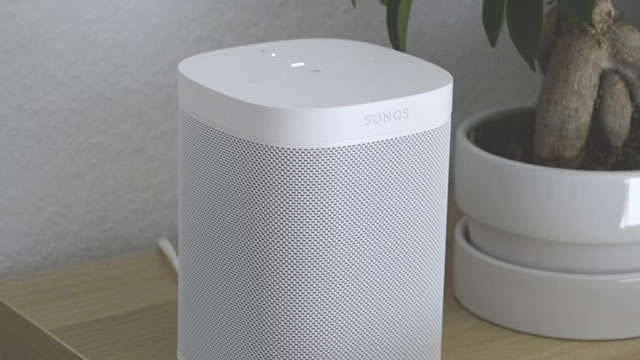
Sonos designs a wireless multi-room audio system that ties hardware (speakers, soundbars, and related accessories) to a proprietary software platform (controller app, device management, and orchestration for synchronized playback). The economic engine is an installed base: once customers adopt Sonos for room-to-room coverage and consistent sound, additional purchases (new speakers, soundbars, and upgrades) tend to follow through the same ecosystem to preserve user experience and system-wide integration.
Distribution is primarily direct and through retail partners, with software acting as an “operating layer” that improves the value of the installed hardware over time and supports higher engagement with connected audio services.
💰 Revenue Streams & Monetisation Model
Revenue is predominantly driven by hardware sales (speakers, soundbars, and accessories). Monetisation has an important secondary component from content and service-related economics, such as licensing/partner economics tied to streaming experiences and Sonos software-driven discovery and engagement. While services are smaller than hardware, they typically offer better incremental margins than pure device sales.
Key margin drivers include:
- Hardware mix: higher-value categories (e.g., multi-room speakers and soundbars) can support better blended margins than entry-level devices.
- Scale and component costs: networked speaker platforms benefit from design reuse and procurement scale.
- Software/service contribution: incremental gross margin leverage from app-driven engagement and partner economics.
🧠 Competitive Advantages & Market Positioning
Sonos’ moat is strongest in switching costs and intangible ecosystem value, supported by an installed-base flywheel.
- Switching costs (ecosystem lock-in): multi-room synchronization, app-based device management, and room-by-room configuration create practical friction for customers considering a wholesale move to another platform.
- Intangible assets (software integration and user experience): the controller ecosystem and system reliability are difficult to replicate at the same level across multiple device categories without years of iteration.
- Network effects (limited but present): while Sonos is not a social network, ecosystem “coverage value” increases with the number of rooms/devices a household connects and with the breadth of supported services and integrations.
Competitive benchmarking:
- Amazon (Echo / Alexa ecosystem): broader smart-home reach and aggressive pricing; Sonos targets premium multi-room audio performance and a more focused audio-first experience.
- Bose: strong audio heritage; Bose competes heavily in hardware but lacks the same breadth of Sonos-style multi-room software-driven system orchestration.
- Apple (HomePod / AirPlay ecosystem): deep integration with Apple devices; Apple emphasizes platform integration, while Sonos historically differentiates through cross-room, multi-speaker orchestration across a wider device mix.
Sonos’ industry focus centers on multi-room, audio-first architecture rather than a general-purpose smart-home platform, which supports differentiation where customers prioritize synchronized listening across rooms.
🚀 Multi-Year Growth Drivers
Over a 5–10 year horizon, growth is driven less by single-product novelty and more by structural adoption of networked home audio:
- Premium multi-room adoption: wireless speakers and synchronized playback continue to shift away from single-room listening and legacy wired systems.
- Installed-base expansion: households with a first Sonos product typically add speakers/soundbars over time to extend coverage, improve acoustics, or upgrade capabilities.
- Content and engagement economics: an app-centric platform can deepen user engagement with streaming services and discovery features, supporting service-related margin contribution.
- Integration with smart home ecosystems: voice control and connected-home interoperability broaden addressability while preserving Sonos as the audio layer.
⚠ Risk Factors to Monitor
- Consumer demand cyclicality: wireless audio is sensitive to discretionary spending and pricing pressure during weaker consumer periods.
- Competitive pricing and feature parity: large platform players can compress margins through bundling and aggressive promotion; audio-only rivals can pressure share through incremental hardware releases.
- Platform and software execution risk: user experience and system reliability are central to switching costs; missteps in app/OS changes can weaken perceived ecosystem value.
- Supply chain and component volatility: audio devices require continuous sourcing of semiconductors, audio components, and power systems; cost inflation can pressure gross margin.
- Regulatory and privacy constraints: voice and connected-home features implicate privacy/security expectations and can increase compliance and engineering costs.
📊 Valuation & Market View
The market typically values SONO through a consumer hardware + platform optionality framework. Device-centric businesses often trade on P/S or EV/EBITDA adjusted for product-cycle volatility, while platform characteristics (software-led engagement, service contribution, and installed-base durability) can support a higher multiple when investors see evidence of margin resilience and recurring-like economics.
The valuation “needle movers” are generally:
- Gross margin trajectory driven by hardware mix and component cost control.
- Stability and growth of installed base, reflected in accessory expansion and repeat ecosystem purchases.
- Service/content contribution that lifts blended margins and reduces earnings dependence on purely new unit volume.
🔍 Investment Takeaway
Sonos presents a defensible premium position anchored by ecosystem switching costs and software-driven multi-room orchestration. The investment case rests on the durability of the installed base, the ongoing expansion of multi-room audio penetration, and the ability to translate software-led engagement into improving blended margins. Competitive intensity from large smart-home platforms remains a material overhang, but the audio-first ecosystem and user experience are structural differentiators that can sustain customer retention and incremental upgrades over a full cycle.
⚠ AI-generated — informational only. Validate using filings before investing.



















 Growth Catalysts