United Airlines Holdings, Inc.

United Airlines Holdings, Inc. (UAL) Market Cap

United Airlines Holdings, Inc. has a market capitalization of .

No quote data available.

CEO: J. Scott Kirby

Sector: Industrials

Industry: Airlines, Airports & Air Services

IPO Date: 2006-02-06

Website: https://www.united.com

United Airlines Holdings, Inc. (UAL) - Company Information

Market Cap: -|Sector: Industrials

Company Profile

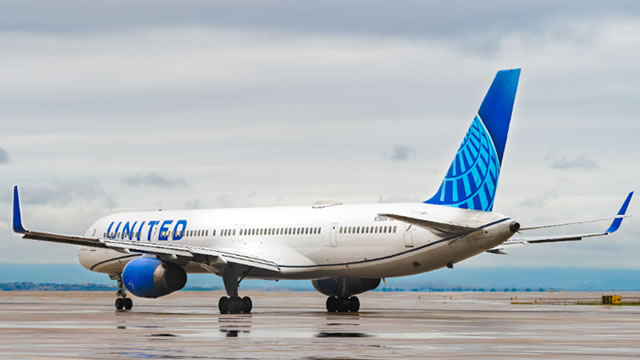
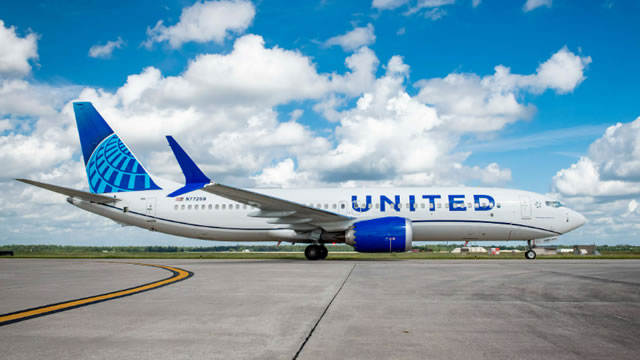
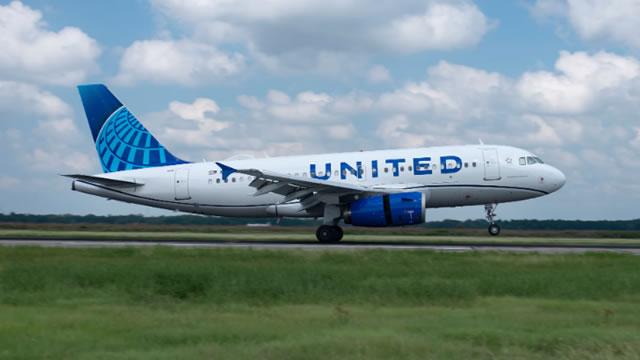
United Airlines Holdings, Inc., through its subsidiaries, provides air transportation services in North America, Asia, Europe, Africa, the Pacific, the Middle East, and Latin America. The company transports people and cargo through its mainline and regional fleets. It also offers catering, ground handling, training, and maintenance services for third parties. The company was formerly known as United Continental Holdings, Inc. and changed its name to United Airlines Holdings, Inc. in June 2019. United Airlines Holdings, Inc. was incorporated in 1968 and is headquartered in Chicago, Illinois.

Analyst Sentiment

84%
Strong Buy

From 26 Active Polls

1Y Forecast: $140.20

▲ +0.0% Potential Upside

Consensus Target Metrics

Low Bound

$112

Median

$136

High Bound

$182

Average

$140

Price & Moving Averages

Loading chart...

🎯 Wall Street Analyst Intelligence Report

1-Year structural target targets, chart projections, and sentiment maps.

Average 1Y Target
$140.20
▲ +32.60% Upside
Low Target
$112.00
6% Risk
Median Target
$135.50
28% Mid
High Target
$182.00
72% Max

Consensus Trend Projection

Trailing closures vs. 12-month metrics map.

Analyst Vote Distribution

Aggregate institutional coverage sentiment weights.

Sentiment volume allocation data unavailable.

Historical valuation matrix unavailable.

📘 Full Research Report

ℹ️

AI-Generated Research: This report is for informational purposes only.

📘 UNITED AIRLINES HOLDINGS INC (UAL) — Investment Overview

🧩 Business Model Overview

United operates a hub-and-spoke network centered on major gateways, using a large aircraft fleet to connect origin passengers to destination demand through scheduled flights. Revenue is monetized through ticket sales and ancillary services, while the company captures additional value via frequent-flyer relationships and partnerships that route connecting traffic through United’s network. The economic engine is capacity planning and network optimization: route-level pricing and load factor dynamics determine operating revenue, while aircraft utilization, maintenance efficiency, and labor productivity largely drive unit costs.

💰 Revenue Streams & Monetisation Model

  • Passenger revenue (main driver): One-way and round-trip ticket sales across economy, premium economy equivalents, and business-class style cabins; yields depend on demand elasticity and route competition.
  • Ancillary revenue: Fees for checked bags, seat selection, priority services, premium cabin upgrades, and onboard sales; typically supported by customer segmentation and loyalty engagement.
  • Frequent-flyer monetization: Miles/liability economics and partner revenue streams tied to co-brand cards and airline partnerships; supports margin resilience when core ticketing faces volatility.
  • Cargo and premium airfreight: Contracts and spot exposure that can add diversification, though it remains cyclical with broader industrial demand.

Margins are primarily driven by load factor and yield (pricing), offset by fuel, labor, and system-level cost efficiency. Ancillary attachments and loyalty economics provide incremental profitability, but operating leverage in aviation remains highly sensitive to capacity discipline and input cost management.

🧠 Competitive Advantages & Market Positioning

Primary moat: Network scale plus constrained infrastructure (hub advantage) and customer lock-in through loyalty.

  • Hub network economics (difficult to replicate): United’s gateway-focused network benefits from connectivity value—more connection options and flight frequencies increase customer preference and corporate travel routing. Competitors can challenge specific routes, but building a similarly dense network at the same hubs is capital- and time-intensive due to airport access, gate availability, and slot constraints.
  • Customer stickiness via loyalty switching costs: Mileage balances, status tiers, and partner redemption create behavioral switching costs for frequent travelers. While loyalty programs are not “owned” in the same way as software, the practical friction of earning and redeeming benefits supports retention and repeat booking behavior.
  • Operating cost and scale advantages: Scale supports procurement leverage, maintenance planning, crew scheduling optimization, and distribution efficiency. Competitors face different fleet mixes and hub structures that can produce cost differentials on specific routes.

Competitive benchmarking (industry focus vs. rivals):

  • American Airlines (AAL): Similar U.S. network competition at major hubs; both firms rely on large-scale connectivity rather than a purely point-to-point model.
  • Delta Air Lines (DAL): Competes strongly on domestic and international premium connectivity; Delta’s geographic emphasis and hub concentration shape competitive intensity on long-haul and premium-heavy itineraries.
  • Southwest Airlines (LUV): More point-to-point leaning with different fare and operational models; Southwest’s approach can pressure unit economics on overlapping short-haul markets, but it typically offers less seamless global connectivity compared with full network carriers.

United’s positioning aligns more closely with full-service network carriers than with low-fare point-to-point competitors. The competitive differentiator is the ability to sustain a high-quality connection network while managing unit costs through scale and operational execution.

🚀 Multi-Year Growth Drivers

  • Long-run growth in air travel demand: Structural expansion tied to global trade, business travel modernization, and leisure travel participation supports industry capacity growth over a five- to ten-year horizon.
  • Premiumization and higher-mix revenue: As passengers shift toward better schedules, onboard products, and cabin differentiation, yields can improve without proportional increases in system-wide capacity.
  • Network optimization and route densification: Better aircraft assignment, schedule frequency management, and hub connectivity can increase revenue per seat across the network.
  • Loyalty and partner ecosystem monetization: Co-brand card partnerships and inter-airline agreements provide a pathway to monetize customer relationships and capture value from connecting itineraries.
  • Fleet modernization and efficiency: Newer aircraft and operational improvements can reduce maintenance complexity and support more efficient utilization, aiding cost per available seat mile over a full cycle.

⚠ Risk Factors to Monitor

  • Fuel and macro volatility: Aviation remains exposed to fuel price swings, interest rate changes, and economic cycles that impact corporate travel and discretionary demand.
  • Labor cost and contract dynamics: Labor is a meaningful fixed-cost component; wage inflation and contract renegotiations can pressure margins.
  • High fixed-cost capacity discipline: Overcapacity can compress fares and yields; the industry’s credit cycle can amplify downside during demand shocks.
  • Regulatory and operational constraints: Airport slot allocation, air traffic control constraints, and safety regulation can limit growth and raise compliance costs.
  • Capital intensity and fleet/lease execution risk: Aircraft delivery timing, maintenance outcomes, and fleet planning accuracy affect both cash flow and cost structure.
  • Disruption and resilience: Weather events, system outages, and operational disruptions can increase cancellations and expense, particularly in dense hub networks.

📊 Valuation & Market View

Equity markets typically value airlines using multiples linked to profitability quality rather than long-duration growth. Common reference points include EV/EBITDA or EV/EBITDAR, sometimes paired with P/S when margins are volatile. Valuation sensitivity tends to be strongest to:

  • Operating margin sustainability: The ability to defend yields through cycles and manage CASM (unit costs).
  • Input cost management: Fuel strategy, labor productivity, and maintenance efficiency.
  • Capital allocation and leverage: Net debt trajectory and discipline in funding fleet and lease obligations.
  • Demand indicators and pricing power: Load factor stability and ability to avoid structurally unfavorable capacity surges.

A sustained valuation premium generally reflects credible margin durability, conservative leverage, and the operational execution required to translate network strength into consistent unit economics.

🔍 Investment Takeaway

United Airlines’ investment case rests on a durable network advantage supported by hub infrastructure constraints and the practical switching costs created by loyalty and partner ecosystems. While the industry remains cyclical with structurally high fixed costs, United’s scale, connectivity value, and operational execution can support resilience across demand regimes. The primary focus for an investor is the sustainability of unit economics through fuel and labor cycles, disciplined capacity planning, and continued improvement in cost efficiency and revenue mix over a multi-year horizon.


⚠ AI-generated — informational only. Validate using filings before investing.

📊 AI Financial Analysis

Powered by StockMarketInfo
Earnings Data: Q Ending 2026-03-31

"UAL’s latest quarter (2026-03-31) reported Revenue of $14.61B and Net Income of $0.70B (EPS $2.14). YoY, Revenue rose +10.6% (vs. $13.21B) while Net Income climbed +80.6% (vs. $0.39B). QoQ, Revenue declined -5.2% (vs. $15.40B) and Net Income fell -33.1% (vs. $1.04B), indicating profitability normalizing after a stronger prior quarter. Profitability shows a mixed trend. Net margin improved YoY (about 2.9% to 4.8%), but it contracted QoQ (about 6.8% to 4.8%), suggesting costs/seasonality pressures in the most recent quarter despite stronger year-over-year earnings power. Balance sheet resilience improved: total assets increased to $80.94B (+5.9% QoQ) and total equity rose to $15.88B (+3.9% QoQ). Net debt decreased meaningfully to $20.10B (down ~19.9% QoQ), supporting a stronger leverage profile. Shareholder returns look strong. The stock’s 1-year move is +52.0% (>20% momentum), which should materially boost total return. There is no dividend yield, and buybacks are not provided, so value creation appears primarily driven by price appreciation. Analyst consensus price targets ($142–$146) imply substantial upside versus the current $101.8."

Revenue Growth

Good

Revenue was down -5.2% QoQ ($15.40B → $14.61B) but up +10.6% YoY ($13.21B → $14.61B), indicating year-over-year demand/price strength despite sequential seasonality.

Profitability

Positive

Net income fell -33.1% QoQ ($1.04B → $0.70B) as net margin contracted (≈6.8% → 4.8%), but YoY earnings improved strongly (+80.6%), lifting net margin vs. the prior-year quarter (≈2.9% → 4.8%).

Cash Flow Quality

Positive

Net income increased +80.6% YoY, but QoQ profit deterioration (-33.1%) tempers confidence. No dividends (yield 0%) and no buyback data provided, so shareholder yield support is limited to equity-market returns.

Leverage & Balance Sheet

Strong

Total assets rose +5.9% QoQ and equity increased +3.9% QoQ. Net debt improved materially (-19.9% QoQ to $20.1B), suggesting better balance-sheet resilience heading into the next period.

Shareholder Returns

Strong

Total value momentum is strong: price is up +52.0% over 1 year (>20% threshold). With no dividend, the score is driven primarily by capital appreciation.

Analyst Sentiment & Valuation

Strong

Consensus targets ($142–$146) imply ~40% upside vs. $101.8. The latest reported P/E (~10.8) is relatively low, supporting a constructive valuation/expectations backdrop.

Disclaimer:This analysis is AI-generated for informational purposes only. Accuracy is not guaranteed and this does not constitute financial advice.

Fundamentals Overview

Loading fundamentals overview...

UAL delivered a strong Q1 2026 with EPS of $1.19 (+31% YoY) and 3.4% pretax margin (+40 bps), despite a $340M higher fuel bill and disruptions that pushed CASM-ex up 5.9% YoY. The central financial story is a structured pass-through plan: yields must rise ~15%–20% to recover 100% of fuel costs, with demand elasticity a modeled risk, but management reported no booking evidence of demand destruction. Guidance is anchored in resilience and capacity discipline—2Q EPS $1–$2 around ~$4.30/gal, full-year EPS $7–$11, and quarterly fuel recovery targets of 40%–50% (2Q), 70%–80% (3Q), and 85%–100% (4Q). Operationally, the company tightened capacity (~5 points removed; Q3/Q4 flat to +2%) and accelerated commercial monetization via nested selling, base fares, fee adjustments, and loyalty/credit-card economics. Q&A reinforced near-term visibility on fuel availability (price/rationing vs outages) and confidence that strong business demand supports elevated fare levels.

AI IconGrowth Catalysts

  • Nested selling launched across united.com and app to better merchandise the full product lineup, driving large upselling increases
  • Base fares introduced in premium cabins (less checked luggage, no early seat assignments, modified club access), enabling more controlled upsell/ancillary conversion (economy/basic economy success cited)
  • Onboard premium expansion via 50 planned A321 Coastliners (extend Polaris to NYC–LAX/SFO) and Airbus A321 XLR onboard products for Atlantic-crossing tailored premium plus layout

Business Development

  • Planned fleet additions: 50 A321 Coastliners to extend Polaris; 4 Boeing 787-9 delivered in Q1 with up to 16 more expected added in 2026
  • Airframe/product partners referenced indirectly: Airbus A321 XLR; Boeing 787-9
  • MileagePlus/credit card co-brand evolution with Chase: more miles earned for MileagePlus members who hold United’s co-branded credit card; additional redemption discounts restricted to credit card holders; expectation of a new optimized contract later
  • Union/labor agreement: tentative agreement reached for flight attendants represented by the Association of Flight Attendants (AFA); voting concludes May 12

AI IconFinancial Highlights

  • EPS: Q1 2026 reported $1.19, within initial guidance range of $1.00–$1.50 and +31% YoY
  • Revenue: consolidated total operating revenue up 10.6% YoY to record $14.6B; TRASM up 6.9% YoY
  • Pretax margin: 3.4% in Q1, +40 bps expansion YoY
  • Fuel cost pressure: $340M higher fuel bill in Q1; jet fuel prices described as having doubled
  • Unit cost impact: CASM-ex up 5.9% YoY, attributed to close-in cancellations (Tel Aviv and Dubai flights together 1.5 points of capacity) and storm-related capacity reductions
  • Capacity and recapture framework: expects Q2 fuel cost recovery of 40%–50%, Q3 70%–80%, and Q4 85%–100%; Q2 EPS guidance $1–$2 anchored by all-in fuel average price ~$4.30/gal
  • Full-year 2026 EPS guidance: $7–$11 (widened range for scenarios); expects double-digit RASM increase in Q2 and for full year
  • Bid-for-pass-through math: to recover 100% of fuel costs, yields need to rise ~15%–20%; elasticity expected to reduce demand (not yet observed)

AI IconCapital Funding

  • Debt reduction: paid down more than $3.1B in debt in Q1
  • Debt actions: accelerated repayment of $2B of notes secured by slots/gates/routes; prepaid $400M of near-term maturity/higher cost aircraft debt
  • Unsecured financing: raised $2B across two unsecured bonds; first unsecured issuance since 2019
  • Free cash flow: generated $2.9B in Q1 free cash flow
  • Cash runway/cliquidity: management cited tripling cash balance by end-2025 (as a preparation action for elevated fuel)

AI IconStrategy & Ops

  • Network adjustments: proactive capacity reduction of ~5 points for rest of 2026; targets Q3/Q4 capacity flat to +2% YoY, lower than original plan; removed marginal capacity on off-peak days/times (e.g., red-eyes)
  • Market-facing pricing actions: implemented 5 broadly successful price increases in late Q1; increased baggage fees beginning to offset jet fuel price increases
  • Sell-in and load strategy: Q2 sold 23% of capacity at lower price points pre-fuel rise; Q3 sold 8% at lower price points; selling ticket yields up 4% YoY in Jan/Feb, 12% in first half March, 18% in second half March, and up 20% YoY for all future travel in last week
  • Customer/self-service automation: day-of-app usage record 86%; improved bag tracking and live TSA wait times; disruption communications updated with live maps embedded in customer messages
  • Reliability/branding operations: per-seat cancellation rate averaged 44% lower than next two largest U.S. carriers; on-time departures rank #1 among 8 largest U.S. carriers; highest first-quarter on-time Net Promoter Score since pandemic
  • Regulatory/operational event: FAA issued order on summer 2026 schedule at Chicago O’Hare; United reviewing and will share next steps after review

AI IconMarket Outlook

  • 2Q EPS guidance: $1–$2 anchored by ~$4.30/gal all-in fuel average price
  • Full-year 2026 EPS guidance: $7–$11 (widened guidance range for multiple fuel scenarios)
  • Fuel pass-through path by quarter: recover 40%–50% of increased fuel costs in 2Q, 70%–80% in 3Q, 85%–100% by 4Q
  • Capacity: targets flat to +2% YoY for Q3 and Q4; also stated 3Q/4Q targets vs earlier plan after ~5-point capacity removal
  • Longer-term margin target: double-digit pretax margins as soon as next year (2027 referenced as target at least 10% pretax margin)

AI IconRisks & Headwinds

  • Fuel remains volatile and elevated; management notes jet fuel prices doubled and is monitoring Iran-related run-up
  • Close-in cancellations and weather/geopolitical disruptions pressured unit costs (CASM-ex +5.9% YoY) despite demand strength
  • Risk of demand elasticity once yields rise: management estimates elasticity could reduce overall demand even though it has not been observed yet
  • Fuel availability risk concentrated in Europe/Asia only as strait closure risk increases; management currently views it as price/rationing, not spot outages
  • Policy/industry headwind: possibility of government support/bailouts for failing carriers (discussed re: Spirit), though management indicated limited impact to United

Q&A: Analyst Interest

  • Fuel risk framework: Management described visibility of 4–5 weeks and characterized Europe/Asia as primarily a price issue (crack spread dynamics) rather than an availability/spot-outage issue; they flagged longer strait-closure duration as the main escalation risk to plan B contingencies.
  • Demand destruction and scenario handling: Management emphasized they have not seen demand declines in bookings despite yield increases, citing strong business metrics (yields +20% YoY; business traffic +25%; business revenue +25% over recent two weeks) and continued robust economy leisure mid-single digits; they still build an “act of God” buffer into guidance.
  • Structural strategy question (foreign hub/partnerships) and competitive share-gain: Management stated it is extremely unlikely United opens a foreign hub and emphasized Star Alliance partnerships for global reach; they implied any hub-aspiration is an aspiration rather than a plan, while viewing current Middle East challenges as temporary with expected full recovery over time.

Sentiment: POSITIVE

Note: This summary was synthesized by AI from the UAL Q1 2026 earnings transcript. Financial data is complex; please verify all metrics against official SEC filings before making investment decisions.

Loading financial data and tables...
© 2026 Stock Market Info — United Airlines Holdings, Inc. (UAL) Financial Profile