
📘 UBER TECHNOLOGIES INC (UBER) — Investment Overview
🧩 Business Model Overview
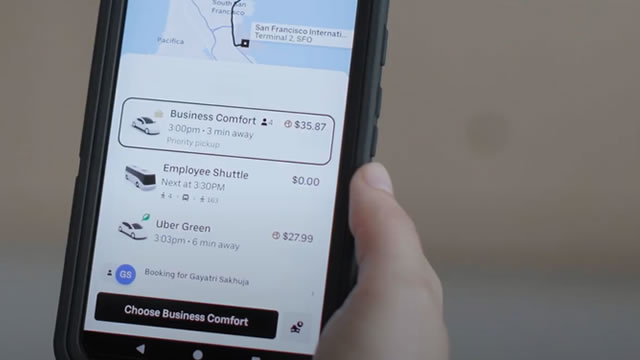
UBER operates a two-sided marketplace connecting riders (demand) with drivers and delivery partners (supply), while also offering ancillary services that deepen engagement. The platform matches users to nearby providers using pricing, routing, and demand-supply balancing tools, enabling rapid fulfillment in dense geographies. Monetisation is driven by a platform “take rate” applied to transactions and by subscription and advertising-style services that sit on top of core mobility and delivery usage.
Customer stickiness is supported less by formal lock-in and more by reliability at the local level: frequent users build comfort with the booking experience, the app’s payment and account setup, and the historical context of service in their area—factors that raise the cost of switching to a less reliable alternative where supply availability is weaker.
💰 Revenue Streams & Monetisation Model
UBER’s revenue is primarily derived from:
- Mobility transactions: revenue tied to rides completed via marketplace and related services (e.g., premium offerings, driver incentives and marketplace facilitation).
- Delivery transactions: revenue tied to food and other last-mile deliveries, typically monetized via marketplace fees and service components.
- Subscription offerings (e.g., membership-style benefits): recurring revenue that can improve retention and smooth demand by subsidizing convenience and pricing.
- Freight/logistics and other services: monetization from matching capacity and facilitating B2B or specialized fulfillment (where applicable).
Margin structure is shaped by a few recurring drivers: (1) take rate and pricing discipline, (2) platform operating leverage as transaction volumes scale, (3) incentive intensity needed to balance supply and demand, and (4) regulatory and compliance costs that can pressure unit economics. Because the model is largely asset-light on the supply side, operating costs tend to scale more with platform infrastructure than with driver asset ownership.
🧠 Competitive Advantages & Market Positioning
UBER’s competitive position rests on a combination of network effects and marketplace density advantages, with supporting elements of data-driven matching that improve service quality (faster matching, better routing, and more predictable supply availability).
- Network effects (two-sided): higher rider demand attracts more drivers/partners, which improves fulfillment availability and reduces wait times, which in turn attracts more riders.
- Operational density: scale in specific cities strengthens the ability to maintain supply during peak demand and to re-balance across demand patterns.
- Data and matching advantages: long-running transaction history supports better demand forecasting, pricing/promotion effectiveness, and route optimization—raising the cost for challengers to replicate service quality quickly.
- Switching costs (practical, not contractual): riders benefit from account/payment setup, service history, and app-based convenience; drivers also develop routines and earning predictability tied to local marketplace dynamics. This creates friction against low-quality alternatives, particularly where UBER’s supply availability is strong.
Competitive benchmarking:
- Lyft (mobility-centric peer in the U.S.): focuses primarily on ride-hailing and competes on local supply and pricing. UBER’s broader multi-category footprint (mobility plus delivery and additional services) can support higher engagement and cross-usage benefits.
- DoorDash (delivery-focused peer): strong position in consumer delivery. Its moat is tightly linked to local delivery partner density and restaurant network relationships; UBER competes by leveraging a rides-and-delivery platform approach and city-level logistics capabilities.
- Didi (ride-hailing peer in multiple markets historically): illustrates the competitive pressure a large incumbent can bring to ride-hailing platforms. UBER’s emphasis on building dense, multi-category marketplaces contrasts with more single-category or regionally constrained approaches.
Overall, UBER’s “moat” is harder to copy than a feature because meaningful marketplace quality depends on achieving critical mass of both sides and building execution expertise in dynamic, regulated environments. While switching remains feasible, competitors must overcome both density hurdles and execution depth to sustain share gains.
🚀 Multi-Year Growth Drivers
A 5–10 year horizon investment case is supported by structural drivers that expand the total number of transactions and improve platform economics:
- Urban mobility demand: long-run shift toward on-demand services in large and growing cities, supported by convenience relative to private vehicle ownership and traditional taxi models.
- Expansion of last-mile delivery: growth in consumer and local commerce increases delivery frequency and the addressable universe of “small fulfillment” needs.
- More frequent and diversified usage: multi-category engagement (rides, delivery, and logistics offerings) can increase retention and reduce churn by embedding the app in daily routines.
- Take-rate and margin optimization: disciplined pricing, improved matching efficiency, and evolving product mix can raise monetisation per transaction without proportional increases in cost.
- Geographic penetration and deepening: market entry and scaling in additional cities improves network density, which can unlock operating leverage as fixed platform costs are spread across a larger volume base.
- Platform tooling for capacity balancing: ongoing improvements in dynamic allocation, routing, and demand forecasting enhance service reliability, which can support customer satisfaction and supply participation.
⚠ Risk Factors to Monitor
- Regulatory and labor classification risk: rules governing driver status, benefits, minimum standards, and inspection requirements can increase compliance costs and alter incentive structures that support supply.
- Competition and take-rate compression: intensified promotional activity or differentiated product offerings by rivals can pressure marketplace fees and unit economics.
- Disruption from alternative transportation and automation: autonomous mobility, alternative ride models, or major shifts in consumer behavior could reduce transaction intensity or alter cost structures.
- Fraud, safety, and trust costs: maintaining safety systems, background checks, and dispute handling requires continuous investment; incidents can drive regulatory attention and reputational risk.
- Adverse macro conditions: reductions in travel frequency or consumer discretionary spending can impact demand and revenue per active user.
- Operational execution risk: dense-market performance depends on reliable supply availability; breakdowns in matching quality can harm retention and increase customer support costs.
📊 Valuation & Market View
Equity markets typically value UBER and similar platform businesses using a combination of EV/Revenue and EV/EBITDA-style frameworks, with emphasis on underlying unit economics rather than accounting earnings quality alone. Key valuation drivers include:
- Transaction growth (mobility and delivery volume) and the durability of engagement metrics.
- Take rate trajectory, influenced by pricing power, mix (premium products, categories), and competitive intensity.
- Contribution margin and operating leverage, driven by scale in platform infrastructure and reduced incentive intensity.
- Regulatory overhang, particularly labor-related cost pressure and compliance requirements.
- Capital intensity and reinvestment needs for marketplace safety, technology, and expansion.
In this sector, the market generally pays for credible pathways to sustainable margins and durable growth in active usage, tempered by the probability of structural regulatory or competitive changes.
🔍 Investment Takeaway
UBER’s long-term investment case is anchored in a scalable two-sided marketplace with network effects and density advantages that improve matching reliability and retention. The platform’s practical switching friction, combined with ongoing improvements in operational tooling, makes share gains difficult to sustain for challengers without parallel scale. The principal debate centers on regulation, competitive pricing dynamics, and the sustainability of take-rate and incentive intensity across cycles.
⚠ AI-generated — informational only. Validate using filings before investing.




















 Growth Catalysts