
📘 BEAZER HOMES INC (BZH) — Investment Overview
🧩 Business Model Overview
Beazer Homes is a U.S. residential homebuilder that creates housing inventory by acquiring or controlling land, performing land development, and constructing homes for sale to end customers. The value chain spans (1) land sourcing and entitlement, (2) development and infrastructure build-out, (3) construction and procurement, and (4) sales and closing.
Homebuilding economics are driven by the relationship between production pace, selling prices, and cost discipline. Revenue is largely transactional—driven by closings—so operating leverage depends on maintaining construction throughput and managing incentives and material/labor costs across the housing cycle.
💰 Revenue Streams & Monetisation Model
The company’s monetisation model is primarily transactional through home closings. Profitability reflects the spread between home selling prices and (a) land and development costs, (b) construction/material and labor costs, and (c) selling and overhead.
Key margin drivers include:
- Gross margin sensitivity to pricing and incentive levels: when demand softens, builders often increase incentives, compressing margins.
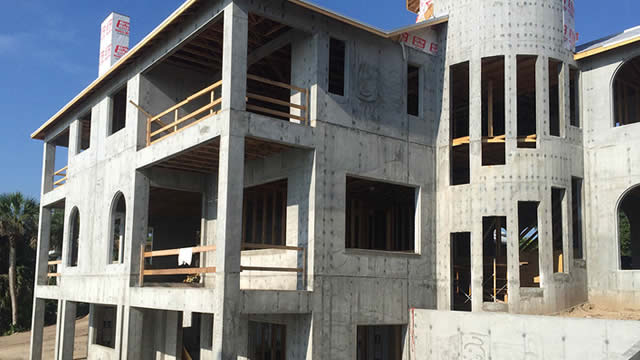
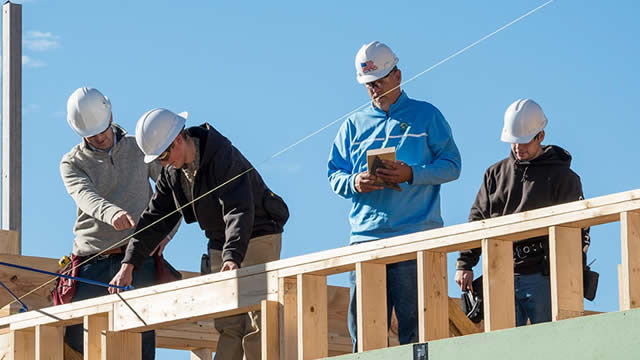
- Construction efficiency: faster absorption, shorter build times, and standardized execution can improve cost per home.
- Land cost basis and write-down discipline: land strategy and inventory management strongly influence downside protection.
🧠 Competitive Advantages & Market Positioning
Homebuilders do not typically exhibit classic “switching costs” or durable network effects. Beazer’s structural edge is better characterized as cost and execution moats, reinforced by land control and operating focus—advantages that can persist through cycles when capital and execution discipline are consistent.
- Land and Lot-Position Advantage: controlled land positions and development timing can reduce uncertainty versus builders that rely more heavily on spot acquisitions at unfavorable pricing.
- Operational Cost Advantage: procurement scale, construction process discipline, and repeatable floorplans can lower per-home costs.
- Local Market Execution: focusing on specific geographies can improve subcontractor relationships, permitting familiarity, and sales efficiency.
Competitive benchmarking (primary rivals):
- Lennar
- PulteGroup
- D.R. Horton
Compared with larger diversified peers such as Lennar, PulteGroup, and D.R. Horton, Beazer is generally viewed as a more execution- and risk-management-oriented operator. Larger rivals often benefit from broader footprint and scale in land purchasing and overhead absorption, while Beazer’s positioning hinges on managing local inventory quality, maintaining cost discipline, and matching product to demand segments within targeted markets.
🚀 Multi-Year Growth Drivers
Over a 5–10 year horizon, growth in housing is supported by demographic and affordability dynamics, but profitability hinges on cycle management. Sustainable drivers include:
- U.S. household formation and housing replacement needs: long-run demand support for new construction and modernization.
- Affordability-driven product strategy: the ability to align home design, community locations, and financing partnerships to buyer demand.
- Operating leverage from process improvements: reducing construction friction, improving schedule reliability, and tightening cost controls can compound through cycles.
- Geographic and lot selection discipline: selective land control can support better margins by managing land basis and avoiding overbuilt neighborhoods.
⚠ Risk Factors to Monitor
- Housing cycle volatility: demand swings can force incentive increases and reduce selling velocity.
- Construction cost inflation (materials and labor): rapid cost increases may not fully pass through to selling prices.
- Land and inventory risk: mis-timed land purchases or impaired inventory can lead to margin dilution via write-downs.
- Interest-rate and mortgage availability sensitivity: homebuyer affordability and demand can shift with credit conditions.
- Regulatory and permitting constraints: changes to building codes, land-use rules, or local permitting capacity can affect build schedules and costs.
📊 Valuation & Market View
Equity valuation in homebuilding typically centers on earnings power rather than long-duration growth assumptions. Market participants often anchor on metrics such as EV/EBITDA and P/E tied to cyclical profitability, and also consider price-to-earnings sensitivity to housing starts and margins.
Drivers that can move valuation multiples include:
- Gross margin trajectory: pricing power versus incentive levels and cost containment.
- Balance-sheet and liquidity strength: ability to absorb down-cycle pressure without forced land liquidation.
- Quality of land pipeline: inventory mix, land basis discipline, and risk-managed development timing.
- Return profile (through-cycle): consistency in converting revenue into durable cash flow despite cycle swings.
🔍 Investment Takeaway
Beazer Homes’ long-term investment case rests on its ability to sustain cost and execution discipline—not on durable product switching or network effects. The core thesis is that land control, construction process efficiency, and disciplined inventory management can preserve margins and cash flow through housing cycles better than less disciplined competitors, supporting attractive compounding when demand conditions normalize.
⚠ AI-generated — informational only. Validate using filings before investing.



















 Growth Catalysts