Grocery Outlet Holding Corp.

Grocery Outlet Holding Corp. (GO) Market Cap

Grocery Outlet Holding Corp. has a market capitalization of $792.1M.

Financials based on reported quarter end 2026-01-03

Price: $8.07

0.17 (2.15%)

Market Cap: 792.10M

NASDAQ · time unavailable

CEO: Jason Potter

Sector: Consumer Defensive

Industry: Grocery Stores

IPO Date: 2019-06-20

Website: https://www.groceryoutlet.com

Grocery Outlet Holding Corp. (GO) - Company Information

Market Cap: 792.10M · Sector: Consumer Defensive

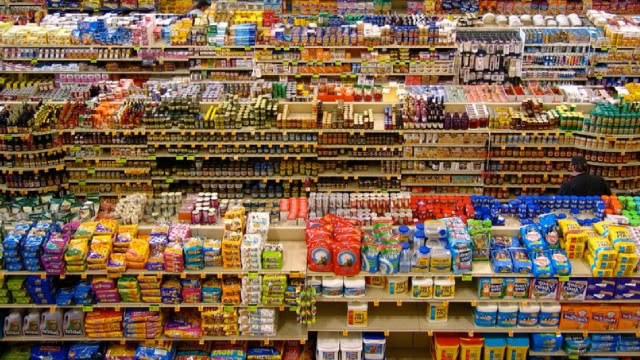
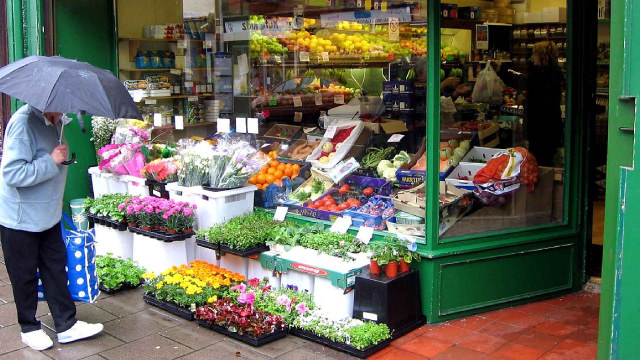
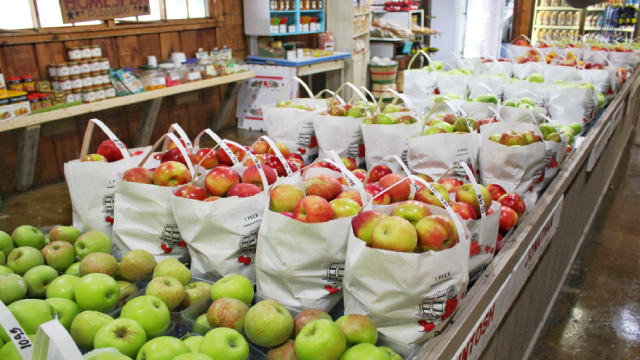
Grocery Outlet Holding Corp. owns and operates a network of independently operated stores in the United States. The company's stores offer products in various categories, such as dairy and deli, produce, floral, and fresh meat and seafood products, as well as grocery, general merchandise, health and beauty care, frozen foods, and beer and wine. As of August 09, 2022, it had 425 stores in eight states. The company was founded in 1946 and is headquartered in Emeryville, California.

Analyst Sentiment

59%
Buy

Based on 23 ratings

Analyst 1Y Forecast: $14.32

Average target (based on 3 sources)

Consensus Price Target

Low

$8

Median

$11

High

$16

Average

$12

Potential Upside: 49.7%

Price & Moving Averages

Loading chart...

📘 Full Research Report

ℹ️

AI-Generated Research: This report is for informational purposes only.

📘 GROCERY OUTLET HOLDING CORP (GO) — Investment Overview

🧩 Business Model Overview

Grocery Outlet Holding Corp ("Grocery Outlet" or "GO") operates a distinctive, value-driven grocery retail model focused on selling deeply discounted, name-brand consumables through a network of independently operated stores. GO partners with independent owner-operators who manage daily store operations, merchandising, and community engagement, under a unique "entrepreneur in a box" structure. This asset-light approach—characterized by centralized procurement and distribution, coupled with decentralized ownership of stores—enables agility, local customization, and cost efficiencies. Central to GO’s proposition is offering high-quality surplus and closeout goods purchased opportunistically from suppliers at significant discounts, translating to everyday low prices for budget-conscious consumers. Store footprints are primarily located in densely populated urban, suburban, and rural communities across the West Coast and expanding eastward.

💰 Revenue Streams & Monetisation Model

GO’s primary revenue stream consists of direct product sales to end consumers at its physical store locations. The company purchases merchandise at discounted rates from suppliers—including manufacturers, distributors, and other retailers—who are looking to liquidate excess inventory, closeouts, packaging changes, or short-dated items. Revenue is predominantly realized at the point of sale to customers; GO then shares a portion of gross profit with its independent operators via a commission-based system, acting as a key incentive for in-store performance. Ancillary revenue streams, such as vendor allowances, slotting fees, and private label product expansion, complement core product sales but remain a minority component. E-commerce and delivery are nascent but present opportunities for incremental revenue generation.

🧠 Competitive Advantages & Market Positioning

Grocery Outlet differentiates itself in the U.S. grocery landscape through several enduring competitive advantages: - **Deep Discount Sourcing Model**: The company’s opportunistic procurement engine allows it to source nationally branded products substantially below standard wholesale costs, fostering persistent price leadership. - **Independent Store Operator Model**: By empowering owner-operators, GO aligns incentives at the store level, driving entrepreneurial execution and fostering community engagement. - **Treasure Hunt Experience**: The constantly rotating inventory, driven by opportunistic buys, creates a “treasure hunt” shopping environment, reinforcing shopper loyalty and frequency. - **Value Proposition**: GO consistently undercuts conventional grocers on price, resonating with value-conscious consumers, especially during periods of economic uncertainty or inflation. - **Resilient Real Estate Strategy**: The company often occupies second-generation or non-traditional retail spaces at favorable lease terms, reducing capital expenditures and allowing for nimble market entry. These advantages collectively underpin Grocery Outlet’s defensible market position versus conventional grocers, discounters, and hard discounters (e.g., Walmart, Aldi, Dollar General).

🚀 Multi-Year Growth Drivers

Several secular and company-specific catalysts support a multi-year growth trajectory: - **Store Count Expansion**: Significant whitespace remains to nearly double or triple the store base, particularly as GO penetrates new geographic markets beyond its historical West Coast core. - **Performance Leverage from Maturing Stores**: Existing stores typically ramp to full sales productivity over several years, supporting ongoing same-store sales growth. - **Consumer Trade-Down Dynamics**: Economic uncertainty, inflation, and persistent cost-of-living concerns drive more consumers toward discount channels, benefiting GO’s value-focused offering. - **Supplier Relationships**: Increasing supplier recognition of GO’s ability to quickly absorb surplus inventory improves access to prime closeout deals and strengthens procurement leverage. - **Private Label & Alternative Revenue**: Expansion of private label offerings and potential exploration of digital/e-commerce channels create incremental growth vectors and margin opportunities.

⚠ Risk Factors to Monitor

While structurally advantaged, GO faces notable risks that investors must monitor: - **Sourcing Constraints**: The model’s dependence on a steady flow of surplus or closeout inventory subjects GO to supply variability and potential gross margin fluctuations. - **Market Penetration Challenges**: Geographic expansion requires adapting to new competitive dynamics, operating in markets with less brand awareness, and securing capable independent operators. - **Execution Risk**: Success hinges on effective recruitment, training, and retention of entrepreneurial store operators—the primary touchpoint with customers. - **Competitive Pressures**: Price-focused competition from dollar stores, deep discount grocers, and mass merchants can compress margins or erode share if value proposition blurs. - **Macroeconomic Sensitivities**: While more affordable in downturns, the model can face demand headwinds as economic conditions improve and consumers "trade up." - **Limited Digital Capabilities**: A slower ramp in e-commerce and delivery could cede share to digitally enabled grocers if consumer demand for omni-channel shopping accelerates.

📊 Valuation & Market View

Valuation of GO centers on its growth potential and defensiveness relative to peers. As an asset-light, high-turn discount retailer, the company historically commands a premium to conventional grocers, underpinned by higher projected unit growth, superior same-store sales momentum, and attractive return on invested capital. Enterprise value metrics (e.g., EV/EBITDA) reflect expectations for continued new store openings and positive cash flow generation. However, valuations may compress if sales or unit growth falter, procurement advantages erode, or new competitors intensify. Relative to grocery peers, GO is viewed as a structural outlier—less exposed to commodity inflation, yet more reliant on opportunistic buy cycles. Consensus among analysts positions GO as a growth retailer with defensive consumer appeal, albeit with execution-dependent risks as the company scales.

🔍 Investment Takeaway

Grocery Outlet offers a differentiated, asset-light model at the intersection of discount grocery and entrepreneurial retailing. Its strong price-value proposition, “treasure hunt” experience, and scalable operator-driven structure underpin compelling unit economics and long-term growth potential. Expansion into new markets, deepening supplier partnerships, and ongoing consumer value migration support a favorable multi-year outlook. Investors should monitor sensitivity to sourcing conditions, store-level execution, and intensifying competitive influences as GO pursues geographic and channel extensions. Within the evolving U.S. grocery landscape, GO stands out as a rare, high-growth value retailer with recession-resilient appeal—though not immune to operational and expansion risks. As part of a diversified portfolio, GO warrants consideration for investors seeking exposure to consumer staples, discounters, and long-term brick-and-mortar growth stories.

⚠ AI-generated — informational only. Validate using filings before investing.

Fundamentals Overview

Loading fundamentals overview...

Management’s tone is unusually direct: Q4 results were “unacceptable,” and the 2026 outlook requires “more work to do.” The operational diagnosis in Q&A centers on a value-perception gap created by a shortfall in opportunistic (op) mix (breadth/weight), which then showed up in basket pressure (units/transaction -170 bps) despite traffic holding (+90 bps). The remedy is quantified: op sales mix +~200 bps and shipments +~150 bps MoM, supported by an ~$20M promotional bridge (not permanent) and a 150-store refresh rollout. The key external hurdle is SNAP/EBT disruption linked to the U.S. government shutdown, with a “double-digit” EBT sales decline in November (recovery in December; February recovery acknowledged and included in guidance). Financially, the stock’s debate likely pivots to guidance: FY26 comp -2% to flat and Q1 comp -2.5% to -1.5%, alongside gross margin pressure (~40 bps in Q1 from inventory liquidation due to closing 36 underperforming stores).

AI IconGrowth Catalysts

  • Restoring opportunistic (op) mix via improved buying/merchandising flow (op sales mix +~200 bps MoM over the last month vs January; opportunistic shipment volume +~150 bps)
  • Promotions as a bridge to rebuild op pipeline (incremental promotional investment ~$20M in 2026; expected to support value while op normalizes)
  • Store refresh program expansion (target 150 stores by end of 2026; early comp lifts vs control group in refreshed stores)
  • Embedded item-level inventory management into proprietary order guide for produce and meat to better align fresh inventory with demand
  • Improved operator tooling/reporting (exception reporting and enhanced comparability to identify performance opportunities faster)

Business Development

  • Working with major suppliers to ensure ample opportunistic supply (management states ample op supply exists; constant contact with major suppliers)
  • Unified merchandising and purchasing under Matt Delly (organizational change to improve supplier engagement and opportunistic offerings)

AI IconFinancial Highlights

  • Q4 net sales: +10.7% to $1.22B; included incremental $82.4M from a 53rd week
  • Q4 ex-extra-week net revenue: +3.2% driven by net new stores, offset by -80 bps comparable-store sales
  • Q4 comp drivers: average transaction size -170 bps offset by traffic +90 bps; basket pressure intensified (negative comp in Q4)
  • Gross margin: 29.7% (+20 bps YoY) but below outlook due to higher seasonal promotions and additional markdowns to clear excess inventory
  • Adjusted EBITDA: $68.0M vs $57.2M last year; contributed +40 bps to adjusted EBITDA margin (5.6% vs 5.2%) primarily from the 53rd week
  • Store optimization/closures drag: guidance calls for ~40 bps gross margin pressure in Q1 from inventory liquidation impact
  • Tax: effective tax rate 10% vs 47.4% prior year (driven by nondeductible goodwill impairment)

AI IconCapital Funding

  • Cash: $69.6M at FY-end; revolver available capacity ~$175M
  • Net cash from operating activities (FY 2025): $222.1M (+$110M YoY)
  • Total debt (net of issuance costs): $492.9M; net leverage 1.7x adjusted EBITDA
  • CapEx (FY 2025): $220.3M before tenant improvement allowances; net of tenant improvement allowance ~$192M (=$18M below outlook of $210M)
  • Store closure cash charges: expected ~$57M cash charges in 2026
  • Revolver/FCF usage: management expects cash requirements related to store closures of $51M to $63M funded from meaningful operating cash flow

AI IconStrategy & Ops

  • DC/inventory actions: added DC capacity; reduced inventories across nonproductive categories to create room for opportunistic product
  • Forecasting/planning: improved internal forecasting for opportunistic buying; expanded internal planning horizon to give operators more time for op execution
  • Systems stabilization actions: restoring key operator tools (order guide, new arrival guide) referenced as intended tailwind; during call management cites embedded item-level inventory management into order guide
  • Promotional bridge: using fresh/direct-to-store branded quality product in synthetic promotions (not intended to be permanent)
  • Go-forward growth model: more clustered store model to improve supply chain efficiency and marketing leverage
  • New store underwriting change: stricter underwriting standards; '26 cohort IRR ~25% range and '27 cohort IRR up to ~30%
  • Opening model pilot: as Virginia '26 stores launch as company-run with intent to reach profitability before handing to independent operators
  • Store closures: identify 36 non-viable stores; closing 36 locations (24 in East ~30% of that region’s fleet); expects annualized adjusted EBITDA improvement ~$12M
  • Portfolio impact detail: remaining 51 East stores profitable on a 4-wall basis; delivered +3.3% comp in Q4

AI IconMarket Outlook

  • FY 2026 comp store sales growth: -2% to flat
  • Q1 2026 comp store sales growth: -2.5% to -1.5%
  • FY 2026 net sales guidance: $4.6B to $4.72B
  • Closure impact on top-line growth: ~2% (closures moderate revenue growth)
  • FY 2026 gross margin: 29.7% to 30% (promotional investment in 1H + inventory liquidation from closures)
  • Q1 2026 gross margin: 29.6% to 29.8% (or 30% to 30.2% excluding inventory liquidation impact)
  • FY 2026 adjusted EBITDA: $220M to $235M; Q1 adjusted EBITDA: $39M to $43M
  • FY 2026 adjusted EPS: $0.45 to $0.55; Q1 adjusted EPS: ~$0.01 to $0.04
  • Guidance for promos/53rd-week non-repeat: 2025 53rd week contributed $82.4M sales and $9M adjusted EBITDA; benefits do not carry into 2026
  • Store count: add 30 to 33 net new stores in 2026, evenly distributed across quarters

AI IconRisks & Headwinds

  • Comp deterioration since late September; Q4 negative comp driven by basket pressure (units/transaction -170 bps, traffic +90 bps)
  • External macro/benefit headwind: U.S. government shutdown impacted federally funded benefits (SNAP/EBT), with guidance noting this and describing Q4 outcomes
  • SNAP/EBT disruption magnitude: November saw roughly a double-digit decrease in EBT sales; management said it was under ~10% of sales with a double-digit increase during the disrupted period; still monitoring into early 2026
  • Affordability pressure increased more than expected for core customer; SNAP timing effects (EBT distribution timing) negatively impacted SNAP business in Q4
  • Supply chain squeeze from in-stocks/everyday assortment push: improving in-stocks and adding assortment squeezed supply chain, impacting ability to deliver high-quality opportunistic branded product; resulted in fewer items per trip (missing weight/breadth of WOW items)
  • Inventory clearance: higher seasonal promotions and additional markdowns to clear excess inventory pressured gross margin in Q4
  • Noncash charges: $109.8M noncash impairment charges for long-lived assets (Q4) and $149M noncash goodwill impairment

Sentiment: CAUTIOUS

Note: This summary was synthesized by AI from the GO Q4 2025 earnings transcript. Financial data is complex; please verify all metrics against official SEC filings before making investment decisions.

Loading financial data and tables...
📁

SEC Filings (GO)

© 2026 Stock Market Info — Grocery Outlet Holding Corp. (GO) Financial Profile