Ranger Energy Services, Inc.

Ranger Energy Services, Inc. (RNGR) Market Cap

Ranger Energy Services, Inc. has a market capitalization of $366.6M.

Price: $15.43

-0.92 (-5.63%)

Market Cap: 366.64M

NYSE · time unavailable

CEO: Stuart N. Bodden

Sector: Energy

Industry: Oil & Gas Equipment & Services

IPO Date: 2017-08-11

Website: https://www.rangerenergy.com

Ranger Energy Services, Inc. (RNGR) - Company Information

Market Cap: 366.64M|Sector: Energy

Company Profile

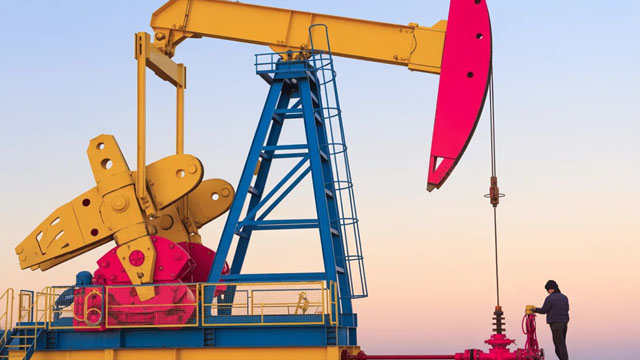
Ranger Energy Services, Inc. provides onshore high specification well service rigs, wireline completion services, and complementary services to exploration and production companies in the United States. It operates through three segments: High Specification Rigs, Wireline Services, and Processing Solutions and Ancillary Services. The High Specification Rigs segment offers well service rigs and complementary equipment and services to facilitate operations throughout the lifecycle of a well; and well maintenance services. This segment also has a fleet of 540 well service rigs. The Wireline Services segment provides wireline production and intervention services to provide information to identify and resolve well production problems through cased hole logging, perforating, mechanical, and pipe recovery services; wireline completion services are used primarily for pump-down perforating operations to create perforations or entry holes through the production casing; and pumping services. This segment also has a fleet of 68 wireline units and four high-pressure pump trucks. The Processing Solutions and Ancillary Services segment rents well service-related equipment consisting of fluid pumps, power swivels, well control packages, hydraulic catwalks, frac tanks, pipe racks, and pipe handling tools; decommissioning services; fluid management services; offers proprietary and modular equipment for the processing of natural gas; coil tubing services; and snubbing services. This segment also engages in the rental, installation, commissioning, start up, operation, and maintenance of mechanical refrigeration units, nitrogen gas liquid stabilizer units, nitrogen gas liquid storage units, and related equipment. Ranger Energy Services, Inc. was incorporated in 2014 and is based in Houston, Texas.

Analyst Sentiment

88%
Strong Buy

From 3 Active Polls

1Y Forecast: $20.00

▲ +29.6% Potential Upside

Consensus Target Metrics

Low Bound

$20

Median

$20

High Bound

$20

Average

$20

Price & Moving Averages

Loading chart...

🎯 Wall Street Analyst Intelligence Report

1-Year structural target targets, chart projections, and sentiment maps.

Average 1Y Target
$20.00
▲ +29.62% Upside
Low Target
$20.00
30% Risk
Median Target
$20.00
30% Mid
High Target
$20.00
30% Max
Consensus
Buy
6 / 10 Buys

Consensus Trend Projection

Trailing closures vs. 12-month metrics map.

Analyst Vote Distribution

Aggregate institutional coverage sentiment weights.

📊 Historical Valuation Multiples

Real-time Trailing Twelve Month (TTM) momentum side-by-side with discrete quarterly metrics.

Fiscal QuarterTTMQ1 2026Q4 2025Q3 2025Q2 2025Q1 2025Q4 2024Q3 2024Q2 2024
Period EndingTrailing 12MMar 31, 2026Dec 31, 2025Sep 30, 2025Jun 30, 2025Mar 31, 2025Dec 31, 2024Sep 30, 2024Jun 30, 2024
Market Cap ($M)367405319306268317344265228
Enterprise Value ($M)413451340280241298326272241
Price to Earnings Ratio (P/E)24.7833.7124.9063.679.18131.9014.857.6112.11
Price/Earnings-to-Growth Ratio (PEG)2.842.412.300.7113.82
Price to Sales Ratio (P/S)0.642.542.242.371.912.342.411.731.65
Price to Book Ratio (P/B)1.211.351.061.130.971.161.260.990.87
Price to Free Cash Flow Ratio (P/FCF)20.60-18.6418.6438.2018.6293.1112.6224.5333.48
Enterprise Value to Sales (EV/Sales)2.832.392.171.712.212.281.781.75
Enterprise Value to EBITDA (EV/EBITDA)5.5321.4818.1920.1711.4125.7216.5711.3213.19
Debt to Equity Ratio0.620.180.110.070.080.080.080.080.09

RNGR Growth Runway Model

Standard long term linear growth fade

Multi-Stage Discounted Cash Flow Sandbox

Market Price$15.43
Intrinsic Value$15.41
Market Alignment
Overvalued by 0.1%relative to calculated intrinsic value
9.00%
Exp: 8%8%
i

Growth runway slowdown

This value provides a time window for the growth rate to decline beyond Stage 1 toward the terminal rate. Longer windows are most useful for companies with high growth starting conditions or strong competitive advantages. This option stretches out the growth rate slowdown across 5, 10, or 15-year steps. A high-growth starting condition (exceeding a 25% initial growth rate) automatically applies a curve decay to simulate realistic, rapid market saturation.
i

Terminal growth rate

With long-term inflation between 3-5%, revenue must grow by that baseline to maintain flat real-world market share. This value sets the permanent terminal growth rate to factor into the valuation beyond the growth slowdown runway toward maturity.

3-Stage Financial Runway Horizon

🧠 Perpetuity Horizon Engine (Stage 3: Post-2035)

Terminal FCF Base$0.05B
Perpetuity TV Value$1.00B
Discounted TV (PV)$0.42B
TV Weighting %62.1%
⚠️
Financial Model Disclaimer & Risk Disclosure: This interactive scenario simulator is an educational sandbox provided strictly for informational and analytical research purposes. Core historical financial statements and consensus estimates are sourced directly via Financial Modeling Prep (FMP). All downstream outputs are entirely deterministic, hypothetical projections generated by combining automated mathematical formulas (including linear interpolation and Gaussian bell-curve decay models) with user-selected variables and third-party financial data inputs. Users assume all liability for trading decisions executed based on these sandbox calculations.

📘 Full Research Report

ℹ️

AI-Generated Research: This report is for informational purposes only.

📘 RANGER ENERGY SERVICES INC CLASS A (RNGR) — Investment Overview

🧩 Business Model Overview

Ranger Energy Services operates in the upstream oil & gas value chain focused on completion-stage needs, primarily centered on frac sand supply and the logistics required to deliver and stage proppant at the wellsite. The model links (1) sourcing proppant from industrial supply chains, (2) storing and handling material through logistics infrastructure, and (3) transporting and delivering it with operational scheduling aligned to hydraulic fracturing execution.

Customer stickiness tends to come from execution reliability rather than product branding: timely delivery, consistent proppant specifications, and the ability to scale material movement to match completion schedules. These factors create friction in switching suppliers, particularly when operators face tight well-completion windows and high penalties for downtime.

💰 Revenue Streams & Monetisation Model

Revenue is largely transactional and completion-driven, with monetization tied to the volume of proppant handled and delivered, plus associated logistics and handling services (such as storage, loading, and transportation). Monetisation can be decomposed into:

  • Proppant sales tied to well activity (commodity-like component).
  • Logistics and handling services (more service-like economics where margins depend on operating efficiency and utilization).
  • Storage/terminal throughput economics when capacity and handling assets are effectively deployed during high-demand periods.

Margin drivers typically include (1) the spread between delivered proppant pricing and sourcing/handling costs, (2) utilization of logistics assets (terminals, yards, and handling systems), and (3) transportation cost discipline (fleet/route efficiency, contracting structures, and minimizing empty miles).

🧠 Competitive Advantages & Market Positioning

Ranger’s competitive positioning is best understood as a logistics-and-supply execution advantage in North American unconventional oil & gas basins, where proppant intensity and timing discipline are central to well economics.

Primary moat: Geographic cost advantage + logistical infrastructure + execution switching costs.

  • Geographic cost advantage: Proximity and routing efficiency between proppant sources, staging points, and active drilling areas can lower delivered cost per ton.
  • Logistical infrastructure: Terminal/yard and handling capabilities reduce execution risk and compress lead times, supporting higher throughput when completion schedules accelerate.
  • Switching costs (operational): Consistency in delivery timing, proppant specifications, and the integrated logistics workflow can discourage substitution, especially under constrained schedules.

Competitive benchmarking: Ranger’s closest public-market peers are typically proppant suppliers and regional sand/logistics providers rather than diversified drilling contractors. Key competitors include:

  • U.S. Silica — broader proppant production footprint; competes on scale in sand supply and basin coverage.
  • Fairmount Santrol (now widely referenced alongside Frac sand platform consolidators) — competes on proppant sourcing and logistics execution in unconventional basins.
  • Hi-Crush — competes with a focus on sand supply and regional logistics.

Ranger’s positioning emphasizes basin-specific delivery economics and operational execution in the segments where fast, dependable logistics materially affects completion performance, while some rivals may focus more on upstream-scale production capacity and broader geographic coverage.

🚀 Multi-Year Growth Drivers

  • Completion intensity remains structurally supported by the economics of unconventional reservoirs, where increased lateral lengths and stages can sustain proppant demand through cycles.
  • Infrastructure buildout in active basins rewards providers able to stage and move proppant efficiently as drilling concentrates geographically.
  • Capacity optimization and service integration can expand margins when logistics assets are deployed with higher utilization and improved cost per delivered ton.
  • Contracting and customer workflow integration can extend demand visibility and reduce customer procurement friction when suppliers demonstrate operational dependability.

Over a 5–10 year period, the TAM for frac-related materials and logistics grows primarily with (1) the number of active wells and (2) proppant intensity per well, both of which are influenced by prevailing well design and basin development plans.

⚠ Risk Factors to Monitor

  • Commodity cycle and customer capex variability: Proppant and logistics volumes are closely linked to upstream drilling and completion budgets.
  • Pricing pressure and spread compression: When industry capacity expands or demand softens, delivered pricing versus cost can deteriorate.
  • Capital intensity and asset utilization risk: Logistics infrastructure economics depend on sustained throughput; underutilization can pressure fixed-cost absorption.
  • Input and logistics cost volatility: Transportation, handling, and energy-related costs can move independently from proppant pricing.
  • Environmental and regulatory constraints: Sand sourcing, land use, water-related permitting, and emissions controls can constrain supply or increase compliance costs.
  • Operational safety and execution risk: Disruptions in material handling and delivery timing can affect customer well schedules.

📊 Valuation & Market View

The market typically values frac sand and energy logistics services using EV/EBITDA or cash-flow-based multiples, reflecting operating leverage and cyclicality. Because earnings can swing with utilization, investors often focus on:

  • Margin durability (delivered cost discipline and logistics efficiency).
  • Utilization and volume throughput as a proxy for operating leverage.
  • Balance-sheet resilience (net debt capacity and cash conversion through downturns).
  • Evidence of switching-cost effects via repeat contracting, stable customer relationships, and execution reliability.

Key valuation “drivers” are therefore operational (utilization, cost per delivered ton, and capacity deployment) rather than long-duration growth assumptions.

🔍 Investment Takeaway

Ranger Energy Services fits an institutional “infrastructure-enabled service” profile within upstream completions. The long-term thesis rests on a logistics-and-delivered-cost advantage—supported by geographic efficiency, handling/staging infrastructure, and operational switching friction—combined with completion-driven demand that can persist through cycles when well intensity remains supported. The primary investment risk is cyclicality translating into spread compression and utilization volatility, making disciplined cost control and balance-sheet management central to sustained value creation.


⚠ AI-generated — informational only. Validate using filings before investing.

📰 Market News & Coverage

15 Stories Available

Real-time institutional reporting and market updates for RNGR.

wsj.com2026-06-04

U.S. Natural Gas Futures Rise on Weather Outlook

U.S. natural gas futures gain with warmer weather forecasts lifting demand expectations for coming weeks.

businesswire.com2026-05-28

Ranger Energy Services, Inc. to Present and Host 1x1 Investor Meetings at the 16th Annual East Coast IDEAS Investor Conference on June 10th & 11th in New York, NY

HOUSTON--(BUSINESS WIRE)--Ranger Energy Services, Inc. (NYSE: RNGR) today announced Stuart Bodden, Ranger's Chief Executive Officer and Melissa Cougle, Executive Vice President and Chief Financial Officer will present at the East Coast IDEAS Investor Conference on Wednesday, June 10, 2026, at The Westin Times Square in New York, NY. The presentation will be webcast and can be accessed through the conference host's main website: https://www.threepartadvisors.com/east-coast and in the investor re.

seekingalpha.com2026-05-26

Ranger Energy: High Spec Rig Demand Support Margin Stability

Ranger Energy: High Spec Rig Demand Support Margin Stability

zacks.com2026-05-04

Should Value Investors Buy Ranger Energy Services (RNGR) Stock?

Here at Zacks, our focus is on the proven Zacks Rank system, which emphasizes earnings estimates and estimate revisions to find great stocks. Nevertheless, we are always paying attention to the latest value, growth, and momentum trends to underscore strong picks.

zacks.com2026-04-30

Why Ranger Energy (RNGR) Might be Well Poised for a Surge

Ranger Energy (RNGR) shares have started gaining and might continue moving higher in the near term, as indicated by solid earnings estimate revisions.

zacks.com2026-04-29

What Makes Ranger Energy (RNGR) a Good Fit for 'Trend Investing'

If you are looking for stocks that are well positioned to maintain their recent uptrend, Ranger Energy (RNGR) could be a great choice. It is one of the several stocks that passed through our "Recent Price Strength" screen.

seekingalpha.com2026-04-28

Ranger Energy Services, Inc. (RNGR) Q1 2026 Earnings Call Transcript

Ranger Energy Services, Inc. (RNGR) Q1 2026 Earnings Call Transcript

zacks.com2026-04-28

Best Income Stocks to Buy for April 28th

PSX, APA and RNGR made it to the Zacks Rank #1 (Strong Buy) income stocks list on April 28th, 2026.

zacks.com2026-04-27

Ranger Energy (RNGR) Lags Q1 Earnings and Revenue Estimates

Ranger Energy (RNGR) came out with quarterly earnings of $0.12 per share, missing the Zacks Consensus Estimate of $0.36 per share. This compares to earnings of $0.05 per share a year ago.

businesswire.com2026-04-27

Ranger Energy Services, Inc. Reports First Quarter 2026 Financial Results

HOUSTON--(BUSINESS WIRE)--Ranger Energy Services, Inc. (NYSE: RNGR) (“Ranger” or the “Company”) today reported its financial and operational results for the first quarter ended March 31, 2026. First Quarter 2026 Financial and Operational Highlights Revenue of $159.1 million, compared to $142.2 million in the fourth quarter of 2025 and $135.2 million in the first quarter of 2025 Net income of $3.0 million, or $0.12 per diluted share, compared to $3.2 million, or $0.14 per diluted share, in the f.

businesswire.com2026-04-22

Ranger Energy Services, Inc. Announces Date for First Quarter 2026 Earnings Conference Call

HOUSTON--(BUSINESS WIRE)--Ranger Energy Services, Inc. (NYSE:RNGR) (the “Company”) will report first quarter financial and operating results after the market closes for trading on Monday, April 27, 2026. Following the announcement, the Company's management will host an earnings conference call the morning of Tuesday, April 28, 2026 at 10:00 a.m. Eastern time (9:00 a.m. Central time). Interested parties are invited to join the call by dialing 1-833-255-2829, or 1-412-902-6710 for international c.

zacks.com2026-04-17

Should Value Investors Buy Ranger Energy Services (RNGR) Stock?

Here at Zacks, our focus is on the proven Zacks Rank system, which emphasizes earnings estimates and estimate revisions to find great stocks. Nevertheless, we are always paying attention to the latest value, growth, and momentum trends to underscore strong picks.

defenseworld.net2026-03-18

Acuitas Investments LLC Boosts Stock Holdings in Ranger Energy Services, Inc. $RNGR

Acuitas Investments LLC grew its position in shares of Ranger Energy Services, Inc. (NYSE: RNGR) by 52.8% during the third quarter, according to its most recent filing with the Securities and Exchange Commission (SEC). The fund owned 226,479 shares of the company's stock after buying an additional 78,259 shares during the period. Ranger

defenseworld.net2026-03-08

Ranger Energy Services Q4 Earnings Call Highlights

Ranger Energy Services (NYSE: RNGR) executives used the company's fourth-quarter and full-year 2025 earnings call to highlight steady activity trends, progress integrating the recently acquired American Well Services (AWS) business, and accelerating interest in the company's EchoRig hybrid electric well service technology. Full-year 2025 results and market backdrop Chief Executive Officer Stuart Bodden said Ranger generated

seekingalpha.com2026-03-05

Ranger Energy Services, Inc. (RNGR) Q4 2025 Earnings Call Transcript

Ranger Energy Services, Inc. (RNGR) Q4 2025 Earnings Call Transcript

📊 AI Financial Analysis

Powered by StockMarketInfo
Earnings Data: Q Ending 2026-03-31

"RNGR reported Q1’26 revenue of $159.1M and net income of $3.0M (EPS $0.13). QoQ (vs. Q4’25) revenue rose +11.9% (from $142.2M) while net income declined -6.3% (from $3.2M). YoY (vs. Q1’25) revenue is +13.2% (vs. $140.6M) and net income is -59.0% (from $7.3M), indicating a major earnings step-down despite higher sales. Profitability weakened across the quarter and over the year: net margin fell to 1.9% (down from 2.3% in Q4 and 5.2% in Q2’25), and operating margin slipped to 3.2% (from 4.6% in Q4). The gross profit margin also compressed versus prior quarters, signaling cost pressure and/or mix headwinds. Cash flow quality deteriorated materially: operating cash flow was -$3.4M and free cash flow was -$21.7M in Q1’26, versus strong positive operating cash flow in both Q2 and Q4’25. Balance sheet resilience remains adequate with total assets up to $459.2M (+9.6% YoY from $419.3M) and equity essentially flat near $300M; leverage is low (total debt ~$15.8M) and interest coverage remains strong. Shareholder returns appear favorable based on market momentum (price +37.8% YoY). Dividends are small (dividend yield ~0.35%) and repurchases in this quarter were modest ($0.5M)."

Revenue Growth

Positive

Q1’26 revenue grew +11.9% QoQ (to $159.1M) and +13.2% YoY vs Q2’25 revenue of $140.6M, showing solid top-line momentum.

Profitability

Neutral

Net income declined -6.3% QoQ and -59.0% YoY; net margin contracted to 1.9% from 5.2% (Q2’25) and 2.3% (Q4’25), indicating margin compression.

Cash Flow Quality

Neutral

Operating cash flow was -$3.4M and free cash flow -$21.7M in Q1’26, versus +$24.1M operating cash flow in Q4’25 and +$20.7M in Q2’25.

Leverage & Balance Sheet

Positive

Low debt and stable equity: total equity ~ $300.4M and total assets $459.2M; leverage remains modest with total debt ~$15.8M and strong interest coverage.

Shareholder Returns

Positive

Strong market momentum with +37.8% 1y price change; dividend yield is low (~0.35%). Buybacks were present but small in Q1’26.

Analyst Sentiment & Valuation

Fair

Consensus target ($20) implies upside vs current price ($17.06), but valuation appears rich on earnings (price/earnings ~33.7x) given the earnings decline.

Disclaimer:This analysis is AI-generated for informational purposes only. Accuracy is not guaranteed and this does not constitute financial advice.

Fundamentals Overview

Loading fundamentals overview...

Ranger is selling a clean growth story (AWS integration on track ~120 days in; ECO momentum with a contract for 15 rigs plus additional conversations and a Texas complex-well P&A award). However, the Q&A shows investors pressing on execution bottlenecks and cash/margin timing. Management explicitly avoids precision on ECO-related margin contribution (“too early” to call 100–300 bps; “not 5%”). They also warn that 2026 free-cash-flow conversion deteriorates to ~50% from nearly 60% in 2025 due to ECO rig capital timing and milestone/refund mechanics—Q1 is further pressured by winter storm impacts and seasonal working capital, with borrowings expected in Q1. Despite optimism on 2027 (15 ECO rigs operating), the near-term signals are cautious: wireline softness persists, and weather has already disrupted monthly margin cadence (December strength vs February damage).

AI IconGrowth Catalysts

  • ECO Hybrid Electric rig program: first two ECO rigs validated; contract for 15 ECO rigs to be built with a key Lower 48 operator
  • Integration momentum from American Well Services (AWS) acquisition (company cites ~120 days in and no expected derail of long-term synergies)
  • Processing Solutions and Ancillary Services benefited from incremental AWS contribution in Q4

Business Development

  • Signed contract for 15 ECO rigs (Lower 48; refurbs discussed; potential follow-on next contract likely <10% of active fleet impact)
  • Texas regulator plug-and-abandonment (P&A) contract for complex wells; currently low single digits of rigs dedicated (~3-ish ± depending on program)
  • Wireline: referenced a 'couple of key customer awards' (customers not named)

AI IconFinancial Highlights

  • Q4 revenue: $142.2M vs $128.9M in Q3 and essentially flat vs $143.1M in Q4 2024
  • Q4 adjusted EBITDA: $20.3M; 14.3% margin vs ~13.0% in Q3; $21.9M adjusted EBITDA in Q4 2024
  • Q4 diluted EPS: $0.14 vs $0.05 in Q3; net income $3.2M vs $1.2M in Q3
  • Q1 2026 guidance implicitly challenged: heavy winter storm impact in January expected to put Q1 2026 largely in line with Q4 (rather than stronger seasonality)
  • Full-year 2025 revenue: $546.9M vs $571.1M in 2024
  • Full-year adjusted EBITDA: $73.2M (13.4% margin) vs $78.9M (13.8% margin) in 2024 (margin down ~40 bps)
  • Free cash flow (FY): $42.9M ($1.89/share) vs $50.4M in 2024; EBITDA-to-FCF conversion ~nearly 60% for third straight year
  • FCF conversion outlook: expects conversion closer to 50% in 2026 due to timing of ECO rig capital
  • Working capital/seasonality: expects borrowings in Q1 due to working capital build and first-quarter labor costs

AI IconCapital Funding

  • FY 2025 repurchased nearly 1,000,000 shares at avg price $12.26 (total $12.3M)
  • FY 2025 dividends + repurchases: returned over 40% of free cash flow to shareholders
  • Liquidity end of FY 2025: $67.7M total (revolver availability $57.4M; cash $10.3M)
  • Outstanding borrowing end of FY 2025: $3.5M
  • FY 2025 capex: $26.1M (down from $34.1M in 2024); 2025 growth capex focused predominantly on ECO deployments
  • FY 2025 used ~$40.0M of free cash flow for the AWS purchase

AI IconStrategy & Ops

  • ECO operational performance example: in first 450 hours, one ECO rig used <22 hours of generator power with remaining energy recharged via onboard battery regenerative capabilities
  • ECO manufacturing capacity: working closely with vendor; company believes manufacturing should not be a bottleneck; key constraints are long-lead items and refurb throughput
  • P&A fleet capacity: Texas complex-well P&A contract described as potentially expandable; current dedication low single digits (~3 rigs ±)
  • Wireline operations: Q4 margin pressure attributed to continued wireline softness; sequential wireline revenue down to $12.4M from $17.2M in Q3

AI IconMarket Outlook

  • 2026 activity level expected 'generally stable and similar to 2025' (execution year)
  • 2026 pro forma annual EBITDA opportunity: >$100M from AWS acquisition
  • By 2027: expects 15 new ECO rigs operating in the Lower 48
  • Q1 2026: winter storm impact expected to keep results largely in line with Q4
  • ECO capex timing: milestone/progress payments in first half; major ramp in back half (management declined to provide quarter-by-quarter dollar guidance)

AI IconRisks & Headwinds

  • ECO capex cash conversion risk: free cash flow conversion expected to deteriorate to ~50% in 2026 (vs ~60% in 2025) due to ECO rig capital timing
  • ECO milestone/progress payment complexity: potential for capital laid out to be refunded later; management expects material disclosures each quarter as it ramps
  • January 2026 severe weather: heavy winter storm impact in January expected to pressure Q1 (guidance 'largely in line with Q4')
  • Wireline: continued margin pressure and revenue softness in Q4; wireline still described as an opportunity set with pricing/utilization headwinds
  • Earnings/margin cadence uncertainty for ECO + AWS: management said it is too early to quantify bps of margin impact (explicitly 'not 5%'; 'too early to tell you that it is 200 bps or 100 bps or 300 bps')
  • Winter storm February impact cited for AWS-related margins: 'real margin expansion' in December reversed by February storm

Sentiment: MIXED

Note: This summary was synthesized by AI from the RNGR Q4 2025 earnings transcript. Financial data is complex; please verify all metrics against official SEC filings before making investment decisions.

📋 Official Regulatory 10-K / 10-Q SEC Filings

Direct authenticated documentation links to audited SEC database reports for RNGR.

SEC EDGAR Live Feed
Loading financial data and tables...
📁

SEC Filings (RNGR)

© 2026 Stock Market Info — Ranger Energy Services, Inc. (RNGR) Financial Profile