
📘 SUMMIT MIDSTREAM CORP (SMC) — Investment Overview
🧩 Business Model Overview
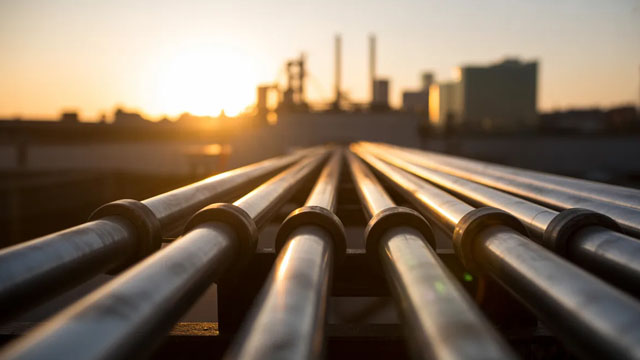
Summit Midstream Corp operates in the energy infrastructure value chain by connecting upstream production to downstream demand through fee-based midstream services. The operating model typically centers on owning or controlling: (1) gathering systems that move produced hydrocarbons from wells to central facilities, (2) processing or treating capabilities that remove/condition natural gas and NGL streams, and (3) transportation, storage, and terminalling infrastructure that delivers products to market. Because these assets are physical and location-specific, customers rely on Summit’s footprint to evacuate production efficiently—creating practical customer stickiness.
Revenue is largely generated from contracted capacity and volumetric transportation/handling services rather than commodity price directionality alone. Where commodity-related components exist (e.g., processing margins tied to NGL yields or spreads), economics still benefit from a logistical “bridge” that converts upstream supply into marketable products.
💰 Revenue Streams & Monetisation Model
Summit Midstream’s monetisation is expected to be dominated by recurring, infrastructure-like cash flows:
- Contracted gathering and transportation fees: Revenues are tied to throughput and/or committed capacity, supporting steadier margins and cash generation.
- Processing/treating and NGL-related services: Monetisation can include both fee-based components and margin contributions linked to product recovery/conditioning and marketability.
- Storage and terminalling: Fee structures often correlate with utilization, turn volumes, and contracted access to capacity.
Primary margin drivers include system utilization (volumes and committed capacity in service), maintenance and operating cost discipline, and the ability to keep contracted assets fully subscribed. For any commodity-adjacent components, margins generally depend on relative product yields and market spreads rather than a pure long commodity bet, which can reduce—but not eliminate—earnings volatility.
🧠 Competitive Advantages & Market Positioning
The moat for Summit Midstream is primarily an infrastructure and logistics moat with a contract-driven durability profile. While direct “switching costs” are less about customer software and more about physical access, the economic effect is similar: once production is tied into a system, changing evacuation routes is costly, operationally disruptive, and often constrained by pipeline/processing capacity availability.
Key barriers competitors face:
- Geographic cost advantage: Proximity to low-cost North American natural gas and NGL supply reduces transportation friction and preserves netback economics.
- Logistical infrastructure scale: Gathering networks, processing constraints, and terminalling interconnects require long lead times, permitting, and capital—raising the barrier to entry.
- Right-of-way and permitting/regulatory friction: Building competing systems in the same geography is time- and cost-intensive, limiting rapid capacity duplication.
Competitive benchmarking: Summit Midstream competes against large North American midstream operators such as Enbridge, Kinder Morgan, and Plains GP/Plains. Compared with these diversified operators, Summit’s competitive focus is typically narrower and more asset-footprint driven—emphasizing connecting specific upstream supply pockets to market through dedicated systems. This creates a positioning advantage when Summit’s infrastructure is well aligned with customer production profiles and committed offtake arrangements.
🚀 Multi-Year Growth Drivers
Over a five-to-ten-year horizon, Summit’s growth profile is generally supported by structural demand for dependable infrastructure in North America’s hydrocarbon supply chain:
- Continued buildout and utilization of gathering systems: As upstream producers expand drilling programs, midstream assets that can debottleneck, add lateral connections, or increase throughput can capture volume growth.
- Optimization of existing capacity: Incremental expansions and operational improvements (compression, conditioning capacity, routing flexibility) can lift cash generation without equivalent scale of greenfield risk.
- Market access for NGLs and processed gas: Growth in production mixes increases the value of conditioning and delivery infrastructure that makes products pipeline-ready and marketable.
- Contracted capacity and customer retention: Long-lived infrastructure tends to benefit from recurring demand for evacuation services, with new volumes often connecting to established assets rather than requiring fully new builds.
The total addressable market expands with (a) upstream resource development and (b) the need for midstream logistics that convert dispersed wellhead production into centralized, marketable supply—an enduring requirement even when commodity cycles fluctuate.
⚠ Risk Factors to Monitor
- Capital intensity and execution risk: Growth depends on project approvals, permitting timelines, construction costs, and integration into operational systems.
- Customer and counterparty credit risk: Concentration in upstream customers or deteriorating credit can pressure utilization and contractual collectability.
- Regulatory and environmental risk: Pipeline and processing operations face evolving compliance requirements (safety, emissions, water handling), potentially increasing sustaining capital and operating costs.
- Commodity-linked volume risk: Even fee-based systems can experience throughput volatility if production volumes decline or product mixes change beyond contract expectations.
- Operational and safety risk: Any material incident can disrupt flows, increase remediation costs, and harm long-term operating reliability.
📊 Valuation & Market View
Midstream equity is often valued through a cash-flow lens rather than purely accounting earnings. Market participants commonly anchor on EV/EBITDA, forward cash generation measures, and yield/coverage concepts, reflecting the sector’s expectation of stable distributable cash flows.
Key valuation drivers typically include:
- Contract coverage and duration: Higher committed utilization and stronger take-or-pay or fee-backed structures support durability.
- Free cash flow after sustaining capital: The market rewards assets that convert EBITDA into durable discretionary cash flow.
- Leverage and interest rate sensitivity: Capital structure affects resilience through commodity and throughput cycles.
- Growth runway quality: Projects that add capacity with reasonable execution risk and attractive contracted economics tend to merit valuation premiums.
Because midstream is infrastructure-like, the market typically prices “how dependable” cash flows are, not just “how large” they are.
🔍 Investment Takeaway
Summit Midstream’s investment case is anchored in an infrastructure moat: location-specific logistics, proximity to low-cost North American supply, and system-level economics that create practical customer stickiness. The long-term thesis rests on contracted capacity durability, utilization growth from upstream development, and disciplined execution of incremental expansions that preserve cash-flow resilience through commodity cycles.
⚠ AI-generated — informational only. Validate using filings before investing.

















 Growth Catalysts