📘 TIMKEN (TKR) — Investment Overview
🧩 Business Model Overview
TIMKEN engineers and manufactures bearings, bearing-related components, and power-transmission products used to reduce friction and support high-load motion in demanding industrial environments. The value chain centers on (1) design and application engineering to match bearing geometry, materials, lubrication conditions, and life requirements to specific machine duty cycles, (2) precision manufacturing and heat-treatment/metallurgy capabilities that drive reliability, and (3) distribution and service support that helps customers select products, manage spares, and minimize unplanned downtime.
Customer stickiness is reinforced through qualification processes (OEM and industrial installed base), the operational cost of bearing failures, and the engineering collaboration required for performance verification—factors that make switching to an alternate supplier slower and more costly than in commoditized components.
💰 Revenue Streams & Monetisation Model
Revenue is primarily product-driven and monetizes through a blend of:
- OEM sales (new equipment production): transactional orders with margins shaped by engineered content, customer-specific designs, and pricing discipline.
- Aftermarket/installed-base sales: replacement demand that benefits from the long service life of industrial machinery and the need to maintain reliability over time.
- Specialty and engineered solutions: higher value content where performance requirements and application engineering increase the amount of “customization-to-order” versus purely standardized product.
Margin drivers typically include mix shift toward engineered and specialty products, manufacturing efficiency, heat-treatment/material execution, and the ability to pass through input cost changes without losing pricing power. Because bearings are embedded in customer assets, aftermarket share can be a stabilizer during OEM downcycles, though overall demand remains tied to industrial production levels.
🧠 Competitive Advantages & Market Positioning
TIMKEN’s moat is strongest in switching costs and reliability/engineering differentiation—a “hard-to-qualify” proposition rather than a pure cost or scale story.
- Switching costs (qualification + operational risk): Customers—especially in heavy industry and transportation—qualify bearing designs through testing and validation. Requalification can be time-consuming and carries downtime risk, particularly for critical rotating equipment.
- Performance differentiation (materials + process control): Bearing life and fatigue resistance depend on metallurgy, heat treatment, and precision manufacturing. These factors are difficult to replicate quickly and can be tied to proprietary process know-how and engineering depth.
- Application engineering and service support: Margin durability improves when TIMKEN participates earlier in design for OEM programs and when it supports faster selection and spares management in aftermarket channels.
Competitive benchmarking:
- SKF and Schaeffler: large, diversified bearing and motion-control competitors with strong global manufacturing and broad product coverage. They compete heavily on engineering content in industrial and transportation end markets.
- NSK: another global bearing leader focused on precision and reliability across a range of demanding applications.
- Contrast vs. TIMKEN: TIMKEN’s industry focus emphasizes engineered reliability in heavy-load, harsh-duty rotating applications where performance verification and qualification matter most—areas where supplier substitution tends to be slower and more engineering-intensive than in light-duty or highly commoditized categories.
🚀 Multi-Year Growth Drivers
A durable growth outlook over a 5–10 year horizon is supported by demand linked to the expansion and modernization of industrial infrastructure, plus replacement cycles in the installed base:
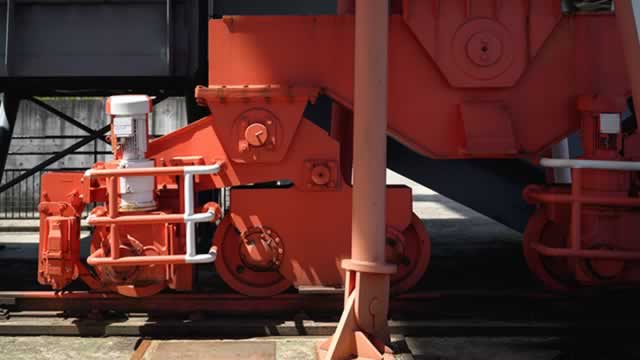
- Industrial capacity additions and upgrades: Steel, mining, cement, chemicals, and other heavy industries require ongoing rotating equipment renewal and modernization, sustaining replacement demand.
- Electrification and drivetrain evolution: Electric motors, wind/renewables, and electrified industrial equipment shift the bearing ecosystem toward designs optimized for new operating profiles (speed, thermal behavior, and load patterns).
- Higher reliability requirements: Customers seek reduced downtime, improved energy efficiency, and longer service intervals, supporting engineered and specialty product content.
- Geographic industrialization: Growth in industrial output across emerging markets expands the TAM for bearings and power-transmission components, particularly as local factories build new equipment and expand throughput.
- Aftermarket installed-base tailwind: As equipment fleets age, replacement and overhaul cycles increase the addressable aftermarket opportunity and tend to provide resilience versus pure OEM-only exposure.
⚠ Risk Factors to Monitor
- Industrial cyclicality: Bearings and motion products track industrial production, freight/rail volumes, and capital spending. Downcycles can pressure utilization and margins.
- Input cost and supply constraints: Bearings depend on steel and alloy inputs and precision components. Sharp cost swings or supply disruptions can impact profitability if not managed through procurement and pricing actions.
- Customer concentration and program timing: OEM awards and industrial projects can shift over time; delays in new equipment programs can affect near-term volumes.
- Competitive dynamics and pricing pressure: Large global rivals can use capacity and scale to defend share, potentially compressing margins in certain categories.
- Technology substitution risk in end markets: Changes in machine design (including drivetrain architectures) can alter bearing requirements. The risk is mitigated when suppliers maintain engineering breadth and can qualify new solutions effectively.
📊 Valuation & Market View
TIMKEN typically trades as a manufacturer in the industrial/precision components complex, where valuation frameworks often emphasize earnings durability and cycle-adjusted margins rather than purely asset-light growth. Common market approaches include:
- EV/EBITDA or EV/EBIT for cyclical industrial platforms—sensitive to operating leverage and margin normalization assumptions.
- P/E where investors forecast a return to normalized profitability and disciplined capital allocation (working capital and capex efficiency).
Key valuation drivers include: (1) ability to sustain engineered/specialty mix, (2) manufacturing and process execution that protects gross margin, (3) resilience from aftermarket and diversified end markets, and (4) returns on invested capital across the product footprint.
🔍 Investment Takeaway
TIMKEN’s long-term investment case rests on durable competitiveness in demanding bearing and motion applications, supported by switching costs from qualification, process- and metallurgy-driven reliability, and deep application engineering that makes supplier substitution difficult. While end-market cycles influence volumes, the installed-base aftermarket opportunity and engineered-content focus provide a foundation for sustained operating performance across an industrial modernization cycle.
⚠ AI-generated — informational only. Validate using filings before investing.






 Growth Catalysts