Valmont Industries, Inc.

Valmont Industries, Inc. (VMI) Market Cap

Valmont Industries, Inc. has a market capitalization of $9.30B.

Price: $481.70

5.09 (1.07%)

Market Cap: 9.30B

NYSE · time unavailable

CEO: Avner Applbaum

Sector: Industrials

Industry: Conglomerates

IPO Date: 1990-03-26

Website: https://www.valmont.com

Valmont Industries, Inc. (VMI) - Company Information

Market Cap: 9.30B|Sector: Industrials

Company Profile

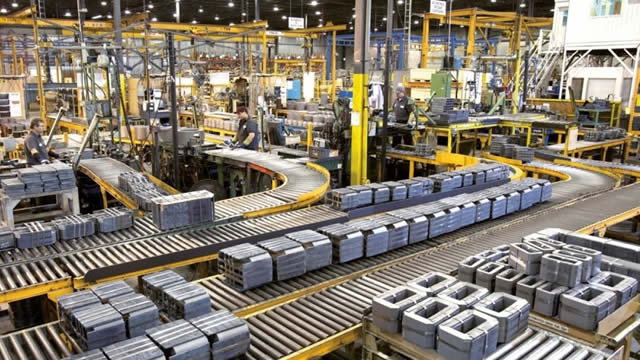
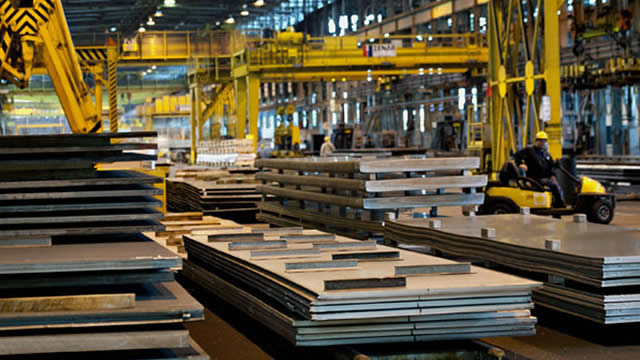
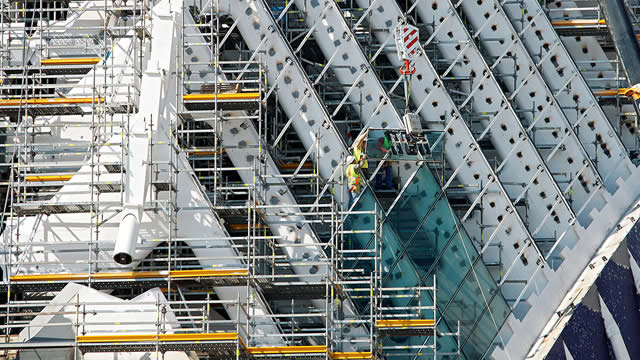
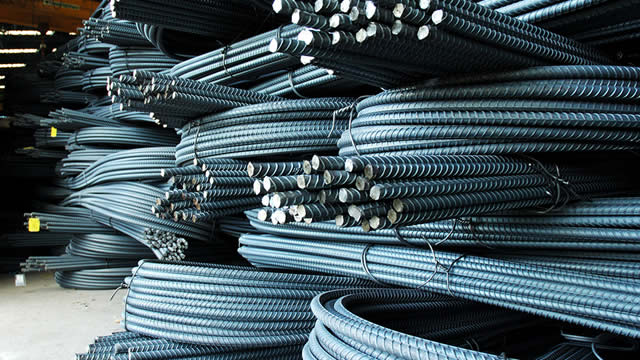
Valmont Industries, Inc. is a global enterprise specializing in engineered products, conducting operations across the United States, Australia, Brazil, Denmark, and other international markets. The company's business is organized into two primary divisions: Infrastructure and Agriculture. Within its Infrastructure segment, Valmont designs, produces, and distributes a wide array of engineered metal, steel, wood, aluminum, and composite structures, including poles, towers, and components. These are deployed in critical areas such as lighting, traffic control, and wireless communication networks. The segment also delivers specialized access systems, integrated structural solutions for smart urban environments, and highway safety products. Furthermore, it provides robust steel and concrete pole structures essential for utility transmission, power distribution, substations, and renewable energy generation facilities, complemented by inspection services. To ensure the durability of metal products, Valmont offers protective services like hot-dipped galvanizing, anodizing, and powder coating. The Agriculture segment focuses on advanced water management technologies and solutions tailored for precision farming. It manufactures and supplies mechanical irrigation equipment, along with associated parts and support services, primarily serving the agricultural industry under its well-known Valley brand. Additionally, this segment produces tubular products for various industrial clients. Valmont's extensive customer base includes municipalities and government agencies, manufacturers of commercial lighting fixtures, construction contractors, telecommunications and utility providers, large agricultural operations, and the broader manufacturing sector. Established in 1946, the company maintains its headquarters in Omaha, Nebraska.

Analyst Sentiment

83%
Strong Buy

From 6 Active Polls

1Y Forecast: $576.00

▲ +19.6% Potential Upside

Consensus Target Metrics

Low Bound

$450

Median

$600

High Bound

$678

Average

$576

Price & Moving Averages

Loading chart...

🎯 Wall Street Analyst Intelligence Report

1-Year structural target targets, chart projections, and sentiment maps.

Average 1Y Target
$576.00
▲ +19.58% Upside
Low Target
$450.00
-7% Risk
Median Target
$600.00
25% Mid
High Target
$678.00
41% Max
Consensus
Hold
5 / 14 Buys

Consensus Trend Projection

Trailing closures vs. 12-month metrics map.

Analyst Vote Distribution

Aggregate institutional coverage sentiment weights.

📊 Historical Valuation Multiples

Real-time Trailing Twelve Month (TTM) momentum side-by-side with discrete quarterly metrics.

Fiscal QuarterTTMQ2 2026Q1 2026Q4 2025Q3 2025Q2 2025Q1 2025Q4 2024Q3 2024
Period EndingTrailing 12MJun 27, 2026Mar 28, 2026Dec 27, 2025Sep 27, 2025Jun 28, 2025Mar 29, 2025Dec 28, 2024Sep 28, 2024
Market Cap ($M)9,29911,0167,6358,0757,5966,6135,8056,1405,808
Enterprise Value ($M)10,03211,7488,3968,8138,2287,2666,4836,8436,656
Price to Earnings Ratio (P/E)19.0122.9717.6612.0119.17-54.5516.6419.7517.50
Price/Earnings-to-Growth Ratio (PEG)2.64-6.5111.77
Price to Sales Ratio (P/S)2.209.857.427.787.266.305.995.925.69
Price to Book Ratio (P/B)5.406.384.554.954.764.333.553.983.77
Price to Free Cash Flow Ratio (P/FCF)28.8798.20110.80114.64107.6248.76166.7536.5928.38
Enterprise Value to Sales (EV/Sales)10.508.168.497.876.926.696.606.52
Enterprise Value to EBITDA (EV/EBITDA)14.8568.3447.3953.8550.50140.2343.3247.9044.17
Debt to Equity Ratio1.080.500.550.570.540.560.530.560.68

📘 Full Research Report

ℹ️

AI-Generated Research: This report is for informational purposes only.

📘 VALMONT INDS INC (VMI) — Investment Overview

🧩 Business Model Overview

Valmont operates as an engineered-products manufacturer serving two end-markets that share a common theme: delivering long-lived infrastructure with high-performance requirements.

In Structures, Valmont designs and fabricates galvanized steel structures and related components used in electric utility transmission/distribution and communications networks. Value is created through engineering support, material processing (including protective coatings), fabrication, and project execution for customers that specify durability and compliance.

In Irrigation, Valmont manufactures center pivot and other precision irrigation systems and provides the installed and replacement ecosystem around those systems (components, distribution, and service/parts). Value is created by integrating hydraulic/mechanical design with corrosion resistance and field-proven reliability, then supporting long service lives in agricultural environments.

Customer stickiness is supported by long asset lifecycles, specification-driven procurement, and the operational cost of switching away from qualified designs after installation.

💰 Revenue Streams & Monetisation Model

Revenue is primarily project- and order-based in Structures and equipment- and component-based in Irrigation. Monetisation also includes an ongoing portion tied to:

  • Parts and service exposure in the Irrigation installed base, supporting repeat replacement demand over the system life.
  • Component and upgrade opportunity as farms and utilities refresh assets for performance and compliance.

Key margin drivers are:

  • Manufacturing efficiency in steel processing and coatings, where throughput and yield matter.
  • Mix and pricing discipline in engineered structures with customization.
  • Volume leverage across fixed costs (engineering, fabrication capacity, logistics networks).
  • Commercial execution that preserves margins in project procurement and delivery.

🧠 Competitive Advantages & Market Positioning

Valmont’s moats are best described as switching costs plus cost/process advantages, reinforced by engineering depth and long-lived performance claims that are difficult for unqualified entrants to replicate quickly.

  • Switching costs (qualification and design-in): Utility and communications structures are specified through engineering requirements and procurement standards. After qualification, customers tend to maintain supplier relationships due to reduced engineering risk, procurement familiarity, and performance verification over time.
  • Cost/process advantage: Protective coating and fabrication expertise supports corrosion resistance and durability. Scale in processing and standardized manufacturing of components reduces unit costs relative to less specialized competitors.
  • Installed-base durability economics (Irrigation): Precision irrigation systems create a long maintenance/replacement pathway. Even when a different vendor sells an original system, replacement parts and service compatibility reduce the attractiveness of full switching for incremental needs.

Competitive benchmarking:

  • Lindsay Corporation (irrigation systems): Similar precision irrigation focus; rivalry centers on system performance, dealer/service coverage, and product reliability.
  • Rain Bird (irrigation solutions): Strong in irrigation products broadly; Valmont’s positioning emphasizes precision agricultural systems and engineered durability in harsh environments.
  • Hubbell Utility Solutions (utility structures and related electrical infrastructure components): More concentrated in specific utility equipment categories; Valmont’s differentiation is broader engineered steel structure capability paired with coatings/fabrication depth.

Overall, Valmont competes most effectively where engineered, durable infrastructure and precision system reliability are valued over commodity-style procurement, allowing the company to win through qualification, manufacturing know-how, and service ecosystem rather than lowest-price offers alone.

🚀 Multi-Year Growth Drivers

Over a 5–10 year horizon, Valmont’s addressable market is supported by structural demand drivers rather than short-cycle “volume-only” recovery:

  • Grid modernization and reliability capex: Continued build-out and replacement of transmission/distribution infrastructure supports demand for durable structures that meet long-term performance expectations.
  • Communications network densification: Ongoing tower and network infrastructure maintenance/expansion supports engineered steel structures with quality and delivery reliability.
  • Water-efficiency and precision agriculture adoption: Constraints on water availability and the economics of yield stability support precision irrigation uptake and upgrades.
  • Climate variability and operating risk management: Greater frequency of weather stress increases the value of controlled irrigation delivery and system reliability.
  • Service/parts monetisation across an installed base: Even when equipment cycles soften, replacement and maintenance create a steadier demand floor in Irrigation.

⚠ Risk Factors to Monitor

  • Industrial cyclicality: Utility and agricultural capex can soften if economic conditions deteriorate, impacting order timing and project volumes.
  • Input-cost volatility: Steel and energy costs can pressure margins if pricing and procurement timing do not offset increases.
  • Execution and working-capital risk: Project-based delivery and engineering complexity can affect cash conversion through receivables, inventory, and contract terms.
  • Regulatory and environmental compliance: Coatings, manufacturing emissions, and agricultural water policies can impose cost or demand shifts.
  • Technology/process substitution: While precision agriculture adoption is a tailwind, product differentiation must persist as competitors innovate in automation and control systems.

📊 Valuation & Market View

Valmont is typically valued as an industrial with cyclical end-markets, so the market focus tends to be less about short-duration earnings and more about:

  • Operating margin durability through the cycle (pricing discipline, input cost pass-through, and manufacturing efficiency).
  • Cash flow conversion (working-capital discipline and project execution).
  • Return on invested capital supported by capacity utilization and service/parts mix.
  • Backlog quality and book-to-bill stability in Structures, where qualification and delivery execution matter.

Sector valuation frameworks often reference EV/EBITDA or EV/EBIT, with valuation expanding when margins stabilize and cash conversion improves relative to the industrial cycle.

🔍 Investment Takeaway

Valmont’s long-term thesis rests on engineered differentiation in durable infrastructure and precision irrigation, supported by qualification-driven switching costs, manufacturing and coatings/process expertise that create cost advantages, and an installed-base that supports recurring parts/service demand. The investment case strengthens with grid reliability spend and continued precision water management adoption, while key risks center on industrial cyclicality, input-cost volatility, and execution discipline.


⚠ AI-generated — informational only. Validate using filings before investing.

📰 Market News & Coverage

15 Stories Available

Real-time institutional reporting and market updates for VMI.

gurufocus.com2026-07-28

Valmont Announces Planned Board Chair Transition

Valmont Industries, Inc. (NYSE: VMI), a global leader that provides products and solutions to support vital infrastructure and advance agricultural productivi

businesswire.com2026-07-28

Valmont Announces Planned Board Chair Transition

OMAHA, Neb.--(BUSINESS WIRE)--Valmont® Industries, Inc. (NYSE: VMI), a global leader that provides products and solutions to support vital infrastructure and advance agricultural productivity, today announced that Mogens C. Bay, Chairman of the Board, will retire from the Company's Board of Directors at the end of the Company's 2026 fiscal year, on December 26, 2026. Consistent with the Board's previously announced succession plan, Catherine J. Paglia, the Company's Vice Chair of the Board and.

businesswire.com2026-07-27

Valmont Board Declares Quarterly Dividend

OMAHA, Neb.--(BUSINESS WIRE)--Valmont® Industries, Inc. (NYSE: VMI), a global leader that provides products and solutions to support vital infrastructure and advance agricultural productivity, today announced that its Board of Directors has declared a quarterly dividend of $0.77 per share payable on October 15, 2026, to shareholders of record on September 25, 2026. The dividend indicates an annual rate of $3.08 per share.About Valmont Industries, Inc.For more than 80 years, Valmont has been a gl.

fool.com2026-07-25

Valmont Industries CFO Buys $100,000 in Shares. What Does This News Mean for Investors?

Acquisition of 208 shares valued at approximately $101,119 at $486.15 per share on July 23, 2026. The transaction increased direct ownership by 7% relative to the CFO's prior position.

zacks.com2026-07-24

3 Reasons Growth Investors Will Love Valmont (VMI)

Valmont (VMI) could produce exceptional returns because of its solid growth attributes.

zacks.com2026-07-24

Here's Why Valmont (VMI) Looks Ripe for Bottom Fishing

After losing some value lately, a hammer chart pattern has been formed for Valmont (VMI), indicating that the stock has found support. This, combined with an upward trend in earnings estimate revisions, could lead to a trend reversal for the stock in the near term.

zacks.com2026-07-24

Down 16.3% in 4 Weeks, Here's Why You Should You Buy the Dip in Valmont (VMI)

Valmont (VMI) has become technically an oversold stock now, which implies exhaustion of the heavy selling pressure on it. This, combined with strong agreement among Wall Street analysts in revising earnings estimates higher, indicates a potential trend reversal for the stock in the near term.

defenseworld.net2026-07-23

Bank of New York Mellon Corp Cuts Stake in Valmont Industries, Inc. $VMI

Bank of New York Mellon Corp lowered its stake in shares of Valmont Industries, Inc. (NYSE: VMI) by 1.8% in the undefined quarter, according to the company in its most recent disclosure with the SEC. The firm owned 153,379 shares of the industrial products company's stock after selling 2,871 shares during the quarter.

defenseworld.net2026-07-23

Valmont Industries Q2 Earnings Call Highlights

Valmont Industries (NYSE: VMI) reported higher second-quarter 2026 sales and earnings, driven by strength in its Infrastructure segment, particularly North America Utility and Coatings, while Agriculture remained pressured by weaker equipment demand and delayed projects in the Middle East. President and CEO Avner Applbaum said the company delivered "a strong second quarter" reflecting execution of its

zacks.com2026-07-22

VMI Q2 Earnings Beat Estimates on Utility Strength, FY26 View Raised

Valmont's Q2 earnings beat estimates as utility and coatings strength offset agriculture weakness, prompting higher 2026 sales and EPS guidance.

gurufocus.com2026-07-21

Valmont Industries Inc (VMI) Shares Fall 3.9% -- GF Value Says Still Overvalued

On July 21, 2026, Valmont Industries Inc (VMI) shares fell 3.9% to a current price of $505.35. This drop is part of a broader trend, with the stock declining 11

seekingalpha.com2026-07-21

Valmont Industries, Inc. (VMI) Q2 2026 Earnings Call Transcript

Valmont Industries, Inc. (VMI) Q2 2026 Earnings Call Transcript

marketbeat.com2026-07-21

Valmont Industries Q2 Earnings Call Highlights

Valmont Industries NYSE: VMI reported higher second-quarter 2026 sales and earnings, driven by strength in its Infrastructure segment, particularly North America Utility and Coatings, while Agriculture remained pressured by weaker equipment demand and delayed projects in the Middle East.

zacks.com2026-07-21

Compared to Estimates, Valmont (VMI) Q2 Earnings: A Look at Key Metrics

Although the revenue and EPS for Valmont (VMI) give a sense of how its business performed in the quarter ended June 2026, it might be worth considering how some key metrics compare with Wall Street estimates and the year-ago numbers.

zacks.com2026-07-21

Valmont Industries (VMI) Tops Q2 Earnings and Revenue Estimates

Valmont Industries (VMI) came out with quarterly earnings of $6.14 per share, beating the Zacks Consensus Estimate of $5.76 per share. This compares to earnings of $4.88 per share a year ago.

📊 AI Financial Analysis

Powered by StockMarketInfo
Earnings Data: Q Ending 2026-06-27

"VMI reported Q2 2026 revenue of $1.119B and net income of $119.9M (EPS $6.19). Sequentially (QoQ), revenue rose to $1.119B from $1.029B (+8.7%), while net income increased to $119.9M from $108.0M (+10.8%). Year-over-year (YoY), revenue declined from $1.051B to $1.119B (+6.5%), and net income improved from a prior-year loss of $(30.3)M to +$119.9M (improvement of $150.2M), with EPS turning strongly positive versus negative prior-year EPS. Profitability improved versus both comparatives. Gross margin was 30.5% in Q2 2026 (vs 30.8% in Q1 2026 and 30.6% in Q2 2025), while net margin improved to 10.7% (vs 10.5% in Q1 and -2.9% in Q2 2025). Operating income rose to $166.1M, though it was slightly below Q1 operating margin (14.8% vs 15.1%). Cash flow quality remained solid: operating cash flow was $148.1M and free cash flow was $112.2M. The company returned capital via buybacks (repurchased ~$60.0M) and dividends (paid ~$15.0M) during the quarter. Shareholder returns are strong: the stock is up 46.8% over 1 year and has modest YTD gains, supporting a high total-return profile. Balance sheet leverage remains meaningful (net debt ~$733M; total assets $3.47B), but liquidity is adequate with $139M cash."

Revenue Growth

Positive

Revenue grew QoQ (+8.7% to $1.119B) and was up YoY (+6.5%). The trajectory is positive despite modest gross margin softness.

Profitability

Good

Net margin improved to 10.7% (from 10.5% QoQ and -2.9% YoY). EPS rose to $6.19 vs $5.55 QoQ and turned from -$1.53 YoY.

Cash Flow Quality

Good

Operating cash flow of $148.1M and free cash flow of $112.2M in Q2 2026. Capital returns continued with buybacks (~$60M) and dividends (~$15M).

Leverage & Balance Sheet

Neutral

Leverage is meaningful for a non-bank: net debt ~$733M and total assets ~$3.47B. Equity remains positive (~$1.74B) and liquidity is acceptable (cash $139M).

Shareholder Returns

Strong

Strong momentum: 1Y stock performance +46.8% (>20% threshold). Also delivered dividends and buybacks during the quarter.

Analyst Sentiment & Valuation

Positive

Using the provided market price ($412.62) vs consensus target ~$576 implies upside; valuation appears elevated but sentiment/expectations are supportive.

Disclaimer:This analysis is AI-generated for informational purposes only. Accuracy is not guaranteed and this does not constitute financial advice.

Fundamentals Overview

Loading fundamentals overview...

Valmont delivered a strong Q2 2026 anchored in North America utility and coatings, with operating leverage highlighted by +130 bps margin expansion to 14.8% and +25.8% adjusted EPS growth to $6.14 on $1.12B revenue (+6.5% YoY). Management raised full-year guidance: sales to $4.3B–$4.45B (midpoint ~6.7%) and adjusted EPS to $22.25–$23.50 (midpoint nearly 20% growth). The key debate in Q&A centered on how temporary or structural the telecom softness is and whether inflation will erode profitability later. Management framed telecom as low-visibility quick-turn with carrier capex shifts, but maintained strong profitability even at lower volumes. For infrastructure, management attributed sequential margin compression to accelerating material inflation (steel 27–30% YTD, diesel 45% YTD) while reiterating H2 margins should be consistent with H1. Agriculture remains the swing factor: margins improved structurally, but Middle East project delays imply minimal activity near term while North America/Brazil grower economics stay strained.

AI IconGrowth Catalysts

  • North America utility delivered 34% growth (driven by higher pricing and volume; commentary cites robust multi-year grid modernization, data centers, electrification demand).
  • North America coatings grew 17% (healthy infrastructure and data center demand; benefiting from Valmont’s galvanizing network and third-party infrastructure demand).
  • North America coatings/to-value-add momentum in agriculture: aftermarket parts sales up ~6% and technology services up ~7% in Q2 despite softer equipment demand.

Business Development

  • No named customers/partners/vendors were disclosed in the Q&A or prepared remarks.

AI IconFinancial Highlights

  • Net sales: $1.12B, +6.5% YoY.
  • Operating margin: expanded +130 bps to 14.8%; operating income $166.1M.
  • Adjusted EPS: $6.14, +25.8% YoY.
  • Tax rate: ~26% (steady).
  • Infrastructure segment operating margins: +130 bps to 17.6%; Q2 agriculture margin: 16.5%, +90 bps YoY.
  • Q2 infrastructure price/volume: Q2 utility pricing cited at 33.9% with volume also contributing (double digits per management).
  • Sequential margin compression driver: material cost inflation accelerated in Q2 and expected to persist into Q3; management cited steel up 27–30% YTD and diesel up 45% YTD.
  • Guidance raise: FY net sales $4.3B–$4.45B (midpoint ~6.7% growth); FY adjusted diluted EPS $22.25–$23.50 (midpoint nearly 20% growth).

AI IconCapital Funding

  • Operating cash flow: $148M in Q2.
  • Cash on hand: ~$139M at quarter end.
  • Net debt leverage: close to 1x.
  • Capex: $36M in Q2 (primarily utility capacity expansion).
  • Debt: repaid remaining $60M outstanding on the revolving credit facility.
  • Shareholder returns: $75M total ($60M share repurchases, $15M dividends).
  • Remaining repurchase authorization: ~$451M at quarter end.

AI IconStrategy & Ops

  • Utility growth supported by capacity expansion and system throughput improvements; management emphasizes supply-side constraints (capacity constrained) as the growth limiter, not demand.
  • Pricing discipline maintained across infrastructure and agriculture; management expects pricing to remain positive in H2 but with moderating YoY contribution.
  • Telecom positioning: described as quick-turn, low-backlog visibility; management states they remain embedded with carriers and alignment with carrier programs despite moderated spending.
  • International: early-stage operational/commercial initiatives expected to show top-line and margin benefits, with more material impact expected into 2027.

AI IconMarket Outlook

  • Telecom: management expects carrier spending conditions to persist through balance of 2026; short answer to “did you see Q2 softness early?” was ‘no,’ citing low visibility and quick-turn nature.
  • Infrastructure margins: management reiterated expectation that back-half infrastructure margins will be consistent with first half.
  • Agriculture: guidance outlook unchanged; management expects operating margin compression in H2 due to normal seasonality (mix shifts away from North America).

AI IconRisks & Headwinds

  • Agriculture Middle East: projects delayed due to conflict; management expects ‘minimal projects’ for the remainder of 2026 and notes the cost to support projects is ‘extremely expensive’ in the near term.
  • Agriculture remains constrained by strained grower economics (North America and Brazil), including financing-rate pressure in Brazil and weaker farm economics.
  • Telecom demand visibility: low backlog/quick-turn business; carrier capital spending shifted to be more selective post-5G peak and affected near-term activity.
  • Cost inflation: steel up 27–30% YTD and diesel up 45% YTD; management expects continued sequential impact on margins into Q3 even while pricing offsets the pressure.
  • Inflationary input costs/material costs partially offset strength in infrastructure operating margin despite pricing and volume gains.

Q&A: Analyst Interest

  • Topic: Telecom visibility and timing of softness. Management said telecom has low visibility, no typical backlog, and that they did not foresee Q2 softness as of January 2026. They cited carriers shifting spending, leadership changes, and discipline in capex, while asserting continued spend and spectrum build-out.
  • Topic: Middle East agriculture impact specifics (Dubai/distribution and manufacturing flex model). Management clarified they manufacture in their ‘device’ facility and use a flexible model to scale for projects. Current issue is near-zero activity due to customer delays from conflict; they expect minimal projects and ‘extremely expensive’ support costs, with long-term food-security demand remaining compelling.
  • Topic: Infrastructure second-half margin trajectory (price/cost lag, tariffs mention, and KPIs). Management guided H2 infrastructure margins to match H1, with Q2 exceptional utility pricing (33.9%) driven by favorable mix and double-digit volume. They expect pricing to remain positive but moderate YoY versus accelerating steel/diesel inflation. KPIs flagged: top-line value-proposition alignment and bottom-line margin realization; more financial impact expected in 2027.

Sentiment: POSITIVE

Note: This summary was synthesized by AI from the VMI Q2 2026 earnings transcript. Financial data is complex; please verify all metrics against official SEC filings before making investment decisions.

📋 Official Regulatory 10-K / 10-Q SEC Filings

Direct authenticated documentation links to audited SEC database reports for VMI.

SEC EDGAR Live Feed
Loading financial data and tables...
📁

SEC Filings (VMI)

© 2026 Stock Market Info — Valmont Industries, Inc. (VMI) Financial Profile