
📘 VISTEON CORP (VC) — Investment Overview
🧩 Business Model Overview
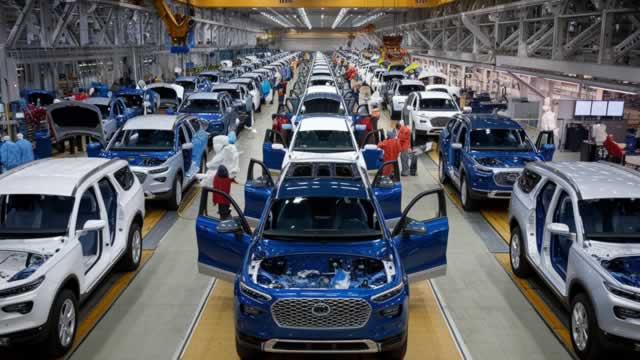
VISTEON CORP is an automotive supplier that designs and manufactures integrated modules used by original equipment manufacturers (OEMs) and their vehicle platforms. The business model is program- and platform-based: Visteon partners with OEMs during vehicle development, earns “design-in” positions through engineering collaboration, and then manufactures modules for the production life of those vehicle programs. A meaningful portion of revenue is tied to vehicle build volumes, with follow-on opportunities from platform refreshes, engineering changes, and aftermarket/service replacements.
From an economic standpoint, the value chain centers on translating OEM requirements into manufacturable systems—particularly in cockpit/user interface content and thermal/closure-related subsystems—then operating factories at scale while managing costs, quality, and delivery performance to maintain qualified supply status.
💰 Revenue Streams & Monetisation Model
Revenue is primarily earned through:
- Production supply (program-based): Sale of modules and components per vehicle produced under long-cycle contracts and purchase agreements.
- Engineering and development services: Upfront and change-order work tied to program launches, variants, and technical updates (often supporting customer “design-in” and sustaining engineering governance).
- Aftermarket/service: Replacement and service-related sales where applicable, typically smaller than production revenue but helpful for smoothing demand.
Margin drivers are less dependent on pricing power alone and more dependent on operational execution: manufacturing yield, logistics performance, cost-down programs, sourcing discipline, and the ability to protect profitability through engineering change management. Program mix and regional content also matter, because module complexity and supplier economics vary by platform and geography.
🧠 Competitive Advantages & Market Positioning
The central moat is qualification- and certification-driven switching costs, reinforced by program economics. Automotive content is “locked in” through testing, homologation, safety/quality requirements, and sustained production processes. Competitors can win share, but displacement is difficult once a supplier is qualified—especially when Visteon has embedded engineering know-how, established manufacturing know-how for specific module architectures, and integrated vendor processes within an OEM’s manufacturing workflow.
Visteon’s positioning is concentrated in automotive interior/cockpit systems and related electronic/thermal content, aligning it with suppliers whose differentiation is driven by integration, electronics/controls competence, and supply chain execution for complex modules.
- Lear Corporation: Broad presence in seating and interior systems with similar design-in dynamics. Lear competes for interior content platforms; Visteon’s emphasis is more focused on cockpit modules and adjacent subsystem content rather than seating-led diversification.
- Magna International: Wide portfolio across seating, interiors, powertrain and chassis components. Magna’s strength is scale and breadth; Visteon competes by being more specialized in certain cockpit and subsystem architectures and by leveraging engineering depth for program transitions.
- Continental: Strong in automotive electronics and cockpit-related technology. Continental can pursue electronics-heavy content; Visteon’s competitive approach typically emphasizes module integration and manufacturing execution in the cockpit and thermal-adjacent arenas, competing where OEMs value integrated supplier capability rather than standalone electronics.
This competitive landscape rewards suppliers that can repeatedly launch programs, meet quality targets, and deliver cost competitiveness through production ramp cycles—creating a practical barrier for competitors relying solely on bidding without demonstrated manufacturing stability.
🚀 Multi-Year Growth Drivers
Over a 5–10 year horizon, Visteon’s addressable growth is supported by structural trends that increase automotive content per vehicle and raise the complexity of interior and thermal systems:
- More vehicle content per platform: Growing electronics integration and more sophisticated user experiences increase demand for modules that combine hardware, controls, and systems engineering.
- Software-enabled vehicle architectures: Higher functional complexity and tighter integration requirements favor suppliers with engineering discipline and validated production processes.
- Thermal efficiency and electrification-related engineering needs: Electrified powertrains increase thermal management complexity across cabins and components, supporting demand for capable thermal/controls content.
- Platform longevity with refresh cycles: Even when total vehicle production fluctuates, OEM refresh strategies create recurring engineering change and variant opportunities that can extend profitable content periods.
- Geographic supply chain optimization: As OEM production footprints evolve, suppliers that can adapt manufacturing and logistics to customer needs can win and retain content across regions.
TAM expansion for the category is driven by higher module content complexity and integration depth rather than a purely volume-led growth story. The key for sustained value creation is maintaining design-in momentum and protecting margins through cost-down execution during program ramp and lifecycle changes.
⚠ Risk Factors to Monitor
- Automotive cyclicality: Revenue and margins are sensitive to production volumes, OEM build plans, and inventory normalization across the supply chain.
- Program ramp and quality execution risk: Defects, delivery issues, or cost overruns during manufacturing ramp can compress margins and damage customer confidence.
- Customer concentration and bargaining leverage: Large OEMs and platform decision cycles can shift pricing pressure, contract terms, or design-in priorities.
- Cost inflation and supply chain volatility: Input cost swings (labor, materials, logistics) can require rapid cost-down actions to preserve profitability.
- Technology and design displacement risk: Electronics integration and architectural shifts can change system boundaries, potentially enabling competitors with different integration strengths to win new designs.
- Capital intensity and footprint management: Manufacturing networks require disciplined investment to balance service levels, capacity utilization, and return on invested capital.
📊 Valuation & Market View
The market typically values automotive suppliers based on earnings power through the cycle, with emphasis on EV/EBITDA and free cash flow durability. Key factors that move valuation multiples include:
- Margin trajectory and cost discipline: Evidence of sustainable gross margin after ramp and under cost inflation improves perceived earnings quality.
- Program win quality: Content depth, lifecycle length, and the expected stability of customer demand increase confidence in forward earnings.
- Cash conversion: Working capital management and capital efficiency influence free cash flow credibility, especially through production cycles.
- Balance sheet resilience: Leverage and liquidity affect downside protection during downturns.
Because demand is cyclical, the market often assigns a premium to suppliers demonstrating consistent execution, credible cost-down pathways, and repeatable design-in outcomes.
🔍 Investment Takeaway
VISTEON’s long-term investment case rests on qualification-driven switching costs and the supplier’s ability to translate engineering integration into manufacturable, cost-competitive module output. Growth prospects are supported by higher vehicle content complexity in cockpit and thermal-adjacent systems, with value creation tied to maintaining design-in momentum, protecting margins through production lifecycle ramps, and managing cash generation through automotive cycles.
⚠ AI-generated — informational only. Validate using filings before investing.



















 Growth Catalysts