Vishay Intertechnology, Inc.

Vishay Intertechnology, Inc. (VSH) Market Cap

Vishay Intertechnology, Inc. has a market capitalization of $3.67B.

Financials based on reported quarter end 2025-12-31

Price: $26.94

0.03 (0.11%)

Market Cap: 3.67B

NYSE · time unavailable

CEO: Joel Smejkal

Sector: Technology

Industry: Semiconductors

IPO Date: 1980-03-17

Website: https://www.vishay.com

Vishay Intertechnology, Inc. (VSH) - Company Information

Market Cap: 3.67B · Sector: Technology

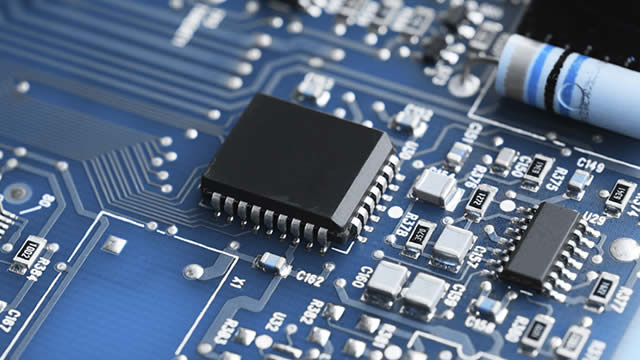
Vishay Intertechnology, Inc. manufactures and supplies discrete semiconductors and passive electronic components in Asia, Europe, and the Americas. It operates through six segments: Metal Oxide Semiconductor Field Effect Transistors (MOSFETs), Diodes, Optoelectronic Components, Resistors, Inductors, and Capacitors. The MOSFETs segment offers low- and medium-voltage TrenchFET MOSFETs, high-voltage planar MOSFETs, high voltage Super Junction MOSFETs, power integrated circuits, and integrated function power devices. The Diodes segment provides rectifiers, small signal diodes, protection diodes, thyristors/silicon-controlled rectifiers, and power modules. The Optoelectronic Components segment contains standard and customer specific optoelectronic components, such as infrared (IR) emitters and detectors, IR remote control receivers, optocouplers, solid-state relays, optical sensors, light-emitting diodes, 7-segment displays, and IR data transceiver modules. The Resistors segment offers resistors, which are basic components used in various forms of electronic circuitry to adjust and regulate levels of voltage and current. The Inductors segment provides inductors for use as an internal magnetic field to change alternating current phase and resist alternating current. The Capacitors segment offers capacitors, which store energy and discharge it when needed. The company sells its products under Siliconix, Dale, Draloric, Beyschlag, Sfernice, MCB, UltraSource, Applied Thin-Film Products, IHLP, HiRel Systems, Sprague, Vitramon, Barry, Roederstein, ESTA, and BCcomponents brands. It serves industrial, computing, automotive, consumer, telecommunications, power supplies, military, aerospace, and medical end markets. Vishay Intertechnology, Inc. was incorporated in 1962 and is headquartered in Malvern, Pennsylvania.

Analyst Sentiment

57%
Buy

Based on 10 ratings

Analyst 1Y Forecast: $0.00

Average target (based on 1 sources)

Consensus Price Target

Low

$25

Median

$25

High

$25

Average

$25

Downside: -7.2%

Price & Moving Averages

Loading chart...

📘 Full Research Report

ℹ️

AI-Generated Research: This report is for informational purposes only.

📘 VISHAY INTERTECHNOLOGY INC (VSH) — Investment Overview

🧩 Business Model Overview

Vishay Intertechnology, Inc. is a leading global manufacturer and supplier of discrete semiconductors and passive electronic components. The company serves a diverse range of industries, including automotive, industrial, computing, consumer electronics, telecommunications, military, aerospace, and medical markets. Vishay’s core offering comprises resistors, capacitors, inductors, diodes, MOSFETs, optoelectronic components, and other semiconductor devices. The company operates with a vertically integrated manufacturing model, with engineering and production facilities across the Americas, Europe, and Asia, which allows it to manage quality, logistics, and cost control effectively. Its broad product portfolio and global reach underpin a business model designed for resilience and scale, supporting both high-volume, standardized component sales and more specialized, application-specific solutions.

💰 Revenue Streams & Monetisation Model

Vishay’s revenue generation comes primarily from the sale of electronic components to original equipment manufacturers (OEMs), contract manufacturers, and distributors. The company’s business is divided into two main segments: semiconductors and passive components. Semiconductors include power MOSFETs, diodes, rectifiers, and optoelectronic products; passive components include resistors, capacitors, and inductors. Sales are diversified by end markets, with automotive and industrial representing significant portions of revenue, supported by the company’s multi-regional sales infrastructure. Pricing power is influenced by technological differentiation, demand cycles, and supply chain dynamics. Long-term supply agreements with industrial and automotive customers, in particular, strengthen revenue visibility and foster recurring sales. Distribution partners also enable a robust channel for reaching smaller customers and facilitating international sales.

🧠 Competitive Advantages & Market Positioning

Vishay’s competitive strengths arise from several key factors: - **Product Breadth & Scale**: With one of the industry’s broadest product catalogs, Vishay serves diverse customer needs, limiting dependence on any single product line or market. - **Manufacturing Footprint**: Global manufacturing and vertically integrated supply chains provide cost advantages, flexibility, and resilience to regional disruptions. - **Reputation & Relationships**: Decades of experience have established Vishay as a reliable supplier, with entrenched relationships among major OEMs, particularly in automotive and industrial sectors. - **Technological Capability**: Consistent investment in R&D allows Vishay to maintain leadership in performance and reliability, positioning its components in demanding applications and standards. - **Aftermarket & Lifecycle Support**: Vishay’s products are often designed into equipment with long service lives. The company’s ability to provide ongoing support, replacements, and compatible components for legacy systems is an important differentiator.

🚀 Multi-Year Growth Drivers

Vishay is positioned to benefit from several durable growth drivers: - **Electrification of Transportation**: Increasing electronic content per vehicle, especially with the shift toward electric vehicles (EVs), enhances demand for power management and reliability-critical components. - **Industrial Automation & IoT**: Adoption of automation technologies, sensors, and connected devices in factories and infrastructure boosts consumption of both passive and semiconductor components. - **Power Supply Miniaturization & Efficiency**: Trends in energy efficiency, renewables, and smaller, more efficient power conversion systems drive demand for Vishay’s advanced discrete devices and precision passives. - **Growth in Emerging Market Electronics**: Expanding manufacturing and consumption of electronics in Asia-Pacific and other emerging regions widen the addressable market. - **Aerospace & Medical Applications**: Stringent reliability requirements in aerospace, defense, and medical markets enable sustained demand for Vishay’s high-specification components and legacy system support.

⚠ Risk Factors to Monitor

While offering attractive growth potential, Vishay faces several ongoing risks: - **Cyclical Demand**: The electronics industry is vulnerable to business cycles, leading to periods of oversupply, price pressure, and inventory corrections. - **Pricing Pressure & Competition**: The market for commodity components is highly competitive, with risks of margin compression from low-cost Asian producers and shifts to alternative technologies. - **Raw Material Costs**: Fluctuations in the prices of metals and specialized materials can impact margins, especially if not passed through to customers. - **Customer Concentration**: Certain segments, such as automotive, entail a degree of customer concentration; the loss of a major client or unfavorable contract renegotiation could negatively impact results. - **Technological Change**: Rapid innovation or industry shifts towards integration (system-on-chip or multi-functional modules) could threaten demand for discrete components over time. - **Geopolitical & Supply Chain Risks**: Global operations expose Vishay to trade tensions, regulations, and disruptions due to natural disasters or pandemics.

📊 Valuation & Market View

Vishay is generally valued as a mature, diversified components provider, typically trading at earnings, book value, and free cash flow multiples that reflect both its stability and the cyclicality of its end markets. The company’s balance sheet discipline and consistent cash flows support shareholder return policies such as dividends and share repurchases. Investors often view Vishay as a proxy for global industrial and electronics demand, appreciating its ability to sustain profitability throughout business cycles, yet recognizing that upside is moderated by the commoditized nature of many product lines and the capital-intensive nature of manufacturing. Strategic acquisitions and operational improvements can serve as additional sources of value creation, and market sentiment often favors Vishay during periods of robust capital expenditure in automotive and industrial sectors.

🔍 Investment Takeaway

Vishay Intertechnology offers investors exposure to the growth of electronic content across automotive, industrial, and consumer markets, supported by a broad product portfolio, global scale, and entrenched customer relationships. The company’s ability to navigate industry cycles, its diversified revenue base, and focus on innovation and operational efficiency suggest resilience and ongoing relevance. Risks related to market cyclicality, competition, and global supply chain uncertainties must be carefully considered, but Vishay’s disciplined capital allocation and established industry position help mitigate these factors. For investors seeking a stable participant in the electronic components landscape, capable of delivering steady returns while benefiting from secular trends in electrification and automation, Vishay represents a credible, long-term opportunity.

⚠ AI-generated — informational only. Validate using filings before investing.
Fundamentals Overview

Loading fundamentals overview...

Vishay’s Q4 showed strong demand signal momentum (book-to-bill 1.2; backlog up nearly 14% to $1.3B; revenue $801M above the guidance midpoint). Management attributes the outperformance to Vishay 3.0 capacity readiness, improved lead times, and cross-selling across OEM/EMS/distribution—especially AI-related power and smart-grid capacitors. However, the Q&A reveals the core pressure points are still operating/margin related: Newport fab remains a measurable headwind (~130 bps in Q4; 600 bps impact to MOSFETs segment) even as management guides Newport drag to 50–75 bps in 2026 and targets gross profit neutral by exit of Q1. On pricing, they emphasize annual contracts (price decrease less than historical), plus early Q1 timing of metal-driven price increases. While management keeps market-growth expectations mid-to-high single digits (and says ASP decline is lower than historical), analysts probed margin durability and industry assumptions—highlighting that underwriting the margin path through Newport ramp and metals is the main skepticism versus the upbeat order narrative.

AI IconGrowth Catalysts

  • Expanded capacity used to clear backlog while generally maintaining competitive lead times amid shortages/escalations
  • Vishay 3.0 capacity readiness translating into revenue generation; improving customer engagement and willingness to scale long-term
  • Automotive: design activity and bookings tied to electrification/ADAS/traction inverters/onboard chargers/infotainment
  • Industrial power: increased shipments of high-voltage DC power capacitors into smart grid infrastructure; production project awarded for 2026 start
  • AI-related power: customers adding Vishay to BOMs for both semiconductors and passives; demand tied to AI server production and extended component lead times
  • Healthcare: Europe demand strength (hearing aids, implantables, diagnostic equipment)

Business Development

  • Automotive OEMs and tier ones: vehicle platform opportunities and mitigation of shutdown risk via capacity/lead-time support
  • Industrial smart grid customers: won another smart grid infrastructure project in the Americas (production in 2026); discussions extend through 2032
  • EMS customers: shift from long lead times to a consistent and growing EMS business (orders now at three-year highs)
  • Customer audits at Newport facility: four audits planned for Q1 (including two new customers)
  • Broad channel cross-sell: strategy delivering results across OEM, EMS, and distribution channels

AI IconFinancial Highlights

  • Revenue: $801M, slightly above Q4 guidance midpoint ($790M) and +1% sequential; +12% YoY (11% volume, partially offset by -1% ASP)
  • Book-to-bill: 1.2 at quarter end (up from previously shared 1.15 run rate); semis 1.27; passives 1.13
  • Backlog: $1.3B; 4.9 months; grew nearly 14% in Q4 with both semis and passives contributing
  • Gross margin: 19.6% (modestly above guidance midpoint and Q3); negative impact from Newport fab ~130 bps
  • Segment margin impact: MOSFETs segment gross margin reduced by ~600 bps in Q4 (improved vs ~720 bps impact in Q3)
  • GAAP operating margin: 1.8% vs 2.4% in Q3; EBITDA margin: 8.8% vs 9.6% in Q3
  • Cash conversion: improved to 125 days (from 130 days); DSO improved 53 -> 48 days aided by AR securitization
  • Tax: Q4 tax expense guided at $4–$8M; actual within range; GAAP effective tax rate described as not meaningful due to small pretax income/loss
  • CapEx: $95M in Q4 (including $75M for capacity expansion); full-year CapEx $273M vs guidance $300M–$350M due to equipment delivery delays to Q1

AI IconCapital Funding

  • No share repurchases in Q4 (only $13.6M quarterly dividend)
  • Global cash & short-term investments: $515M; net borrowing position in the US
  • Revolver outstanding: $219M; $254M accessible on revolver at current EBITDA levels
  • Operating cash flow: $149M operating cash in Q4 (included $62M from AR securitization)
  • Free cash flow: $55M in Q4 (vs -$24M in Q3), partially benefiting from securitization offsetting high CapEx
  • Company expects negative free cash flow in 2026 due to capacity expansion plans

AI IconStrategy & Ops

  • Vishay 3.0: capacity readiness enabling shorter/competitive lead times and deeper technical engagements; reengaging previously underserved/inactive customers
  • Subcontractor initiative freeing capacity for high-growth products and broadening share of customer bill of materials
  • Qualified additional diodes, inductors, and capacitor products during the quarter; over 10,000 part numbers qualified since initiative began
  • Manufacturing/capacity ramps: Newport ramp-up ongoing; Taiwan and Turin, Italy ramping and product qualifications underway
  • Silicon carbide roadmap: released eight Gen 2 1200V planar MOSFETs (industrial use) and first trench MOSFET (SiC Gen 3 1200V) for industrial and automotive applications
  • Solution selling/reference designs released in Q4: 2 eFuse designs (40A bidirectional; 20A unidirectional) and an isolated current sensor for high-voltage

AI IconMarket Outlook

  • 2026 revenue guidance: $800M–$830M
  • Asia expected lower than Q4 due to Lunar New Year impact; Americas/Europe make up the difference
  • Sequential revenue increases expected in each of five growth segments: automotive electronic content, industrial power, healthcare, aerospace & defense, AI computing
  • 2026 gross margin guidance: ~19.9% ± 50 bps (including tariff impacts and expected higher input costs)
  • Newport drag expected: 50–75 bps; still expects to exit Q1 with Newport gross profit neutral and accretive thereafter
  • 2026 SG&A: $153M ± $2M; expects Q1 run-rate for each quarter of 2026
  • Tax: expected tax expense $2–$4M in Q1 assuming similar mix among jurisdictions
  • Strategic market growth framing (from Q&A): management still sees industry mid-to-high single digit growth and aims to outperform (segment-by-segment: industrial power mid-to-high single digit; automotive flat-to-mid single digit for Vishay; aerospace & defense mid-to-high single digit; AI mid-to-high single digit; healthcare mid-single digit range)

AI IconRisks & Headwinds

  • Newport fab drag: ~130 bps in Q4; MOSFET segment reduced by ~600 bps gross margin impact (improved from ~720 bps in Q3); continued ramp risk until at/after Q1 2026
  • Elevated metals and material costs continued to pressure margins (countered via volume and pricing actions)
  • US aerospace/defense spending delays impacting resistors revenue (continued delays cited)
  • Automotive near-term volatility from year-end holiday pull rates (Q4 revenue auto down 3.4% vs Q3; December holiday weeks reduced pull rates)
  • US government shutdown impacted aerospace defense billings/projects and drove slight revenue decline (-1.2% vs Q3)
  • Receivable securitization used as funding/DSO lever (cash benefit but indicates ongoing working-capital/capacity funding needs)

Sentiment: MIXED

Note: This summary was synthesized by AI from the VSH Q4 2025 earnings transcript. Financial data is complex; please verify all metrics against official SEC filings before making investment decisions.

Loading financial data and tables...
📁

SEC Filings (VSH)

© 2026 Stock Market Info — Vishay Intertechnology, Inc. (VSH) Financial Profile