
📘 WEYERHAEUSER REIT (WY) — Investment Overview
🧩 Business Model Overview
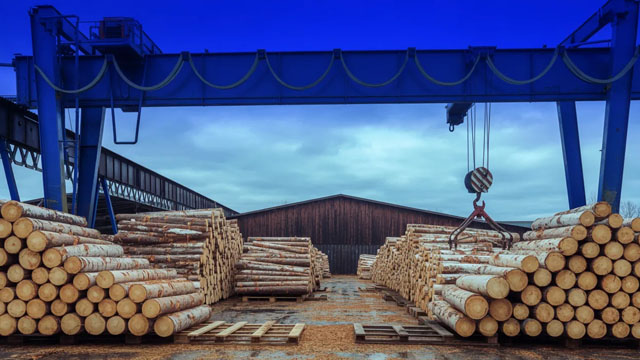
Weyerhaeuser operates as a vertically oriented timberland owner and manager. The core “engine” is ownership of productive forest acreage, active silviculture, and harvesting execution that converts long-duration biological growth into saleable forest products. Value is realized through (i) selling logs/wood fiber to mills and (ii) leveraging the spatial fit between timberlands and downstream processing capacity—reducing procurement and hauling friction for customers. The company’s real asset base also enables selective monetization of land and non-core assets when market conditions support efficient redeployment.
💰 Revenue Streams & Monetisation Model
- Timber harvest and product sales (primary): Revenue is driven by harvest volumes and prevailing wood-fiber pricing across product streams (sawlogs, pulpwood, and other fiber categories). Margins typically track harvest timing, logging/transport costs, and the quality mix of the harvested stands.
- Long-term supply arrangements and customer relationships: While pricing can be market-linked, the company’s scale and managed forest productivity support repeatable fiber flows to industrial customers, improving utilization consistency for counterpart mills.
- Land and related asset monetisation (secondary): Sales or monetization of land parcels, rights, and specialty properties contribute additional optionality. These tend to be less frequent than harvest-driven revenue but can improve total return across cycles.
Overall monetisation is structurally weighted toward real asset production rather than short-cycle operating exposure. Margin drivers are largely operational (harvesting efficiency, fiber mix, logistics) and macro-relative (housing/industrial wood demand affecting end-market prices).
🧠 Competitive Advantages & Market Positioning
Weyerhaeuser’s competitive edge is rooted in durable geographic cost advantage and asset scarcity. Timberland productivity is heterogeneous across regions; productive acres with favorable soils, growth rates, and weather resilience are difficult to replicate. In addition, proximity to industrial wood users and processing infrastructure lowers delivered cost for customers, supporting Weyerhaeuser’s ability to win and retain supply relationships.
- Geographic & logistical advantages: Timberlands positioned near rail/road corridors and processing capacity reduce transportation costs and delivery lead times, effectively lowering the “delivered wood” cost for customers.
- Scale and forest management capability: Large acreage and active silviculture improve resource planning, harvested mix optimization, and operational continuity across long growth cycles.
- Long-duration asset stickiness: Competitors cannot rapidly scale productive timberland. Biological growth timelines and land acquisition constraints create structural persistence in supply capability.
Competitive benchmarking:
- Rayonier (RYN): Competes primarily as a timberland-focused operator with different regional exposure and product mix emphasis.
- PotlatchDeltic (DLB): Timberland owner with its own regional network and customer relationships; faces similar cycles but not identical geographic/logistical footprints.
- Hancock Timber Resource (HTI): Another timberland manager/operator; competes for fiber supply and land monetisation, but with differing acreage quality and regional proximity to end markets.
Compared with these timberland-focused peers, Weyerhaeuser typically emphasizes operational breadth and logistics fit across its key regions, aiming to convert acreage productivity into dependable delivered fiber economics.
🚀 Multi-Year Growth Drivers
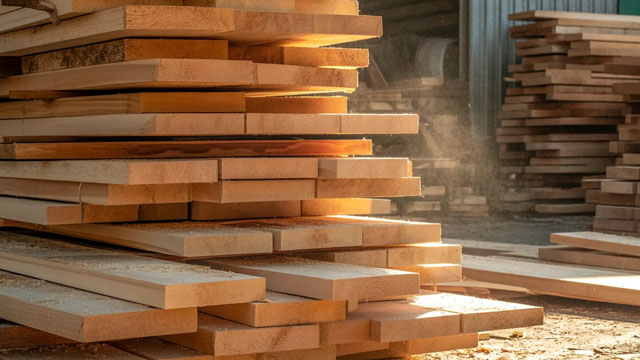
- Demand for wood in construction and engineered products: Structural use cases for wood—particularly engineered wood products—can support higher-value fiber utilization and improved demand durability versus purely paper/commodity uses.
- Conversion of biological growth into higher-grade outputs: Ongoing forest management upgrades (species selection, thinning strategy, rotation optimization) can improve yield quality and realized pricing per harvested acre.
- Decarbonization and ecosystem value monetisation: Forest assets benefit from rising policy and corporate focus on carbon stewardship. This can create incremental revenue opportunities and improve the investment attractiveness of sustainably managed timberlands.
- Optionality from land and non-core monetization: Over a multi-year horizon, selective sales and redeployment can sharpen capital efficiency, particularly when land-use alternatives offer attractive embedded value.
- Resilience from supply-side constraints: Limited availability of high-quality timberland constrains competitive supply growth, supporting the long-term value of existing productive acres.
⚠ Risk Factors to Monitor
- Timber and wood-fiber price cycles: Revenues are sensitive to commodity end-markets (housing, industrial demand). Harvest timing and product mix can partially mitigate, but not eliminate, cyclicality.
- Climate, pests, and operational disruption: Biological and weather risks can impair growth rates, reduce recoverable volume, and increase salvage or replanting costs.
- Regulatory and environmental requirements: Forestry practices, land-use restrictions, protected habitat rules, and reporting standards can affect harvest schedules and cost structure.
- Capital intensity and balance-sheet/financing conditions: While timberland is a long-lived asset, sustaining silviculture and meeting cash obligations can be influenced by interest-rate and credit conditions.
- REIT compliance and payout durability: The structure requires consistent tax-compliant distributions; business performance and capital allocation must remain aligned with REIT requirements.
📊 Valuation & Market View
Markets typically value timberland REITs using a blend of cash flow fundamentals and real-asset value. In practice, investors monitor:
- Dividend/total payout capacity: Sustainable free cash flow relative to distributions is central for REIT-focused investors.
- Operating cash flow drivers: Harvest volumes, delivered cost trends, and realized pricing spreads across product categories.
- Asset value considerations: Timberland value and replacement cost logic influence valuation floors, especially when future growth and carbon stewardship are emphasized.
- Interest-rate sensitivity: Discount rates and cost of capital affect the equity value of income-oriented real assets.
Key valuation “movers” are therefore tied to fiber economics (pricing and cost), harvest discipline, and the perceived durability of real-asset cash flows across cycles.
🔍 Investment Takeaway
Weyerhaeuser’s long-term investment case rests on the structural economics of owning productive timberlands: geographic/logistical cost advantage, operational scale in forest management, and the scarcity and durability of high-quality acreage. While outcomes remain exposed to timber-cycle volatility and environmental/regulatory constraints, the asset-driven business model and supply-side limitations create a credible foundation for resilient cash generation over a multi-year horizon.
⚠ AI-generated — informational only. Validate using filings before investing.












 Growth Catalysts