
📘 AGCO CORP (AGCO) — Investment Overview
🧩 Business Model Overview
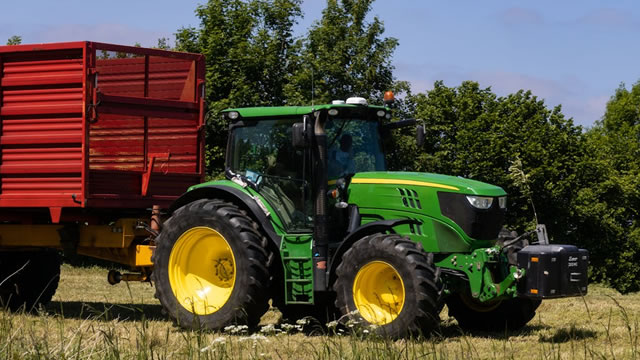
AGCO designs and manufactures agricultural equipment, including tractors, combines, hay tools, and associated implements, then distributes products through a global network of independent dealers. The dealer channel is central to the business model: dealers provide sales coverage, financing introductions, and—critically—ongoing service and parts support.
The long-term value creation mechanism is the installed base dynamic. After tractors and machinery enter farmers’ fleets, customer economics tend to favor OEM-aligned service, scheduled maintenance, and replacement parts. That creates a recurring service-and-parts layer that partially offsets the cyclicality of new equipment demand driven by planting seasons and farm income.
💰 Revenue Streams & Monetisation Model
AGCO monetises through two primary streams:
- Equipment sales (tractors, combines, and implements): more cyclical, linked to replacement cycles and seasonal demand conditions.
- Parts and service: structurally more resilient due to the large installed base, higher frequency of spend over the asset life, and service requirements tied to uptime.
Margin drivers typically include (1) the mix shift toward parts and service, (2) operational execution in manufacturing and supply chain sourcing, (3) dealer-funded promotional discipline, and (4) pricing/discounting discipline in the face of demand swings.
🧠 Competitive Advantages & Market Positioning
AGCO’s core moat is best understood as installed-base stickiness plus channel depth rather than pure product brand alone. Once a fleet is in operation, farmers and dealers have strong incentives to source compatible parts and maintain uptime using OEM-aligned systems and service practices. This creates practical switching costs (parts compatibility, service know-how, and downtime risk) and encourages recurring demand through the dealer network.
Competitive benchmarking:
- Deere & Company: broad premium positioning and strong integrated digital ecosystem emphasis. Deere’s competitive edge also includes scale and dealer support, but the company’s model is more tightly coupled to its own platform.
- CNH Industrial (Case IH / New Holland): extensive product line and global dealer coverage. CNH competes aggressively on breadth and local market fit.
- Kubota: strength in compact and specialty equipment segments with strong distribution relationships in key geographies.
AGCO positioning versus rivals: AGCO competes as a global multi-brand OEM with a focus on tailored equipment solutions across crop needs and farm sizes, supported by extensive dealer service infrastructure. The competitive differentiator is the ability to convert the installed base into durable parts/service revenue while maintaining product competitiveness across geographies and farm segments.
🚀 Multi-Year Growth Drivers
- Mechanisation and productivity demand: agricultural output growth depends on labor efficiency, stronger crop yields, and better farm economics—benefiting equipment penetration and replacement needs.
- Replacement-cycle support: machinery is capital-intensive; aging fleets and rising productivity expectations drive periodic equipment refreshes.
- Precision agriculture adoption: as farmers seek input optimization (seed, fertilizer, chemicals) and yield stability, adoption of telematics, guidance, and connected workflows increases the value of integrated equipment and service.
- Higher life-cycle spend: even when equipment units fluctuate, the installed base supports service and parts volumes, helping stabilise cash generation over a cycle.
- Dealer network monetisation: dealer coverage expansion and service capability upgrades increase attachment rates for parts and service, reinforcing recurring revenue.
⚠ Risk Factors to Monitor
- Agricultural cycle sensitivity: equipment demand tends to track farm profitability and credit availability; downturns can compress unit volumes and pricing.
- Credit and financing conditions: while dealers often absorb a portion of financing distribution, tighter credit standards can slow customer purchases.
- Input cost and supply chain volatility: component sourcing, logistics, and manufacturing cost inflation can pressure margins if pricing power is insufficient.
- Competitive intensity: major OEMs compete on pricing, product incentives, and dealer programs, which can affect gross margins.
- Regulatory and emissions compliance: technology requirements and compliance costs influence product roadmaps and capex intensity.
📊 Valuation & Market View
The market typically values agricultural equipment OEMs using EV/EBITDA and earnings power metrics, with a premium often assigned when service-and-parts mix improves and when management demonstrates cycle-resilient cash generation. Key valuation swing factors include:
- Parts/service attachment and demonstrated durability of installed-base revenue.
- Margin structure: pricing discipline, cost absorption, and operating leverage through the cycle.
- Net working capital and cash conversion: inventory management and dealer channel health.
- Balance sheet risk: leverage and funding costs that affect downside protection in downturns.
In this sector, valuation is often less about near-term forecasting precision and more about the credibility of mid-cycle earnings resilience and the durability of service revenue.
🔍 Investment Takeaway
AGCO’s investment case rests on an installed-base-led model where equipment sales feed a growing stream of recurring parts and service. The moat is reinforced by practical switching frictions tied to fleet compatibility, OEM-aligned maintenance practices, and a deep dealer network. Over a full cycle, the key differentiator is the ability to sustain service monetisation and margin discipline while managing the inherent cyclicality of new equipment demand.
⚠ AI-generated — informational only. Validate using filings before investing.











 Growth Catalysts