Armada Hoffler Properties, Inc.

Armada Hoffler Properties, Inc. (AHH) Market Cap

Armada Hoffler Properties, Inc. has a market capitalization of .

No quote data available.

CEO: Shawn J. Tibbetts

Sector: Real Estate

Industry: REIT - Diversified

IPO Date: 2013-05-08

Website: https://www.armadahoffler.com

Armada Hoffler Properties, Inc. (AHH) - Company Information

Market Cap: -|Sector: Real Estate

Company Profile

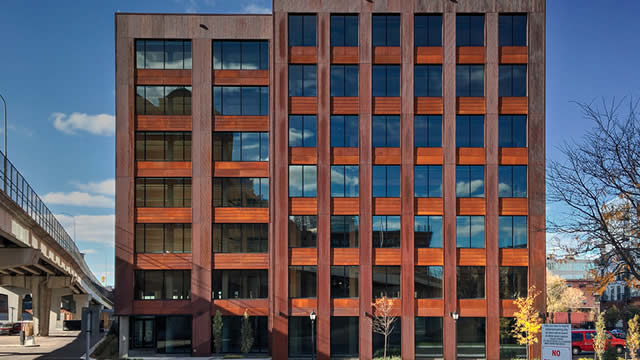
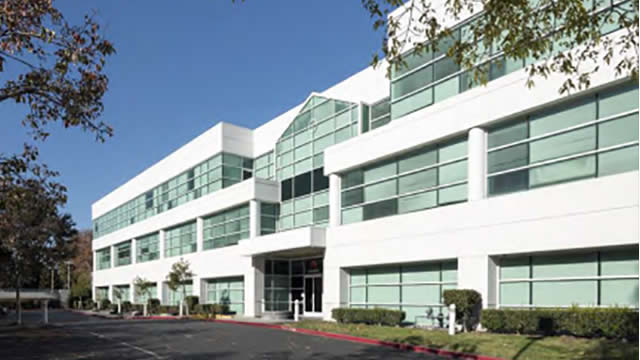
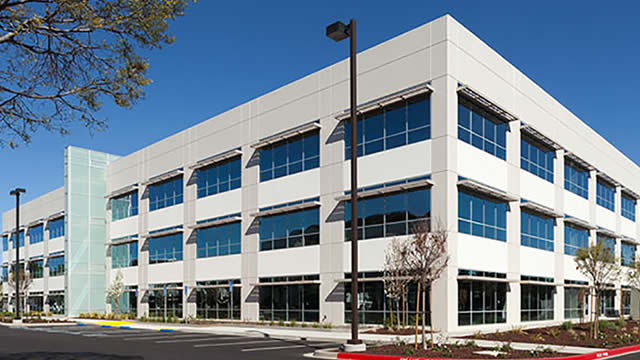
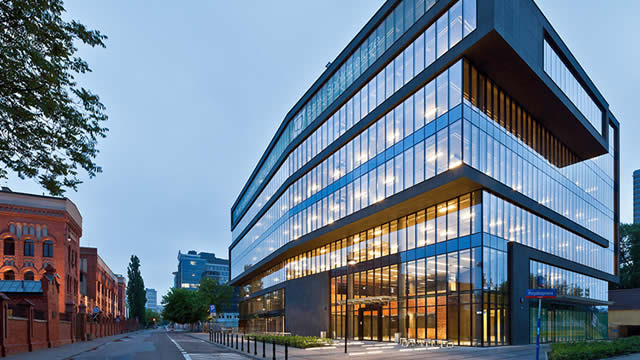
Armada Hoffler Properties, Inc. (NYSE: AHH) is a vertically-integrated, self-managed real estate investment trust (REIT) with four decades of experience developing, building, acquiring, and managing high-quality, institutional-grade office, retail, and multifamily properties located primarily in the Mid-Atlantic and Southeastern United States. In addition to developing and building properties for its own account, the Company also provides development and general contracting construction services to third-party clients. Founded in 1979 by Daniel A. Hoffler, the Company has elected to be taxed as a REIT for U.S. federal income tax purposes.

Analyst Sentiment

54%
Hold

From 4 Active Polls

1Y Forecast: $8.25

▲ +0.0% Potential Upside

Consensus Target Metrics

Low Bound

$8

Median

$8

High Bound

$9

Average

$8

Price & Moving Averages

Loading chart...

🎯 Wall Street Analyst Intelligence Report

1-Year structural target targets, chart projections, and sentiment maps.

Average 1Y Target
$8.25
▲ +22.04% Upside
Low Target
$7.50
11% Risk
Median Target
$8.25
22% Mid
High Target
$9.00
33% Max

Consensus Trend Projection

Trailing closures vs. 12-month metrics map.

Analyst Vote Distribution

Aggregate institutional coverage sentiment weights.

Sentiment volume allocation data unavailable.

Historical valuation matrix unavailable.

📘 Full Research Report

ℹ️

AI-Generated Research: This report is for informational purposes only.

📘 ARMADA HOFFLER PROPERTIES REIT INC (AHH) — Investment Overview

🧩 Business Model Overview

AHH is a commercial real estate REIT that generates cash flows by owning, operating, and selectively developing income-producing properties, with an emphasis on leasing space to operating businesses and maintaining the asset quality of its portfolio. The value chain is straightforward: (1) acquire/develop properties in targeted submarkets, (2) lease space on contractual terms (often with recurring base rent plus recoveries), (3) manage occupancy, tenant retention, and leasing spreads through active property and leasing management, and (4) recycle capital through redevelopment and selective acquisitions that meet underwriting return targets.

In this model, stability comes from lease contracts and tenant demand within specific geography-driven markets; durability comes from the ability to keep properties functional and market-relevant through capex, leasing execution, and asset repositioning when needed.

💰 Revenue Streams & Monetisation Model

The core monetisation is recurring rent, supported by expense reimbursement structures commonly used in commercial leases. Key revenue components include:

  • Base rent (recurring): predictable contractual income, sensitive primarily to occupancy and lease-up/renewal timing.
  • Recoveries and reimbursements: pass-throughs for operating expenses reduce volatility versus pure gross-rent models.
  • Percentage rent / tenant-linked revenue (where applicable): can add upside when tenant sales perform, but typically cannot be relied upon as a base-case income stream.
  • Development / redevelopment value creation: where AHH funds capital projects, the monetisation is realized through higher stabilized rents and improved occupancy after repositioning.

Margin drivers in this sector are mainly occupancy and leasing spreads, the stickiness of tenant footprints, disciplined capital allocation (capex intensity and timing), and the extent to which operating costs are recoverable through the lease structure.

🧠 Competitive Advantages & Market Positioning

AHH’s moat is best described as a combination of location-specific asset quality and lease-based switching costs. Real estate is not easily portable: tenants face non-trivial relocation costs (build-out, downtime, marketing and customer flow disruption, and contractual penalties/termination frictions). That creates inertia in occupancy and supports renewal probability when properties maintain competitive access, visibility, and functional layout.

Additionally, AHH benefits from geographic concentration and market familiarity—a practical advantage in leasing cycles and underwriting because submarket conditions, local demographic demand, and contractor/tenant networks are learned and operationalized over time. In commercial real estate, this tends to translate into better underwriting discipline and execution speed, which can matter as spreads compress during tougher credit and capital-market regimes.

Competitive benchmarking (public REIT peers):

  • Kimco Realty (retail REIT): broader geographic footprint with a heavier emphasis on large-scale retail portfolios. AHH’s positioning is more concentrated, favoring localized execution and asset-level repositioning rather than sheer national breadth.
  • Regency Centers (retail REIT): quality-focused retail centers, often with strong grocery and service anchors. AHH competes for tenants and capital with similar “asset quality” principles, but its differentiator is typically the targeted submarket approach and ability to improve properties through redevelopments.
  • Prologis (industrial REIT): structurally different asset class and tenant base. While Prologis competes for capital and institutional real estate exposure, it does not replicate AHH’s tenant-location switching-cost dynamics tied to localized commercial retail/office footprints.

🚀 Multi-Year Growth Drivers

Over a 5–10 year horizon, AHH’s growth outlook is most sensitive to property-level fundamentals and capital allocation discipline rather than broad “top-line” expansion. Key drivers include:

  • Occupancy and leasing execution: net absorption and renewal rates within targeted submarkets can improve cash flow without requiring the balance sheet to scale rapidly.
  • Redevelopment/repositioning value creation: improving tenant mix, updating merchandising/accessibility, or reconfiguring space can increase rent potential and reduce future vacancy risk.
  • Operating cost efficiency: expense controls and strong lease recoverability can protect margins even when inflation pressures operating costs.
  • Capital recycling: selective dispositions and reinvestment into higher-return projects can compound returns when acquisition/disposition spreads are favorable.
  • Tenant demand in targeted markets: demographic and employment trends in AHH’s footprint can support long-run space demand and stabilize renewal outcomes.

⚠ Risk Factors to Monitor

  • Interest rate and refinancing risk: REIT leverage and debt maturity schedules can magnify downside if borrowing costs rise or capital markets tighten.
  • Tenant credit and rent collections: economic slowdowns can increase defaults, concessions, and vacancy duration.
  • Lease rollover concentration: clusters of expirations can pressure occupancy and renewal spreads if leasing conditions soften.
  • Property-level obsolescence: for commercial real estate, functional layout, access, and tenant mix matter; insufficient capex can reduce rent durability.
  • Concentration risk: geographic or asset-type concentration can underperform if local demand weakens.
  • Regulatory and tax environment for REITs: compliance with REIT requirements (income/asset/dividend tests) constrains flexibility in capital structure and operations.

📊 Valuation & Market View

The market typically values commercial REITs using cash-flow and asset-based metrics such as FFO/AFFO-based multiples and enterprise value relative to operating cash flows, with additional emphasis on net asset value (NAV), including assumptions around capitalization rates and development pipeline risk.

Key valuation drivers include:

  • Interest rate regime and credit spreads: higher cost of debt can compress valuation through higher cap rates and reduced affordability for borrowers/tenants.
  • Same-property cash flow trends: occupancy, renewal spreads, and expense recovery strength move the core earnings quality.
  • Leverage and debt maturity profile: the ability to refinance without punitive terms protects per-share cash flows.
  • Capex needs and development execution: underinvestment can hurt future rent durability; overinvestment can dilute returns if leasing does not materialize.

🔍 Investment Takeaway

AHH’s long-term investment case rests on the structural friction of commercial space relocation (real, observable switching costs), the earnings durability of lease-based cash flows, and disciplined asset-level management in targeted submarkets. The moat is not an abstract brand; it is the combination of location-specific asset quality, tenant inertia created by lease terms and build-out costs, and the capability to preserve and improve income streams through redevelopment and cost management. The principal debate for investors centers on debt/refinancing resilience, leasing execution through cycles, and the risk-adjusted returns of its capital deployment.


⚠ AI-generated — informational only. Validate using filings before investing.
📊 AI Financial Analysis

Powered by StockMarketInfo
Earnings Data: Q Ending 2026-03-31

"AHH (2026-03-31, Q1) reported Revenue of $52.3M and Net Income of -$30.4M (EPS -$0.33). On a YoY basis, revenue declined from $114.6M (2025-03-31, Q1) to $52.3M, a -54.3% YoY drop, while net income deteriorated from -$2.8M to -$30.4M (worsening by -978.2% YoY). QoQ, revenue fell from $75.6M in 2025-12-31 (Q4) to $52.3M (-30.8% QoQ), and net income swung from +$2.1M to -$30.4M (a -1,569% QoQ reversal). Profitability is contracting sharply: gross margin turned negative at -3.4% in Q1 2026 versus +5.8% in Q4 2025, and net margin was -58.1% versus +2.7% in Q4. Operating income remains positive in Q1 ($13.1M), but net income is heavily impacted by below-the-line items (income before tax -$0.5M). Cash flow data for this quarter is not provided (reported operating cash flow/free cash flow show as 0), so cash generation quality cannot be verified from Q1. Balance sheet leverage is high: total assets are $2.48B with long-term debt of $1.36B and equity of $760M; net debt remains elevated at $1.33B. Total shareholder return appears weak: the stock price is $6.05 with a -7.8% 1-year change and no evidence of strong momentum or meaningful buyback/dividend support in the quarter."

Revenue Growth

Neutral

Revenue fell -54.3% YoY (from $114.6M in 2025-03-31 to $52.3M in 2026-03-31) and -30.8% QoQ (from $75.6M in 2025-12-31 to $52.3M).

Profitability

Neutral

Margins deteriorated materially: gross margin turned negative (-3.4%) vs +5.8% in Q4 2025, and net margin collapsed to -58.1% from +2.7% QoQ. Net income worsened to -$30.4M (EPS -$0.33).

Cash Flow Quality

Neutral

Q1 2026 cash flow fields are reported as 0, limiting validation of operating cash generation. Prior quarters showed positive OCF (e.g., Q4 2025 OCF +$26.7M). No dividend/buyback support is evident in Q1 2026.

Leverage & Balance Sheet

Caution

Balance sheet is heavily levered but equity is positive ($760M). Total assets are $2.48B with long-term debt $1.36B; net debt is $1.33B. Leverage remains a key risk given negative net income.

Shareholder Returns

Neutral

Price performance is weak: -7.8% over 1 year and no >20% momentum. Dividend yield shown in ratios is ~5.1%, but earnings deterioration and missing Q1 cash flow reduce confidence in near-term sustainability.

Analyst Sentiment & Valuation

Neutral

Consensus target ~$8.25 vs current $6.05 implies upside, but the fundamentals deteriorated sharply in the most recent quarter, making valuation support less reliable.

Disclaimer:This analysis is AI-generated for informational purposes only. Accuracy is not guaranteed and this does not constitute financial advice.

Fundamentals Overview

Loading fundamentals overview...

AH Realty Trust’s Q1 2026 shows a clean transition from multifamily and noncore businesses into a pure-play retail and mixed-use office REIT, with outperformance in go-forward earnings. FFO as adjusted came in at $0.15/share, above expectations, and management raised full-year 2026 guidance to $0.51–$0.55. Operating momentum is supported by strong leasing outcomes and tenant brand strength (Trader Joe’s, Golf Galaxy, F1 Arcade) and office occupancy recovery catalysts (Interlock, Town Center, Southern Post). The biggest balance-sheet lever is the planned sale of 11 of 14 multifamily assets for $562 million to an affiliate of Harbor Group International, expected to help drive net debt down toward a 5.5x–6.5x target. Capital return is underway via ~$24.1 million repurchases YTD at ~$5.70. Near-term risks remain concentrated in retail store closures and quarter-to-quarter office leased-vs-economic occupancy volatility tied to free-rent structures, plus refinancing uncertainty in a tougher office debt market.

AI IconGrowth Catalysts

  • Retail economic occupancy lift expected in 2H26 driven by rent commencements at Columbus Village and the Interlock (no specific year-end range given in transcript).
  • New retail tenant/additions: Trader Joe’s at Columbus Village (visits ~2x the other market location), Golf Galaxy (top-3 nationwide ranking), and F1 Arcade at the Interlock (30% YoY visit increase; 45% increase in parking volume).
  • Office economic occupancy gains expected from Interlock and Town Center rent commencements, plus ABR expansion at Interlock (~$1.0m new ABR, majority commencing Q3/Q4).
  • Southern Post leasing momentum: leased 22,000 sq ft to industrious this quarter and an additional 9,000 sq ft last week; office lease occupancy >93%; economic occupancy expected >60% by YE26 and >80% by Q1 2028 (free rent burn-off).
  • Office re-leasing/turnover catalysts: re-lease 8,000 sq ft recaptured at 4525 Main with lease execution expected by mid-2026; backfill planned for One Columbus (lease expirations with positive spreads for new tenants).

Business Development

  • Binding agreement to sell 11 of 14 multifamily assets for $562 million to an affiliate of Harbor Group International (close expected in coming weeks).
  • Construction business sale completed via a wind-down disposition to the company’s employees (described as best buyer; price described as north of gross profit otherwise due to shareholders).
  • Allure disposition reportedly closed last week by partner (partner name not provided in transcript).

AI IconFinancial Highlights

  • Q1 FFO as adjusted attributable to common shareholders: $0.15 per diluted share, above expectations; Q1 FFO attributable to common shareholders: $0.20 per diluted share, above expectations.
  • Q1 net operating income (NOI): $34.7 million (+1.8% YoY) and approximately $0.7 million ahead of guidance.
  • AFFO: $19.9 million or $0.19 per diluted share; payout ratio 72% (AFFO exceeds current cash dividend as outlined in supplemental).
  • Updated full-year 2026 FFO as adjusted guidance raised to $0.51–$0.55 per diluted share.
  • Economic vs leased occupancy framing introduced: retail leased 94.8% vs economic 92.5%; office leased 96% vs economic 87.7%.
  • bps-specific item: leased occupancy at One Columbus expected to decline by roughly 10 basis points in Q2 due to anticipated lease expirations (economic occupancy expected to slightly increase).
  • Same-store NOI outlook: retail growth to slow through 2026; annual same-store NOI growth expected within 1%–2%. Office annual same-store NOI growth expected within 1.4%–2.5%.
  • Tax/timing impact clarification: improved visibility into tax considerations for residential transactions; management expects no material tax consequences to the REIT (reallocated acquisition capital accordingly).

AI IconCapital Funding

  • Share repurchases: repurchased ~4.3 million shares in Q1; year-to-date ~4.2 million shares for $24.1 million at ~$5.70 weighted average price (~>4% of common equity stated).
  • Target leverage: intends to use ~$750 million of expected asset-sale proceeds to reach 5.5x–6.5x net debt to total adjusted EBITDA.
  • Liquidity: ended quarter with approximately $142 million.
  • Debt paydown expectation at transformation completion: approximately $700 million total debt paydown (noted as material reduction to reshape capital structure).
  • Current leverage metric: net debt to total adjusted EBITDA was 8.3x at quarter end (temporarily elevated vs prior quarter).

AI IconStrategy & Ops

  • Transformation milestones: entered binding agreement to sell multifamily assets (11 of 14) for $562 million; completed construction business sale; advanced wind-down of real estate financing platform via dispositions.
  • Remaining multifamily disposition: marketing 2 remaining multifamily assets in Gainesville; intend to retain only Smiths Landing in residential category due to unique ground lease structure and stable cash flow.
  • Board refresh: nominated Ted Bigman and Lori Wittman for election at 2026 Annual Meeting; George Allen and Dennis Gartman not standing for reelection.
  • Operational focus: unlocked and leased 38,000 sq ft at 222 Central Park at top-of-market rents by consolidating/downsizing/relocating corporate offices to accommodate demand (new ABR $1.3 million; full realization expected in Q3 next year with partial recognition in Q3/Q4 2026).
  • New disclosure approach: introduced economic occupancy, refreshed NAV page, and rental revenue disaggregation for transparency on cash flow durability and embedded value.

AI IconMarket Outlook

  • Full-year 2026 FFO as adjusted guidance raised to $0.51–$0.55 per diluted share.
  • Retail same-store NOI: annual growth expected to settle within 1%–2% after slowing through 2026 due to vacancies and store closures.
  • Office same-store NOI: annual growth expected within 1.4%–2.5%, supported by scheduled rent increases and expected rent commencements in 2H26.
  • Lease-to-economic occupancy expectation (no numeric year-end range disclosed): management expects the office leased vs economic occupancy gap to narrow through 2H26 as new tenants begin paying rent; specific volatility tied to Morgan Stanley free rent structure at Same Street Wharf.

AI IconRisks & Headwinds

  • Macro/financing risk: higher interest rates and elevated financing costs continue to pressure the broader real estate landscape; office debt market characterized as especially challenging (impacting refinancing environment).
  • Retail drag: vacancies and store closures at Southgate Square, Broadmoor Plaza, Broadcreek Shopping Center; tenant backfill identified (Conn’s, Party City, JOANN, West Elm, Orbis) expected to weigh on current-year same-store NOI.
  • Office occupancy volatility: office leased vs economic occupancy gap expected to persist with variability (Interlock narrowing in 2H; Same Street Wharf gap volatility due to Morgan Stanley’s month of free rent every other quarter, with closure patterns across quarters).
  • Re-leasing risk: no new rent commencements forecast at One City Center or Wills Wharf in 2026, requiring re-leasing effort for reclaimed space.

Q&A: Analyst Interest

  • Buyer breadth/decision for multifamily + construction: Management cited “depth” in multifamily/retail capital markets despite macro headwinds and highlighted selling 11 multifamily assets to Harbor Group as best-for-shareholders at an implied mid-5 cap. Construction was in wind-down; sold to employees to reduce complexity and risk.
  • Year-end 2026 economic occupancy guidance: Management did not provide a numeric retail/office economic occupancy range. They emphasized the largest office leased vs economic gap driven by Interlock, expected to narrow in 2H26, and noted variability from Same Street Wharf’s Morgan Stanley free rent timing that closes/opens across quarters.
  • Office leased vs economic occupancy mechanics: Management explained the gap behavior quarter-by-quarter rather than a single point estimate, describing Morgan Stanley’s monthly free rent every other quarter causing leased-economic divergence to narrow in Q2, widen in Q3, then close again in Q4. Overall, the gap is expected to narrow in 2H26.

Sentiment: POSITIVE

Note: This summary was synthesized by AI from the AHH Q1 2026 earnings transcript. Financial data is complex; please verify all metrics against official SEC filings before making investment decisions.

Loading financial data and tables...
© 2026 Stock Market Info — Armada Hoffler Properties, Inc. (AHH) Financial Profile