Builders FirstSource, Inc.

Builders FirstSource, Inc. (BLDR) Market Cap

Builders FirstSource, Inc. has a market capitalization of .

No quote data available.

CEO: Peter Jackson

Sector: Industrials

Industry: Construction

IPO Date: 2005-06-28

Website: https://www.bldr.com

Builders FirstSource, Inc. (BLDR) - Company Information

Market Cap: -|Sector: Industrials

Company Profile

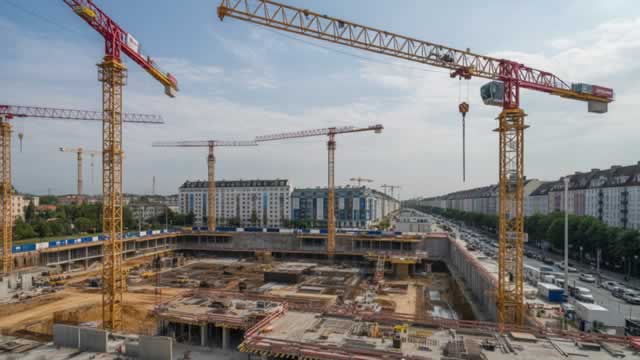
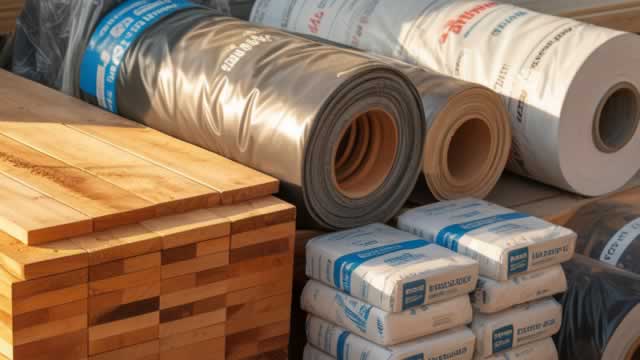
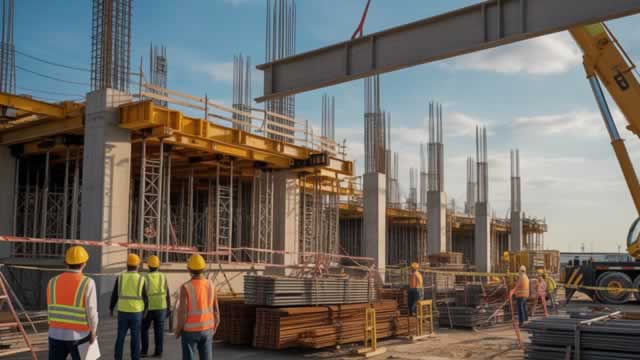
Builders FirstSource, Inc., together with its subsidiaries, manufactures and supplies building materials, manufactured components, and construction services to professional homebuilders, sub-contractors, remodelers, and consumers in the United States. It offers lumber and lumber sheet goods comprising dimensional lumber, plywood, and oriented strand board products that are used in on-site house framing; manufactured products, such as wood floor and roof trusses, steel roof trusses, wall panels, stairs, and engineered wood products; and windows, and interior and exterior door units, as well as interior and exterior trims and custom products under the Synboard brand name. The company also offers gypsum, roofing, and insulation products, including wallboards, ceilings, joint treatments, and finishes; and siding, metal, and concrete products, such as vinyl, composite, and wood siding products, as well as exterior trims, other exteriors, metal studs, and cement products. In addition, it provides other building products and services, such as cabinets and hardware, as well as turn-key framing, shell construction, design assistance, and professional installation services. The company was formerly known as BSL Holdings, Inc. and changed its name to Builders FirstSource, Inc. in October 1999. Builders FirstSource, Inc. was founded in 1998 and is based in Dallas, Texas.

Analyst Sentiment

67%
Buy

From 22 Active Polls

1Y Forecast: $106.64

▲ +0.0% Potential Upside

Consensus Target Metrics

Low Bound

$81

Median

$105

High Bound

$143

Average

$107

Price & Moving Averages

Loading chart...

🎯 Wall Street Analyst Intelligence Report

1-Year structural target targets, chart projections, and sentiment maps.

Average 1Y Target
$106.64
▲ +44.81% Upside
Low Target
$81.00
10% Risk
Median Target
$105.00
43% Mid
High Target
$143.00
94% Max

Consensus Trend Projection

Trailing closures vs. 12-month metrics map.

Analyst Vote Distribution

Aggregate institutional coverage sentiment weights.

Sentiment volume allocation data unavailable.

Historical valuation matrix unavailable.

📘 Full Research Report

ℹ️

AI-Generated Research: This report is for informational purposes only.

📘 BUILDERS FIRSTSOURCE INC (BLDR) — Investment Overview

🧩 Business Model Overview

Builders FirstSource operates as an integrated provider of building materials and components to residential and light commercial construction. The business combines (i) local distribution of lumber, panels, and related construction inputs with (ii) manufacturing and value-added production of engineered building components (such as wall systems, trusses, and other fabricated products), then (iii) logistics and jobsite delivery designed for contractor throughput.

The model converts fragmented, job-by-job demand into repeatable workflows: estimating and product specification, inventory availability, manufacturing lead-time management, and delivery scheduling. This integration is intended to improve fill rates, reduce downtime on sites, and stabilize gross margin through better product mix and operational control.

💰 Revenue Streams & Monetisation Model

Revenue is predominantly generated through a combination of contractor- and builder-facing sales of building materials (more transactional in nature) and value-added manufactured components (typically supporting higher gross margins due to fabrication, design/specification, and reduced waste). Monetisation is driven by:

  • Material distribution economics: turnover and purchasing scale matter; margins tend to reflect pricing discipline and the ability to pass through input cost changes.
  • Manufacturing value capture: engineered components can command a premium versus commodity inputs when delivery reliability and labor/material efficiency are improved.
  • Customer relationship-driven pull: stable order flow from builders and contractors supports production planning and reduces idle capacity.

Overall profitability is most sensitive to product mix, manufacturing utilization, logistics execution, and the spread between selling prices and input costs—rather than to a single recurring subscription mechanism.

🧠 Competitive Advantages & Market Positioning

BLDR’s primary moat is a blend of scale-based cost advantages and switching costs created by operational integration. While the customer relationship is not a contractual “lock-in” in the software sense, switching away is often costly for builders and contractors because it can degrade jobsite reliability, extend lead times, and introduce specification risk for engineered components.

Key sources of defensibility:

  • Switching costs (operational): established product specifications, engineering support, delivery performance, and credit terms reduce friction for repeat procurement.
  • Cost advantages (scale + manufacturing): purchasing leverage, optimized inbound logistics, and manufacturing know-how can improve unit economics versus stand-alone distributors.
  • Local network density: distribution reach and fabrication footprint support faster fulfillment and lower freight intensity.

COMPETITIVE BENCHMARKING

Primary competitors include:

  • US LBM Holdings: a major building products distributor with strong distribution presence. Compared with BLDR, the competitive overlap is greatest in materials distribution; BLDR’s emphasis on fabrication and engineered components can provide an additional margin lever and delivery reliability advantage.
  • Ferguson: stronger positioning in plumbing, HVAC, and related specialties. Ferguson competes more where MEP categories dominate; BLDR’s focus is broader across structural and fabricated building components for residential construction.
  • Beacon Roofing Supply: a leading roofing distributor. The competitive set overlaps in building envelope/roofing spend, but BLDR’s differentiated exposure spans multiple structural categories and component fabrication.

Overall, BLDR’s positioning is most differentiated when integrated procurement and engineered component supply are valuable—especially where faster fulfillment and spec adherence materially affect job completion risk and builder schedules.

🚀 Multi-Year Growth Drivers

Over a 5–10 year horizon, the fundamental drivers are less about market share gains and more about structural demand and product mix:

  • Housing formation and repair/remodeling: long-run demographic and replacement-cycle needs support steady demand for building materials even through housing-cycle volatility.
  • Higher value content per home: building codes and energy-efficiency standards tend to increase the importance of engineered systems, tighter tolerances, and spec-driven components.
  • Geographic penetration and network densification: incremental distribution points and fabrication capacity can improve customer service levels and lower delivered costs.
  • Light commercial and non-residential recovery: growth in smaller commercial builds can expand demand for fabricated components and consolidated material sourcing.

The investment case typically strengthens when demand supports manufacturing utilization and distribution volumes, allowing the company to convert operational leverage into durable earnings power.

⚠ Risk Factors to Monitor

  • Residential construction cyclicality: building materials demand is closely linked to housing starts and builder order flows.
  • Input cost volatility (lumber and related commodities): pricing power can lag input costs; margin can compress if pass-through timing is unfavorable.
  • Execution and integration risk: manufacturing throughput, inventory management, and logistics coordination are operationally complex, particularly during capacity expansions or acquisitions.
  • Credit and working-capital sensitivity: customer payment behavior and inventory funding requirements can affect cash conversion, especially during weaker demand periods.
  • Labor and logistics constraints: wage inflation, trucking capacity, and warehouse throughput influence delivered cost and service levels.
  • Regulatory and building-code changes: evolving code requirements can require re-specification, new manufacturing set-ups, or additional compliance overhead.

📊 Valuation & Market View

Building-products distributors and component manufacturers are commonly valued on earnings power and cash generation, with market practitioners often focusing on metrics such as EV/EBITDA and forward earnings multiples, supported by return on invested capital (ROIC) and cash conversion.

Key valuation drivers include:

  • Gross margin resilience: the ability to maintain spreads through input cycles and sustain value-added mix.
  • Operating leverage: utilization of manufacturing capacity and efficiency in distribution/logistics.
  • Capital discipline: disciplined reinvestment and measured working-capital intensity.
  • Service-level performance: consistent fulfillment can reduce customer churn and protect pricing.

Because the business is exposed to construction cycles and commodity inputs, valuation typically reflects expectations for normalized margins and the sustainability of operational advantages rather than one-off results.

🔍 Investment Takeaway

BLDR offers an integrated platform that can translate scale, local logistics, and engineered-component manufacturing into better customer outcomes—supporting switching costs through reliability and specification fit, and cost advantages through purchasing leverage and utilization. The long-term thesis hinges on sustained demand for housing-related construction, higher value content per build, and the company’s continued ability to convert network density and fabrication capabilities into resilient earnings power across construction cycles.


⚠ AI-generated — informational only. Validate using filings before investing.

📊 AI Financial Analysis

Powered by StockMarketInfo
Earnings Data: Q Ending 2026-03-31

"Revenue and EPS weakened sharply in BLDR’s latest quarter (2026-03-31, Q1): revenue was $3.29B and EPS was -$0.43, with net income at -$47.4M (net margin -1.4%). QoQ, revenue declined from $3.36B (2025-12-31) to $3.29B (down ~2.1%). YoY, revenue also fell versus $3.66B in 2025-03-31 (down ~-10.2%). Profitability contracted materially: gross margin slipped to ~28.3% from ~29.8% in Q4, and net margin swung from +0.9% (Q4) and +2.6% (Q1’25) to -1.4% in Q1’26. Operating income remained positive on a thin basis ($16.5M), but the quarter’s pre-tax line turned negative (income before tax -$57.9M) as financing/other items deteriorated, driving the net loss. From a cash perspective, operating cash flow was +$87.5M and free cash flow was +$40.7M in Q1’26—improving versus Q4’25’s FCF of +$106.7M but still supported by cash generation despite accounting losses. Shareholder returns appear weak: the stock is down ~21.7% over the last year and 1Q profitability deterioration likely pressured sentiment. The company also repurchased shares aggressively in the quarter (-$300.1M), but with no dividends reported. Valuation context is mixed, with a consensus price target around $119.5 versus the $88.5 share price (~+35%), suggesting potential upside if profitability normalizes."

Revenue Growth

Neutral

Revenue down ~2.1% QoQ (Q4’25 $3.36B to Q1’26 $3.29B) and down ~10.2% YoY (Q1’25 $3.66B to Q1’26 $3.29B).

Profitability

Neutral

Margins contracted: gross margin fell to ~28.3% from ~29.8% (Q4’25). Net margin swung from +0.9% (Q4’25) and +2.6% (Q1’25) to -1.4% in Q1’26; EPS moved from +0.28 (Q4) and +0.85 (Q1’25) to -0.43.

Cash Flow Quality

Neutral

Despite a net loss, cash held up: OCF +$87.5M and FCF +$40.7M. Free cash flow remains positive, but profitability deterioration raises the risk of future variability.

Leverage & Balance Sheet

Fair

Balance sheet shows equity of ~$4.00B (down vs ~$4.35B in Q4’25), with total assets ~$11.31B. Debt increased on totalDebt (~$6.79B) and net debt rose (~$0.58B), but liquidity is still present (cash ~$98M) and leverage is not collapsing.

Shareholder Returns

Neutral

Total shareholder return appears negative: price is down ~21.7% over 1 year and ~28.0% over 6 months. No dividend yield; buybacks (-$300M in Q1’26) partially support per-share value but cannot offset the price trend.

Analyst Sentiment & Valuation

Fair

Consensus target ($119.5) is above the current price ($88.5), implying ~+35% upside if earnings recover. Recent earnings weakness may be depressing sentiment, consistent with the negative stock momentum.

Disclaimer:This analysis is AI-generated for informational purposes only. Accuracy is not guaranteed and this does not constitute financial advice.

Fundamentals Overview

Loading fundamentals overview...

BLDR delivered Q1 2026 results in a weak housing market but at the upper end of expected ranges for sales and EBITDA, despite broader macro disappointment. Net sales fell 10% to $3.3B and gross margin dropped 220 bps to 28.3%, with adjusted EPS down 82% to $0.27. The margin decline was driven by a lower starts environment and unexpected volatility in specialty/other products, partly offset by resilience in lumber/value-add. Management’s response is clear: $100M cost actions (with $13M realized in Q1) and active consolidation (21 facilities YTD in 2026) alongside $6M productivity savings and a digital/automation ramp (nearly $800M in Q1 quote processing). The investment case hinges on operating leverage in 2H—2026 adjusted EBITDA margin guided to 7.5%–9.6%—and ongoing ability to pass through fuel/diesel surcharges without letting affordability pressure destroy profitability. Buybacks continue ($303M in Q1; $500M authorized) despite leverage above target, signaling confidence in liquidity and downside control.

AI IconGrowth Catalysts

  • Digital platform scaled to nearly $800 million of quotes processed in Q1; next-generation integrated hubs (community, plan, selections, construction) rolling out later in 2026 with embedded AI
  • Single-family share growth approach focused on customer service, bundling broad portfolio to improve affordability, and leveraging technology to accelerate the build process
  • Product category differentiation showing relative resilience in lumber/lumber sheet/value-add, while specialty products drove more volatility than expected

Business Development

  • Acquired premium building components in January, marking BFS’s first trust and wall panel operations in York

AI IconFinancial Highlights

  • Net sales down 10% to $3.3B (organic down; commodity deflation offset partially by acquisitions); Q1 gross profit down 17% to $0.9B
  • Gross margin 28.3%, down 220 bps YoY; adjusted EBITDA margin 6.5%, down 360 bps YoY (adjusted EBITDA down 42% to $214M)
  • Adjusted EPS $0.27, down 82% YoY
  • Cost actions / downturn playbook: $100M in 2026 cost actions (split $75M YoY reductions and $25M avoidance); actions complete or meaningfully underway; $13M realized in Q1
  • Capital returns: repurchased 3.3M shares for $303M in Q1; Board authorized additional $500M share repurchase (inclusive of remaining $200M from April 2025 authorization)
  • Liquidity and leverage: net debt/adj. EBITDA ~3.2x (above long-term target) with $1.5B liquidity; trailing 12-month free cash flow yield ~10%

AI IconCapital Funding

  • Share repurchases in Q1: $303M (3.3M shares)
  • Incremental repurchase authorization: $500M (including $200M remaining under April 2025 authorization)
  • Capex $45M in Q1; acquisitions spend $12M
  • Free cash flow: $43M in Q1; guided 2026 FCF ~$400M to $500M (below-normal starts with working-capital swing)

AI IconStrategy & Ops

  • Facility consolidation: consolidated 21 facilities in 2026 YTD; consolidated 55 total facilities over prior 2 years; maintained on-time/in-full >90%
  • Productivity savings: $6M in Q1 driven primarily by targeted supply chain and logistics initiatives; still targeting $50M–$70M full-year productivity savings
  • Automation / AI: digital platform processed ~$800M of quotes in Q1; next-gen integrated hubs planned for later in 2026; unified mybldr.com platform

AI IconMarket Outlook

  • 2026 starts outlook: single-family and multifamily starts down 2.5%; repair & remodel down 1% YoY
  • 2026 guidance: net sales $14.6B–$15.6B; adjusted EBITDA $1.1B–$1.5B; adjusted EBITDA margin 7.5%–9.6%
  • 2026 gross margin: 27.5%–29%
  • 2026 free cash flow: ~$400M–$500M (working capital swing: ~$180M YoY headwind from 2025 working-capital release; expects stronger 2H but requires working-capital investment)
  • Commodity assumption: average commodity prices $390–$410 per thousand board feet (long-term avg ~$400); company noted pricing pushed higher since mid-December
  • Q2 guidance: net sales $3.75B–$4.05B; adjusted EBITDA $300M–$350M
  • Expectation: “no meaningful improvement” in multifamily results until next year given current project pipeline

AI IconRisks & Headwinds

  • Housing demand weakness: affordability constraints and muted consumer confidence weighing on demand; Middle East conflict drove higher interest rates and added inflationary pressure
  • Margin pressure drivers: gross margin down 220 bps YoY primarily from declining starts environment; adjusted EBITDA margin down 360 bps YoY
  • Specialty products volatility more challenging than expected; margin rebound may be less than prior degree due to sales volume expectations
  • Competitive pressure: smaller players closing facilities, aggressive pricing/behavior, churn, and capacity coming out slowly; potential contract/timing uncertainty around inbound fuel/inputs
  • Fuel/transport and inflation: diesel costs rising; inbound/outbound fuel exposure “not insignificant” and timing of pass-through can affect near-term margins

Q&A: Analyst Interest

  • Drivers of second-half margin improvement: Management attributed the back-half adjusted EBITDA margin expansion mainly to leverage from stronger summer selling seasons and sequential flow-through, plus realization of already-implemented cost actions and productivity savings. They reiterated targeting $50M–$70M productivity and $100M cost actions, with benefits building as the year progresses.
  • Gross margin guidance interpretation and range dispersion: Management said Q1 was the low watermark due to uncertainty and higher input costs (including fuel and timing of inbound from supply partners). They kept a wide gross margin range, expecting some pass-through of distributor cost increases with muted timing impact, and still expect margin uplift via fixed-cost and COGS leverage.
  • Share repurchase decision amid higher leverage: Management emphasized balance-sheet “rock solid” liquidity, ongoing core investment, and opportunistic buybacks after seeing a dip tied to Middle East dynamics. They highlighted that leverage multiple is elevated from EBITDA decline but is not viewed as an area of concern, maintaining repurchase discipline.

Sentiment: CAUTIOUS

Note: This summary was synthesized by AI from the BLDR Q1 2026 earnings transcript. Financial data is complex; please verify all metrics against official SEC filings before making investment decisions.

Loading financial data and tables...
© 2026 Stock Market Info — Builders FirstSource, Inc. (BLDR) Financial Profile