Brookfield Property Partners L.P.

Brookfield Property Partners L.P. (BPYPN) Market Cap

Brookfield Property Partners L.P. has a market capitalization of $5.72B.

Price: $13.63

0.00 (0.00%)

Market Cap: 5.72B

NASDAQ · time unavailable

CEO: Brian William Kingston

Sector: Real Estate

Industry: Real Estate - Services

IPO Date: 2020-02-11

Website: https://bpy.brookfield.com

Brookfield Property Partners L.P. (BPYPN) - Company Information

Market Cap: 5.72B|Sector: Real Estate

Company Profile

Brookfield Property Partners, through Brookfield Property Partners L.P. and its subsidiary Brookfield Property REIT Inc., is one of the world's premier real estate companies, with approximately $88 billion in total assets. We own and operate iconic properties in the world's major markets, and our global portfolio includes office, retail, multifamily, logistics, hospitality, self-storage, triple net lease, manufactured housing and student housing. Brookfield Property Partners is the flagship listed real estate company of Brookfield Asset Management Inc., a leading global alternative asset manager with over $540 billion in assets under management. More information is available at www.brookfield.com. As of July 26, 2021, Brookfield Property Partners L.P. operates as a subsidiary of Brookfield Asset Management Inc.

Analyst Sentiment

Analyst ratings pending...

Consensus Target Matrix

Data feed parsing pending...

Price & Moving Averages

Loading chart...

🎯 Wall Street Analyst Intelligence Report

1-Year structural target targets, chart projections, and sentiment maps.

Average 1Y Target
$14.31
▲ +5.00% Upside
Low Target
$10.22
-25% Risk
Median Target
$13.90
2% Mid
High Target
$17.04
25% Max

Consensus Trend Projection

Trailing closures vs. 12-month metrics map.

Analyst Vote Distribution

Aggregate institutional coverage sentiment weights.

Sentiment volume allocation data unavailable.

📊 Historical Valuation Multiples

Real-time Trailing Twelve Month (TTM) momentum side-by-side with discrete quarterly metrics.

Fiscal QuarterTTMQ1 2026Q4 2025Q3 2025Q2 2025Q1 2025Q4 2024Q3 2024Q2 2024
Period EndingTrailing 12MMar 31, 2026Dec 31, 2025Sep 30, 2025Jun 30, 2025Mar 31, 2025Dec 31, 2024Sep 30, 2024Jun 30, 2024
Market Cap ($M)5,7186,2345,8626,0425,3174,8544,6495,5724,496
Enterprise Value ($M)58,02257,96354,78954,60055,16056,27556,72656,64174,264
Price to Earnings Ratio (P/E)-18.24-24.74-24.42-13.86-11.76-15.36-23.72-9.29-6.50
Price/Earnings-to-Growth Ratio (PEG)-4.45-3.88-5.23-1.46
Price to Sales Ratio (P/S)0.893.703.183.452.952.782.442.261.86
Price to Book Ratio (P/B)0.700.690.650.670.610.560.550.660.52
Price to Free Cash Flow Ratio (P/FCF)-1.57-2.08-6.87-32.31295.41-14.6632.9731.8431.88
Enterprise Value to Sales (EV/Sales)34.4029.6831.2030.6132.1829.8222.9730.65
Enterprise Value to EBITDA (EV/EBITDA)15.4960.6344.3384.5260.8265.2147.5961.10113.73
Debt to Equity Ratio13.816.005.665.605.926.166.456.258.31

BPYPN Growth Runway Model

Standard long term linear growth fade

Multi-Stage Discounted Cash Flow Sandbox

Market Price$13.63
Intrinsic Value$0.00
Market Alignment
Overvalued by 645.3%relative to calculated intrinsic value
9.00%
Exp: 2%2%
i

Growth runway slowdown

This value provides a time window for the growth rate to decline beyond Stage 1 toward the terminal rate. Longer windows are most useful for companies with high growth starting conditions or strong competitive advantages. This option stretches out the growth rate slowdown across 5, 10, or 15-year steps. A high-growth starting condition (exceeding a 25% initial growth rate) automatically applies a curve decay to simulate realistic, rapid market saturation.
i

Terminal growth rate

With long-term inflation between 3-5%, revenue must grow by that baseline to maintain flat real-world market share. This value sets the permanent terminal growth rate to factor into the valuation beyond the growth slowdown runway toward maturity.

3-Stage Financial Runway Horizon

🧠 Perpetuity Horizon Engine (Stage 3: Post-2035)

Terminal FCF Base$1.32B
Perpetuity TV Value$24.84B
Discounted TV (PV)$10.49B
TV Weighting %58.7%
⚠️
Financial Model Disclaimer & Risk Disclosure: This interactive scenario simulator is an educational sandbox provided strictly for informational and analytical research purposes. Core historical financial statements and consensus estimates are sourced directly via Financial Modeling Prep (FMP). All downstream outputs are entirely deterministic, hypothetical projections generated by combining automated mathematical formulas (including linear interpolation and Gaussian bell-curve decay models) with user-selected variables and third-party financial data inputs. Users assume all liability for trading decisions executed based on these sandbox calculations.

📘 Full Research Report

ℹ️

AI-Generated Research: This report is for informational purposes only.

📘 Brookfield Property Partners L.P. (BPYPN) — Investment Overview

Brookfield Property Partners L.P. is a real estate investment and operating platform with a focus on acquiring, developing, and owning high-quality property assets across major global markets. The investment thesis for BPYPN hinges on the company’s ability to monetize property cash flows through active asset management, recycle capital via development and disposition, and maintain financial flexibility through diversified funding sources. For investors evaluating BPYPN specifically (a preferred-equity instrument linked to Brookfield’s property partnership structure), the return profile is shaped by (i) the durability of underlying property operating performance, (ii) preferred distribution terms and any call/conversion features, (iii) leverage and liquidity, and (iv) broader real-estate credit and rates dynamics.

🧩 Business Model Overview

Brookfield Property Partners operates as a property owner and manager with an emphasis on long-duration, income-generating real estate. The business model typically includes:
  • Ownership of stabilized assets: Operating income is generated from leased properties where contractual cash flows and property-level fundamentals support recurring earnings power.
  • Active asset management: Management seeks value creation through leasing strategy, tenant retention, rent optimization, capex programs, and portfolio reshaping.
  • Development and redevelopment: The platform allocates capital to projects with potential to enhance yields, expand returns, and upgrade the quality of the asset base.
  • Capital recycling: Dispositions of mature or lower-return assets can fund reinvestment into higher-return opportunities, supporting compounding at the partnership level.
  • Use of structured capital strategies: The company typically blends secured and unsecured financing, joint venture structures, and preferred equity instruments to balance risk and return targets.
As a preferred-equity investor (BPYPN), the core analytical focus shifts toward the stability and creditworthiness of the partnership’s cash generation and the ranking of preferred distributions in the capital structure. While common equity absorbs operating volatility more directly, preferred holders generally rely on disciplined leverage and asset performance to preserve distribution sustainability and market pricing.

💰 Revenue Streams & Monetisation Model

The monetisation model for Brookfield Property Partners is rooted in turning real estate assets into durable, cash-generating instruments through leasing, property operations, and selective development. Key revenue and cash flow components include:
  • Rental income: Primary source of cash flows from leased properties. Rental escalations, tenant credit quality, and occupancy levels influence steadiness and growth.
  • Property-level operating revenue and recoveries: Many real estate arrangements include reimbursement of certain operating costs, which can reduce earnings volatility relative to pure fixed-cost structures.
  • Development profits and value creation: Value realization may occur upon project completion, refinancing, or sale. The company’s monetisation depends on executing development with disciplined underwriting and effective risk management.
  • Joint venture and partnership income: A portion of returns can be attributable to equity interests in ventures, where cash distributions depend on project performance and partner economics.
  • Fee and management economics (where applicable): Some value may be captured through operating expertise, though the largest driver remains net operating cash flows and equity participation in asset value.
For BPYPN holders, the monetisation question becomes: how reliably can the underlying property portfolio generate cash flows that support (directly or indirectly) preferred distributions while maintaining appropriate debt service coverage and liquidity buffers? The preferred market value is therefore sensitive to both fundamentals (asset cash flows, leverage) and the broader cost-of-capital environment.

🧠 Competitive Advantages & Market Positioning

Brookfield’s competitiveness stems from its platform scale, global sourcing and execution capability, and active management approach. Core advantages typically include:
  • Institutional-scale real estate platform: Ability to underwrite, acquire, develop, and operate assets across cycles provides resilience and enhances deal sourcing.
  • Operational expertise and value creation: Tenant strategy, capital planning, and property improvements can sustain or grow net operating income over time.
  • Global diversification: Geographic spread can reduce single-market exposure, which is especially valuable when local demand cycles diverge.
  • Capital markets access: Brookfield’s track record and relationships can facilitate refinancing and liquidity management, lowering the risk of forced asset sales.
  • Partnership and joint venture capabilities: Co-investment models can reduce capital requirements and diversify project risk.
  • Disciplined underwriting culture: Large platforms often maintain structured investment criteria and governance, supporting improved risk-adjusted outcomes.
For preferred-equity investors, the “competitive advantage” question is less about growth in absolute earnings and more about the capacity to protect distribution economics under varying interest-rate and real-estate demand regimes. Market perception of Brookfield’s discipline and liquidity tends to influence preferred pricing because it informs expectations about distribution continuity and potential refinancing pathways.

🚀 Multi-Year Growth Drivers

The multi-year growth outlook for Brookfield Property Partners is generally supported by a combination of reinvestment and portfolio evolution:
  • In-place cash flow compounding: Rental escalations, tenant improvements, and ongoing leasing efforts can support gradual growth in net operating cash flows.
  • Development pipeline execution: The company can create value by advancing projects with robust demand fundamentals and clearly defined cost and timeline controls.
  • Leasing and re-leasing cycle management: Portfolio durability depends on maintaining tenant quality, managing rollover risk, and calibrating rental strategy to market conditions.
  • Capital recycling and redeployment: Dispositions can monetize value while funding higher-return acquisitions or developments, sustaining portfolio quality.
  • Refinancing and capital structure optimization: Over multiple years, effective refinancing strategy can influence interest expense, net leverage, and distribution coverage.
  • Selective investment in supported sectors: Strategic allocation to real estate sub-sectors that benefit from durable demand drivers can improve risk-adjusted returns.
For BPYPN specifically, multi-year value creation is expressed through (i) the capacity of the partnership to sustain preferred distributions under different market regimes, (ii) the preservation of asset coverage relative to liabilities, and (iii) the ability to maintain prudent leverage while pursuing value-accretive opportunities.

⚠ Risk Factors to Monitor

Investment outcomes can diverge materially from expectations due to real estate cyclicality, capital markets conditions, and partnership-level execution. Key risks include:
  • Interest-rate and refinancing risk: Higher rates can pressure valuation, increase cost of capital, and challenge refinancing economics for maturing debt.
  • Real estate market volatility: Demand shifts, leasing spreads, and property-specific fundamentals can affect occupancy, rents, and operating margins.
  • Leverage and liquidity risk: Preferred equity pricing depends heavily on the partnership’s ability to manage leverage and maintain sufficient liquidity through downturns.
  • Development and construction risk: Cost overruns, permitting delays, and slower-than-expected leasing can reduce expected returns or defer monetisation.
  • Asset valuation and impairment dynamics: Mark-to-market and realized gains/losses may fluctuate, influencing investor sentiment and balance-sheet flexibility.
  • Concentration and tenant credit risk: Sector or geographic concentration, large tenant exposures, and credit deterioration can impact cash flows.
  • Distribution coverage uncertainty: For preferred holders, the key risk is the sustainability of preferred distributions under stress scenarios, including covenants and structural priorities.
  • Regulatory, tax, and structural risk: Changes in taxation, real estate regulation, or partnership structures may alter net economics.
  • Liquidity and instrument-specific dynamics: Preferred securities can experience market mispricing based on credit sentiment and rate volatility, independent of underlying asset performance.
A disciplined investment process typically tracks leverage metrics, debt maturity profiles, asset liquidity, tenant quality/renewal exposure, and the gap between asset cash flows and fixed obligations that influence distribution safety.

📊 Valuation & Market View

Valuation for Brookfield Property Partners can be approached through a blend of asset-based and cash-flow-based frameworks, with preferred instruments requiring additional attention to the instrument’s distribution rights and relative seniority. 1) Asset-based valuation (NAV-style thinking)
A common approach is to estimate the fair value of the real estate portfolio (and development pipeline net of expected costs), then subtract net debt and other obligations to approximate net asset value. Key drivers include cap rates, discount rates, occupancy assumptions, and development-stage risk. 2) Cash-flow and yield-based valuation
For preferred equity, investors often focus on the relationship between distributable cash flows and fixed obligations, then discount those cash flows using a credit-appropriate rate. In practice, preferred pricing can be more sensitive to rates and credit spreads than pure operating earnings. 3) Relative valuation and market-implied expectations
Preferred securities often trade on yield spread relative to comparable credit instruments and peers with similar duration and seniority. Market-implied assessments of distribution safety, leverage trajectory, and refinancing access can dominate valuation when real estate fundamentals are stable. What to look for in underwriting
  • Coverage and cushion: Evidence that underlying property cash flows can support preferred economics through varying leasing and cost scenarios.
  • Balance-sheet flexibility: Liquidity sources, maturity management, and access to capital markets.
  • Portfolio quality: Tenant credit, lease duration profile, and the proportion of stabilized versus development assets.
  • Rate sensitivity: Exposure to floating-rate debt and the ability to refinance without materially harming coverage.
  • Distribution terms: Any call, reset, or conversion dynamics that could influence investor outcomes.
Overall, the market view for BPYPN is typically tied to the perceived stability of real estate cash flows and the partnership’s credit discipline. When spreads widen due to macro credit risk, preferred securities can offer higher yield but also embed greater distribution or refinancing stress assumptions—necessitating fundamental verification.

🔍 Investment Takeaway

Brookfield Property Partners offers an institutional real estate platform with a multi-engine value creation model: stabilize cash flows from leased properties, invest in development with value-accretive potential, actively manage assets, and recycle capital to sustain compounding. For BPYPN, the investment case is best framed around the stability of distribution economics supported by property cash flow durability, prudent leverage management, and resilient refinancing capacity. A high-quality underwriting process for BPYPN should emphasize distribution safety through stress scenarios, balance-sheet liquidity and maturity management, property-level leasing resilience, and development execution discipline. When these elements align, preferred equity can provide a structured participation in the broader real estate upside with a return profile anchored by income characteristics and credit fundamentals.

⚠ AI-generated — informational only. Validate using filings before investing.

📰 Market News & Coverage

15 Stories Available

Real-time institutional reporting and market updates for BPYPN.

defenseworld.net2026-01-15

Brookfield Property Partners (NASDAQ:BPYPN) Stock Price Down 0.4% – Time to Sell?

Brookfield Property Partners L.P. (NASDAQ: BPYPN - Get Free Report)'s share price was down 0.4% during mid-day trading on Wednesday. The company traded as low as $13.37 and last traded at $13.50. Approximately 24,250 shares changed hands during mid-day trading, an increase of 95% from the average daily volume of 12,428 shares. The stock had

defenseworld.net2025-12-24

Brookfield Property Partners (NASDAQ:BPYPN) Stock Price Down 0.3% – Here’s Why

Brookfield Property Partners L.P. (NASDAQ: BPYPN - Get Free Report) shares were down 0.3% during mid-day trading on Tuesday. The stock traded as low as $13.54 and last traded at $13.5350. Approximately 1,121 shares traded hands during mid-day trading, a decline of 92% from the average daily volume of 14,187 shares. The stock had previously

seekingalpha.com2020-09-12

What Goes Up Must Come Down

The tech-wreck dragged on as U.S. equity markets declined for the second-straight week after Congress failed to reach a compromise on a renewed stimulus package and after a potential vaccine setback.

seekingalpha.com2020-09-11

The Mall Meltdown Is Underway

There was a time when malls were thriving communities – agoras, if you will – where people went to sell, shop, eat, unwind, catch up, and hang out.

seekingalpha.com2020-09-10

The Retirees' Dividend Portfolio: John And Jane's August Taxable Account Update

The Taxable account generated $1,674.90 of dividends in August of 2020 compared with $1,591.52 of dividends in August of 2019.

seekingalpha.com2020-09-05

August 2020 Dividend Portfolio Update

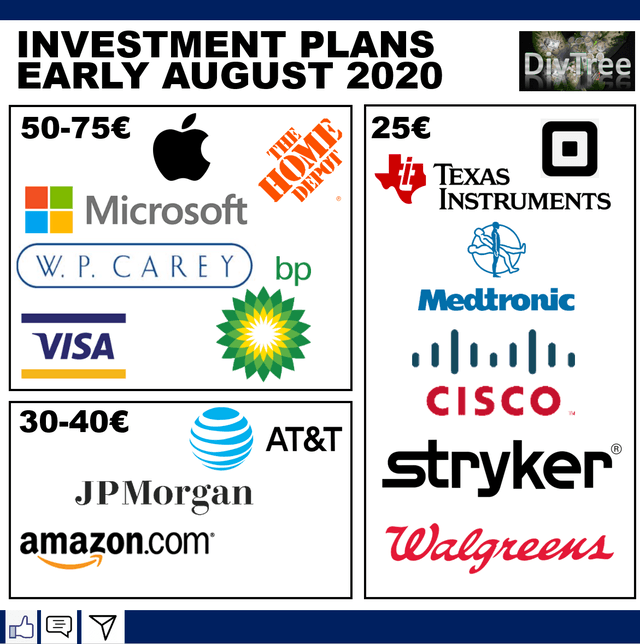
Markets were racing to all-time highs in August fueled by technology stocks and the mega caps. I am continuing my monthly investment plans and suspiciously follow the massive rally in technology stocks.

seekingalpha.com2020-09-04

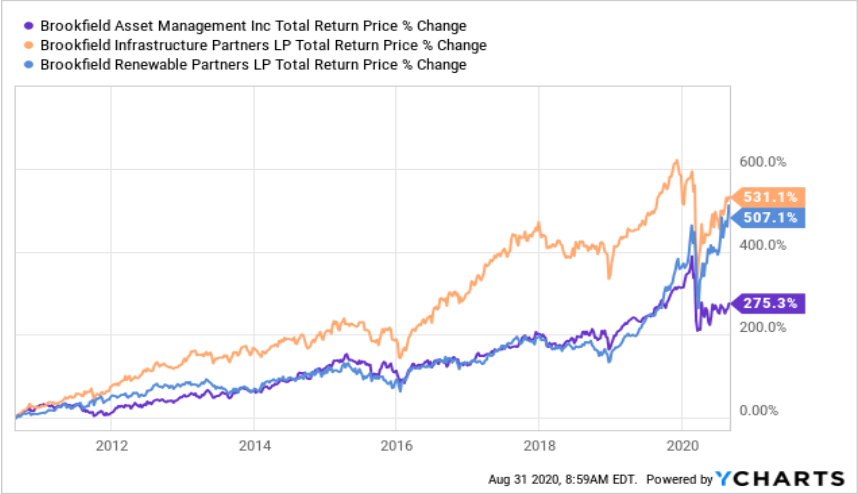
Brookfield Property's Huge 11% Yield Makes It A Great Income Pick

Brookfield Property has great management. The company's shares trade inexpensively based on book value and IFRS real estate value.

seekingalpha.com2020-08-26

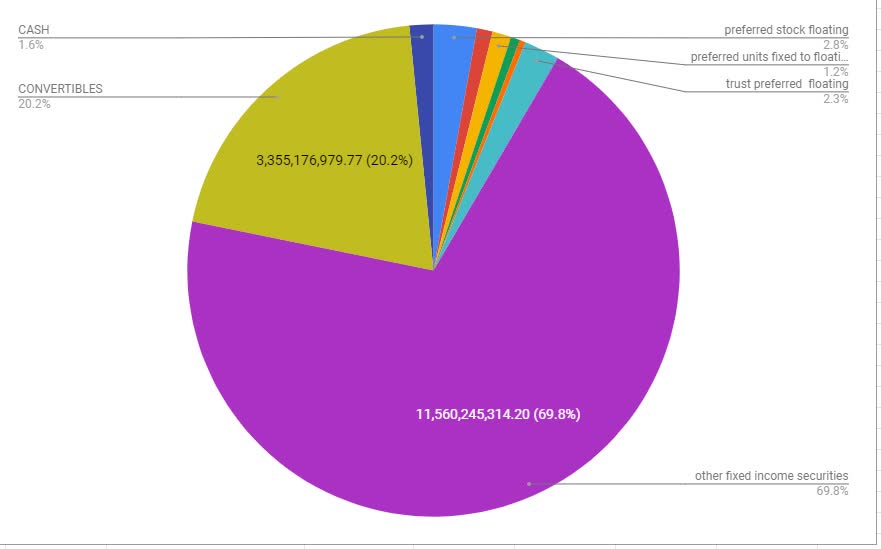
Not So Common Fixed Income Preview

A review of all floating-rate preferred stocks, third-party trust preferred securities, trust preferred stocks, and preferred units.

seekingalpha.com2020-08-22

Dividend Challenger Highlights: Week Of August 23

A weekly summary of dividend activity for Dividend Challengers. Companies which changed their dividends.

seekingalpha.com2020-08-15

Good News Is Bad News

U.S. equity markets flirted with fresh all-time highs this week following a slate of better-than-expected economic data, which has ironically thrown a political curveball into the now-stalled fiscal stimulus negotiations.

seekingalpha.com2020-07-29

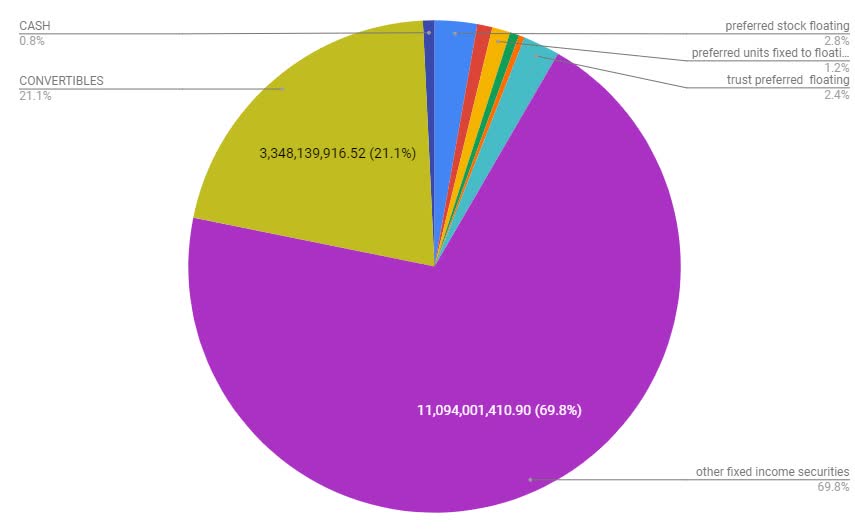
Not So Common Fixed Income Preview

A review of all floating-rate preferred stocks, third-party trust preferred securities, trust preferred stocks, and preferred units.

seekingalpha.com2020-06-27

Dividend Challenger Highlights: Week Of June 28

A weekly summary of dividend activity for Dividend Challengers. Companies which changed their dividends. Companies with upcoming ex-dividend dates. Companies wi

seekingalpha.com2020-06-24

Not So Common Fixed-Income Preview

A review of all floating-rate preferred stocks, third-party trust preferred securities, trust preferred stocks, and preferred units. Almost all securities are t

seekingalpha.com2020-04-07

The Retail Apocalypse Is Accelerating

Store closings outnumber store openings by a wide margin. 2020 will be a year where store closings rise well above average levels, we could see 15,000 stores be

seekingalpha.com2020-03-30

Brookfield Property Partners: Iconic Assets At Iconic Discount

Panic selling has caused massive outflows from real estate and opened up opportunities to buy high-quality assets at deep discounts. We believe Brookfield Prope

Fundamentals Overview

Loading fundamentals overview...

So What: Management delivered a clear operational rebound—Q3 EBITDA of $52m swung from -$35.6m a year ago, with utilization jumping to 93.9% (from 81.5% in Q2) and Ultra-High Protein running record rates. The key growth engine is protein and carbon-enabled ingredients: 60 Pro production hit 62.3% at Wood River, with commercial quantities started and another delivery tranche planned for Q4. However, the Q&A pressure focused on policy and pricing risk. Analysts probed when 45Z guidance will arrive; management said SAF 40B guidance is expected by Sept. 15 and 45Z could slip into early next year. On corn oil, they acknowledged a mid-quarter pricing pullback but emphasized they locked Q4 corn oil at higher values and will watch Chinese used cooking oil that can capture tax credits. The tone in prepared remarks is confident on platform stabilization and commissioning timelines, but Q&A reveals meaningful uncertainty around government guidance timing and feedstock/tax-credit competition.

AI IconGrowth Catalysts

  • Ultra-High Protein platform: Q3 ethanol operating rate 93.9% and new record Ultra-High Protein production/sales; reiterated Q4 higher on pace for new highs
  • Restarted Wood River MSC Protein System late July; consistent rates across entire platform
  • Wood River 60% protein (60 Pro) full-scale run: produced as high as 62.3% during the quarter; began delivering commercial quantities; additional 60 Pro sales positioned for Q4
  • MSC turnkey JV with Tharaldson slated for commissioning/startup in Q1 2024 (largest MSC plant ever built) bringing ~100,000 tons to sales platform

Business Development

  • Pet food contract renewed for 2024: “100% of that business back” and growing volumes tied to ongoing customer/partner volume increases
  • 60 Pro repeat business: first repeat 60 Pro business; used in several large-scale commercial diets plus additional trials (U.S. and global)
  • Expanded customer base: increased number of customers by 25% to 30% in the quarter; sales now across North & South America, Europe, Middle East, and Asia

AI IconFinancial Highlights

  • EBITDA: $52.0m in Q3 (vs -$35.6m in Q3 2022)
  • Net income attributable to Green Plains: $22.3m or $0.35 diluted EPS (vs net loss of $73.5m or -$1.27 diluted EPS in Q3 2022)
  • Consolidated revenue: $892.8m, down $62.2m (~6.5%) YoY (lower ethanol and DDG prices)
  • Plant utilization: 93.9% in Q3 vs 90.9% in Q3 2022; improved from 81.5% in Q2 2023; guided to mid-90% utilization targeting
  • Consolidated crush: $48.5m in Q3 2023 vs -$20.5m in Q3 2022
  • SG&A: $35.5m vs $29.1m in Q3 2022, driven by legal fees tied to GPP buy-in and other legal activity
  • Income tax benefit: $7.8m vs $1.9m benefit in Q3 2022, attributed to reduced valuation allowance from decrease in deferred tax assets; normalized tax rate guided to ~23% (Green Plains Inc. excluding minority interest)
  • Corn basis headwind quantified: Q3 corn basis in areas was $0.44 higher than 5-year average; management stated corn basis has moderated significantly vs prior two years
  • Ethanol pricing structure: ethanol “inverted slightly on the curb” at quarter-end (managed as inventory-reduction negative when market set up that way)

AI IconCapital Funding

  • Q3 allocated $29m capital across the platform: $15m to Clean Sugar build in Shenandoah; ~$8m other growth; ~$6m maintenance/safety/regulatory
  • Remainder of 2023 CapEx guidance: $25m to $45m (timing of permitting for MSC technology at a couple of larger plants)
  • Liquidity at quarter-end: $366.2m cash/cash equivalents/restricted cash plus ~$200m available under working capital revolver
  • Debt: no maturities until 2026; ~two-thirds fixed rate; overall cost of borrowing ~7.2% during the quarter
  • Partnership/distribution: Green Plains Partners declared quarterly distribution $0.455/unit with 0.99x coverage (distributable cash flow $10.7m)

AI IconStrategy & Ops

  • Modernization/automation: hired new operations executive leadership team focused on modernization and automation to bring platform back to consistent operations
  • Yields: Shenandoah averaged over 4 pounds/bushel vs original thesis of 3 to 3.5; referenced higher average yields per bushel and refining processes across five locations
  • Permitting delays: construction of Madison, IL and Fairmont, MN pending favorable permitting outcomes; permitting taking longer than thought
  • MSC deployment: total annual capacity target 580,000 tons at base yield of 3.5 pounds/bushel; goal to reduce locations via higher yields (fewer locations needed to reach 2025 volumes)
  • 60 Pro ramp: debottlenecking production process mechanically and biologically to transition MSC from 50% to 60% protein at full scale

AI IconMarket Outlook

  • Utilization guidance: “targeting utilization rates in the mid 90% range” of stated capacity
  • Q4 outlook: expecting higher Ultra-High Protein production vs Q3; management said they locked veg oil pricings higher and now “own our winter gas at or below market”
  • 2024 EBITDA opportunity: $80m to $120m during 2024 from five operating MSC facilities plus partial-year impact from Tharaldson JV (excluding any uplift for 60% protein)
  • 2024 60 Pro allocation goal: dedicate 20% to 30% of portfolio to 60 Pro during 2024
  • First possible 45Z/SAF guidance timing: government said it will come out with 40B SAF guidance by September 15; 45Z guidance expected by end of year but could slip into early next year
  • CCS startup expectations: Summit Carbon Solutions—initially 2026 startup referenced by management as current indication, but said “expect that many stranded navigator plants will end up on this project”; Nebraska CCS project (Central City, Wood River, York) appears on track for 2025 startup
  • Clean sugar (Shenandoah, IA) commissioning: mechanically completed by end of 2023; waiting final electrical gear; commissioning expected Q1 2024

AI IconRisks & Headwinds

  • Aged assets/operations challenge: management cited assets aging and need to hire new operations executive leadership to address “harder to run these plants” after first-half headwinds continued into July; referenced weekly noise in EIA data stabilization
  • Permitting risk and duration: Madison, IL and Fairmont, MN permitting taking longer than thought; Summit CCS pipeline permitting noted as having “headwinds” and dependent on routing/early funding final permits
  • Ethanol market/inventory risk: ethanol inverted slightly on the curb at quarter-end; management stated inventory reduction is a “slight negative when the market was set up like that”
  • Input economics: corn basis was $0.44 higher than the 5-year average in Q3; still a remaining need to buy in for the quarter though management said they are generally covered at or below market and on a physical corn basis
  • Corn oil price pressure linked to market dynamics: management attributed Q4 corn oil price pullback to “unwind between meal and oil” and noted it could be pressured by Chinese used cooking oil competing for tax credits
  • Chinese used cooking oil competition (tax-credit eligibility): management called it out as being able to earn their tax credits; mitigation: “defend our position as a U.S.-made product against a foreign-made product getting our tax credits” and monitor closely

Sentiment: MIXED

Note: This summary was synthesized by AI from the BPYPN Q3 2023 earnings transcript. Financial data is complex; please verify all metrics against official SEC filings before making investment decisions.

📋 Official Regulatory 10-K / 10-Q SEC Filings

Direct authenticated documentation links to audited SEC database reports for BPYPN.

SEC EDGAR Live Feed
No recent 10-K available.
No recent 10-Q available.
Loading financial data and tables...
📁

SEC Filings (BPYPN)

© 2026 Stock Market Info — Brookfield Property Partners L.P. (BPYPN) Financial Profile