BXP, Inc.

BXP, Inc. (BXP) Market Cap

BXP, Inc. has a market capitalization of .

No quote data available.

CEO: Owen David Thomas

Sector: Real Estate

Industry: REIT - Office

IPO Date: 1997-06-18

Website: https://www.bxp.com

BXP, Inc. (BXP) - Company Information

Market Cap: -|Sector: Real Estate

Company Profile

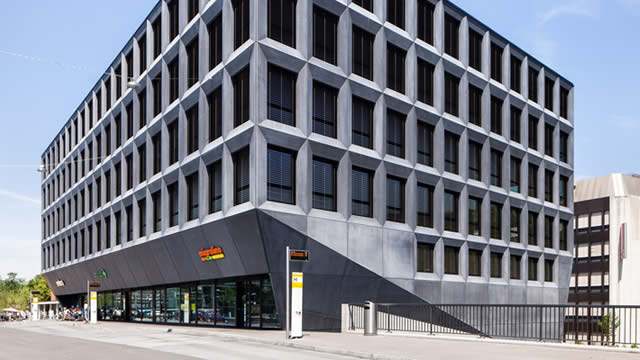
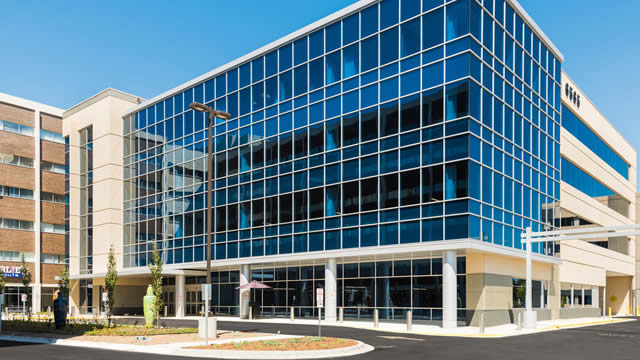
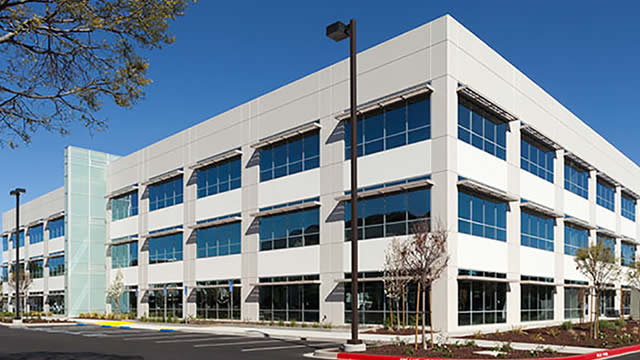
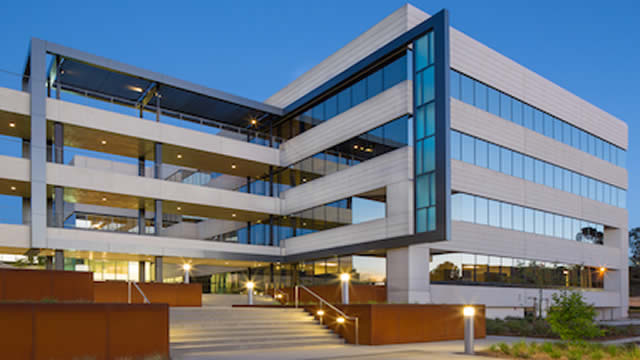
Boston Properties (NYSE:BXP) is the largest publicly-held developer and owner of Class A office properties in the United States, concentrated in five markets - Boston, Los Angeles, New York, San Francisco and Washington, DC. The Company is a fully integrated real estate company, organized as a real estate investment trust (REIT), that develops, manages, operates, acquires and owns a diverse portfolio of primarily Class A office space. The Company's portfolio totals 51.2 million square feet and 196 properties, including six properties under construction/redevelopment.

Analyst Sentiment

70%
Buy

From 22 Active Polls

1Y Forecast: $65.00

▲ +0.0% Potential Upside

Consensus Target Metrics

Low Bound

$61

Median

$64

High Bound

$72

Average

$65

Price & Moving Averages

Loading chart...

🎯 Wall Street Analyst Intelligence Report

1-Year structural target targets, chart projections, and sentiment maps.

Average 1Y Target
$65.00
▲ +4.28% Upside
Low Target
$61.00
-2% Risk
Median Target
$64.00
3% Mid
High Target
$72.00
16% Max

Consensus Trend Projection

Trailing closures vs. 12-month metrics map.

Analyst Vote Distribution

Aggregate institutional coverage sentiment weights.

Sentiment volume allocation data unavailable.

Historical valuation matrix unavailable.

📘 Full Research Report

ℹ️

AI-Generated Research: This report is for informational purposes only.

📘 BXP INC (BXP) — Investment Overview

🧩 Business Model Overview

BXP is a large, vertically integrated office-focused real estate investment trust (REIT) with an emphasis on owning, operating, and selectively redeveloping Class A properties in high-barrier submarkets. The operating engine is straightforward: lease commercial space to tenants, collect base rent and tenant reimbursements (for operating expenses and taxes), and manage ongoing property operations to preserve net operating income (NOI). A meaningful portion of value creation comes from leasing strategy (tenant retention, credit selection, and renewal terms), capital allocation (capital improvements and redevelopment), and active asset management in markets where location, building quality, and amenity sets are scarce.

Tenant stickiness is driven by lease-backing constraints, buildout costs, and the friction of relocating teams in dense business districts—factors that tend to favor well-located, institutional-grade assets over commodity office space.

💰 Revenue Streams & Monetisation Model

BXP’s monetisation is dominated by recurring cash flows from office tenants:

  • Base rent: primary source of revenue tied to lease terms and renewal/rollover dynamics.
  • Tenant reimbursements: pass-throughs for property operating expenses, utilities, and taxes, supporting NOI resilience.
  • Parking and ancillary income: smaller but steadier revenue lines in many submarkets.
  • Development and redevelopment economics: value crystallises through leasing stabilized space (and, where applicable, sale or joint-venture monetisation of developed exposure).

Margin structure for an office REIT is typically more sensitive to NOI/occupancy and leasing spreads than to revenue volume. Key economic drivers include controllable operating costs, the ability to re-lease space at attractive economics, and the timing/scale of capital expenditures needed to maintain building competitiveness (especially for tenant-driven upgrades such as lobbies, elevators, HVAC, and amenity programming).

🧠 Competitive Advantages & Market Positioning

The primary moat is a combination of location scarcity and switching frictions anchored in a consistently institutional-grade asset base:

  • Switching costs (tenant-specific and logistical): relocating corporate teams involves non-trivial transaction costs (brokerage, fit-out, technology, brand/customer presence) and risk to operational continuity. Premium buildings in central business districts reduce those frictions due to established infrastructure, transit access, and high-quality specifications.
  • Asset quality as an operating advantage: competing with newer, amenity-rich supply requires sustained capex and construction/operations competence. BXP’s scale and in-house operating discipline allow it to execute improvements and maintain competitiveness.
  • Capital allocation capability: selective redevelopment and repositioning can transform aging stock into space that better matches evolving tenant requirements, supporting re-leasing economics over time.

Competitive benchmarking: Office REIT exposure is competed primarily on submarket concentration, building quality, and leasing execution. Key rivals include:

  • Vornado Realty Trust (VNO)
  • SL Green Realty (SLG)
  • Kilroy Realty (KRC) (West Coast office tilt, primarily)

BXP’s differentiation is its focus on premier, dense employment nodes and its track record of operating and redeveloping Class A assets in those markets. Many peers possess valuable portfolios, but BXP’s positioning emphasizes the ability to keep a large share of exposure in high-demand urban locations and to upgrade buildings to remain tenant-preferred as leasing standards evolve.

🚀 Multi-Year Growth Drivers

Growth over a 5–10 year horizon is best framed as stability plus selective upside, driven by redevelopment cycles and long-duration demand for high-quality space in constrained submarkets:

  • Upgrade cycle for “tenant-preferred” offices: tenants increasingly demand superior building systems, amenity ecosystems, and flexible environments. Redevelopment and modernization can support higher renewals and mitigate economic friction on transitions.
  • Constrained supply in prime locations: central business districts tend to face land scarcity and higher replacement costs, favoring established owners with well-located assets.
  • Leasing execution through asset management: maintaining tenant quality and retention reduces downtime and helps preserve NOI through lease rollover events.
  • Strategic redevelopment and reconfiguration: repositioning older floorplates and building amenities improves addressable tenant segments and can expand utilization in specialized use cases.
  • Capital recycling and balance-sheet discipline: the ability to fund improvements through disciplined capital allocation supports resilience across credit cycles and keeps the portfolio competitive.

Net result: the investment thesis relies on the expectation that the gap between prime assets and commoditised office will remain structurally wide, allowing BXP to protect cash flows while selectively capturing improvement in leasing demand and terms.

⚠ Risk Factors to Monitor

  • Secular office demand and occupancy variability: changes in workforce patterns can extend leasing timelines and increase tenant concessions, especially for less differentiated space.
  • Interest-rate and capital-market sensitivity: office REIT valuations and refinancing terms respond to cap rates and credit spreads, affecting development optionality and balance-sheet flexibility.
  • Tenant credit concentration: a portfolio skew toward certain industries or tenant sizes can amplify cash-flow volatility if demand weakens for those user groups.
  • Capital intensity and execution risk: redevelopment and modernization require sustained capex and accurate budgeting; cost overruns or construction delays can impair projected returns.
  • Regulatory and compliance costs: building standards, energy-efficiency rules, and local ordinances can increase operating expenses and capex needs.

📊 Valuation & Market View

The market typically values BXP and peer office REITs through a mix of:

  • NAV/discounted cash-flow frameworks: reflecting the net value of real estate assets and development pipeline after costs, leasing assumptions, and capex needs.
  • FFO and NOI-based multiples: linking valuation to property cash generation rather than accounting earnings.
  • Cap-rate and cost-of-debt sensitivity: changes in perceived risk, financing rates, and liquidity conditions affect asset pricing and refinancing economics.

Drivers that tend to move the needle include leasing spreads, occupancy/renewal outcomes, the pace and success of redevelopment leasing, the stability of operating costs, and the strength of the balance sheet (including refinancing access and maturity structure). In office, valuation dispersion across portfolios often reflects the degree of differentiation and likelihood of sustained cash-flow durability.

🔍 Investment Takeaway

BXP’s investment case rests on durable differentiation in prime urban office assets—supported by location scarcity, tenant switching frictions, and an operating/redevelopment capability that can preserve cash-flow quality through market cycles. The principal value lever is maintaining and upgrading a portfolio that remains tenant-preferred, enabling resilient NOI generation while selectively capturing redevelopment upside. Key monitoring items are office demand durability, financing conditions, and redevelopment execution, all of which determine how quickly leasing economics translate into long-term per-share value creation.


⚠ AI-generated — informational only. Validate using filings before investing.

📊 AI Financial Analysis

Powered by StockMarketInfo
Earnings Data: Q Ending 2026-03-31

"BXP (Q1’26, ended 2026-03-31) reported Revenue of $872.1M and Net Income of $101.6M, with EPS of $0.64. YoY growth was modest: Revenue rose +0.8% (from $865.2M in Q1’25) while Net Income declined -9.1% (from $61.2M in Q1’25 to $101.6M in Q1’26; note the provided quarterly series shows a stronger Q1’25 base for margin context). QoQ, Revenue was roughly flat (-0.6% vs $877.1M in Q4’25), but Net Income fell -59.1% (from $248.5M in Q4’25). Profitability softened sequentially: net margin contracted to 11.6% from 28.3% in Q4’25, with operating margin down to 26.1% from 55.9%. Over the full 4-quarter window, results appear volatile, with a loss in Q3’25 (net margin -14.0%) and a rebound in Q2’25 and Q4’25 before the Q1’26 pullback. Cash generation weakened materially in Q1’26. Operating cash flow was $156.5M and free cash flow turned negative at -$131.8M (capex of -$288.3M), alongside dividends paid of -$124.1M. Balance sheet resilience remains mixed: total assets were $25.1B and equity $5.15B, but leverage is high (total debt ~$15.97B; net debt ~$15.46B). Shareholder returns: the stock is down -7.96% over 1Y with a modest dividend yield (~1.5%); no strong positive momentum signal. Overall, the quarter shows near-flat top-line but margin and cash-flow deterioration QoQ."

Revenue Growth

Neutral

Revenue was +0.8% YoY in Q1’26 ($872.1M vs $865.2M) and -0.6% QoQ ($877.1M in Q4’25 vs $872.1M). Overall trend is steady but not accelerating.

Profitability

Caution

Net margin contracted sharply QoQ to 11.6% from 28.3% in Q4’25; operating margin fell to 26.1% from 55.9%. Over the 4-quarter span, profitability was volatile (loss in Q3’25).

Cash Flow Quality

Neutral

Operating cash flow was $156.5M in Q1’26, but free cash flow was -$131.8M due to higher capex. Dividends remain sizable (-$124.1M), and Q1’26 FCF did not cover them.

Leverage & Balance Sheet

Fair

Balance sheet size is stable (assets $25.1B) with equity around $5.15B, but leverage remains high (total debt ~$15.97B; net debt ~$15.46B). Equity did not show major QoQ deterioration.

Shareholder Returns

Fair

Dividend yield is ~1.5%, but total return is muted by weak price momentum (1Y change -7.96%). No buyback support is evident in the cash flow beyond small repurchases (-$0.9M).

Analyst Sentiment & Valuation

Neutral

With current price $58.05 and consensus target ~$72.1, implied upside is attractive (~+24%). Valuation multiples are not provided for trend, but the price-to-earnings in the latest period is ~20.3x.

Disclaimer:This analysis is AI-generated for informational purposes only. Accuracy is not guaranteed and this does not constitute financial advice.

Fundamentals Overview

Loading fundamentals overview...

BXP’s Q1 2026 results and outlook skew strongly positive, driven by accelerating leasing—especially premier and AI/tech-led demand. Management reported Q1 FFO of $1.59/share ($0.02 above guidance midpoint; $0.01 ahead of consensus) with portfolio outperformance (+$0.03/share) offset by higher net interest expense (+$0.01/share) tied to CP rate widening (25–30 bps). Operationally, in-service occupancy rose 70 bps to 87.4% and leased/occupied spread widened 80 bps to 3.5%, supporting continued occupancy gains. The company raised full-year 2026 FFO midpoint by $0.01 to $6.90–$7.04 and increased occupancy guidance by 25 bps to an 88.25% average, alongside higher same-property NOI share growth assumptions (1.4%–2.4%, +15 bps). Capital strategy remains on track: $1.2B net proceeds since investor conference and $360M year-to-date, plus sizable land/residential entitlements. Key near-term risk is execution of backfills tied to credit-driven terminations (~200k sf), while interest-rate assumptions shift to flat SOFR remainder of 2026.

AI IconGrowth Catalysts

  • Leased 1.14 million square feet total in Q1 2026, including 700,000 square feet of vacant space leasing plus renewals/backfills of 235,000 square feet of 2026/2027 expirations
  • Premier workplaces outperformance: Premier vacancy 8.5% vs 13.8% broader office market; asking rents premium >60%; premier net absorption 11.9 million square feet over 3 years vs 420,000 for nonpremier
  • AI-driven tenant demand: AI/tech leasing increasing from 50% of SF market leasing demand (2024) to 57% and nearly 80% in Q1 2026; multiple AI tenant expansions/leases across SF and other markets
  • Same-store occupancy momentum translating into guidance: in-service occupancy +70 bps to 87.4% and leased-occupied spread +80 bps to 3.5%, supporting further occupancy gains
  • Pipeline acceleration: 1.6 million square feet of signed leases not yet commenced occupancy for currently vacant space; 3.0 million square feet total lease pipeline in negotiation/active discussions

Business Development

  • Marriott headquarters partnership: sold BXP’s 50% interest in the 743,000 sq. ft. Bethesda, MD Marriott headquarters building to its partner (fully leased; sold for $430 million; 6.8% initial cap rate)
  • AstraZeneca: referenced for 290 Benny Street; commenced cash rent payments April 1 and expected project delivery by June 1 (latest)
  • Washington Commanders: D.C. transactions at 2,200 and lease-related move into BXP-owned space (58,000 sq. ft; 2,200 referenced)
  • Equity partners for 343 Madison Avenue: discussions for 30% to 50% leverage interest (names not provided)
  • Construction financing: agreed letter of intent with a consortium of banks for construction financing for 343 Madison recapitalization
  • AI/tech tenant examples in leasing pipeline: OpenAI, Anthropic, Databricks, Perplexity, Decagon, CRAI, Snowflake (tenants cited; Decongon appears in transcript as referenced); additional tenant names are described as 'new tenants in BXP roster'

AI IconFinancial Highlights

  • Q1 2026 FFO per share of $1.59: $0.02 above company guidance midpoint and $0.01 ahead of consensus; portfolio performance contributed +$0.03 per share vs expectations, offset by +$0.01 higher net interest expense
  • Q1 portfolio outperformance mix: +$0.02 better rental revenues and +$0.01 higher termination income
  • Q1 termination income totaled $12.8 million (two client-related items): (1) proactively took back 25,000 sq. ft. in Washington, D.C. enabling lease of 58,000 sq. ft to Commanders; (2) client default termination payment of $6.25 million after prior $3.6 million charge
  • Commercial paper (CP) rates widened 25 to 30 bps during Q1, driving the interest income shortfall and +$0.01 per-share net interest expense increase
  • 2026 guidance update: raised midpoint FFO by $0.01 to $6.90–$7.04 (midpoint increase reflected by bottom end raised to $6.90; top end maintained at $7.04)
  • 2026 occupancy guidance: +25 bps to 88.25% average for the year
  • 2026 same-property NOI share growth assumption: increased by 15 bps to 1.4%–2.4% (termination income excluded from same-property NOI assumptions)
  • 2026 termination income assumption increased by $8 million; management expects lease terminations affecting ~200,000 sq. ft, with more than half in a joint venture (partial financial impact) and expects backfill
  • Development/interest expense assumptions: early delivery of 290 Benny Street (tenant improvements nearly complete; cash rent began April 1) reduces capitalized interest; guidance now assumes SOFR rates flat remainder of 2026; net interest expense assumption increased by ~$10 million (including Q1 result)

AI IconCapital Funding

  • Asset sales monetization: $360 million total net sale proceeds in 2026 so far; $1.2 billion net proceeds since investor conference
  • Asset sale composition disclosed: $250 million land sales, $460 million apartment sales, $500 million office lab/retail sales
  • Under contract dispositions: 3 assets with total net proceeds of ~$40 million; additional assets in marketing
  • 2026 disposition proceeds potential: future net proceeds projected in 2026 could aggregate up to an additional $400 million
  • Development capital plan (343 Madison recapitalization): discussions for 30%–50% leverage partner interest and construction financing via bank consortium; intent to complete recapitalization in 2026
  • No share repurchase amounts or specific debt balance were provided in the transcript

AI IconStrategy & Ops

  • Leasing execution: executed leases on 700,000 sq. ft of vacant space in Q1; renewed/backfilled 235,000 sq. ft of 2026/2027 expirations
  • Post-quarter leasing pipeline: 1.7 million sq. ft in negotiation covering ~500,000 sq. ft existing vacancies plus ~500,000 sq. ft of 2026 and 2027 expirations
  • Near-term occupancy math: if no changes, expected to pick up ~670,000 sq. ft (150 bps occupancy) and end 2026 at 89%
  • Lease reporting methodology change: now reports second-generation leasing statistics based on rent change for leases executed in the quarter where the comparable lease expired within prior 24 months
  • CapEx/concessions commentary: management said they are being more conservative on concessions (lower free rent and TIs) in certain markets (Boston, Midtown Manhattan, Reston) while West Coast concessions remain relatively larger due to still-significant space availability
  • Development progress: 343 Madison procurement cost savings—83% of construction costs realized anticipated savings vs original budget; stabilized unleveraged cash return targeted at 7.5%–8% upon delivery in 2029

AI IconMarket Outlook

  • Leasing/occupancy: expects minimum 4 million sq. ft of leasing in 2026 (consistent with 2026 guidance); signed not-yet-commenced leases for currently vacant space increased to 1.6 million sq. ft
  • Occupancy: raised 2026 average occupancy outlook by 25 bps to 88.25%
  • Occupancy improvement target: management reiterated confidence that the 4 percentage points of total occupancy improvement over 2026 and 2027 remains achievable
  • Development delivery: 290 Benny Street expected delivery by June 1 at the latest; AstraZeneca commenced cash rent April 1
  • Dispositions: continued objective to sell land, residential, and nonstrategic office assets for ~ $1.9 billion in net aggregate sale proceeds by 2028

AI IconRisks & Headwinds

  • AI narrative risk: management acknowledged market anxiety over AI’s impact on job creation and leasing demand, but argued negative impacts are more likely in support functions less present in premier workplaces
  • Legal process variability: lease execution speed can range from days to ~6 months depending on aggressiveness of tenant legal counsel; management suggested this is not primarily driven by market conditions
  • Concessions/CapEx timing: management expects higher leasing transaction costs in 2026 due to early renewals that already increased Q1 lease commencements (leasing costs per sq. ft ~ $10/psf; expects total annual leasing costs to be higher than prior quarters)
  • Credit/termination risk: 2026 termination income increase ties to credit issues impacting ~200,000 sq. ft; more than half held in a joint venture, reducing BXP’s financial exposure, but requires backfill execution
  • Interest rate/financing conditions: CP rates widened 25–30 bps in Q1; management’s 2026 SOFR assumption shifted to flat remainder of 2026 due to reduced likelihood of Fed cuts

Q&A: Analyst Interest

  • Lease timing & TI/CapEx impact: Management said lease execution speed depends largely on tenant legal counsel aggressiveness—sometimes “bang down in a couple of days,” other times up to six months—rather than market conditions. They added that concessions and TIs are being reduced in Boston/Midtown/Northern Virginia, while West Coast concessions remain larger due to still-available space.
  • AI demand composition and durability: Management began by arguing incremental absorption is accelerating due to AI-oriented companies, with tech titans from 2010–2019 no longer expanding materially in San Francisco and some downsizing. They said they can’t confirm persistence next several quarters, but cited aggressive hiring and 20+ large requirements >100k sf (~3.3m sf) vs ~12 a year ago.
  • Leasing CapEx/transaction costs drivers: Management attributed higher leasing costs in Q1 to an unusually high volume of lease commencements—about 2x normal—driven by early renewals that hit this quarter (over 1 million sf). They expect quarterly run-rates to normalize but annual lease transaction costs to exceed $400 million given occupancy growth and stated $175 million leasing costs at the start.

Sentiment: POSITIVE

Note: This summary was synthesized by AI from the BXP Q1 2026 earnings transcript. Financial data is complex; please verify all metrics against official SEC filings before making investment decisions.

Loading financial data and tables...
© 2026 Stock Market Info — BXP, Inc. (BXP) Financial Profile